
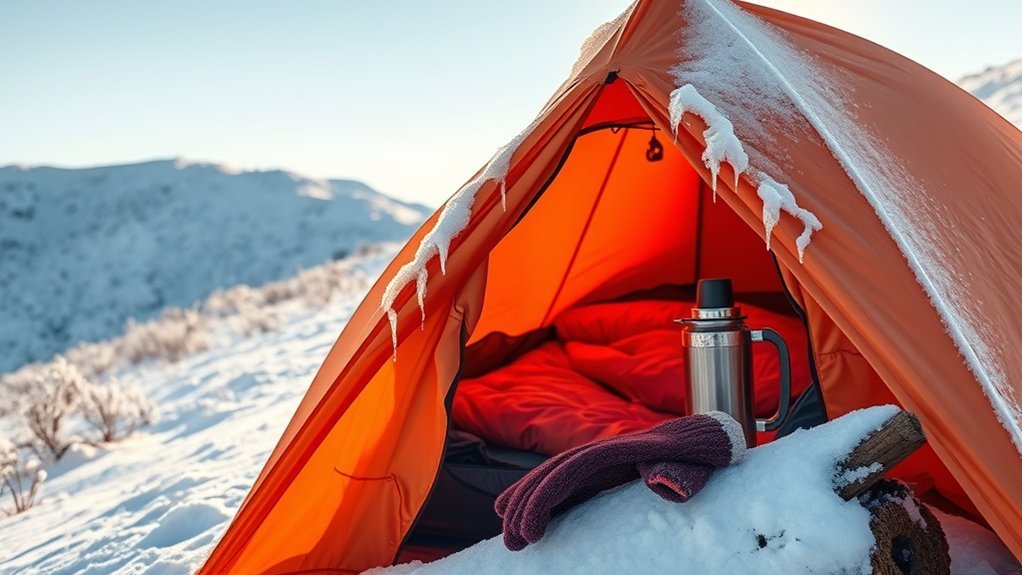
To keep warm and dry while camping in winter, choose a double-walled tent and set it up on elevated, dry ground. Proper ventilation is key, so crack windows and use high vents to let humidity escape. Avoid cooking inside your tent to minimize moisture. Insulate your sleeping area with a suitable pad and consider adding extra blankets for warmth. By following these tips, you’ll reduce condensation and improve your winter camping experience. There’s more to learn about ensuring a comfortable setup.
Understanding Tent Condensation

When you set up your tent, it’s essential to understand how tent condensation forms, especially in winter. Tent condensation happens when warm, moist air inside your tent meets cooler surfaces, leading to water droplets forming. This process is similar to dew forming on grass in the morning. The primary moisture sources include your breath, sweat, and wet gear, all contributing to increased humidity levels.
To minimize condensation, recognize temperature differences between the inside and outside of your tent. Warm air retains more moisture, and when it cools, that moisture condenses. Choose tent materials designed for winter use, as they can help manage this moisture better. Additionally, pick a campsite away from water sources and on higher ground to avoid cold air pooling. Finally, implement proper ventilation strategies by keeping vents open, allowing airflow, and greatly reducing moisture buildup for a more comfortable night.
Finding a Suitable Campsite
When you’re choosing a campsite, aim for higher ground to prevent cold air from pooling and increasing condensation risks. Seek out sheltered areas, like clusters of trees, to shield your tent from wind and create a warmer atmosphere. Also, keep your distance from water sources to reduce humidity, and make sure to pitch your tent on dry ground to avoid moisture seeping in.
Products Worth Considering
A MUST FOR TENT: An extra tent tarp doesn't just give you extra waterproofing, it is used as ground cloths under tents to prevent wear and tear. There’s no question that an insulated tent footprint is a great idea to help protect your investment, definitely, the choice to extend your tent's life
Ultralight and Compact: Size 80'' x 80'', weighing a mere 0.7 lbs, Made of high-density material, keeping your gear as light as possible.
【Upgraded Folding Method, Easier Fold Back】Throw the tent to the ground, and spread the pole then it will open up instantly in 3 seconds. Folding back is easier than tranditional pop up camping tent, fold the easy setup tent like number "8" and repeat TWICE, please refer to the instructional video. Practice a few times, you'll get the method quickly
Ideal Campsite Location
Choosing the right campsite can greatly impact your winter camping experience, especially when it comes to minimizing condensation in your tent. Aim for higher campsite elevation to prevent cold air from pooling, which can increase moisture inside. Look for sheltered spots away from water sources—ideally 50-75 feet back—to keep humidity levels low. Pitch your tent under sturdy trees to take advantage of the warmer microclimates created by tree cover, reducing moisture accumulation. Avoid open fields, as they’re prone to nighttime radiative cooling, which heightens condensation risks. Finally, choose sites that receive morning sunlight. This warmth helps dry out your tent and keeps moisture at bay throughout the day. Happy camping!
Avoiding Water Proximity
To minimize condensation in your tent, it’s essential to keep your campsite at least 50-75 feet away from any water sources. Water source proximity can greatly increase humidity levels, leading to uncomfortable sleeping conditions and excess condensation on your tent walls. To enhance humidity management, look for higher ground to pitch your tent. Avoid low dips where cold air pools, as these areas can worsen condensation issues during chilly nights. Additionally, select spots that receive morning sunlight; this exposure helps dry out moisture and prevents excess humidity buildup. By strategically choosing your campsite, you can create a more comfortable and dry environment, allowing you to fully enjoy your winter camping experience.
High Ground Advantages
Setting up your tent on higher ground can greatly enhance your camping experience by reducing the likelihood of condensation. The elevation benefits are clear: cold air pools in low areas, leading to increased moisture inside your tent. By choosing a campsite at a higher elevation, you’ll enjoy warmer air temperatures, which helps keep condensation at bay. Additionally, this higher ground offers airflow enhancement, allowing for better ventilation that further minimizes moisture accumulation. Avoid those low dips in the landscape; they can invite cold drafts that disrupt your comfort and increase condensation. Ultimately, selecting a site on higher ground provides a strategic advantage, ensuring a cozier, drier camping experience that allows you to fully embrace your outdoor adventure.
Tent Setup Techniques and Guidelines for Reducing Condensation
While camping in winter, minimizing condensation inside your tent is crucial for a comfortable stay. To achieve effective moisture management, follow these setup techniques:
- Use a double-walled tent: This design maximizes air circulation between the rainfly and the inner wall, preventing moisture accumulation.
- Pitch your tent tightly: Make certain the fabric is snug; loose areas can collect moisture in wrinkles, leading to drips inside.
- Open vents and windows: Take advantage of high vents to allow warm, moist air to escape, reducing internal humidity.
Also, utilize a rainfly for external moisture protection, but leave it off if rain isn’t expected to avoid trapping humidity. Securely stake your tent down to maintain structure and prevent cold air gaps. By focusing on these key tent maintenance strategies, you can greatly reduce condensation and enjoy a drier, more comfortable winter camping experience.
Products Worth Considering
4 SEASON TENT: We offer a limited ONE-YEAR GUARANTEE. Polyester rain fly, groundsheet, and bathtub with PU 5000 coating are firmer than you expected. Weatherproof material with factory-sealed seams keeps you dry and comfortable in four seasons or cold weather! Better material but more affordable! You really need an appropriate lightweight 2-person tent for backpacking for ALL SEASON!
ROOMY FOR 8-10 PERSON TENT: The tent is perfect for 8-10 person outdoor camping. With the size of 13.1ft x 9.1ft x 76.7in(H) (119.2 sq ft). 2 queen air mattresses (6.7ft*5ft/200cm*150cm, thickness suggest below 7.8in) or 8-10 sleeping bags are well fit in the tent. Perfect for family camping or adventures with friends.
All-season tent: The heavy-duty double-layer design allows you to simply remove the inner awning in summer, to feel cool while camping in hot weather.
Ventilation Strategies and Managing Moisture Sources
Effective ventilation is key to managing moisture inside your tent during winter camping. Employ ventilation techniques like keeping windows and doors slightly open to balance internal and external temperatures, allowing humid air to escape. Use high vents to release the warm air you exhale; remember, warm air rises, and without proper venting, it can lead to condensation buildup.
Avoid cooking inside the tent, as this introduces unnecessary humidity; prepare your meals outside to minimize moisture sources. Choose moisture-wicking fabrics for your clothing to manage sweat and reduce humidity while you sleep. Regularly check and wipe down any condensation on the inner walls of your tent; maintaining a drier environment prevents moisture accumulation. By implementing these strategies, you’ll enhance your comfort and enjoy your winter camping experience, free from the discomfort of excess moisture.
Products Worth Considering
Excellent Odor Control: The air carbon filter is made of premium Australian virgin charcoal with an IAV of 1200+, which has a higher absorption rate and practicality, effectively eliminating odors and chemicals in grow tents and hydroponic rooms, indoor grow tents, bathrooms, basements and kitchens.
Powerful Airflow: This powerful blower with a fan speed of 2500 RPM can create an airflow of 195 CFM; It works efficiently in ventilating grow tents, transferring heat or cool rooms, circulating fresh air, as well as controlling proper humidity, temperature, and air quality for your grow area
New Way for Grow Tent Ventilation System: For most other grow tent fans, the main complaint is stop oscillating after working for a period of time. Combined with ball-shaped joint to the clamp design making fan direction can be adjusted freely and 5-inch size requiring only a small amount of space, this dual-fan without oscillating has the same effect as the oscillating fan, no boring of failure to work.
The Importance of Preparation and The Joy of Camping
Preparation is essential for a successful camping trip, as it directly impacts your safety and comfort in the great outdoors. When you take the time to prepare, you reveal numerous camping benefits that enhance your overall experience.
Preparation is key to a successful camping trip, ensuring safety and comfort while enhancing your overall outdoor experience.
- Familiarize yourself with tent setup and maintenance to minimize issues like condensation.
- Stay updated on weather conditions to choose the right gear for your adventure.
- Commit to continuous learning about camping practices for personal growth and a deeper connection with nature.
Choosing and Enhancing Sleeping Bags
Selecting the appropriate sleeping bag can greatly influence your comfort and warmth during winter camping trips, so it’s crucial to take into account several factors. First, check the certified temperature rating (EN or ISO) to make certain it meets your needs. Opt for a sleeping bag rated 10-20°F (5-10°C) colder than expected temperatures to stay cozy.
Consider sleeping bag types; mummy-shaped bags offer superior insulation and a snug fit, effectively minimizing empty air space. To enhance warmth, incorporate a sleeping bag liner—fleece liners can increase insulation by up to 12°F (6°C), while Thermolite liners can add up to 25°F (13°C).
Finally, confirm your sleeping bag is the right size for your body type. A proper fit prevents insulation compression, maximizing heat retention while you sleep. With these tips, you can stay warm and comfortable during your winter adventures.
Products Worth Considering
Add up 27°F / 15°C top to your sleeping bag
Insulated sleeping bag liner adds extra warmth and personal hygiene to any sleeping bag.
Cozy sleeping bag liner for mummy style sleeping bags
Insulating the Tent Floor
To keep warm during winter camping, insulating your tent floor is essential. Use sleeping pads to create a barrier against the cold ground, and consider adding extra blankets for additional warmth. Make sure everything is dry before setting up to prevent heat loss and discomfort.
Products Worth Considering
【Extra Wide & 3" Thick Sleep Support】 The self inflating pad for camping is up to 78*27*8 inches, after inflating keeps you away from the uneven ground and hard rocks. The innovative egg-shaped air cells and built-in pillow are designed to relieve back and neck pressure, allowing you to freely adjust your body balance and comfort, whether on your back or your side, ensuring maximum comfort and warm for your sleep all night!
FOR THE LOVE OF COMFORT: The innovative fill packs down without sacrificing performance; Roomy footbox; Zipper draft tube; Soft liner provides a comfortable night's sleep
【9 R-Value Certified】Built with an advanced 9-layer insulation system, this camping sleeping pad delivers an exceptional R-value of 9, independently SGS tested and ASTM F3340-22 certified. It provides excellent insulation against ground chill, creating a comfortable sleep surface in cold weather—even in extreme environments down to -40°C. Designed for serious outdoor use, it delivers dependable warmth and comfort when temperatures drop, making it a reliable choice for four-season adventures.
Use Sleeping Pads
Using sleeping pads is vital for insulating the tent floor and enhancing your overall comfort during winter camping. These pads create a barrier between you and the cold ground, greatly reducing heat loss. When choosing sleeping pad materials, consider the benefits of inflatable vs. foam options. Inflatable pads typically offer superior comfort and insulation, often rated for specific temperatures.
- Confirm your sleeping pad is well-inflated for maximum insulation.
- Use extra blankets or clothing underneath the pad for added warmth.
- Avoid direct contact with the ground to minimize moisture absorption.
Add Extra Blankets
While sleeping pads provide a good foundation for warmth, adding extra blankets beneath them can further enhance insulation and comfort during winter nights. By incorporating blanket layers, you greatly reduce heat loss to the cold ground, ensuring you stay warm and cozy throughout the night.
| Blanket Type | Insulation Benefits |
|---|---|
| Old Comforters | Extra cushioning and warmth |
| Sleeping Bags | Excellent heat retention |
| Fleece Blankets | Lightweight and compact |
| Foam Pads | Added protection from cold |
Using dry, lightweight blankets is key to maximizing warmth without excess bulk. Remember, damp materials can worsen cold and moisture issues. Invest in these blanket layers for a more liberating winter camping experience.
Frequently Asked Questions
How Does Humidity Affect Winter Camping Condensation Levels?
Humidity sources like breath and cooking create moisture, increasing condensation levels in your tent. By practicing effective condensation control—ventilating properly and reducing humidity—you can minimize discomfort and enjoy a drier winter camping experience.
Can Specific Tent Materials Reduce Condensation?
Yes, specific tent materials like breathable fabrics can greatly aid in condensation reduction. By allowing moisture to escape while providing insulation, you’ll stay drier and more comfortable during your winter camping experiences. Choose wisely!
What Are the Best Practices for Drying Wet Gear Inside the Tent?
To dry wet gear inside your tent, hang items from tent poles and use gear drying techniques like airflow enhancement. Employ moisture management strategies, ensuring your gear’s dry, so you can embrace the wilderness fully.
How Frequently Should I Ventilate My Tent in Winter?
You should ventilate your tent every few hours while winter camping. Opening vents or doors briefly allows moisture to escape, reducing condensation. Consistent tent ventilation keeps you comfortable and dry, enhancing your overall camping experience.
What Common Mistakes Contribute to Increased Condensation in Tents?
Placing your tent in low-lying areas traps moisture, while improper insulation techniques can lead to cold spots. Guarantee proper ventilation and select elevated spots to minimize condensation and maximize your comfort during winter camping.
Conclusion
By following these tips, you can conquer tent condensation and enjoy a cozy camping experience, even in the coldest weather. Remember, a well-ventilated tent can make you feel like you’re sleeping in a warm cloud, free from the dampness that can ruin a trip. With the right setup and preparation, you’ll stay warm and dry, making your next adventure unforgettable. Embrace the joy of camping and make memories that’ll last a lifetime!