

Last Updated on July 24, 2026 by Logan Reeves
For most inshore fishing, braided line is the best mainline because its thin diameter supports long casts and its low stretch helps you detect light bites. However, braid is visible and can fray against shell, rocks, and barnacles. Pair it with a monofilament or fluorocarbon leader chosen for your lure, target fish, water clarity, and cover.
Quick Answer
Use 10 to 20 lb braid for many light and general inshore setups, or 20 to 30 lb braid near heavier cover. Add a mono or fluorocarbon leader. Start around 15 to 25 lb, then adjust for water clarity, sharp structure, lure action, and the fish you expect to catch.
Key Takeaways
- Braid is the best all-around mainline for sensitivity, spool capacity, and casting distance, but it is not low-visibility.
- Fluorocarbon leaders work well in clear water and around shell, docks, rocks, and other abrasive cover.
- Monofilament leaders add stretch and buoyancy, making them useful with topwater lures and treble hooks.
- Twenty-pound leader is a starting point, not a rule. Use lighter material for clear, open water and heavier material near sharp cover or larger fish.
- Match the whole setup to your rod, reel, lure, target species, and fishing conditions.
At a Glance
| Time Required | About 10 to 20 minutes to spool and connect a leader |
| Difficulty | Easy to moderate, depending on the connection knot |
| Tools Needed | Rod and reel, braid, leader material, mono backing if needed, and line cutters |
| Cost | Varies by line type, brand, strength, and spool size |
Disclosure: As an Amazon Associate I earn from qualifying purchases. Some links on this page are affiliate links, at no extra cost to you.
Best Fishing Line for Inshore Trips
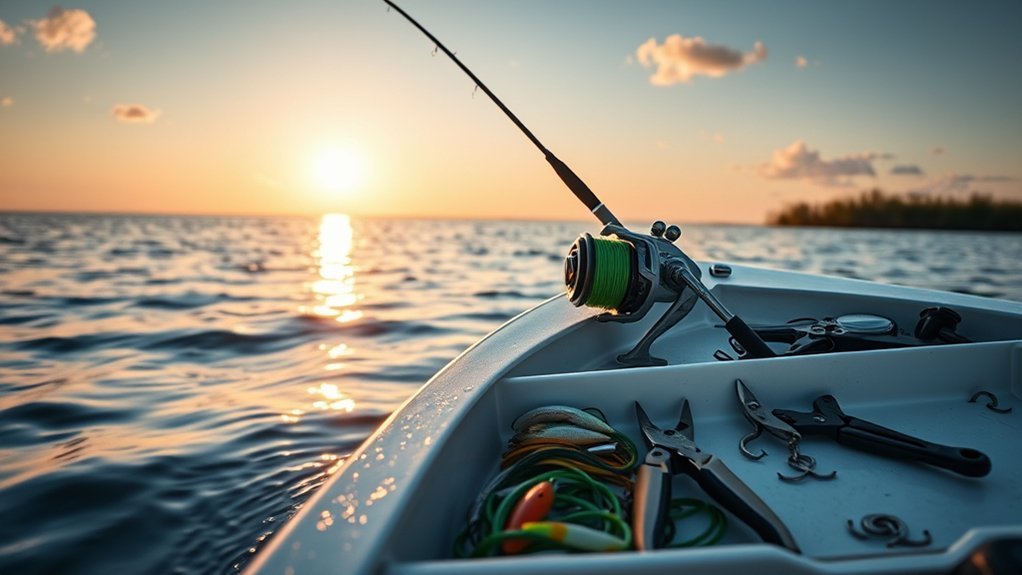
For most inshore spinning setups, braid offers the strongest mix of casting distance, sensitivity, and line capacity. Its diameter is thinner than mono or fluorocarbon of a similar labeled strength, and it has very little stretch. That helps you feel a light trout bite, maintain contact with a jig, or set a hook at the end of a long cast.
Braid is not invisible, though. The Berkley fishing-line comparison guide describes braid as highly visible while noting its high sensitivity and low stretch. Adding a clear leader gives you braid’s handling benefits near the reel while placing mono or fluorocarbon near the lure.
| Situation | Mainline Starting Point | Leader Starting Point | Why It Works |
| Open flats, small lures, trout, or flounder | 10 to 15 lb braid | 12 to 20 lb mono or fluorocarbon | Supports long casts and a natural presentation |
| General redfish and mixed inshore fishing | 15 to 20 lb braid | 15 to 25 lb mono or fluorocarbon | Balances casting, strength, and abrasion protection |
| Docks, oyster beds, mangroves, or heavier fish | 20 to 30 lb braid | 25 to 40 lb leader, as conditions require | Adds control and protection near sharp structure |
| Topwater lures | 10 to 20 lb braid | Mono leader | Mono adds buoyancy and cushions sudden strikes |
| Clear water or slow subsurface presentations | 10 to 20 lb braid | Fluorocarbon leader | Reduces visibility near the lure and sinks faster than mono |
These ranges are starting points, not fixed rules. Check the line rating printed on your rod and reel, then consider the lure weight, average fish size, drag setting, water clarity, and amount of cover. Moving to heavier line does not help if it overloads the rod or ruins the lure’s action.
Note: Ordinary mono and fluorocarbon are not bite-proof. Spanish mackerel, bluefish, barracuda, and other toothy fish may require wire or a purpose-made bite leader.
Why Braid Works Best as Your Mainline
Braid gives you considerable strength without filling the reel with thick line. The smaller diameter also allows a properly matched spinning reel to hold more line and cast light lures efficiently.
- High sensitivity: Low stretch sends taps, bumps, and bottom contact through the rod quickly.
- Strong hooksets: Less stretch can help drive a single hook when fishing jigs or soft plastics.
- Long casts: Thin, smooth braid can leave a spinning reel with less resistance than thicker line.
- Low memory: Braid does not form the same stiff coils commonly seen with old monofilament.
- Useful visibility: Bright braid can help you watch for sideways movement or a falling-line bite.
Braid also has limits. It can be difficult to break when snagged, may slip on a smooth reel arbor, and can fray when dragged over oysters, barnacles, sharp rocks, or rough pilings. A leader protects the terminal section, but you still need to inspect the first several feet of braid after fishing heavy cover.
If your reel does not have a braid-ready spool, add a short layer of monofilament backing before attaching the braid. This prevents the entire braid spool from spinning around the arbor under pressure. Berkley’s spinning-reel setup guide also describes using mono or fluorocarbon backing before adding superline.
Warning: Tight braid can cut deeply into your fingers. Never wrap it around your bare hand to pull a snag free. Point the rod toward the snag and use a protected line-pulling tool or cut the line safely.
When to Use Mono vs Fluoro Leaders?
Choose the leader by considering water clarity, lure depth, hook type, cover, and the amount of stretch you want. Neither material is best in every situation.
| Feature | Monofilament Leader | Fluorocarbon Leader |
| Buoyancy | More suitable near the surface | Sinks faster |
| Visibility | Clear but generally more visible underwater | Less visible underwater |
| Stretch | More immediate stretch and shock absorption | Usually firmer, although it still stretches under load |
| Best uses | Topwater lures, treble hooks, and economical general use | Clear water, bottom contact, shell, rocks, docks, and subsurface lures |
| Knot handling | Soft and easy to knot | Requires careful knot seating and inspection |
Fluorocarbon leader is a strong choice around shell, docks, jetties, reefs, and grass. Seaguar’s inshore fluorocarbon guidance highlights abrasion resistance, knot strength, low underwater visibility, and a faster sink rate than monofilament.
Mono remains useful when you want a little more give. That stretch can cushion a violent topwater strike and help keep pressure on fish hooked with small treble hooks. It is also usually easier to tie and less expensive to replace.
A short leader of about 16 to 30 inches is easy to cast and keeps the connection knot outside the guides. A leader around 2 to 4 feet provides more abrasion protection and separation from visible braid. In very clear water, some anglers use an even longer leader, but the knot must be slim and well tied if it repeatedly passes through the guides.
How to Match Fishing Line to Your Lure
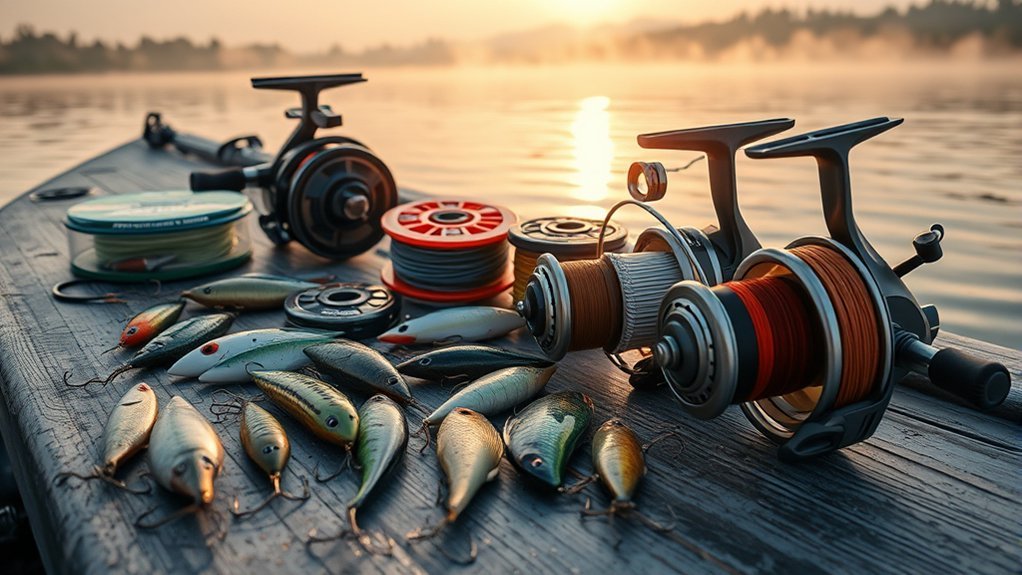
Your line should help the lure reach its intended depth and move naturally. A heavy or stiff leader can reduce the action of a small lure, while a sinking leader can pull the nose of a small surface bait downward.
Match Line to Lure
- Walking baits, poppers, and prop baits: Use braid with a mono leader when you want the leader to remain near the surface and absorb sudden strikes.
- Suspending plugs and diving jerkbaits: Use fluorocarbon when low visibility and a sinking leader support the intended depth. Test the lure beside the boat because heavy fluorocarbon can change its balance.
- Soft-plastic jerkbaits and paddle tails: Use braid with a fluoro leader for sensitivity and a natural presentation.
- Jigs and bottom rigs: Braid provides strong bottom contact, while a fluorocarbon leader protects the final section near shell and rock.
- Lipped and lipless crankbaits: These are subsurface lures. Mono can add forgiveness around treble hooks, while fluorocarbon may help the lure reach depth.
- Live bait: Match the leader to the bait size, water clarity, current, hook, and cover. Avoid leader material so stiff that it restricts the bait’s movement.
Lure-Specific Line Choices
Line diameter can matter as much as labeled strength. A thick leader catches more current, may reduce casting distance, and can limit the movement of a small lure. Use the lightest leader that still gives you reasonable protection from the fish and the surrounding cover.
When fishing a jig or soft plastic, braid’s low stretch makes it easier to feel the lure contact grass, shell, and bottom. With topwater lures, mono adds a useful cushion and is less likely than sinking fluorocarbon to pull a small lure downward. For treble-hook plugs, avoid an overly stiff rod-and-line combination that can tear hooks free during a close fight.
Pro Tip: After changing leader diameter or material, test the lure beside the boat or shoreline. Watch its depth, balance, and action before making a full cast.
Best Knots for Braid-to-Mono Leaders
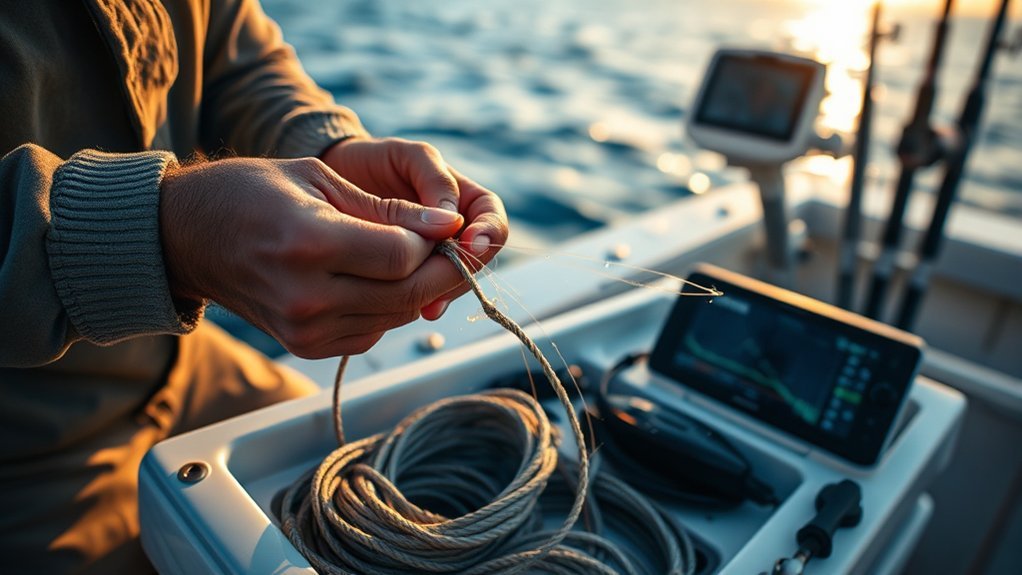
The best connection knot is one you can tie correctly and inspect with confidence. Braid is slick, so an incomplete or poorly seated knot can slip even when it looks acceptable.
- Double Uni Knot: Easy to learn and practical when the braid and leader diameters are not extremely different. It is dependable but bulkier than an Alberto or FG knot.
- Alberto Knot: Slimmer than a Double Uni and useful when joining thin braid to a thicker mono or fluorocarbon leader.
- FG Knot: Very slim and useful with long leaders that pass through the guides. It takes more time and practice to tie correctly.
Berkley’s fishing-knot guide includes Uni-style connections and other common terminal knots.
How to Tie a Double Uni Connection
- Overlap the braid and leader by about 8 to 10 inches.
- Use the braid tag end to form a loop over both lines.
- Wrap the braid tag through the loop and around both lines six to eight times.
- Pull the braid tag end to form the first Uni knot without fully tightening it.
- Form a loop with the leader tag end and wrap it around both lines four to six times.
- Moisten the leader side, tighten both individual knots, and then pull the standing lines so the two knots slide together.
- Trim the tags carefully and pull firmly on both standing lines to test the connection.
Fluorocarbon can weaken if a knot is crossed, burned by friction, or tightened unevenly. Wet it before final tightening, seat the wraps slowly, and retie any connection that looks cloudy, flattened, or damaged.
Common Line Mistakes That Hurt Casting
Many casting problems come from the way the reel is filled or handled rather than the line material itself.
- Overfilling the spool: Line can jump from the spool in loose coils and form wind knots. Leave a small gap below the spool lip and follow the reel manufacturer’s instructions.
- Underfilling the spool: A low line level increases friction against the spool lip and reduces casting distance.
- Spooling braid without enough tension: Loose braid can dig into lower layers when you set the hook or fight a fish.
- Skipping backing on a smooth arbor: The entire braid spool may rotate without taking in line.
- Using a leader that is too thick: A heavy leader may shorten casts and restrict small-lure action.
- Ignoring line twist: Closing a spinning-reel bail by turning the handle, reeling against the drag, and using spinning lures without a suitable swivel can increase twist.
- Using a damaged knot: A leader knot that repeatedly hits the guides may weaken or catch during the cast.
- Leaving frayed line in service: Shell, barnacles, rocks, fish teeth, and hook points can damage both the leader and braid.
When a spinning reel develops repeated wind knots, remove the damaged section, check the spool level, inspect the line roller, and make several firm casts with a suitable lure. Maintain light tension while retrieving the line so it lays evenly.
Pick the Right Inshore Setup Fast
A practical inshore setup does not need to be complicated. Start with a balanced rod and reel, choose braid within the printed equipment rating, and add a leader that suits the water and cover.
Braid Mainline Basics
Ten- to 15-pound braid works well for many open-water and light-lure situations. Fifteen- to 20-pound braid is a flexible all-around choice, while 20- to 30-pound braid provides more control near docks, oyster beds, mangroves, and heavier fish.
- Choose by conditions: Use lighter braid for casting and open water, or heavier braid when structure and fish size require it.
- Check the equipment: Stay within the line and lure ratings printed on the rod and reel.
- Use backing when needed: Add mono backing or use a manufacturer-approved braid attachment on a braid-ready spool.
- Spool under firm tension: Loose braid can dig into itself under load.
- Inspect the working end: Cut away faded, fuzzy, or flattened sections before tying a new leader.
High-visibility braid can be useful when watching the line for subtle movement. The clear leader provides separation between the bright mainline and the lure.
Mono Leader Setup
A 20 lb monofilament leader remains a useful all-around option for topwater lures, treble-hook plugs, and mixed inshore fishing. A short 16- to 30-inch leader is convenient when you want the connection knot to stay outside the guides.
Move lighter when the water is clear, the lure is small, and sharp cover is limited. Move heavier when fishing rough docks, oyster beds, mangrove roots, large snook, or other fish with abrasive mouths or gill plates. Switch to fluorocarbon when low visibility, a faster sink rate, or stronger protection near hard structure matters more than buoyancy.
After catching a fish or dragging the leader across cover, slide your fingers carefully along the leader. Cut it back and retie if you feel roughness, flat spots, cuts, or cloudy areas.
Fast Inshore Line Match
- Select braid that fits the rod, reel, lure, fish, and cover.
- Add mono backing if the reel spool is not braid-ready.
- Fill the spool evenly under firm tension without overfilling it.
- Use mono for surface presentations and extra stretch.
- Use fluorocarbon for clear water, bottom contact, and abrasive cover.
- Start with a short leader, then lengthen it if you need more stealth or abrasion protection.
- Connect the lines with a properly tied Double Uni, Alberto, or FG knot.
- Test every knot before casting and inspect the leader during the trip.
The best inshore line is not one fixed material or pound test. It is a balanced system in which the mainline handles casting and sensitivity while the leader handles visibility, lure action, and contact with cover.
Line Care, Replacement, and Safe Disposal
Salt, sand, UV exposure, knots, and rough cover gradually weaken fishing line. Rinse the reel gently with fresh water after saltwater use, allow it to dry, and avoid forcing water into the reel with a high-pressure spray.
- Inspect the leader before every trip and after contact with shell, rock, docks, or fish teeth.
- Remove any braid that looks fuzzy, flattened, badly faded, or cut.
- Replace mono that has severe coils, cracks, cloudiness, or reduced knot strength.
- Replace fluorocarbon that develops nicks, sharp bends, or cloudy damaged sections.
- Do not rely on a fixed calendar alone. Fishing frequency, storage, sunlight, and abrasion determine how quickly line wears.
Never leave cut line on a bank, dock, boat ramp, or in the water. NOAA explains that fishing line and other gear can entangle marine mammals, sea turtles, birds, and fish. Its marine-life entanglement guidance recommends recycling or disposing of recreational fishing gear properly and cutting closed loops before placing line in the trash.
Note: Many fishing-line recycling bins accept clean monofilament and fluorocarbon but not braid, wire, hooks, swivels, or heavily contaminated line. Follow the instructions printed on the collection bin.
Sources
- Berkley Fishing Line Guide — compares braid, monofilament, and fluorocarbon properties.
- Seaguar Inshore Fluorocarbon Leader — supports fluorocarbon visibility, sink-rate, knot-strength, and abrasion-resistance guidance.
- Berkley Fishing Knots 101 — explains common fishing knots and Uni-style connections.
- Daiwa PE and Braid 101 — explains common differences among braid carrier counts.
- Berkley Spinning-Reel Spooling Guide — supports the use of backing and proper reel filling.
- NOAA Fisheries Entanglement Guidance — supports responsible line disposal and loop-cutting precautions.
Frequently Asked Questions
What Is the 80/20 Rule in Fishing?
The 80/20 rule is the idea that a small part of the water, time, or lure selection often produces most of your catches. It is a strategy principle rather than a fishing-line rule. Use your catch history to identify productive locations and presentations, then select line that fits those specific conditions.
What Is Better, 4x or 8x Braid?
Eight-carrier braid is usually smoother, rounder, quieter through the guides, and well suited to long casts. Four-carrier braid is often less expensive and may provide a rougher surface that cuts vegetation well. Construction, coating, diameter, and material also affect durability, so carrier count alone does not determine which line is stronger or better.
Is It Better to Use Fluorocarbon or Braided Line?
They perform different jobs. Braid is usually better as a mainline when you want casting distance, capacity, sensitivity, and low stretch. Fluorocarbon is usually better near the lure when you need lower visibility, a faster sink rate, and protection from abrasive cover. Combining a braid mainline with a fluorocarbon leader gives you both sets of benefits.
How Do I Know Which Fishing Line to Use?
Check your rod and reel ratings first. Then consider the target species, average fish size, water clarity, cover, lure weight, hook type, and desired lure depth. Use lighter line for open water and small lures, or heavier line when sharp cover and larger fish require more control.
Do You Need a Leader With Braided Line?
You do not always need one, but a leader is useful in most inshore situations. It reduces visibility near the lure, adds abrasion protection, and lets you choose mono or fluorocarbon properties without filling the reel with that material. Direct braid can work in dirty water or vegetation when visibility and hard-surface abrasion are less important.
How Long Should an Inshore Leader Be?
A leader around 16 to 30 inches is convenient and keeps the knot outside the guides. A 2- to 4-foot leader adds more separation from visible braid and gives you extra material to cut back after abrasion. Clear water or repeated contact with rough cover may justify a longer leader and a slim connection knot.
Conclusion
For most inshore fishing, braid is the strongest all-around mainline because it casts well, provides high sensitivity, and fits plenty of line on a compact reel. Its visibility and vulnerability to sharp structure are the reasons you usually add a leader.
Choose mono when you want buoyancy, easy knot handling, and extra stretch. Choose fluorocarbon when you need lower visibility, a faster sink rate, or added protection near shell, docks, rocks, and other hard cover. Start with a balanced setup, test every knot, inspect the working end often, and adjust the line strength instead of treating one 20 lb combination as the answer for every trip.
