

A semi-freestanding tent merges the benefits of freestanding and non-freestanding designs, making it an ideal choice for backpackers. It features a tripod-style pole setup, which reduces weight while still providing structural integrity. Unlike freestanding tents, it requires staking for stability. This design offers a compact option that balances weight and weather protection. You’ll find advantages in setup and performance, especially in tricky conditions. Continue to learn about its features and various options available.
Understanding Semi-Freestanding Tents
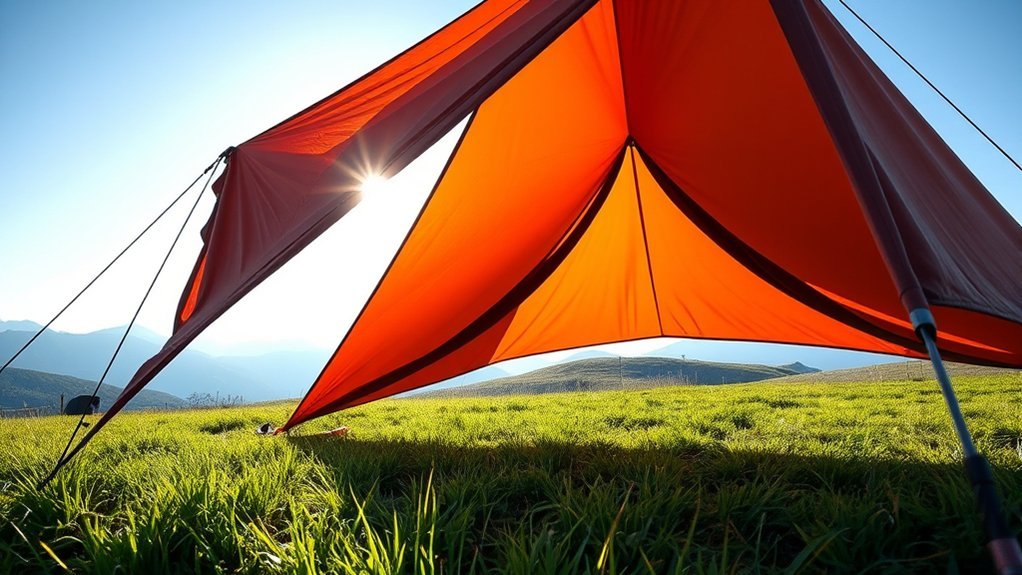
Understanding semi-freestanding tents can enhance your camping experience, especially if you value a lightweight setup without sacrificing stability. These tents combine the best aspects of freestanding and non-freestanding designs, utilizing a tripod-style pole configuration that considerably reduces weight compared to traditional four-pole setups. This design feature makes them ideal for backpackers seeking efficiency.
However, it’s essential to note that semi-freestanding tents require staking at the corners for ideal expansion and stability. They also necessitate guy lines to maintain structural integrity in challenging conditions. For instance, popular models like the REI Quarter Dome SL 1 and Big Agnes Fly Creek HV UL2 exemplify lightweight design while ensuring performance. Staking is vital, particularly to keep your gear dry and prevent condensation from impacting your sleeping area. By considering these weight considerations and design features, you can make an informed choice that aligns with your adventurous spirit.
Advantages of Semi-Freestanding Tents
Semi-freestanding tents offer several advantages that make them an appealing choice for outdoor enthusiasts. One of the most significant benefits is their weight savings, making them perfect for backpackers who want to minimize their load on long trips. Their compact design allows for smaller packed volumes, enhancing portability and convenience during your adventures.
While you’ll need some stakes for full stability, these tents strike a balance between structural integrity and lightweight design. This versatility means you can set up on various surfaces, taking advantage of the lightweight benefits without sacrificing function. Additionally, many semi-freestanding tents come equipped with features like rainflies, providing essential weather protection without the bulk of heavier models. This means you can stay comfortable in unpredictable conditions while enjoying the freedom of traveling light. Overall, semi-freestanding tents cater to those who seek liberation in their outdoor experiences.
Comparing Semi-Freestanding and Freestanding Tents
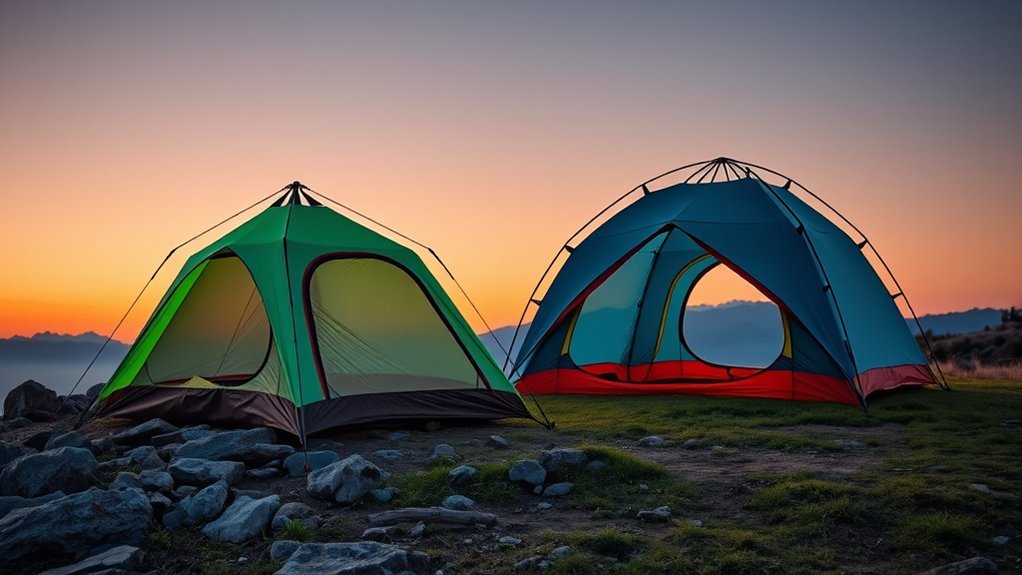
When choosing between semi-freestanding and freestanding tents, it is crucial to take into account your camping needs and terrain. Both types have distinct advantages, especially regarding weight comparison and tent materials.
| Feature | Semi-Freestanding | Freestanding |
|---|---|---|
| Setup | Requires staking for full expansion | Can stand alone without stakes |
| Weight | Generally lighter, fewer poles | Heavier due to more poles |
| Stability | Offers good structural integrity | Prioritizes maximum stability |
| Interior Space | May feel more compact | Typically more spacious |
| Weather Protection | Needs care to prevent condensation | Usually includes effective rainfly |
If you’re looking for a balance of lightweight design and structural integrity, semi-freestanding tents might be ideal. However, if you prefer straightforward setup and ample interior space, a freestanding tent could be your best choice.
Setup Considerations for Semi-Freestanding Tents
To guarantee a successful setup of your semi-freestanding tent, proper staking at the corners is essential for stability and functionality. Focus on precise stake placement to anchor your tent securely, as this guarantees it performs efficiently in various conditions. When selecting a site, look for level ground that’s free of rocks or debris, since hard or uneven surfaces can complicate staking.
If you master the setup process, you’ll find that it can be executed quickly, even in rainy weather, minimizing the risk of wetting the interior. The tripod-style pole configuration reduces packed volume, making your tent lighter and easier to carry. Additionally, thoughtful orientation and anchoring can help reduce condensation, enhancing your overall comfort. With these considerations in mind, you’ll be well on your way to enjoying the freedom that comes with using a semi-freestanding tent.
Popular Semi-Freestanding Tent Options
Exploring the world of semi-freestanding tents reveals a variety of options tailored to different camping styles and preferences. The REI Quarter Dome SL 1, with its tripod structure, requires staking at the corners for ideal expansion, making it a reliable choice for diverse terrains. If you’re focused on weight, the Big Agnes Fly Creek HV UL2 is a standout, thanks to its lightweight design and compact packed volume—perfect for backpackers wanting to minimize their load. For those who prioritize space, the Big Agnes Tiger Wall UL 2 offers a semi-freestanding design that maximizes interior comfort. Additionally, the Nemo Hornet UL 2 strikes an impressive balance between weight and structural integrity with its efficient pole configuration. Each of these tents utilizes advanced tent materials, providing durability while ensuring a favorable weight comparison for your outdoor adventures.
Frequently Asked Questions
Can Semi-Freestanding Tents Be Used on Rocky Surfaces?
Yes, you can use semi-freestanding tents on rocky terrain. Just make certain you have appropriate staking options, like rock stakes or additional gear, to secure your tent effectively in challenging conditions for a stable setup.
How Much Weight Do Semi-Freestanding Tents Typically Save?
You’ll typically enjoy weight savings of 1 to 3 pounds with semi-freestanding tents, thanks to lightweight materials like ripstop nylon and aluminum poles. This reduction can greatly enhance your backpacking experience, offering freedom without sacrificing comfort.
Are Semi-Freestanding Tents Suitable for Winter Camping?
Yes, semi-freestanding tents can be suitable for winter camping if they have adequate winter insulation and snow stability features. Make certain you choose a model designed for cold conditions to enhance your camping experience.
What Accessories Enhance the Usability of Semi-Freestanding Tents?
Using a rainfly improves waterproofing by up to 30%, while a footprint protects your tent floor from abrasions. These accessories enhance your semi-freestanding tent’s usability, ensuring durability and comfort in various camping conditions.
How Do I Choose the Right Size Semi-Freestanding Tent?
To choose the right size semi-freestanding tent, consider tent dimensions and capacity considerations. Make certain it accommodates your group comfortably, factoring in gear space and height for ideal movement and ventilation during your adventures.
Conclusion
In conclusion, semi-freestanding tents offer a versatile option for campers seeking a balance between weight and stability. With their ability to pitch securely in varied terrains, they’re a popular choice among backpackers; in fact, studies show that nearly 30% of backpackers prefer them over fully freestanding models. As you gear up for your next adventure, consider the unique benefits of a semi-freestanding tent to enhance your outdoor experience and guarantee a comfortable night under the stars.
