
Last Updated on August 23, 2026 by Mason Reed
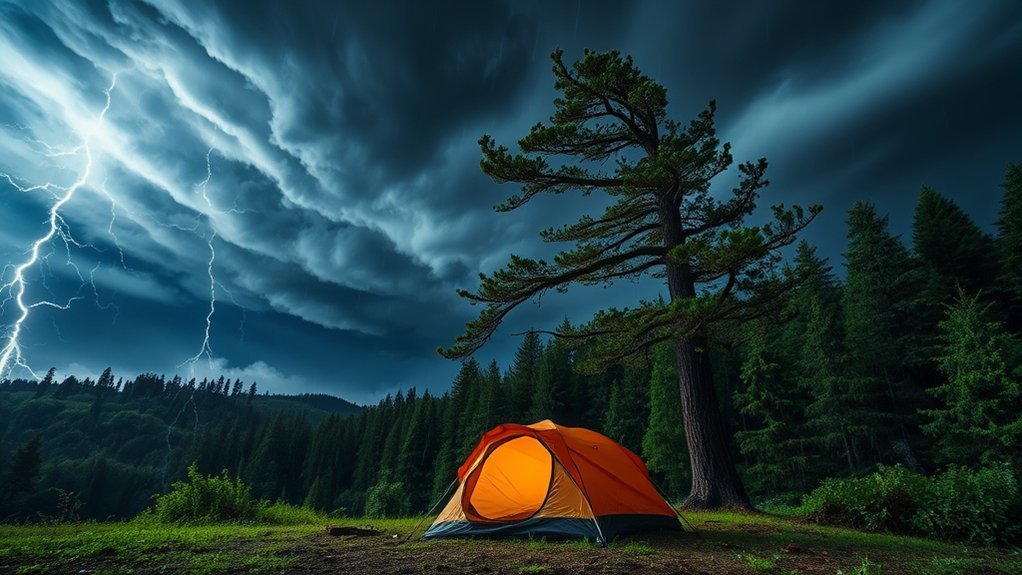
Camping during a thunderstorm requires quick decisions and careful preparation. The safest approach is to monitor weather conditions, choose a lower-risk campsite, and move to a proper shelter when possible. A tent can protect you from rain and wind, but it does not provide lightning protection. Knowing what to do before and during a storm can make your outdoor trip much safer.
Quick Answer
If a thunderstorm reaches your campsite, move to a substantial building or hard-top vehicle whenever possible. Avoid exposed areas, isolated trees, water, and flood-prone locations. If you must remain in a tent, reduce risks by staying away from conductive objects, avoiding tent walls and poles, and waiting until the storm safely passes.
Key Takeaways
- A tent does not protect you from lightning strikes.
- Choose campsites away from high points, isolated trees, water, and flood paths.
- A hard-top vehicle or substantial building is the safest shelter during lightning.
- Weather alerts and an emergency plan are essential parts of storm preparation.
At a Glance
| Time Required | Preparation before the trip plus immediate action during storms |
| Difficulty | Easy planning with important safety decisions |
| Tools Needed | Weather radio or alerts, emergency kit, flashlight, waterproof storage |
| Cost | Varies depending on safety equipment already owned |
Disclosure: As an Amazon Associate I earn from qualifying purchases. Some links on this page are affiliate links, at no extra cost to you.
Choosing the Right Campsite During Thunderstorms
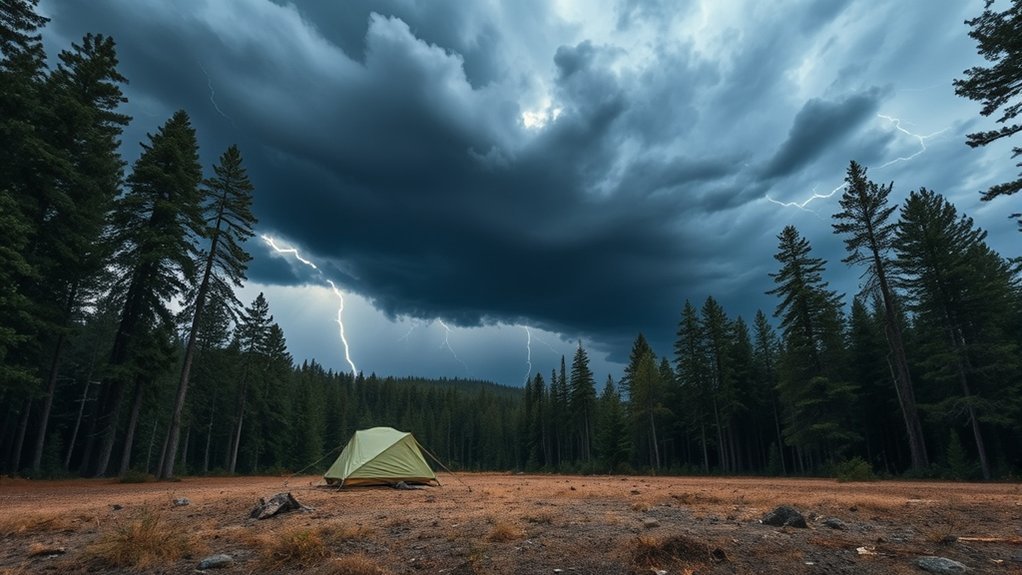
When selecting a campsite, safety should come before convenience. Avoid exposed locations such as hilltops, ridgelines, and open fields because they increase your exposure during severe weather.
Choose a location away from isolated tall trees, rivers, lakes, and areas where water can collect. Low areas may reduce lightning exposure compared with exposed high ground, but avoid places where rainwater can quickly accumulate.
Warning: Never camp in dry creek beds, drainage channels, or areas below steep slopes. Heavy rain can create dangerous flash floods with little warning.
Understanding Lightning Risks While Camping
Lightning can strike far from the center of a storm, so waiting until heavy rain begins may be too late to find safe shelter. The safest option is to move early when thunderstorms are approaching.
Tents, picnic shelters, and open-sided structures do not provide reliable lightning protection. The best shelters are enclosed buildings with electrical wiring and plumbing or hard-top vehicles with windows closed.
When thunder is heard, lightning is close enough to pose a danger. Take shelter immediately.
Behavior Inside a Tent During a Thunderstorm
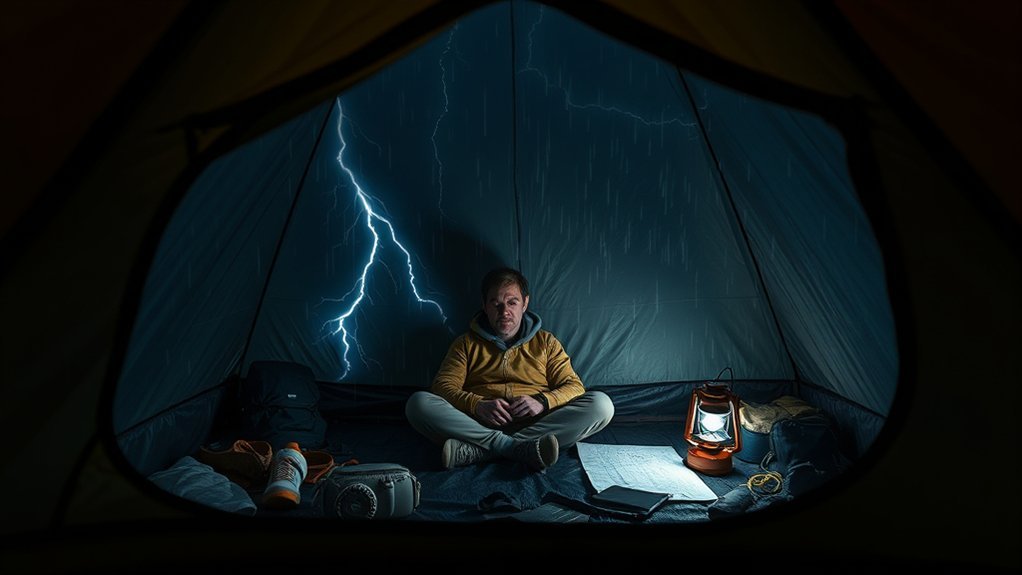
If you cannot reach safer shelter and must remain in your tent, reduce risks as much as possible. Stay away from tent poles, frames, and metal components. Avoid touching conductive items and keep electronic equipment disconnected when practical.
Do not rely on sleeping bags, boots, or camping mats as lightning protection. They may provide comfort but cannot prevent a lightning injury.
Pro Tip: Keep your emergency gear organized so you can leave quickly if weather conditions worsen.
Essential Safety Equipment for Thunderstorm Preparedness
Good preparation starts before you arrive at the campsite. Carry a reliable weather alert method, such as a battery-powered weather radio or emergency alert system.
Useful storm equipment includes:
- First aid supplies
- Flashlight or headlamp with spare batteries
- Waterproof bags for important items
- Emergency communication equipment
- Rain gear and extra dry clothing
Emergency Procedures for Thunderstorm Situations
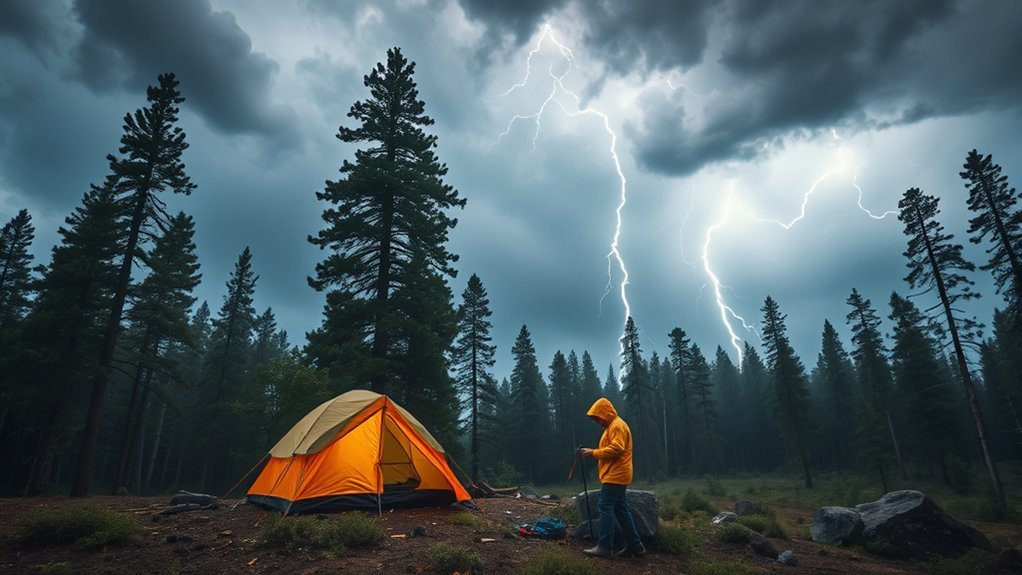
When a thunderstorm approaches, act early. Check weather alerts, stop outdoor activities, and move toward safer shelter if available.
If you are caught outside without shelter, avoid isolated trees, open areas, and water. Keep your body position low if lightning is nearby, but do not lie flat on the ground.
After the storm, wait until conditions are safe before returning to normal activities. Continue watching for additional storms, falling branches, unstable ground, and flooding.
Note: Weather conditions can change quickly in outdoor environments. Always check local forecasts before and during camping trips.
Frequently Asked Questions
Can I use my phone during a thunderstorm in a tent?
A wireless phone is generally safer than using connected wired equipment, but avoid unnecessary use during severe storms and prioritize moving to safe shelter.
What should I do with camping gear during a storm?
Secure loose equipment, protect important items from rain, and keep essential emergency supplies accessible.
Is it safe to cook inside a tent during a thunderstorm?
No. Cooking inside a tent creates fire and carbon monoxide risks. Never use fuel-burning stoves in enclosed tent spaces.
How do I choose a safer tent location?
Choose a location away from exposed high ground, isolated trees, water, steep slopes, and areas that can flood.
Conclusion
Thunderstorms do not have to ruin a camping trip, but they require preparation and smart decisions. Choose safer campsites, monitor changing weather, move toward proper shelter when possible, and understand the limits of tent protection. Staying informed and prepared helps you enjoy the outdoors while reducing avoidable risks.
Sources
- National Weather Service Lightning Safety — lightning safety recommendations.
- National Weather Service Flood Safety — flash flood risks and warnings.
- National Park Service Lightning Safety — outdoor lightning precautions.
