
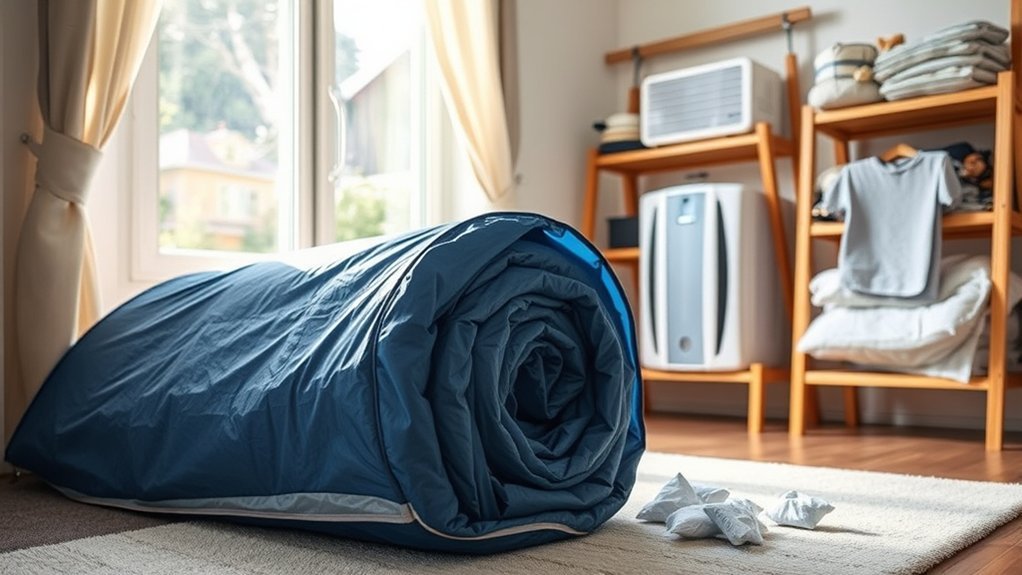
To prevent mold, mildew, and odors in your tent, start by cleaning it with mild soap and make certain it’s completely dry before storage. Avoid packing damp tents and store them in a cool, dry place with good ventilation. Use breathable storage bags and regularly inspect for signs of moisture. Consider incorporating desiccants to absorb excess humidity. With these practices, your tent will remain in great condition—there’s much more to discover on maintaining it effectively.
The Importance of Preventing Mold and Mildew

When you store your tent, it’s essential to prevent mold and mildew, as these harmful fungi thrive in damp, dark environments. To avoid mold prevention issues, always clean your tent with mild soap and guarantee it’s completely dry before storage. Storing your tent in areas with high humidity, like attics or basements, increases mildew risks due to moisture retention. Instead, opt for cool, dry, and well-ventilated spaces to maintain its integrity.
Regularly inspect your tent before and after camping trips. Look for early signs of mold, such as discoloration or musty odors. If you spot any, act quickly to prevent further damage. Additionally, use breathable storage bags to help keep your tent fresh. By taking these proactive steps, you can enjoy your outdoor adventures without worrying about unpleasant odors or health issues linked to mold and mildew growth. Your tent deserves the best care to guarantee countless adventures ahead.
Common Causes of Mold and Mildew Growth in Tents
Mold and mildew can quickly become a problem for your tent if you’re not careful about how you store it. One major cause is high humidity levels, especially during wet weather, which creates a perfect environment for mold spores to thrive. If you pack your tent while it’s still damp, you’re trapping moisture that accelerates mildew growth. Additionally, a lack of ventilation during storage allows moisture to linger, further promoting mildew formation and resulting in unpleasant odors.
To combat this, always guarantee your tent is completely dry before packing it away. Regularly inspect your tent for damp spots or visible mold, as early detection can simplify removal and prevent further damage. By understanding these common causes, you can take proactive measures to protect your tent from mold and mildew, guaranteeing it’s ready for your next adventure.
Proper Drying Techniques
To effectively prevent mold and mildew, it’s vital to dry your tent thoroughly after each use. Start by setting it up in a sunny spot with good airflow, which plays an important role in tent drying. Make certain the tent is completely dry before packing it away; damp or wet tents are breeding grounds for mildew. If you’re drying indoors, guarantee proper ventilation to help moisture evaporate quickly, avoiding a damp environment that encourages mold growth.
When hanging your tent, invert it to expose all surfaces, including the underside of the tent fly, to air and sunlight. This all-encompassing drying method guarantees that every inch is adequately treated. Regularly inspect for damp spots or visible mold before storage—early detection can save you from further damage and unpleasant odors. By following these proper drying techniques, you’ll maintain your tent’s integrity and enjoy your adventures free from mold worries.
Products Worth Considering
Clothes drying laundry rack for energy savings and gentle air drying so clothes last longer; for indoor use
A mesh netting rack designed to preserve plant material by promoting even drying and curing.
Efficient Herb Drying: You will get 4 pcs herbal drying racks, each equipped with 30 stainless steel detachable clips, allowing you to dry and preserve a variety of herbs simultaneously, saving you time and effort
Cleaning Your Tent to Prevent Mold and Mildew
Cleaning your tent regularly is essential for preventing mold and mildew. Start by using a mixture of mild soap and warm water to thoroughly clean your tent, steering clear of harsh detergents or bleach that can harm the fabric and its coatings. For stubborn mold and mildew, consider a specialized cleaner like Revivex Pro Cleaner. Avoid machine washing, as it can damage your tent’s fabric.
After cleaning, make sure your tent is completely dry; damp conditions are a breeding ground for mold and mildew. Regularly inspect your tent for signs of growth, like musty odors or discoloration, and address any problems immediately to prevent further damage.
Before storing your tent, think about applying a mold-resistant treatment to enhance its protection. These tent maintenance and fabric care practices will help keep your gear fresh and ready for your next adventure!
Products Worth Considering
POWERFUL CONCENTRATED FORMULA: Effectively removes mold, mildew, algae, leaf stains, bird droppings, tree sap, grease, oil, and some food or drink stains from awnings, tents, boat covers, cushions, carpets, vinyl, plastic, and fiberglass without damaging fabrics or colors.
Fast and Effective: ACTIVE Seal & Grout Stain Remover is a Powerful Whitening Deep Cleaner. Mildew Stain Remover has an Instant Effect in Minutes to Quickly Clean Mold Stain and Eliminate Unwanted Musty Dirt and Grime
Wet & Forget Concentrate Outdoor Cleaner removes green and black stains caused by moss, mold, mildew, and algae, no scrubbing, no rinsing, no pressure washing, just wet it and forget
How to Store Your Tent Properly
To store your tent properly, you need to create ideal conditions that prevent moisture buildup and damage. Focus on moisture management techniques, like using breathable bags and incorporating desiccants, to keep your tent dry. Additionally, pay attention to how you pack it to guarantee it stays in top shape for your next adventure.
Products Worth Considering
Nonwoven Paper Packaging Material-The silica gel desiccant packets are three-side sealing constructed with high quality Verna non-woven fabric material. This packaging material has good breath-ability, dust-proof functionality, strong strength and seal strength;
Excellent Moisture Absorption: Our silica gel packets has transparent silica gel beads inside, decassant packs has high moisture absorption, which can effectively absorb the humidity in the air, keep the items in a dry state, and prevent the moisture from damaging the items
GOOD ADSORPTION CAPACITY: Silica gel desiccant is a highly active adsorption material, has good thermal properties and chemical stability, and does not react with other substances.
Ideal Storage Conditions
When it comes to storing your tent, guaranteeing it’s kept in a cool, dry, and dark environment is essential for preserving its integrity. By controlling temperature and minimizing light exposure, you protect your tent from damage.
Here are some ideal storage conditions to follow:
- Choose a temperature-controlled area, avoiding basements and attics.
- Use breathable storage options like large mesh laundry bags or cotton bags.
- Regularly inspect your tent for wear or damage.
- Air out your tent for several days before storage, especially in humid conditions.
- Consider adding desiccants like silica packets or DampRid to absorb excess moisture.
Following these steps will help you maintain your tent’s quality and guarantee it’s ready for your next adventure!
Moisture Management Techniques
While storing your tent, managing moisture is essential to preventing mold and mildew. Start by ensuring your tent is completely dry before packing it away, as any retained moisture can foster unwanted growth. Store your tent in a cool, dry place, avoiding direct sunlight to protect the fabric. Use breathable storage bags like large mesh or cotton bags to promote airflow and enhance moisture control. Regularly check for signs of wear and damage, and consider incorporating desiccants like DampRid to assist with humidity monitoring in your storage area. Steer clear of high-humidity environments, such as damp basements or attics, as they greatly increase the risk of mold and mildew development. Your tent deserves the best care for future adventures!
Tent Packing Methods
Properly packing your tent is essential for ensuring its longevity and readiness for your next adventure. Follow these packing strategies to keep your tent in top shape:
- Ensure it’s dry: Moisture leads to mold and mildew.
- Use tent folding techniques: Fold neatly to avoid creasing and damage.
- Choose a breathable bag: This allows for moisture evaporation.
- Store in a cool, dark, dry environment: Avoid humid places like basements or attics.
- Inspect regularly: Check for wear or moisture to catch issues early.
Regular Tent Inspections
Regular inspections of your tent are essential for maintaining its longevity and functionality. Conduct these checks before and after each camping trip to spot any dampness, visible mold, or musty odors that might indicate moisture retention. Pay close attention to seams, zippers, and fabric for discoloration or small black or green spots, which signal mold. Addressing these issues immediately can prevent extensive damage and guarantee your tent remains usable for future adventures.
Don’t forget to inspect stored tents periodically, especially in high-humidity areas, to catch any signs of wear or moisture accumulation. A good rule of thumb is to establish an inspection frequency that suits your camping habits. Keeping a mold removal kit handy during these inspections allows for prompt treatment of any discovered mold, preserving your tent’s condition and enhancing your overall camping experience. Prioritize tent maintenance, and your gear will reward you with many memorable outings.
Products Worth Considering
TWO FAST-ACTING FORMULAS: The ultimate mold prevention kit, our bundle includes 1 spray bottle of RMR-86 and 1 spray bottle of RMR-141 RTU to kill mold and mildew instantly while lifting difficult stains that are left behind
MOLD AND MILDEW STAINS GONE ON CONTACT: Spray on and watch black and gray stains break down without scrubbing. Works on old set-in stains other cleaners leave behind. Marine grade formula so your bathroom and patio stains do not stand a chance.
4'' air carbon filter: Air flow: 220CFM; reversible flange ducting: 12-inch length. 1200+ IAV Australian RC414 activated carbon: High-quality carbon for higher absorption and long service. Hook design, easy to hang
Frequently Asked Questions
Can I Use a Regular Plastic Bag for Tent Storage?
You shouldn’t use a regular plastic bag for tent storage. Tent material needs to breathe, and plastic traps moisture. Instead, opt for breathable storage options to keep your tent in great condition with these storage tips.
How Often Should I Inspect My Stored Tent?
How often do you want your tent in top shape? For ideal tent maintenance, inspect your stored tent every few months. This inspection frequency helps you catch potential issues before they become significant problems.
What’s the Best Temperature for Tent Storage?
The best temperature for tent storage is between 50°F and 70°F. These ideal conditions help prevent mold and mildew, ensuring your gear stays fresh and ready for your next adventure without unwanted odors.
Can I Use Essential Oils to Prevent Odors?
Yes, you can use essential oils for odor prevention. Just a few drops on cotton balls or fabric can keep your space fresh, like a serene forest breeze, enhancing your liberation from unpleasant smells.
Should I Store My Tent Indoors or Outdoors?
You should store your tent indoors for ideal protection. Indoor storage minimizes exposure to moisture and pests, while outdoor storage increases the risk of damage. Keep your gear safe and in great condition by choosing indoor storage.
Conclusion
By taking these steps, you can guarantee your tent stays fresh and ready for your next adventure, like a trusty companion waiting to share new experiences. Remember, mold and mildew thrive in damp, dark environments, so always prioritize drying and cleaning your tent before storage. With regular inspections and proper care, you’ll extend your tent’s life, keeping it in peak condition for countless camping trips to come. Don’t let neglect turn your adventure gear into a forgotten relic!