
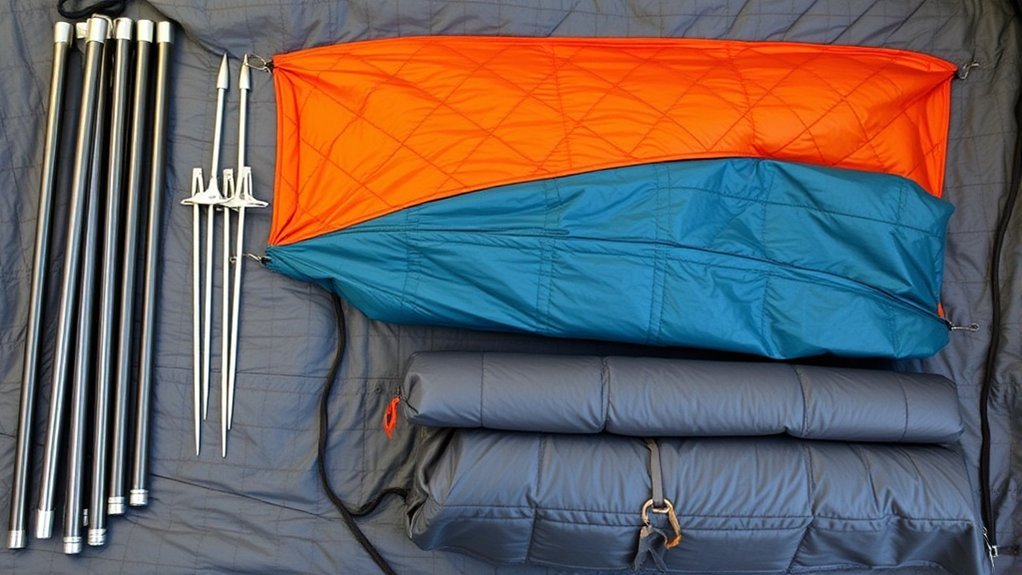
To pack your tent efficiently, start with the poles at one end of the bag. Follow with the stakes, ensuring they’re secured to avoid damage. Next, place the rainfly, folded neatly to maintain compactness. Finally, add the tent body, folded to match the width of the poles. Tuck everything tightly to prevent spillage and maintain order during transport. This method not only protects your gear but also prepares you for quick setups on future trips. There’s more to explore on optimizing your packing process.
Importance of Proper Tent Packing

When you pack your tent properly, you not only protect its fabric but also assure its longevity and functionality for future trips. Effective tent maintenance starts with utilizing the right packing techniques. By folding the tent instead of stuffing it, you prevent damage to the fabric and safeguard the vulnerable mesh areas. This method also reduces the risk of dirt and grime entering tent pole connections, which helps maintain structural integrity.
If you’ve packed your tent while damp, make certain it’s completely dry before storing it to minimize mold and mildew growth. Keeping your tent clean and moisture-free during packing protects your investment, assuring usability over time. A well-packed tent facilitates easier transport and setup, enhancing your overall camping experience. By following these guidelines, you’ll keep your tent in prime condition, ready for your next adventure.
Products Worth Considering
LARGE CAPACITY: 46 x 12.5 x 12.5 Inches, with storage capacity of 30Gal, ideal for travel or storing foldable strollers and sports gear.
Dimensions when full: 52" x 12" x 16" (L*W*H) with extra-large capacity, COOLBEBE travel bag with roomy interior for storing items. Ideal for camping, hunting and sport travel and even fits for umbrella style strollers
Pack your tent in our ALPS Mountaineering Tent Bag and you're ready for you next campout
Initial Preparations and Tent Disassembly
Proper tent packing begins with careful initial preparations and disassembly. Before you take down the tent, check the interior for any loose gear or forgotten items; you don’t want to leave anything behind. Shake the tent to dislodge dirt, debris, and excess water, which is essential for tent maintenance and prevents damage during packing. Next, remove the ground stakes and guidelines, neatly bundling the guidelines to avoid tangling for future use.
Before detaching the rainfly from the tent body, zip up the doors to maintain cleanliness. Use the Velcro straps to keep the rainfly secure. Once disassembled, hang the rainfly and tent components on a dry line to air out. This guarantees all parts are clean and free of debris, setting you up for effective packing. Incorporating these packing tips will make your next camping trip smoother and more enjoyable.
Products Worth Considering
Guy Rope 4mm Reflective Cord Guy Line Tent Guide Rope with Aluminum Adjuster 13 Feet 8 Pack for Tent Tarp Outdoor Packaging
✔️ FAST & EASY TO USE - Our cord tensioners are incredibly quick to set up and use. Easily adjust your tent guylines with one one hand in an instant.
【Upgraded Folding Method, Easier Fold Back】Throw the tent to the ground, and spread the pole then it will open up instantly in 3 seconds. Folding back is easier than tranditional pop up camping tent, fold the easy setup tent like number "8" and repeat TWICE, please refer to the instructional video. Practice a few times, you'll get the method quickly
Folding and Preparing Tent Components
To efficiently pack your tent components, start by folding the tent body so it’s no wider than the tent poles. This guarantees a compact shape, enhancing packing efficiency. Next, fold the rainfly into a rectangular shape, bringing the edges toward the center to match the width of the tent poles. Utilize effective folding techniques, such as folding into thirds or quarters, to keep everything organized and compact.
Once you’ve folded the footprint, rainfly, and tent body, stack them together. This organization makes transporting your gear easier. Make certain all components are dry and clean before folding to prevent mold and maintain hygiene for future use. Finally, introduce the tent poles at one end of the stack, ensuring they don’t disrupt your neatly folded components. Following these steps will streamline your packing process, allowing you to enjoy your adventures with greater freedom.
Products Worth Considering
Pack your tent in our ALPS Mountaineering Tent Bag and you're ready for you next campout
PREMIUM NYLON STRAPS: These buckle straps are made of high quality nylon materials which are more sturdy and wear resistant.
? EASY TO USE - Convenience is everything, that?s why we built our Compression Strap to be as intuitive as possible; When you?re packing or unpacking your expandable shelving system the last thing you want to do is spend time looking for our quick-release buckles; That?s why we designed our extra long straps in bright vivid colors!
Final Packing Steps
As you finalize your packing, start by stacking the folded components in the correct order: the footprint first, followed by the rainfly, and then the tent body. Align these pieces to guarantee compactness and ease of handling. Next, place the tent poles at one end of the stack to maintain organization, setting you up for a neat roll.
Roll the entire bundle tightly but not excessively, making sure the fabric remains compact without straining its material. Once rolled, tuck the tent stakes and any extra guidelines at the bottom of the tent bag to keep them organized and prevent loss.
Finally, cinch the bag tightly, checking for any loose ends or excess fabric. Securely close the bag to prevent spillage during transport. With these final packing steps, you’ll achieve ideal tent organization, making your next adventure seamless.
Products Worth Considering
【Extra Large Size】: 31'' x 18'' x 10'' - 90 Liters or 23 Gallon Volume, Plenty of packing space, These bags are perfect for moving and make a lightweight, economical alternative to moving boxes. Waterproof, great for space saving, moving, traveling, college dorm, camping. Use as storage containers or moving bags to conveniently store clothing, blankets, comforters, sweaters, sheets, towels, pillows and more. 【Please Note】: Thin Material.
SPACE-SAVING DESIGN FOR TRAVEL & HOME: Compact and efficient at 14"L x 10"W x 3"H (each), these packing cubes fit perfectly in suitcases, duffel bags, backpacks, and totes, making them ideal for business trips, vacations, camping, and cruises. You can also use them at home to maximize closet space and keep items organized and easy to find.
Giant Capacity: Measuring 31'' x 18'' x 10'' with a generous 90 liters (23 gallon) capacity, these moving bags offer ample space to pack bulky items with ease. Whether you're relocating, storing seasonal items, or heading off to college, their extra-large size eliminates the need for multiple smaller containers, making packing more efficient and hassle-free
Practice Techniques and Final Thoughts
While you’ve mastered the packing techniques, practicing your tent setup and takedown in familiar surroundings can enhance your skills considerably. Set aside time in your backyard or local park to refine your approach. Here are three key practice techniques:
- Simulate Real Conditions: Set up your tent as if you’re camping, including any gear organization you plan to use.
- Troubleshoot Issues: Identify and resolve problems with your tent or equipment, ensuring smooth tent maintenance.
- Practice Packing Up: Follow your packing order consistently to solidify the process, making it second nature when it’s time to head home.
Regular practice not only boosts your confidence but also transforms your camping experience into something enjoyable and hassle-free. By investing time in these techniques, you’ll be well-prepared for your next adventure, ready to embrace the freedom that comes with organized gear and efficient setup.
Frequently Asked Questions
Can I Pack My Tent When It’s Wet?
You shouldn’t pack your tent when it’s wet, as moisture can lead to mold and mildew. Use drying techniques like air drying or using a towel to guarantee ideal tent care before packing.
What if I Lose a Pole or Stake?
If you lose a pole or stake, don’t panic. Explore pole replacement options like DIY solutions or local outdoor shops. For stakes, use alternatives like rocks or sturdy sticks. You’ve got options to keep camping.
How Do I Clean My Tent Before Packing?
To clean your tent, shake out debris, use a soft brush, and a mild soap solution with water. Rinse thoroughly, let it air dry, and store it properly for effective tent maintenance and longevity.
Are There Specific Bags for Tent Components?
Yes, specific tent component bags exist. Think of them like puzzle pieces; each bag keeps components organized. For effective tent packing, use these bags to simplify setup and prevent damage to your gear.
How Can I Prevent My Tent From Getting Damaged While Packing?
To prevent your tent from getting damaged while packing, use proper packing techniques: clean all components, avoid sharp objects, and store in breathable bags. Follow these tent maintenance tips for longevity and ideal performance.
Conclusion
By following the proper packing order for your tent—poles, stakes, rainfly, and body—you guarantee a more efficient setup and teardown process. Did you know that campers who pack their tents systematically can reduce their setup time by up to 30%? This efficiency not only enhances your outdoor experience but also minimizes stress when conditions change. So, practice these techniques, and you’ll be ready to hit the trail with confidence, knowing your tent is packed correctly.