
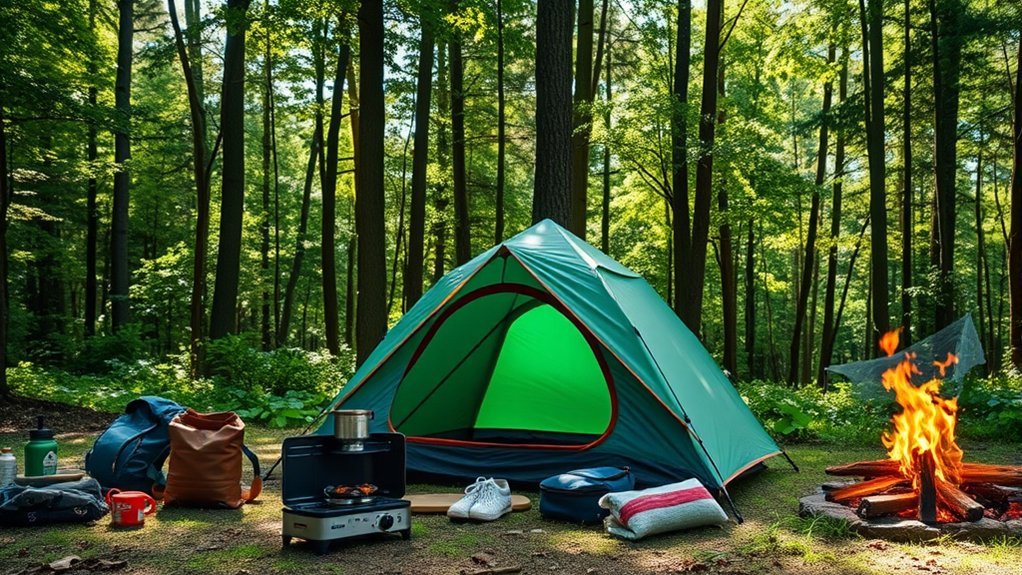
If you’re new to tent camping, you’ll want to pack essential gear like a reliable tent, a temperature-appropriate sleeping bag, and portable cooking equipment. Choose a safe campsite, at least 200 feet from water sources, and be aware of weather conditions. Meal prep ahead of time with non-perishables and familiar recipes. Don’t forget a first aid kit and bear-proof food storage for safety. With these tips, you’re on your way to an unforgettable adventure. There’s so much more to discover!
Essential Gear for Tent Camping
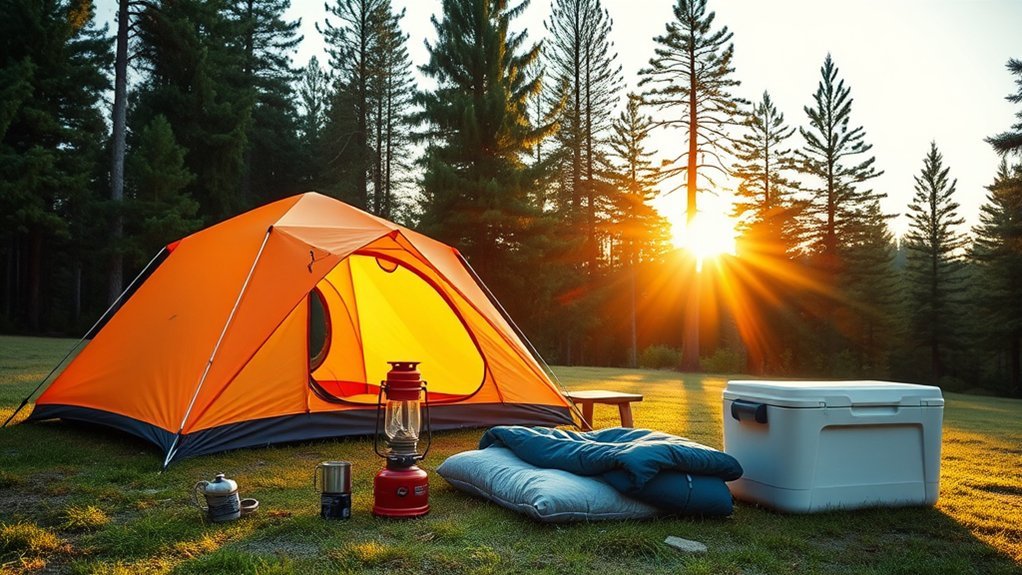
When you head out for your first tent camping adventure, having the right gear is fundamental for a successful experience. Start with tent selection; choose a reliable tent that fits your needs, considering size, weight, and seasonality. A good tent protects you from the elements, guaranteeing comfort and safety. Next, don’t forget a sleeping bag suited to the temperature rating, especially if you’re camping in cooler conditions.
Cooking equipment is essential too—pack portable stoves, utensils, and fire-starting supplies to keep your meals nutritious. A well-stocked first aid kit can save the day, allowing you to handle minor injuries and emergencies. Finally, gear maintenance is imperative; clean and check your equipment regularly to make sure everything’s in top shape. With the right gear, you’ll feel liberated and ready to embrace the great outdoors!
Choosing the Right Campsite
Choosing the right campsite can make all the difference in your camping experience, so it’s crucial to prioritize safety and comfort. Start with campsite selection: look for level ground that’s free of hazards like dead branches overhead. Proximity to a water source is essential for convenience, but set up your tent at least 200 feet away to avoid flooding and unwanted wildlife encounters.
Consider the season and weather conditions, as they can impact your comfort and campsite suitability. Familiarize yourself with campground regulations and amenities, like restroom access and fire restrictions, to enhance your trip. If you’re camping with family, assess accessibility for everyone involved, especially children and older adults. By taking these factors into account, you’ll guarantee a pleasant and memorable camping adventure that allows you to connect with nature and enjoy the freedom of the outdoors.
Meal Planning and Cooking Tips
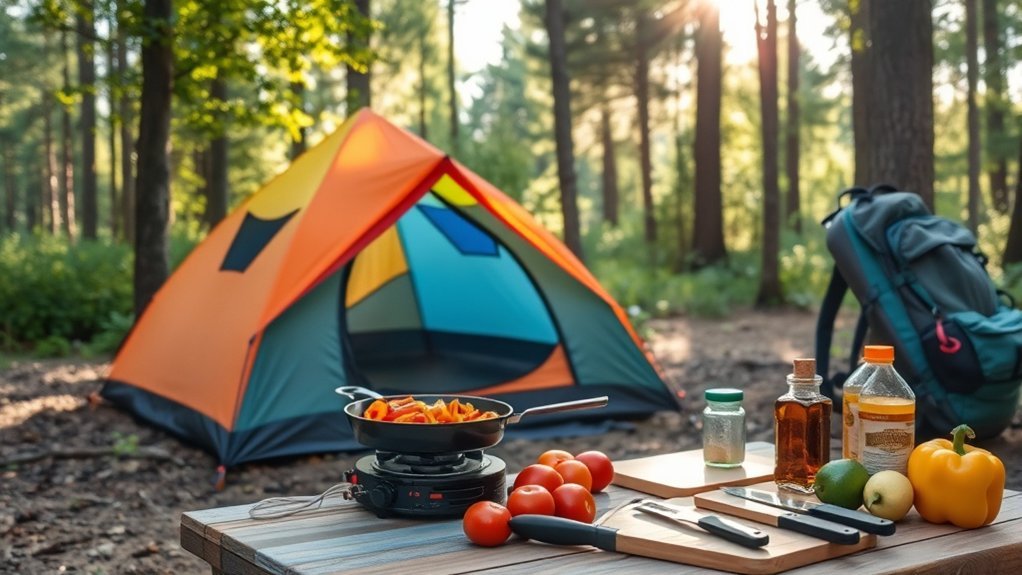
Planning your meals ahead of time can make your camping trip not only easier but also more enjoyable. Start with meal prep by choosing non-perishable food items that will keep well outdoors. Prepare meals in advance and use storage containers to stay organized. Opt for multi-use ingredients to minimize waste and save money.
Don’t forget to pack high-energy snacks like trail mix and granola bars to keep your energy levels up during hikes and outdoor activities. Familiarize yourself with various cooking techniques, such as using portable stoves or cooking over a campfire, to enhance your culinary experience.
Lastly, bring clean-up supplies like biodegradable soap and trash bags to maintain cleanliness at your campsite. By following these tips, you’ll not only enjoy delicious meals but also embrace the spirit of adventure and respect for nature on your camping journey.
Safety Precautions for Beginners
Safety is paramount for a successful camping experience, so it’s essential to familiarize yourself with the regulations and potential hazards of your chosen camping area. Be aware of wildlife encounters; securely store food in bear-proof containers or hang it from trees to prevent attracting animals. Always inform someone about your itinerary and expected return time—this guarantees help is available if you run into trouble.
Weather preparedness is equally crucial. Regularly check forecasts before and during your trip to anticipate changing conditions. Having the right gear can make all the difference. When traversing remote areas, use maps and compasses to avoid getting lost; it’s better to be cautious than to wander aimlessly.
Camping Etiquette and Best Practices
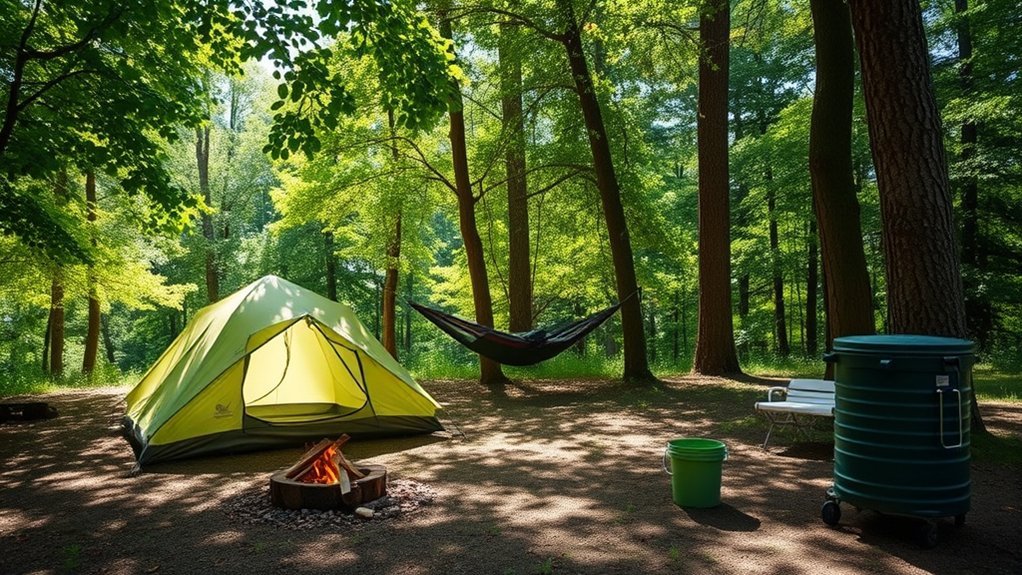
When you head out into the great outdoors, understanding camping etiquette can greatly enhance your experience and that of those around you. By following these best practices, you’ll guarantee a fun and respectful environment:
- Respect Campground Rules: Familiarize yourself with the specific rules of the campground, including fire regulations and pet policies.
- Practice Leave No Trace: Clean your campsite, dispose of waste properly, and minimize your environmental impact to preserve nature for future campers.
- Prioritize Wildlife Safety: Secure food in animal-proof containers to prevent wildlife encounters. This keeps both you and the animals safe.
- Be Considerate: Keep noise levels down, especially during quiet hours, and respect fellow campers’ privacy by avoiding their space.
Frequently Asked Questions
How Do I Choose the Right Tent for My Needs?
To choose the right tent for your needs, consider cozy camping configurations, tent sizes, and durable camping materials. Match your group size and adventure style to guarantee comfort and convenience under the stars.
What Should I Do if It Rains While Camping?
If it rains while camping, put on your rain gear and seek shelter options like your tent or a nearby structure. Stay dry, keep your gear protected, and enjoy the unique atmosphere that rain brings!
Can I Bring My Pet Camping With Me?
You can bring your pet camping, but seek pet-friendly campsites. Pack proper camping gear like leashes and bowls, ensuring a safe, satisfying adventure for both you and your furry friend. Enjoy the outdoors together!
How Do I Stay Warm at Night While Camping?
To stay warm at night while camping, use a high-quality sleeping bag rated for cold weather and wear thermal layers. These essentials keep your body heat trapped, ensuring you enjoy a cozy night under the stars.
What Are the Best Ways to Deal With Insects?
To fend off pesky bugs, use effective insect repellents and natural deterrents like citronella candles or essential oils. You’ll enjoy your outdoor adventures more without those annoying little critters buzzing around your head.
Conclusion
In conclusion, successful tent camping starts with savvy selections and some simple strategies. By gathering the right gear, scouting suitable sites, and planning delicious meals, you’ll make memorable moments in the great outdoors. Don’t forget to prioritize safety and practice proper etiquette to guarantee a pleasant experience for everyone. So pack your passion for adventure, and plunge into the delightful world of camping—you’re sure to create cherished campfire camaraderie and unforgettable tales under the stars!
