
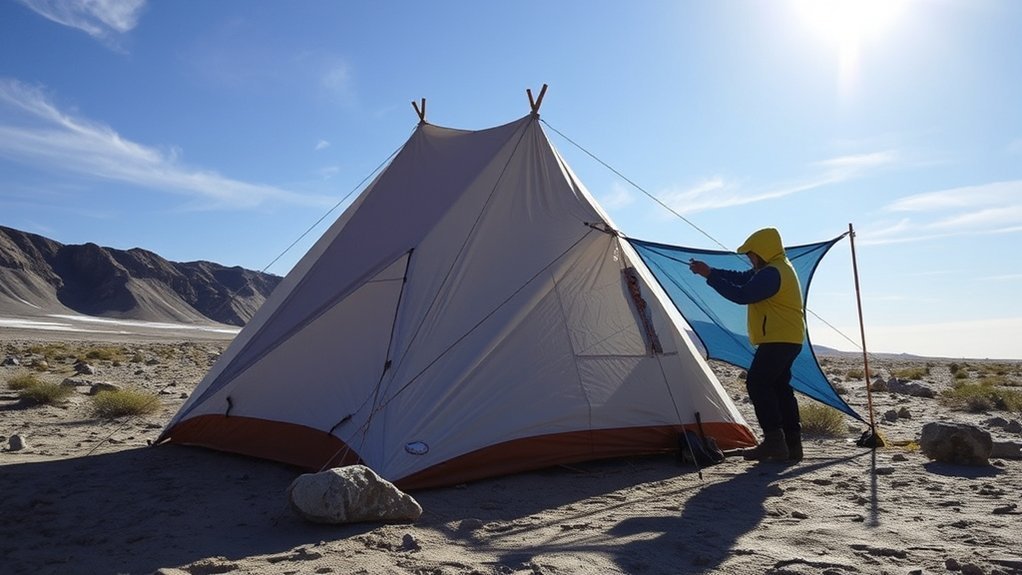
When tent camping in windy conditions, start by checking wind forecasts and position the narrow end of your tent into the wind to reduce noise and improve stability. Secure your tent with heavy-duty stakes at a 45-degree angle and utilize taut guy lines for even stress distribution. Choose a low-profile tent designed for wind resistance, and be sure to monitor changing weather conditions. There’s plenty more to help you camp comfortably in the wind.
Understand Wind Forecasts Before You Go

Before you head out on your camping trip, understanding wind forecasts is essential for ensuring a safe and comfortable experience. Pay close attention to wind speed and gust forecasts, as these can greatly impact your tent’s stability and overall comfort, especially in remote alpine areas. Familiarize yourself with key terms: average wind speed refers to the mean speed over a certain period, while gusts are brief increases in wind speed that can catch you off guard.
Using the Beaufort Scale can help you gauge wind strength and make informed decisions about your campsite. Don’t forget that in Australian conditions, wind chill can alter perceived temperatures, influencing what you pack. Be sure to cross-reference multiple weather apps for the most reliable predictions on wind speed and direction. Taking these steps will empower you to choose the right spot and gear, enhancing your camping liberation.
Choose the Right Tent for Wind Resistance
Understanding wind forecasts is just the first step in preparing for a successful camping trip; the next is choosing the right tent to withstand those conditions. When selecting a tent, focus on key tent features that enhance wind resistance.
- Opt for strong, commercial-grade canopy tents with steel frames for superior stability.
- Choose a low-profile design to minimize wind resistance and prevent it from acting like a sail.
- Look for tents marketed specifically for wind resistance, featuring reinforced seams and extra guylines.
Material selection is essential too. Smaller tents generally perform better in high winds due to their reduced surface area, which makes them less vulnerable to gusts. By prioritizing these elements, you’ll set yourself up for a more enjoyable and secure camping experience, free from the worries of wind-related disruptions.
Products Worth Considering
60 Seconds Set Up: You can set up the instant camping tent in under 60 seconds, thanks to its pre-installed poles and seamless construction. The quick and easy installation makes it the ideal companion for beginner campers, allowing you and your family to enjoy more time with nature
Roomy 6 People Family Tent: Spacious design offers enough room for 6 people family, with a size 10' x 9' x 78"(H) (90 sq ft),2 air mattresses or 6 sleeping bags are well fit in the tent,78 inch center height is enough for you to stand up changing
Quick Setup & Portable Design: The newly upgraded Purebox 2026 dome tents for camping features an ultra-simple setup with flexible cross poles at the top and easy-to-use clips. Its lightweight construction and included carry bag make it easy to transport and store, perfect for camping trips, music festivals, backyard relaxation, and overnight stays
Secure Your Tent Properly With Quality Stakes
To keep your tent grounded during windy conditions, start by choosing heavy-duty stakes made of steel or aluminum. When you insert them, angle them at 45 degrees toward the tent for better stability against gusts. This simple technique can make all the difference in ensuring your shelter remains secure throughout your camping trip.
Products Worth Considering
CAMPING STAKES MATERIAL: Galvanized steel for corrosion resistance;Milled points prod easily into hard soil with PP head for mallet driving
【Camping Tent Accessories Kit】You will get 12 packs of 10in heavy duty tent stakes, 1pc professional tent stakes hammer, 1pc storage pouch. They helps you to set up and dismantle tent easily
Value Pack: You will get 20 Packs of heavy-duty tent stakes; 9.75 inches in length. Diameter: 7 mm
Choose Heavy-Duty Stakes
When it comes to securing your tent in windy conditions, choosing heavy-duty stakes is essential for ensuring a stable setup. Opt for stakes made from heavy-duty materials like steel or durable aluminum for superior holding power. Longer stake lengths, around 10-12 inches, penetrate the ground more effectively, providing better resistance against gusty winds.
Here are a few tips to enhance your tent’s stability:
- Use stakes designed for specific soil types, like spiral or corkscrew stakes for sandy ground.
- Insert stakes at a 45-degree angle towards the tent for maximum grip.
- Always carry extra heavy-duty stakes for quick replacements if needed.
With the right stakes, you can enjoy your camping experience without worrying about your tent blowing away!
Proper Stake Placement Techniques
Securing your tent properly starts with the right stake placement techniques. Insert your stakes at a 45-degree angle toward the tent; this enhances their holding power against wind forces. Opt for heavy-duty stakes or longer tent pegs to guarantee they penetrate deeply into the soil for maximum stability. Begin staking from the windward side to prevent your tent from lifting during setup, allowing the other side to blow freely. For added security against strong winds, weigh down your stakes with heavy rocks or sandbags, making sure they don’t touch the guy lines. Finally, regularly check and tighten those guy lines to maintain tension, distributing wind stress evenly across your tent structure. Happy camping!
Utilize Guy Lines Effectively for Stability
To keep your tent stable in windy conditions, taut guylines are essential. Make certain to place them ideally and use reinforcement techniques like extra stakes on the windward side for added security. Regularly check your guylines to guarantee they’re tight and ready to handle strong gusts.
Products Worth Considering
Guy Rope 4mm Reflective Cord Guy Line Tent Guide Rope with Aluminum Adjuster 13 Feet 8 Pack for Tent Tarp Outdoor Packaging
🍀 MATERIAL: The inner core is made of high quality nylon, which is very durable, the surface is made of polyester, not easy to break, tear resistant. It won't easily deformed even in bad weather conditions
Surreal poetry exploring human identity and isolation
Importance of Taut Guylines
Taut guylines play an essential role in ensuring your tent stands firm against the wind, as they distribute wind stress evenly across the structure. By using non-stretch guyline materials, you maintain consistent tension, preventing sagging and ensuring your tent’s structural integrity. Remember, proper tension maintenance is important for stability, especially in gusty conditions.
- Anchor guylines at a 45-degree angle toward the tent to maximize holding strength.
- Regularly check and adjust guylines during windy weather to keep them taut.
- Enhance stability by incorporating additional stakes or double pegging techniques.
With these tips, you’ll enjoy a more secure and peaceful camping experience, liberated from the worry of strong winds jeopardizing your shelter.
Optimal Guyline Placement
When strong winds threaten your camping experience, placing guylines suitably becomes essential for maintaining stability. Start by positioning your guylines at a 45-degree angle; this distributes stress evenly, enhancing your tent’s resilience. Use ideal guyline materials, like non-stretch, durable fabrics, to maintain tension and prevent flapping that can wear down your tent. Secure your guylines to multiple stakes, preferably with two stakes at each end to reinforce stability against gusts. Regularly check and tighten your guylines to guarantee they remain taut, especially before adverse weather conditions. If you encounter hard ground, incorporate line extensions to anchor effectively, reducing the risk of your tent lifting. With these guyline tension techniques, you’ll enjoy a more secure and peaceful camping experience.
Reinforcement Techniques for Stability
Proper guyline placement sets the foundation for a stable tent, but reinforcement techniques take your setup to the next level. To guarantee your tent stands strong against fierce winds, consider these essential tent reinforcements:
- Angle guylines at 45 degrees for ideal stability.
- Use non-stretch guylines made from high-quality materials to distribute stress evenly.
- Add extra stakes and double peg for enhanced support.
Regularly check and tighten your guylines to prevent slack, which can lead to flapping and damage. Additionally, reinforcing apex guy points before storms acts as vital wind barriers, maintaining your tent’s integrity. With these practical tips, you can camp confidently, embracing the freedom of the outdoors without worrying about the elements.
Position Your Tent Wisely Against the Wind
To guarantee your tent stands strong against the wind, position the narrowest end into the gusts. This minimizes your tent’s profile, reducing the risk of it acting like a sail. For ideal tent orientation, choose a campsite that offers natural windbreaks like trees or large boulders. Set up downwind from these features to enhance your protection.
Make certain to orient the tent door away from the wind direction; this prevents gusts from catching it, making access easier. When selecting your campsite, consider the terrain; low-lying areas can provide shelter but make sure they aren’t prone to flooding.
Stay vigilant and regularly assess changing wind conditions during your stay. Be ready to adjust your tent’s orientation as needed for stability. With these strategies, you’ll enjoy a more peaceful camping experience, liberated from wind-related disruptions.
Reinforce Your Tent With Extra Weight
As you prepare for windy camping conditions, reinforcing your tent with extra weight can make a significant difference in its stability. By strategically adding weight, you’ll lower the center of gravity, improving resistance against those gusty winds. Here are some effective ways to do it:
- Weigh down corners with heavy rocks or sandbags to reduce flapping noise.
- Distribute your interior gear evenly across the tent floor to maintain tension and prevent uplift.
- Use heavy-duty stakes and ratchet straps to fortify your tent’s anchoring system.
Incorporating small, heavy objects around the base creates a barrier against wind movement, enhancing overall stability. Remember, effective weight distribution is key to keeping your tent grounded and your camping experience enjoyable. Embrace the outdoors with confidence, knowing you’ve set up your shelter for success!
Prepare for Quick Setup in Windy Conditions
To tackle windy conditions, you need to organize your gear for a quick setup. Keep your stakes and guylines easily accessible, and master efficient pole assembly techniques to minimize delays. With a solid quick stake placement strategy, you’ll have your tent up and secure in no time, even when the wind picks up.
Products Worth Considering
LARGE CAPACITY: INFANZIA large-capacity duffle bag is one of the essential items for your travel. It can be used to store tents, clothing, sports equipment or foldable strollers. INFANZIA travel bags are available in 45*12*13 Inch/115*31*31 CM size to meet your travel needs
【Complete Camping Kit】Comes with 8 stakes, 4 guylines, 1 puller, and 1 storage bag—a compact, all-in-one solution for your tent setup.
1. Puncture-Proof & Ultra-Durable Fabric Stop ruined bags and lost stakes! Crafted from a rugged 600D polyester-oxford & cation fiber blend, our stake bag resists sharp edges and tearing. It’s built to safely carry 8-16 sharp stakes for years, protecting your other gear from punctures. No more ripped bags or misplaced stakes!
Gear Organization Pre-Setup
When the wind picks up, having your gear organized can make all the difference in a smooth tent setup. Focus on tent organization to maximize setup efficiency. Keep essential items like tent poles, stakes, and guylines in a designated bag for quick access. Store stakes and guylines in a pocket or small pouch to keep them from blowing away. Assemble tent poles beforehand and adjust trekking poles to the right height, streamlining your process. Use sleeping bags, pads, and backpacks to anchor the tent while staking it out, providing crucial stability. Finally, lay out the groundsheet under the tent after pitching to prevent it from becoming a wind sail.
- Designate a gear bag
- Use pouches for stakes
- Pre-assemble tent poles
Efficient Pole Assembly Techniques
Organizing your gear sets the stage for efficient tent setup, but mastering pole assembly techniques is just as important, especially in windy conditions. First, consider pre-snap assembly; putting your pole sections together before you hit the campsite saves precious time when the wind starts howling. Use pole color coding to easily identify and match sections, which speeds up the process. If you’re dealing with gusty winds, opt for lightweight poles designed for quick setup—they’re easier to manage. Finally, practice at home to boost your speed and confidence. This way, you’ll be ready to pitch your tent swiftly and effectively, transforming your outdoor experience into a liberating adventure, no matter the weather!
Quick Stake Placement Strategy
As you prepare to set up your tent in windy conditions, having a quick stake placement strategy can make all the difference. Start by pre-placing your stakes at the corners and sides to streamline the setup once the tent’s unpacked. Focus on stake orientation by positioning them at a 45-degree angle toward the tent, which enhances stability. Always anchor the windward side first to minimize the risk of your tent blowing away. Keep your stakes and guy lines handy in your pockets or attached to your gear for quick access.
- Practice your setup at home for efficiency.
- Use long, sturdy stakes and weighted rocks.
- Confirm stakes face into the wind direction for maximum strength.
Protect Your Cooking Area From Wind
To keep your cooking area safe and efficient during windy conditions, strategically positioning your setup behind natural windbreaks like trees or boulders is crucial. This shields your cooking space from direct gusts, maintaining a stable environment. Additionally, consider using a windscreen around your stove. It enhances flame efficiency and reduces cooking times. Make certain your windscreen and cooking setup are anchored securely, using heavy windbreak materials like rocks to prevent tipping or being blown away.
Here’s a quick reference table to help you choose effective windbreak options:
| Windbreak Material | Benefits |
|---|---|
| Trees | Natural protection |
| Rocks | Heavy, stable anchoring |
| Boulders | Solid barrier against winds |
| Tarps | Portable, adjustable shield |
Products Worth Considering
【Tall and Large】- The unfolded size of the stove's windscreen is 32.3" x 9.5", which is windproof and large enough to be used for both gas knapsack stoves and wood-burning stoves
Large Size: Ohuhu Camp Stove Windscreen is enough to provide wind protection and big enough for both gas backpacking stoves as well as wood burning stoves.
【Tall and Large】- The unfolded size of the stove's windscreen is 53" × 9.5", which is windproof and large enough to be used for both gas knapsack stoves and wood-burning stoves.
Monitor Weather Changes and Adjust Accordingly
Keeping an eye on weather changes is essential for ensuring your camping experience remains safe and enjoyable. Regularly check weather apps or local forecasts for real-time updates on wind patterns. If you notice wind speeds climbing above 25 mph, it’s time to reinforce your tent setup to avoid damage.
- Use a portable weather station for precise monitoring in remote areas.
- Be prepared for sudden gusts that can pop up unexpectedly.
- Adjust your tent setup promptly by securing stakes and reinforcing guylines as needed.
Maintain Your Gear for Longevity and Safety
Maintaining your gear is essential for ensuring a safe and enjoyable camping experience, especially in windy conditions. Regular tent maintenance can extend your gear’s longevity and keep you comfortable during your adventures. Here’s a quick checklist to help:
| Task | Frequency |
|---|---|
| Inspect poles and stakes | Before each trip |
| Clean after use | Every outing |
| Apply seam sealers | Before major trips |
| Replace frayed guylines | As needed |
| Pack a repair kit | Always in your gear |
Store your tent in a dry, cool place to avoid mold and degradation. A repair kit with patches and duct tape is invaluable for addressing damages on the go. Remember, keeping your guylines taut and in good condition greatly enhances tent stability against gusty winds, ensuring you can enjoy the great outdoors with peace of mind.
Frequently Asked Questions
What Materials Are Best for Tent Stakes in Windy Conditions?
For windy conditions, you’ll want aluminum stakes for their durability and strength. Plastic stakes might bend or break under pressure, so stick with aluminum to keep your tent secure and stable during those blustery nights.
How Can I Reduce Noise Inside My Tent During Strong Winds?
To reduce noise inside your tent during strong winds, you can use noise dampening materials like foam pads or blankets for sound insulation. This’ll help create a more peaceful camping experience while you enjoy the outdoors.
Are There Specific Tents Designed for Extreme Wind Resistance?
Yes, wind resistant tents with aerodynamic designs are available. These tents feature low profiles and sturdy materials, allowing you to confidently embrace the outdoors, even in strong winds, ensuring your comfort and safety during your adventures.
What Are the Best Weights to Use for Tent Stabilization?
For tent stabilization, use sandbags or filled water jugs as weights. They effectively keep your tent grounded against wind, providing you peace of mind while enjoying the great outdoors. Stay secure and liberated on your adventures!
How Do I Ensure My Rainfly Fits Snugly on My Tent?
To guarantee your rainfly fits snugly, make quick rainfly adjustments. Check tension on all corners and secure straps properly. A tight fit keeps out moisture and enhances your tent’s overall stability, assuring a worry-free camping experience.
Conclusion
By following these tent camping hacks, you can turn the wild winds into your ally rather than your enemy. Just like a sturdy tree bends but doesn’t break, your well-prepared campsite will stand strong against the gusts. Stay aware of the forecasts, choose the right gear, and secure your tent properly. With a little effort, you can enjoy the great outdoors without the racket of the wind stealing your peace. Happy camping!