
Last Updated on July 29, 2026 by Mason Reed
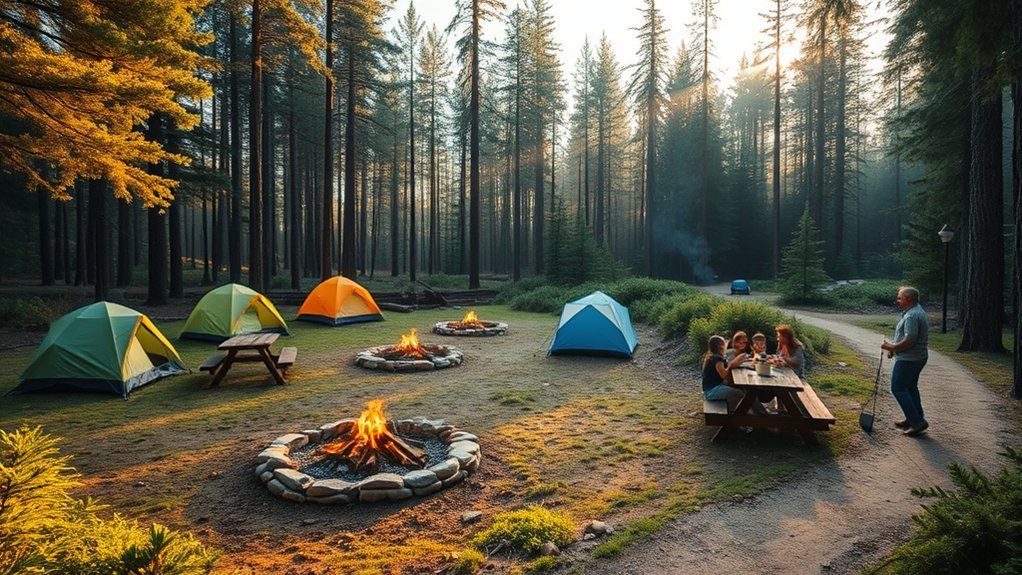
Good campground etiquette starts with one simple idea: enjoy your trip without taking away from anyone else’s. Stay inside your assigned campsite, use campground roads and paths, keep noise and lights under control, clean up food and waste, manage pets, and follow every posted rule. Small acts of courtesy make a crowded campground safer, quieter, and more enjoyable.
Quick Answer
The main rules of campground etiquette are to stay within your assigned site, respect quiet hours, control pets and children, store food safely, use shared facilities properly, and leave the site clean. Check local rules before arrival because fire, generator, leash, lighting, parking, and checkout requirements vary by campground.
Key Takeaways
- Read the campground’s rules, alerts, quiet hours, fire restrictions, and checkout time before setting up.
- Keep tents, stakes, guy lines, chairs, vehicles, pets, and activities inside your assigned campsite.
- Lower voices, music, lights, engines, and generators before quiet hours begin.
- Secure food, trash, toiletries, pet food, and other scented items so wildlife cannot reach them.
- Use fires only when permitted, attend them at all times, and extinguish them until every coal is cold.
- Leave on time and make the campsite cleaner than you found it.
Note: Posted campground rules always take priority over general etiquette advice. Check your reservation, entrance board, permit, website, and instructions from the campground host.
Disclosure: As an Amazon Associate I earn from qualifying purchases. Some links on this page are affiliate links, at no extra cost to you.
Importance of Camping Etiquette
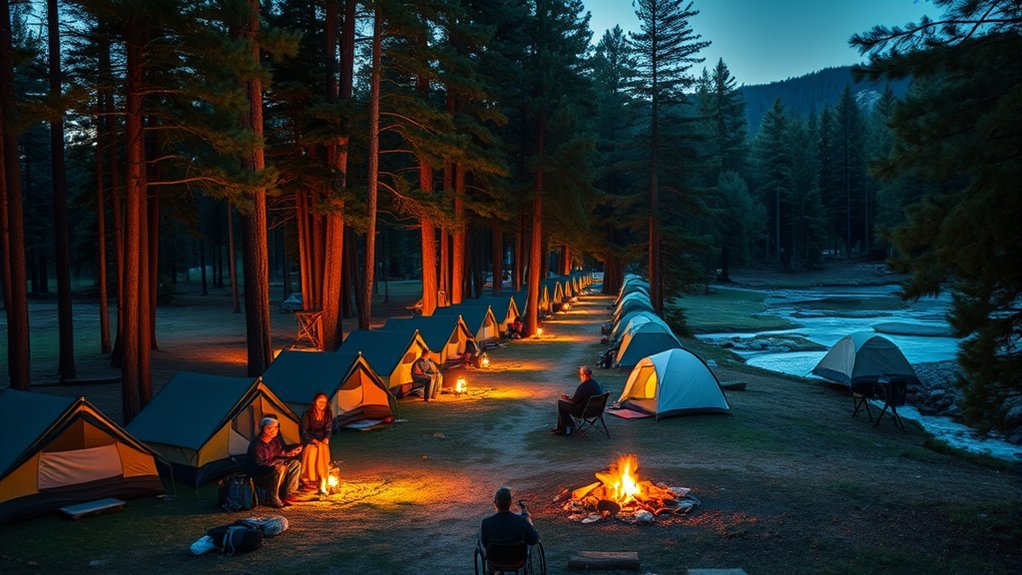
Camping etiquette includes both written rules and everyday courtesy. Written rules may cover fires, pets, generators, vehicles, occupancy, food storage, and quiet hours. Unwritten rules include avoiding shortcuts through another campsite, pointing lights away from nearby tents, and asking before entering someone else’s space.
Camping remains highly popular. An industry survey from The Dyrt estimated that 81.1 million Americans went camping in 2024. The pandemic-era increase also introduced many people to camping for the first time. Clear etiquette helps new and experienced campers share busy campgrounds without unnecessary conflict.
Good campground etiquette protects three things at once: your neighbors’ comfort, the safety of wildlife, and the condition of the campsite.
Check the Campground Rules Before Arrival
Every campground operates differently. Before leaving home, review the property’s reservation page or official website. Check for:
- Check-in and checkout times
- Quiet hours
- Maximum numbers of people, tents, and vehicles
- Pet restrictions and leash-length rules
- Generator hours or generator-free loops
- Current fire restrictions
- Food-storage requirements
- Rules for hammocks, clotheslines, string lights, and equipment attached to trees
- Parking and extra-vehicle fees
- Rules for dishwater, trash, recycling, and gray water
Rules can change because of fire danger, wildlife activity, severe weather, water shortages, or seasonal staffing. Check again when you arrive and read the entrance board before setting up.
Pro Tip: Save a screenshot of the campground map and rules before the trip. Cell service may be weak or unavailable after you arrive.
Respecting Campsite Boundaries
Each campsite is rented for the use of its registered campers. Respecting that boundary gives everyone privacy and prevents arguments, damaged equipment, and tripping hazards.
- Keep your tent, stakes, guy lines, chairs, cooking gear, and recreation equipment inside your site.
- Park only on your assigned parking pad or in approved overflow parking.
- Do not place equipment on plants or expand into an empty neighboring site.
- Use campground roads and designated paths instead of cutting through occupied sites.
- Ask permission before entering another campsite, even when you know the campers.
- Teach children not to run, bike, or play through neighboring sites.
- Keep pets and long leads from crossing into another site or wrapping around shared objects.
The National Park Service specifically advises campers not to enter or pass through an occupied campsite without permission. It also recommends keeping every part of your setup from encroaching on a neighbor’s space. See the National Park Service campground-etiquette guidance.
Arriving Late or Leaving Early
If you arrive after dark, prepare as much as possible before entering the campground. Know your site number, dim interior vehicle lights, close doors gently, and use a small downward-facing light. Avoid shouting directions across the site or repeatedly locking a vehicle with a loud horn confirmation.
For an early departure, pack loose equipment the night before. Keep voices low, avoid idling the vehicle, and wait until an allowed hour before using a generator, air compressor, or other loud equipment.
Maintaining Cleanliness and Waste Management
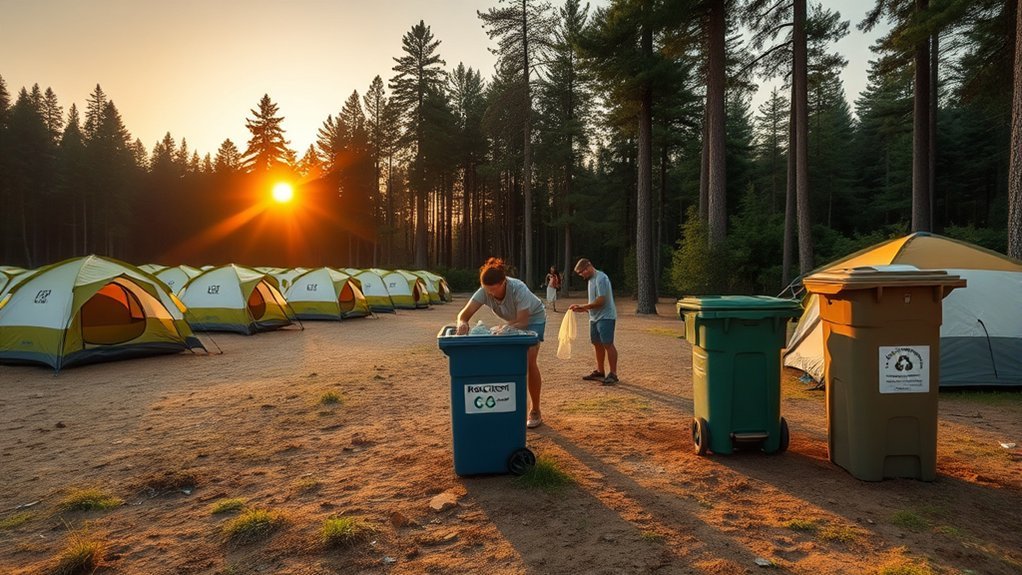
A clean campsite is more comfortable for people and less attractive to insects and wildlife. Collect food scraps, wrappers, bottle caps, twist ties, pet waste, and small pieces of litter throughout the day rather than waiting until checkout.
- Use campground trash and recycling bins as directed.
- Pack out all waste when no collection service is provided.
- Never leave garbage beside a full or locked dumpster.
- Do not bury food scraps or scatter them in the woods.
- Do not burn plastic, foil, glass, cans, food, or other trash.
- Keep picnic tables, grills, fire rings, and tent pads free of spilled food.
- Pick up pet waste promptly and place the sealed bag in an approved trash bin.
Follow the seven Leave No Trace principles, including packing out trash and minimizing damage to the site.
Wash Dishes Without Polluting Water
Use a designated dishwashing sink when the campground provides one. Do not wash dishes in a bathroom hand basin, drinking-water spigot, shower, lake, or stream unless the facility specifically permits it.
When there is no dishwashing station, first follow the campground’s gray-water rules. Where local rules allow Leave No Trace disposal, scrape food into the trash, use a small amount of soap, strain the wastewater, and dispose of it at least 200 feet from lakes and streams. Leave No Trace provides additional frontcountry dishwashing guidance.
Respect Shared Facilities
Restrooms, showers, water taps, and cleaning stations serve the whole campground. Keep visits efficient when others are waiting, supervise young children, and remove personal items when you leave.
- Do not leave soap, hair, food, diapers, wipes, or trash behind.
- Do not use a drinking-water spigot to wash feet, cookware, pets, or muddy equipment.
- Do not hold a water tap open longer than necessary.
- Report an overflowing toilet, broken fixture, or water leak to the host.
- Follow posted rules for shower time, tokens, potable water, and wastewater.
Store Food Safely and Protect Wildlife
Food storage is part of campground etiquette because one careless site can attract animals to the entire loop. Store food according to the campground’s instructions whenever you are sleeping or away from the site.
Items that may need secure storage include:
- Food and drinks
- Coolers and food containers
- Trash and recycling
- Cookware and utensils with food residue
- Pet food, treats, and bowls
- Toothpaste, cosmetics, sunscreen, and other scented products
Some campgrounds require a provided wildlife-resistant locker. Others allow storage in a locked, hard-sided vehicle. A tent is not secure food storage. Follow the exact local rule rather than assuming one method works everywhere.
Warning: Never feed wildlife or leave food outside for an animal. Feeding can make animals aggressive, damage their health, and create danger for future campers. Notify campground staff if an animal repeatedly enters occupied sites.
Control Noise During Quiet Hours
Many campgrounds post quiet hours around 10 p.m. to 6 a.m., but the actual schedule varies. Some begin earlier or end later. Read the posted hours and remember that courtesy still applies during the day.
Respect Established Quiet Hours
During quiet hours:
- Keep conversations low and close to your own site.
- Turn off amplified music.
- Do not shout between tents or campsites.
- Close vehicle doors and storage compartments gently.
- Keep pets from barking for long periods.
- Do not split wood, hammer stakes, or pack hard-sided gear.
- Follow all generator restrictions.
- Prepare food, pack equipment, and move around quietly.
Sound travels farther on still nights. A conversation that seems quiet beside a fire may be easy to hear several sites away.
Minimize Noise Throughout the Day
Quiet-hour rules are a minimum standard, not permission to be disruptive at other times. Keep music at a level that cannot be clearly heard from nearby sites. Avoid unnecessary engine idling, repeated car-alarm chirps, loud games near occupied tents, and extended generator use.
If the site layout allows, place the sleeping area away from the campground road. Soft pads under chair legs can reduce scraping on hard surfaces, but do not move tents or furniture beyond the assigned site to create more distance.
Use Lights and Generators Considerately
Bright light can shine through tent walls and reduce other campers’ view of the night sky. Use the lowest light level that safely meets your needs.
- Point lanterns and flashlights down.
- Shield lights so they do not shine into neighboring tents.
- Turn off decorative lights before sleeping.
- Do not attach lights to trees or campground structures unless the rules allow it.
- Use a red or low-output light for late-night trips to the restroom.
- Avoid aiming vehicle headlights into occupied campsites.
Run a generator only where and when it is permitted. Keep it within your site, operate it according to the manufacturer’s safety instructions, and never place it where exhaust can enter a tent, vehicle, or neighboring campsite.
Practice Responsible Campfire Safety
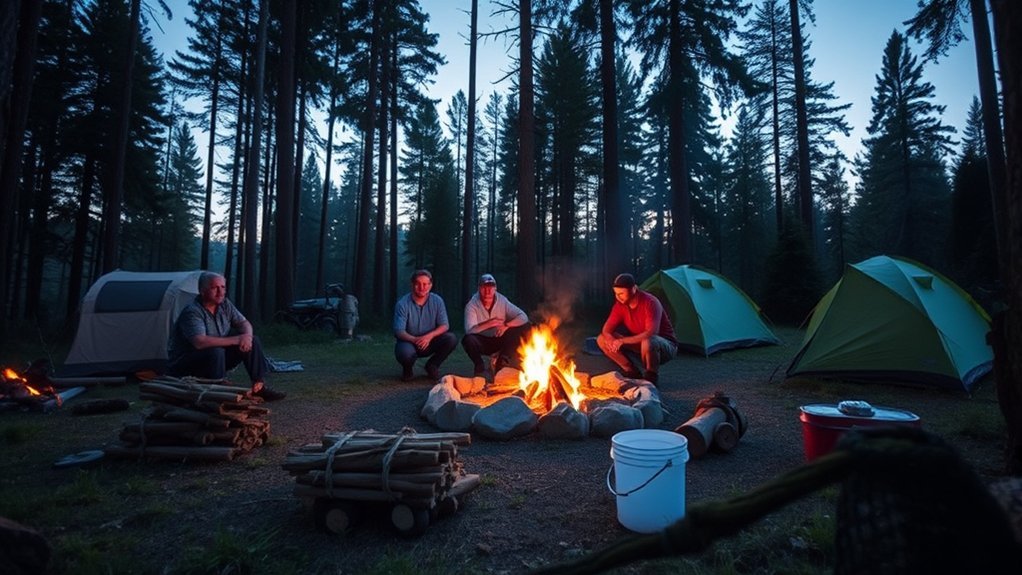
A fire ring does not automatically mean fires are allowed. Check current restrictions before lighting a campfire, charcoal grill, candle, or other open flame. Rules may change quickly during dry or windy weather.
Warning: Never leave a campfire unattended, even for a short trip to the restroom. Keep water nearby, supervise children, and extinguish the fire completely before sleeping or leaving.
- Use only a supplied fire ring, grate, or other approved location.
- Do not build a new fire ring or enlarge an existing one.
- Keep the fire small and manageable.
- Keep chairs, tents, fuel, firewood, and other flammable items a safe distance away.
- Do not burn garbage, food, plastic, foil, glass, batteries, or aerosol cans.
- Control smoke and sparks, especially when the wind blows toward neighboring sites.
- Follow rules for charcoal and ash disposal.
Extinguish a Campfire Completely
Allow the wood to burn down when possible. Pour water over the fire, stir the wet coals and ashes, and add more water. Repeat until there is no hissing, glowing material, or heat. The National Park Service advises campers to continue until all material is cold to the touch. Do not rely on dirt alone, because buried coals may continue to smolder. Review the National Park Service campfire guidance.
Use Local or Approved Firewood
Moving untreated firewood can spread insects and tree diseases. Buy wood near the campground, use certified heat-treated wood when required, or collect wood only where the rules clearly permit it. The USDA recommends that campers buy firewood near where it will be burned.
Do not take leftover local firewood to another region. Ask the campground host whether you should burn it, leave it in an approved location, transfer it directly to another registered camper, or dispose of it another way.
Manage Pets and Respect Other Campers
Pets can enjoy camping, but their owners remain responsible for their safety, noise, movement, and waste. Check whether the campground allows pets and whether trails, beaches, buildings, or other nearby areas have separate restrictions.
Leash and Control Pets
- Keep pets restrained according to the campground’s leash rule.
- Do not allow a leash, tether, or pet to cross into another campsite or path.
- Prevent chasing, lunging, repeated barking, or unwanted contact with people and animals.
- Do not assume another camper wants to greet your pet.
- Ask before introducing a pet to a person, child, or another animal.
- Keep pets away from wildlife and restricted habitat.
- Never leave a pet unattended when campground rules prohibit it.
- Never leave an animal in a vehicle when the temperature could create a health risk.
Many National Park Service properties use a six-foot leash limit, but campers should check the exact rule for their destination. See the NPS guide to camping with pets.
Clean Up Pet Waste
Carry enough waste bags for the full trip and pick up waste immediately. Seal the bag and use an approved trash container. Do not leave filled bags beside a path, fire ring, tree, restroom, or campsite marker.
Keep pets from relieving themselves near neighboring tents, cooking areas, water sources, playgrounds, or communal facilities. Clean any accident at your own site as thoroughly as campground rules allow.
Respect Campers Who Need Distance
Some people have allergies, fears, service animals, reactive pets, or young children. Keep your pet close and allow others to decide whether they want an interaction. A friendly pet should still remain under control.
Supervise Children and Groups
Children should be free to explore within safe limits, but adults must teach them how shared campgrounds work. Explain site boundaries, road safety, quiet hours, wildlife rules, and respect for other people’s equipment.
- Keep games inside your site or in a designated recreation area.
- Do not allow bikes, scooters, or balls to enter occupied campsites.
- Supervise children near fires, roads, water, restrooms, and wildlife.
- Keep group conversations and activities within the reserved group site.
- Follow the campground’s occupancy and visitor limits.
- Do not move tables or other campground property without permission.
Share Resources Without Invading Privacy
Friendly conversations, shared meals, and small acts of help can make a campground welcoming. You might offer a spare match, help a neighbor position a tent, or share an approved local bundle of firewood. However, community spirit should never become pressure or intrusion.
- Ask before entering another site or joining a campfire gathering.
- Ask before lending food to children or giving treats to pets.
- Return borrowed items promptly and in good condition.
- Do not use another site’s table, fire ring, water connection, electricity, or parking space without permission.
- Respect a polite refusal without asking again.
- Keep shared restrooms, sinks, showers, and gathering areas ready for the next person.
A wave or brief greeting is often enough. Some campers enjoy meeting neighbors, while others choose camping for quiet and privacy.
Handle Problems Calmly
For a minor issue, such as music that is slightly too loud, a calm and respectful request may solve the problem. Speak to an adult at the site, describe the specific issue, and avoid insults or threats.
If the problem continues, violates a posted rule, or involves fire, aggressive behavior, unsafe driving, wildlife harassment, or a threatening person, contact the campground host, ranger, security staff, or emergency services as appropriate. Do not enter another site or continue a confrontation when you feel unsafe.
Leave the Campsite Ready for the Next Camper
Begin packing early enough to meet the posted checkout time. Before leaving:
- Remove all tents, stakes, cords, decorations, and personal equipment.
- Pick up small litter, including scraps that were present when you arrived.
- Dispose of trash, recycling, pet waste, and wastewater correctly.
- Clean the picnic table and cooking area.
- Return moved campground property to its proper place.
- Make sure the fire is completely cold.
- Check under the table, around the tent pad, and inside the fire ring for belongings.
- Report damaged equipment, hazards, or overflowing facilities to staff.
Do not remain on an unoccupied site after checkout unless campground staff has approved an extension. The next camper needs time and space to arrive.
Frequently Asked Questions
Can I set up my tent anywhere in the campground?
No. Set up only in your assigned or officially designated site. Keep the tent, stakes, and guy lines inside the site boundary or tent pad, and do not place equipment on vegetation or in another camper’s space.
What should I do if my campground neighbor is too noisy?
For a minor problem, politely ask an adult at the site to lower the volume. If the noise continues, occurs during quiet hours, or you do not feel safe approaching, contact the campground host or ranger rather than escalating the argument.
Are campfires allowed only in designated fire rings?
Use only an approved ring or grate, but first confirm that fires are currently permitted. Temporary fire restrictions may prohibit campfires even when a site has a permanent ring.
Is it okay to let my dog off-leash at a campground?
Only when the campground explicitly allows it in that location. Otherwise, keep the dog restrained according to the posted leash rule. Off-leash permission at a nearby dog area does not necessarily apply inside the campground.
How do I handle a disagreement with fellow campers?
Stay calm, describe the specific problem, and listen to the response. Look for a simple solution that follows campground rules. Contact staff when the disagreement continues, involves a safety risk, or feels threatening.
Can I wash dishes in a campground bathroom sink?
Usually not unless the sink is clearly marked for dishwashing. Use a provided dish station. When none exists, follow the campground’s gray-water rules and keep wastewater away from natural water sources.
What should I do with leftover firewood?
Do not transport untreated firewood to another area. Ask the campground host whether it may be burned, left in an approved location, transferred to another camper, or disposed of according to local rules.
Do quiet-hour rules apply to generators and pets?
They often do. Campgrounds may enforce separate generator hours, and owners are responsible for unreasonable pet noise. Follow the posted rule even when it is stricter than the campground’s general quiet-hour schedule.
Conclusion
Good campground etiquette does not require constant conversation or formal rules for every situation. It means noticing how your choices affect the people, wildlife, and land around you. Stay inside your site, keep noise and light reasonable, secure food, manage pets, use fire safely, and clean up before checkout.
Friendly conversations and shared meals can become favorite camping memories, but privacy matters too. When every camper follows posted rules and gives neighbors room to enjoy their stay, the campground becomes safer, calmer, and more welcoming for everyone.
Sources
- National Park Service: Camp Etiquette — quiet hours, lighting, personal space, and campsite cleanliness
- National Park Service: Camping With Pets — leashes, pet waste, restricted areas, and unattended pets
- Leave No Trace: Seven Principles — waste disposal, durable surfaces, wildlife, and campfire impact
- Leave No Trace: Frontcountry Dishwashing — food-scrap removal and wastewater disposal
- National Park Service: Campfire and Smoke Safety — attended fires and complete extinguishing
- USDA: Firewood Choices Matter — buying local or certified firewood to limit the spread of invasive pests
