
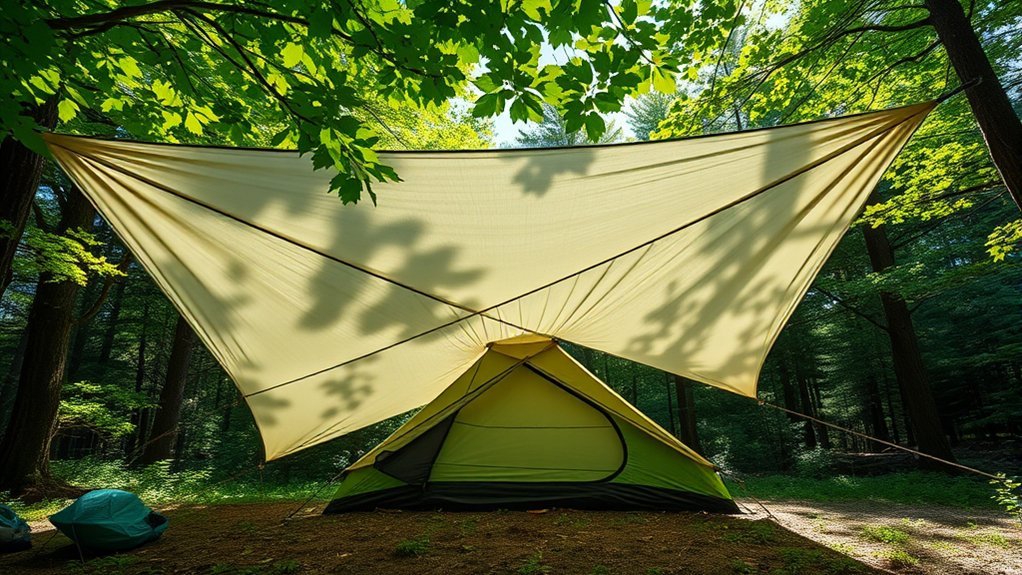
Setting up a tarp over your tent is a smart way to protect against rain and sun. First, choose a flat, dry site with enough distance between trees for a taut installation. Use a sturdy, weather-resistant tarp and durable rope. Master essential knots to secure the tarp tightly, ensuring full coverage over the tent. Make final adjustments to eliminate sagging, and double-check all connections. With these tips, you’ll optimize your camping experience and create a comfortable outdoor space.
Importance of Tarp Installation

When you’re camping, installing a tarp over your tent is essential for maximizing comfort and protection. A well-placed tarp shields you from harsh weather conditions like rain and intense sunlight, guaranteeing a more enjoyable experience. It also prevents water from pooling on your tent, reducing leaks and extending the life of your gear.
The shade from a tarp helps regulate the temperature inside your tent, keeping it cooler during hot days. Additionally, it creates outdoor living space for cooking or relaxing, all while staying protected from the elements.
When considering tarp maintenance tips, check for any tears or wear before your trip, and make sure your tarp is properly secured to withstand wind and rain. Always keep weather considerations in mind to adapt your setup, assuring a drier, more comfortable camping environment. With these strategies, you’ll enhance your outdoor adventure and stay liberated from the unpredictability of nature.
Choosing the Right Location
After securing your tarp, the next step is choosing the right location for your tent and tarp setup. Start with a thorough ground assessment—look for flat, dry ground that’s clear of debris and potential hazards. This guarantees ideal safety and comfort.
Distance considerations are key; pick a spot with enough space between trees to allow for a taut tarp installation. This prevents sagging and enhances stability. Also, search for a natural slope to direct rainwater away from your tent, avoiding unwanted pooling beneath the tarp.
Don’t forget about wind protection—select a site shielded by trees or natural barriers to minimize exposure. Finally, verify your chosen area receives adequate sunlight for warmth during the day while still offering shade when you need it. This balance enhances your overall camping experience, giving you the freedom to enjoy the great outdoors.
Essential Materials for Setup
When setting up a tarp over your tent, you’ll need a few essential materials to guarantee a successful installation. Start by selecting a water-resistant tarp that’s large enough to cover your tent, then choose durable rope, ideally nylon or paracord, to secure it in place. Don’t forget a hammer for stakes and a multi-tool for any adjustments along the way.
Products Worth Considering
STAY DRY IN THE RAIN: Unigear tent tarp is made of super strong 210D rip-stop Oxford fabric, PU 3000mm waterproof. It offers an excellent protection against rain, sudden downpours, snow and high winds. Open size is 300x300cm/10x10ft
LARGE CAPACITY: INFANZIA tripod carrying bag is one of the essential items for your travel. It can be used to store speaker stands, light, camp chair, microphone Poles and sports equipment. These travel bags are available in 7.1*35*7.1 Inch/18*89*18 CM size to meet your travel needs
✔️ WATERPROOF & WEAR-RESISTING: The oxford tent footprint shows great resistance to wear and water, and is durable; it provides excellent rain protection, sudden downpour, and strong wind protection. Protect you and your belongings from dampness
Tarp Selection Criteria
Choosing the right tarp is essential for effective tent setup, as it can greatly enhance your outdoor experience. When selecting a tarp, keep these criteria in mind:
- Tarp Size Considerations: Make sure it’s large enough to cover your tent, with at least a foot of overhang on all sides.
- Tarp Material Options: Opt for durable, water-resistant materials like polyethylene or ripstop nylon for longevity.
- Weight and Packability: Choose lighter materials for easier transport, especially if you’re hiking to your campsite.
- Reinforced Grommets: Look for tarps with sturdy grommets or tie-down points to secure your setup against wind.
Rope Types and Sizes
A sturdy tarp setup isn’t complete without the right rope, which plays a key role in securing your shelter. When you choose a rope, look for paracord or nylon with a minimum strength of 550 pounds. Aim for a diameter between 3mm to 6mm to balance strength and ease of handling. Use a length that’s at least twice the distance from the tarp to a tree for secure knots. Reflective ropes enhance nighttime visibility, preventing tripping hazards. Opt for static ropes to guarantee rope durability and maintain tension during storms.
| Rope Type | Key Features |
|---|---|
| Paracord | High strength, flexible |
| Nylon Rope | Durable, weather-resistant |
| Reflective Rope | Night visibility, safe use |
Essential Tools Needed
To successfully set up a tarp over your tent, you’ll need a few essential tools and materials. These items will guarantee your setup is sturdy and effective, providing you with the shelter you seek.
- A large, weather-resistant tarp free of holes
- Durable rope for securing the tarp and additional rope for pegging down corners
- A sturdy hammer for throwing the rope over branches
- Extra sticks for creating loops and stabilizing corners
Keep these tarp maintenance tips in mind: always check your gear before you head out. Consider smart rope storage solutions to avoid tangles. With the right tools, you’ll create a secure and reliable shelter, giving you the freedom to enjoy your outdoor experience.
Techniques for Rope Setup
When setting up your tarp, choosing the right rope is essential for stability. You’ll want to master a few knot tying techniques to guarantee everything stays secure, and selecting a sturdy tree can make a big difference in your setup. Let’s explore how these elements come together for an effective tarp installation.
Products Worth Considering
Guy Rope 4mm Reflective Cord Guy Line Tent Guide Rope with Aluminum Adjuster 13 Feet 8 Pack for Tent Tarp Outdoor Packaging
Guy Rope 4mm Reflective Cord Guy Line Tent Guide Rope with Aluminum Adjuster 13 Feet 8 Pack for Tent Tarp Outdoor Packaging
Super strong paracord -high tenacity polyester thread braided coating with 3 strands inside.
Choosing the Right Rope
Selecting the right rope is essential for a successful tarp setup. Focus on these key factors to guarantee peak performance:
- Rope Durability: Choose nylon or polyester, known for high tensile strength and weather resistance.
- Thickness: Aim for at least 1/4 inch to support the tarp’s weight without breaking under tension.
- Rope Visibility: Use reflective or brightly colored rope to enhance visibility in low-light conditions.
- Length: Keep your rope at least 1.5 times the height of the trees for proper elevation and secure tying.
Knot Tying Techniques
Knowing the right knot tying techniques can make all the difference in securing your tarp effectively. Start with the bowline knot, which creates a fixed loop that won’t slip—perfect for attaching to grommets or tree branches. For adjusting tension, use the taut-line hitch; it lets you easily tighten or loosen the rope to keep your tarp taut. When you need to join two lengths of rope, the square knot is your go-to for a secure connection. Always prioritize knot safety by ensuring your knots are properly dressed and tightened to prevent slippage, especially in windy conditions. Practicing these knot types before your trip can greatly boost your efficiency and confidence in your tarp setup.
Tree Selection Tips
Choosing the right trees for your tarp setup can make a significant difference in both stability and safety. Focus on these key points when selecting your trees:
- Sturdy tree types: Look for trees with a diameter of at least 8-12 inches to support the tarp’s weight.
- Spacing: Verify trees are 10-15 feet apart for adequate tarp coverage and proper rope tension.
- Tree health: Avoid trees with loose bark or signs of disease; they won’t provide reliable support.
- Height: Select trees at least 12-15 feet tall to hang the tarp for proper drainage and prevent sagging.
Attaching the Tarp Securely
While attaching the tarp securely, create a small loop in the rope to connect it to the tarp grommet. This guarantees a strong connection that can handle tension from wind and rain. Use a stick to push the loop through the grommet, protecting the tarp while allowing easy adjustments. Start at the back edge for proper alignment, making your way toward the front.
| Step | Description |
|---|---|
| 1. Create a Loop | Form a small loop in the rope. |
| 2. Push it Through | Use a stick to push the loop through. |
| 3. Wrap Around Tree | Increase stability by wrapping around. |
| 4. Check Connections | Verify tarp is taut and secure. |
Wrapping the rope around the tree enhances tarp stability and leverages its strength. Finally, check all connections to maximize protection from the elements.
Products Worth Considering
👍A THOUSAND USES IN ONE: Use heavy duty ball bungee ties to securely fasten tarps to a canopy frame, Camping, Tent, Cargo, Holding Wire and Hoses, Patio Umbrellas, boat, car, RV, tractor or another indoor and outdoor objects.
Built to Last: The retractable ratchet straps are durable, tear & rust-resistant - up to 75 lbs weight load capacity per ratchet and 300 lbs per 4-pack
Guy Rope 4mm Reflective Cord Guy Line Tent Guide Rope with Aluminum Adjuster 13 Feet 8 Pack for Tent Tarp Outdoor Packaging
Proper Corner Securing Methods
To secure the corners of your tarp effectively, you’ll want to use additional rope to create a loop at each corner. This method allows for easy attachment to ground stakes or nearby trees, enhancing corner stability. For best results, follow these steps:
- Insert a sturdy stick through the loop at each corner for added stability.
- Peg down the corners into the ground with stakes, driving them deep to withstand wind and rain.
- When tying the corners to nearby trees, make sure your knots are tight to maintain rope tension and coverage.
- Regularly check the corner connections during your camping trip, especially after inclement weather, to make certain they remain secure.
Products Worth Considering
🏖️【𝐏𝐞𝐫𝐟𝐞𝐜𝐭 𝐒𝐢𝐳𝐞 𝐟𝐨𝐫 𝐀𝐥𝐥 𝐀𝐝𝐯𝐞𝐧𝐭𝐮𝐫𝐞𝐬】The 57" x 60" compact beach blanket will comfortably fit 1-3 adults, yet folds down small for easy storage in the included mini storage bag, making it one of the most practical beach essentials, —ideal for beach trips, picnics, or outdoor festivals.
🏖️【𝐏𝐞𝐫𝐟𝐞𝐜𝐭 𝐒𝐢𝐳𝐞 𝐟𝐨𝐫 𝐀𝐥𝐥 𝐀𝐝𝐯𝐞𝐧𝐭𝐮𝐫𝐞𝐬】The 57" x 79" compact blanket offers ample space for adults and kids, yet folds down small for easy storage in the included mini storage bag—ideal for beach trips, picnics, or outdoor festivals.
CAMPING STAKES MATERIAL: Galvanized steel for corrosion resistance;Milled points prod easily into hard soil with PP head for mallet driving
Final Adjustments and Checks
Now that you’ve secured the tarp, it’s time for final adjustments. Check all connections to verify they’re tight and reliable, and adjust the tarp’s position if needed to cover the tent completely. This will help prevent any surprises from rain or wind while you’re settling in for the night.
Inspect All Connections
Before you settle in, check all connections of your tarp setup to verify everything is secure and functional. This step is essential for tarp maintenance and guaranteeing connection stability throughout your camping experience. Take a moment to inspect the following:
- Look for signs of looseness or wear in all rope connections.
- Verify the tarp is aligned correctly for ideal shade and coverage.
- Confirm all corners are securely pegged down or tied to trees.
- Tighten loops around grommets to prevent sagging and maintain even tension.
Adjust Tarp Position
Once you’ve secured the tarp, take a moment to adjust its position for maximum coverage and protection. Use these tarp alignment techniques to guarantee your setup is effective:
| Tarp Adjustment Tips | Actions to Take |
|---|---|
| Check Coverage | Make sure the tarp covers the tent entirely. |
| Adjust Height | Slide rope through grommets for ideal angle. |
| Confirm Tautness | Pull on the rope and re-tie if sagging occurs. |
Verify that all corners and sides are fastened securely. This minimizes gaps that could allow rain or wind in. After these adjustments, conduct a final inspection of all connections. You’ll maintain stability and tension throughout your camping trip, ensuring a comfortable experience.
Benefits of Using a Tarp
A tarp can be a game-changer for your camping experience, offering multiple benefits that enhance your outdoor stay. By adding a tarp over your tent, you can greatly improve your camping comfort and enjoy these tarp benefits:
- Rain Protection: It keeps rain from pooling on your tent, ensuring a dry interior.
- UV Shielding: A tarp protects your tent from harmful UV rays, extending its lifespan.
- Temperature Control: It provides shade on hot days, reducing the heat inside your tent.
- Versatile Living Space: Set up a sheltered area for cooking, dining, or relaxing, away from direct sun or rain.
These practical advantages make a tarp an efficient and lightweight addition to your gear, enhancing your overall outdoor experience. You’ll appreciate the extra layer of security and comfort it brings, allowing you to truly enjoy nature without worrying about the elements.
Tips for Optimal Shade and Rain Protection
To maximize shade and rain protection with your tarp setup, angle it properly so rainwater can easily run off, preventing pooling that could compromise your tent’s interior. Choose a tarp that’s at least two feet larger than your tent on all sides for adequate coverage and ideal shade. When determining tarp angles, consider the natural shade from surrounding trees; this not only enhances shade effectiveness but also keeps your tent cooler during sunny days.
Set the tarp high enough to allow for ventilation underneath, which reduces heat buildup and improves comfort inside your tent. Regularly check the tarp’s tension and adjust the ropes as necessary to maintain its integrity against wind and rain. By following these tips, you’ll guarantee that your tarp setup effectively shields you from the elements, allowing you to embrace the great outdoors with confidence and comfort.
Quick Setup for Efficient Camping
While you’re enthusiastic to set up camp and enjoy the great outdoors, having your tarp and rope ready can streamline the process considerably. With the right techniques, you can achieve a quick camping experience that sets you up for a successful adventure.
- Arrive with essential materials: tarp and rope.
- Choose sturdy trees; use a hammer to throw the rope over branches.
- Attach the tarp securely through grommets for easy adjustments.
- Stake down corners for stability against wind and rain.
An efficient setup not only provides shade during hot weather but also protects your tent from unexpected rain. This way, you can focus on enjoying nature rather than fussing with your gear. By preparing ahead and following these steps, you’ll create a comfortable camping environment that enhances your outdoor experience.
Products Worth Considering
FAST & KNOT-FREE ROPE TIGHTENING – Works as a rope tensioner, guyline tensioner, and tent rope adjuster for securing tarps, tents, and awnings without knots. Perfect camping and outdoor gear accessory.
Great Value For Money Paracord Kit: This paracord kit has 30 different colors of rope, each color is 10 feet; You will also get complete accessories: 20 buckle, 4 carabiner, 4 key ring, 1 whistle and 1 needle to meet your different needs
【Size Information】1/8" Diameter with 25 feet length,Blackwhite.
Frequently Asked Questions
How Do I Choose the Right Tarp Size for My Tent?
To choose the right tarp size, measure your tent dimensions and add at least a foot on each side. Consider tarp materials for durability and weather resistance, ensuring you stay protected during your outdoor adventures.
Can I Use a Tarp in Windy Conditions?
Yes, you can use a tarp in windy conditions, but guarantee tarp stability. Studies show well-secured tarps reduce wind resistance by up to 40%. Proper setup is key to keeping your shelter intact during gusts.
What Type of Rope Is Best for Tarp Setup?
For tarp setups, nylon rope’s durability makes it ideal, but paracord alternatives work well too. Both options provide strength and flexibility, ensuring your tarp stays secure even in challenging conditions. Choose what fits your needs best!
How Do I Prevent Water Pooling on My Tarp?
You can’t just throw a tarp over your tent and expect it to work. Use tarp drainage techniques and adjust the angle properly to prevent water pooling, ensuring you stay dry and comfortable.
Is It Necessary to Use Stakes for Every Corner?
It isn’t strictly necessary to stake every corner, but doing so enhances tarp stability. If you prefer alternatives, consider using rocks or heavy objects to secure corners, ensuring your setup remains effective and resilient against wind.
Conclusion
You might think setting up a tarp over your tent is complicated, but it’s actually quite straightforward. By following these steps, you’ll create a reliable shelter that enhances your camping experience. Visualize a cozy tent protected from rain and sun, with a perfectly positioned tarp overhead. It not only keeps you dry but also offers shade, making your camping trip more enjoyable. So grab your materials and set up your tarp with confidence—your outdoor adventure awaits!