
Last Updated on July 30, 2026 by Mason Reed
Long-term tent storage is simple, but small mistakes—packing damp fabric, leaving it compressed, or choosing a hot attic—can lead to mildew, odors, coating failure, corrosion, and pest damage. The safest method is to clean the tent only as needed, dry every component completely, inspect it, and store it loosely in a cool, dry indoor space.
Quick Answer
Clean off dirt, hand-wash only when needed, and dry the tent body, rainfly, footprint, guylines, poles, and stakes completely. Store the fabric loosely in a breathable cotton or mesh bag in a cool, dry place away from sunlight. Keep poles and stakes dry, separated, and protected from the fabric.
Key Takeaways
- Never store a tent while any part of it is damp.
- Use the tent maker’s cleaning instructions and avoid washing machines, dryers, bleach, dish soap, and harsh detergents.
- Keep the tent loose in a breathable storage bag instead of its compact travel sack.
- Choose a cool, dry, shaded area with stable conditions rather than relying on one exact temperature.
- Inspect the fabric, coatings, seams, zippers, poles, stakes, and guylines before storage and again before the next trip.
At a Glance
| Time Required | 20–40 minutes of active work, plus several hours or overnight for complete air-drying |
| Difficulty | Easy |
| Tools Needed | Soft brush, damp cloth or sponge, water, manufacturer-approved tent cleaner or mild non-detergent soap, old toothbrush, and a breathable cotton or mesh bag |
| Cost | Usually $0–$25, depending on whether you need cleaner, a storage bag, or repair supplies |
Disclosure: As an Amazon Associate I earn from qualifying purchases. Some links on this page are affiliate links, at no extra cost to you.
Keep Your Tent Dry and Clean
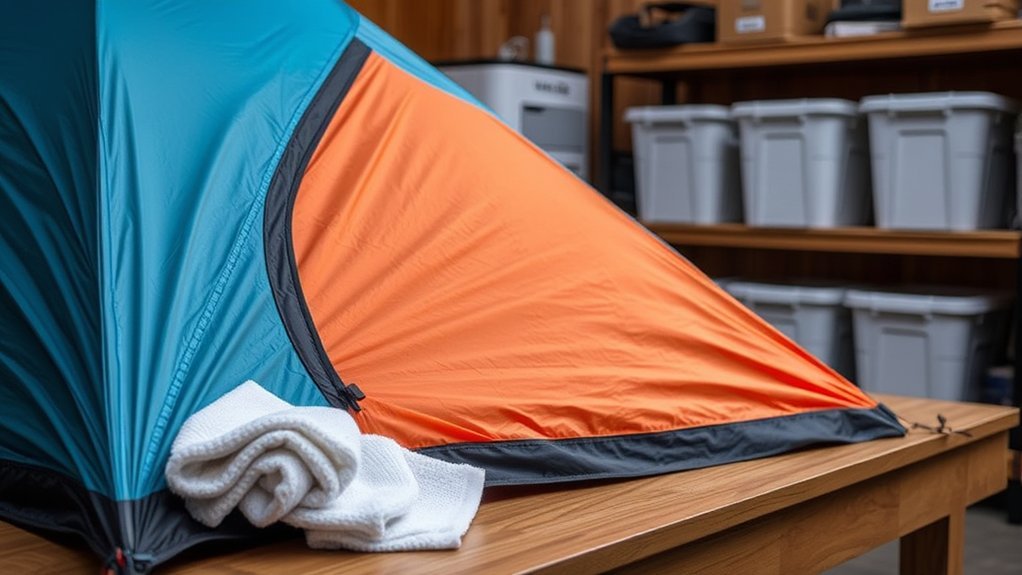
Complete drying is the most important part of long-term tent storage. Moisture trapped in the fabric, seams, webbing, pockets, or rainfly can produce odors and mildew and may contribute to the breakdown of waterproof coatings. According to MSR tent-care guidance, mildew may begin forming on a wet, crumpled tent in as little as 24 hours in warm weather.
Clean and Dry the Tent Step by Step
- Empty the tent. Remove food, leaves, sand, and personal items from the tent body, pockets, vestibules, and gear loft.
- Separate the components. Unpack the tent body, rainfly, footprint, guylines, poles, stakes, pole sack, and stake sack so hidden moisture can escape.
- Shake and brush away dry debris. Use a soft brush or cloth on dirt, mud, sand, and zipper tracks before adding water.
- Spot-clean first. Use cold or lukewarm water with a soft sponge. When more cleaning is needed, follow the tent maker’s instructions and use a manufacturer-approved gear cleaner or mild non-detergent soap.
- Rinse completely. Cleaner left in the fabric may affect coatings or attract dirt, so rinse until the water runs clear.
- Air-dry every part. Pitch the tent indoors, hang it loosely, or drape it in a shaded, well-ventilated place. Turn the rainfly, footprint, and tent body so both sides dry.
- Check hidden areas. Feel seams, corners, sleeves, pockets, webbing, guyline knots, and folded layers before packing anything.
Warning: Do not machine-wash, machine-dry, dry-clean, bleach, or scrub a tent with harsh household detergent. Heat and agitation can damage lightweight fabric, mesh, seam tape, and waterproof coatings. Always follow the care label or manufacturer’s instructions.
In warm weather, a wet, crumpled tent may begin developing mildew in as little as 24 hours.
How to Tell Whether the Tent Is Fully Dry
Do not rely only on the large fabric panels. A tent can feel dry on the outside while moisture remains in seam folds, pole sleeves, zipper covers, webbing, storage pockets, and the underside of the footprint. The tent is ready for storage when every part feels dry, no cool or clammy areas remain, and there is no damp or musty smell.
Store in a Dark Environment
Keep the tent away from prolonged sunlight during storage. Ultraviolet exposure gradually weakens tent fabrics and finishes, especially when a tent or rainfly remains exposed for long periods. REI’s tent-care guidance recommends minimizing UV exposure to extend the life of the canopy and rainfly.
A gear closet, interior shelf, or shaded storage room is usually better than a sunny window, open carport, or clear container exposed to daylight. Darkness alone is not enough, however. The storage area must also remain dry and reasonably cool.
Maintain a Cool Temperature
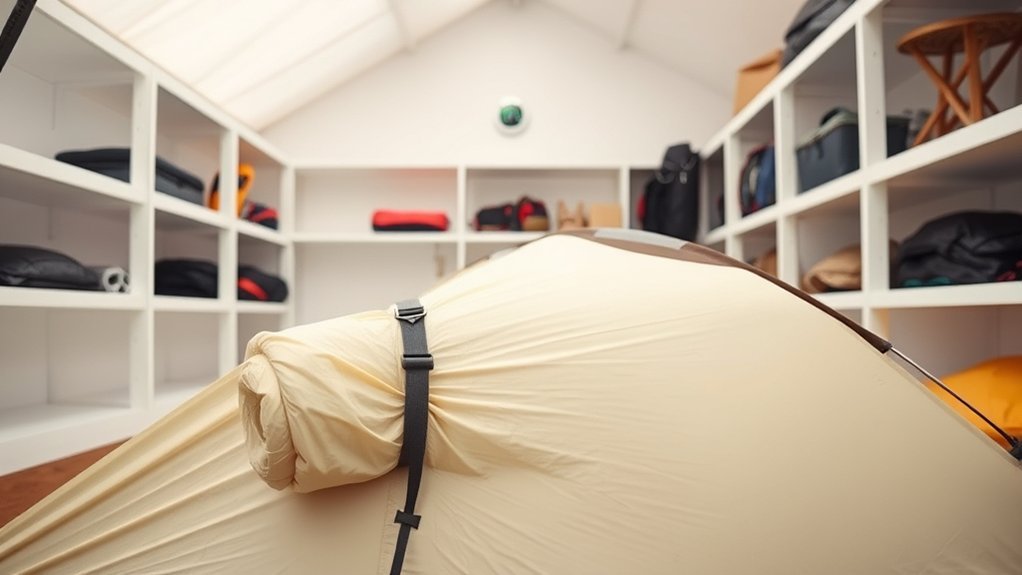
There is no universal requirement to keep every tent between 18–21°C (65–70°F). A better rule is to choose a cool, dry, temperature-stable area and follow the instructions for your specific tent. Avoid places that become very hot, collect condensation, leak, or remain humid for long periods.
Note: Humidity and trapped moisture are usually more important than hitting one exact temperature. If the storage space smells damp, develops condensation, or requires frequent moisture cleanup, move the tent or improve the room’s ventilation and humidity control.
| Storage Location | Suitability | What to Check |
|---|---|---|
| Indoor gear closet | Usually the best option | Dry, shaded, ventilated, and away from heaters |
| Finished basement | Suitable only when dry | Leaks, condensation, musty odors, humidity, and pests |
| Garage | Conditionally suitable | Summer heat, winter moisture, rodents, insects, and chemical fumes |
| Attic, vehicle trunk, or hot shed | Avoid | High heat and wide temperature swings |
| Damp crawlspace or leaking basement | Avoid | Persistent moisture, mildew, and pest activity |
Proper Packing Techniques
For long-term storage, take the tent out of the compact stuff sack used for travel. Tent fabrics and seam tape should remain relaxed rather than tightly compressed for months at a time. Place the completely dry tent body, rainfly, and footprint in an oversized cotton sack, mesh duffel, or clean pillowcase.
You may loosely fold, roll, or stuff the fabric unless the manufacturer gives a specific instruction. Avoid sharp creases, tight compression straps, heavy objects stacked on top, and folding the tent along exactly the same hard lines every time.
Pro Tip: Label the storage bag with the tent model and a component checklist. Before putting it away, confirm that the body, fly, footprint, poles, stakes, guylines, repair sleeve, and manufacturer-specific accessories are all present.
Can You Use a Plastic Storage Bin?
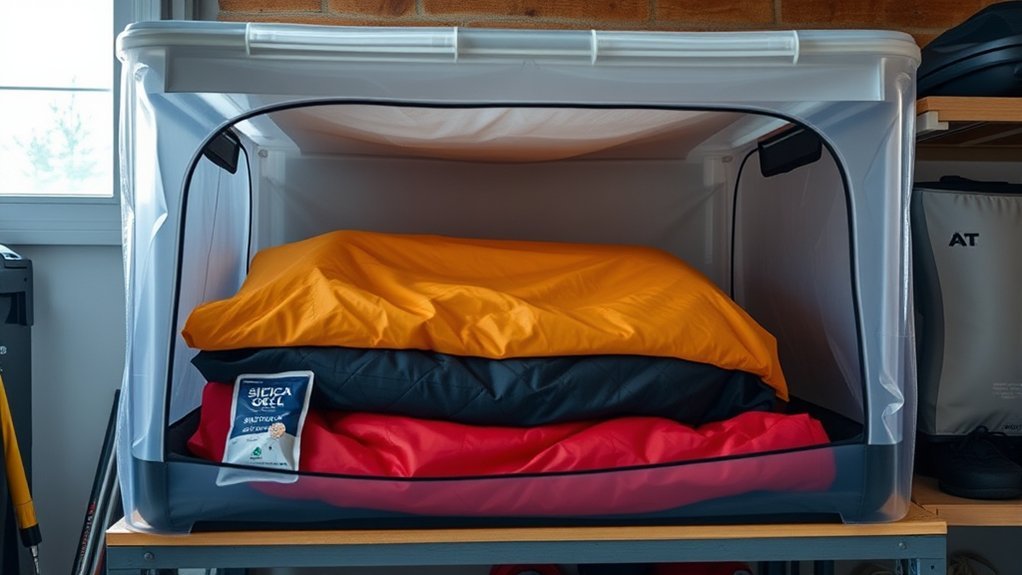
Manufacturer recommendations differ. A clean bin can protect gear from dust and pests, but a tightly sealed tote may trap humidity around polyurethane-coated fabric. Sea to Summit advises against sealed long-term storage for its tents and tarps, while REI notes that a sealed bin may be useful when a damp storage location cannot be avoided.
The safest common approach is to move the tent to a dry indoor area and use a breathable bag. If you must use a bin, start with a completely dry tent, do not place wet gear in the same container, avoid crushing the tent, and follow the storage directions for that specific model.
Store Tent Poles, Stakes, and Guylines Correctly
Tent Body, Rainfly, and Footprint
Store the fabric pieces clean, fully dry, and loose. The footprint often holds moisture and mud on its underside, so dry it separately rather than assuming it is ready when the tent body feels dry.
Tent Poles
Wipe poles clean and dry, paying attention to ferrules and joints. If space permits, storing shock-corded poles partially assembled reduces continuous strain on the elastic. When fully collapsing them, begin near the center and work toward the ends so the tension is distributed more evenly. Keep the poles in their own sleeve beside the tent rather than pressing hard pole ends into the fabric bundle.
Stakes
Remove soil, rinse when necessary, and dry metal stakes before storage. Check for bends, cracks, sharp burrs, and corrosion. Store stakes in a durable stake sack so their points cannot puncture the tent.
Guylines and Zippers
Dry guylines before coiling them loosely. Remove grit from zipper teeth and sliders with a soft brush or old toothbrush. Do not force a stuck zipper or apply an unapproved oil that may stain fabric and attract dirt.
What to Do After Packing a Wet Tent
Sometimes rain or an early departure makes it necessary to pack a wet tent on the trail. Temporary wet packing is not the same as long-term storage, but the tent should be unpacked as soon as practical.
- Remove the tent from its stuff sack immediately after reaching home or a dry shelter.
- Separate the rainfly, body, footprint, poles, stakes, guylines, and sacks.
- Pitch, hang, or drape the fabric in a ventilated indoor area or shaded outdoor space.
- Turn each part so folded surfaces and coated sides are exposed to moving air.
- Clean mud or salt residue after the fabric has been opened and inspected.
- Do not begin long-term storage until every part is completely dry.
Regular Inspections and Maintenance
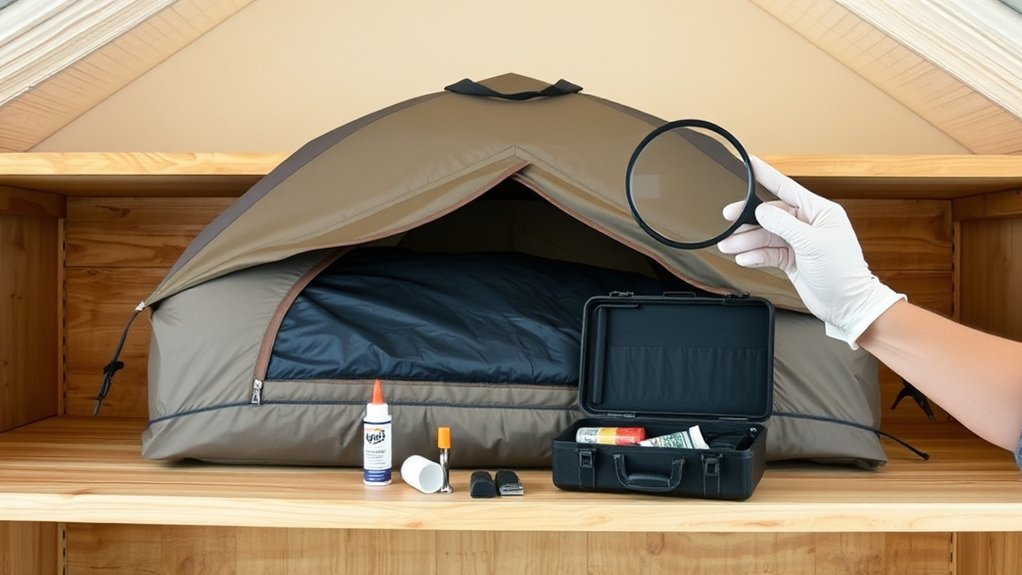
Inspect the tent while it is clean and open rather than discovering damage at the next campsite. Perform a full check before long-term storage and before the first trip of the next season. When the tent is kept in a basement, garage, or another less-controlled location, checking it every few months is a practical precaution.
| Inspection Area | Key Action | Suggested Timing |
|---|---|---|
| Tent fabric and mesh | Look for holes, cuts, abrasion, stains, and pest damage | Before storage and before the next season |
| Rainfly and floor coating | Check for stickiness, flaking, peeling, strong odors, or delamination | Before storage and before use |
| Seams and seam tape | Inspect for lifting tape, gaps, and damaged sealant | Before storage and before wet-weather trips |
| Zippers | Brush away grit and test the sliders without forcing them | Before storage and before use |
| Poles and shock cord | Check joints, cracks, bends, corrosion, and elastic tension | Before storage and before use |
| Stakes and guylines | Clean, dry, count, and inspect for bends, fraying, or damaged tensioners | After each trip and before storage |
| Storage area | Look for leaks, condensation, insects, rodents, and strong temperature swings | Every few months in an uncontrolled area |
Troubleshooting Common Tent Storage Problems
Musty Odor or Visible Mildew
Move the tent to a well-ventilated area and open every component. Brush away loose debris, then clean the affected material according to the manufacturer’s instructions. Do not use bleach or strong household cleaners. Dry the tent completely before reassessing it. Mildew stains may be permanent, and severe moisture damage can weaken waterproof coatings.
Sticky, Flaking, or Foul-Smelling Coating
A sticky or flaking inner surface may indicate that a polyurethane coating or seam treatment is breaking down. Cleaning alone may not restore it. Contact the tent manufacturer before applying a coating or seam sealer because silicone-treated and polyurethane-coated fabrics require different products. When the floor coating is extensively degraded, replacement may be safer and more reliable than a large repair.
Corroded Poles or Loose Shock Cord
Clean light dirt from pole joints and allow them to dry completely. Replace badly corroded, cracked, or bent sections before using the tent. If the shock cord no longer holds the sections together, consult the manufacturer or a tent-pole repair service for restringing or replacement.
Rodent or Insect Damage
Remove food, scented products, crumbs, and nesting material from the storage area. Move the tent to a clean, pest-resistant location. Patch small holes with a repair product approved for the fabric, but seek professional repair for structural seams, large tears, or widespread damage.
Frequently Asked Questions
Can I store my tent in a basement?
Yes, but only when the basement is dry, leak-free, well-ventilated, and protected from pests. Use a dehumidifier when the room becomes damp or musty, and keep the tent off the floor in case of minor flooding or condensation.
How often should I check my tent during storage?
Inspect it before long-term storage and before the first trip of the next season. If it is kept in a garage, basement, or another uncontrolled area, check it every few months for dampness, odors, pests, corrosion, or coating problems.
Is it safe to store a tent in a garage?
A garage is acceptable only if it remains dry, reasonably cool, and pest-free. Avoid garages that become very hot, collect condensation, flood, or contain rodents. A stable indoor closet is usually safer.
Can I use a plastic bin for tent storage?
Use one only with care. A bin protects against dust and pests, but a sealed tote can trap humidity. The tent must be completely dry, loosely packed, and stored according to its manufacturer’s instructions. A breathable bag in a dry room is the safer general choice.
What should I do if my tent smells musty?
Open and air out every component, inspect for mildew and sticky or flaking coatings, and clean the tent according to the manufacturer’s directions. Dry it completely afterward. A persistent foul odor combined with tacky or peeling material may indicate coating failure that cleaning cannot reverse.
Can I leave my tent in its stuff sack all winter?
The compact stuff sack is designed for transportation, not long-term storage. Transfer the completely dry fabric to an oversized cotton bag, mesh sack, or pillowcase so it is not held under constant compression.
Should tent poles and stakes be stored separately?
Yes. Clean and dry them, then keep poles and stakes in their own protective sleeves beside the tent fabric. This prevents sharp stake points or pole ends from rubbing against and puncturing the fabric.
Can a tent stay in storage for several years?
It can, but inspect and air it periodically. Before relying on it for a trip, pitch the tent and check the fabric, floor, rainfly, seams, zippers, poles, guylines, and waterproof coatings. Age-related coating or shock-cord failure can occur even when the tent has not been used.
Conclusion
To keep a tent ready for future trips, store it completely dry, clean enough to prevent grit and organic residue from causing damage, and loose enough that its fabric and seam tape are not compressed for months. A cool, dry indoor closet is usually the safest location. Keep the components organized, inspect them periodically, and address mildew, coating failure, corrosion, or pest damage before relying on the tent outdoors.
Sources
- REI Co-op: How to Store a Tent — drying, loose storage, storage locations, zippers, and tent-pole handling.
- REI Co-op: How to Clean, Waterproof and Care for a Tent — UV exposure, cleaning precautions, coatings, seam tape, and long-term care.
- MSR: How Do I Keep My Tent Clean and Dry? — mildew timing, hydrolysis, safe cleaning, and breathable storage.
- NEMO Equipment: Cleaning, Repairing, and Storing Your Tent — component drying, technical fabric cleaners, zipper care, repairs, and loose storage.
- Sea to Summit: Long-Term Tent and Tarp Storage — ventilated containers, avoiding tight rolls, and recognizing coating degradation.
