
Last Updated on July 29, 2026 by Mason Reed
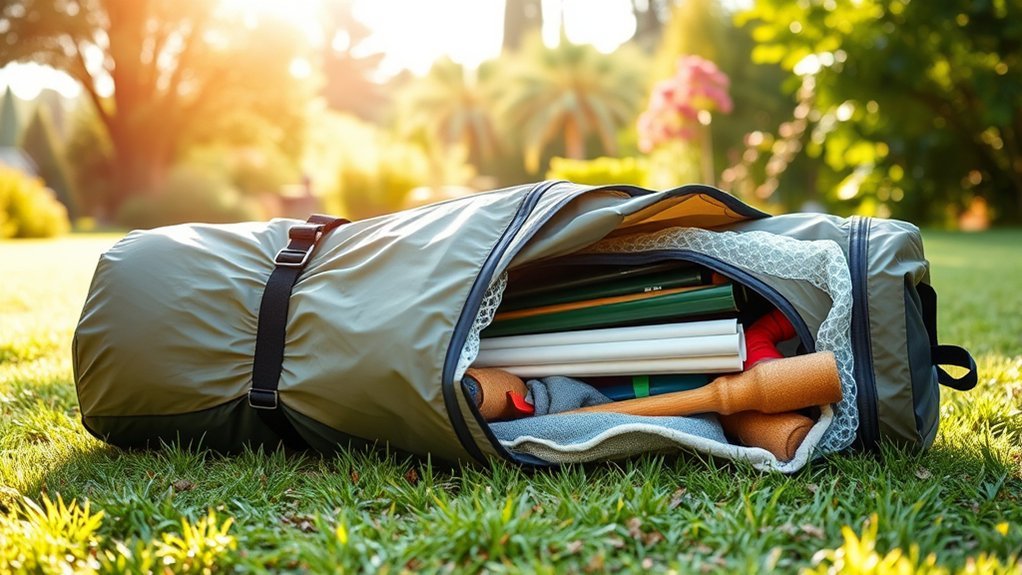
Packing a tent for air travel takes more than squeezing the fabric into a stuff sack. The tent body, poles, and stakes may be treated differently at airport security, and exposed hardware can be damaged during baggage handling. Start with a clean, completely dry tent, follow the manufacturer’s packing method, and check the rules for every airline operating your trip.
Quick Answer
Pack the tent body and rainfly clean and completely dry, with loose hardware tucked away. Put tent stakes in checked baggage, protect pole sections in a closed sleeve, and follow your airline’s size and weight limits. Keep the packed tent inside luggage rather than leaving it exposed to baggage equipment.
Key Takeaways
- For U.S. screening, a tent may travel in carry-on or checked baggage, but tent stakes must be placed in checked baggage.
- Tent poles are generally permitted in either type of bag, subject to screening and the airline’s baggage dimensions.
- Dry the tent completely and remove dirt, stones, and moisture before packing.
- Follow the tent manufacturer’s instructions because some tents are designed to be folded and rolled while others are better loosely stuffed.
- Protect poles, hubs, stakes, clips, and buckles from bending or pressing into the tent fabric.
- Never pack camp stove fuel, fuel canisters, liquid fuel, or solid fuel tablets in carry-on or checked baggage.
At a Glance
| Time Required | 10–20 minutes after the tent is dry |
| Difficulty | Easy |
| Tools Needed | Tent stuff sack, pole sleeve, stake bag, soft straps, and protective luggage |
| Cost | Usually $0 with existing bags; an optional pole tube or travel duffel costs extra |
Disclosure: As an Amazon Associate I earn from qualifying purchases. Some links on this page are affiliate links, at no extra cost to you.
Check Airline and Security Rules First
For flights screened in the United States, the Transportation Security Administration allows tents in carry-on and checked baggage. However, tent stakes must go in checked baggage. TSA also states that tent poles are generally permitted in carry-on or checked bags under special instructions.
Warning: Do not put tent stakes or spikes in a carry-on bag for a U.S. flight. Place them in checked baggage, cover the points, and secure them so they cannot injure baggage inspectors or puncture other equipment.
Security permission does not guarantee that the packed item meets the airline’s dimensions. The U.S. Department of Transportation notes that there is no single federal carry-on size or weight standard. Check the operating airline—not only the company that sold the ticket—for every flight segment, especially on regional, codeshare, and international itineraries.
Note: TSA guidance applies to screening in the United States. Departure countries, connecting airports, and individual airlines may use different restrictions. Verify the rules for the complete itinerary before leaving home.
Choose Carry-On or Checked Baggage
A compact backpacking tent may fit in a carry-on bag, but its stakes still need to be checked or left behind. Carrying the tent body and poles in the cabin can reduce their exposure to rough baggage handling, provided the airline accepts the bag’s size and the poles pass screening.
Larger backpacking, family, and car-camping tents usually need to be checked. Place them inside a zippered duffel, suitcase, or travel cover. Avoid checking a backpack with the tent, poles, or straps hanging from the outside. Loose items can snag, separate from the bag, or strike hard surfaces.
| Packing Method | Best For | Main Limitation |
|---|---|---|
| Carry-on luggage | Small tents and short pole sections that meet airline limits | Tent stakes cannot be included in a U.S. carry-on |
| Checked suitcase or duffel | Most complete tent kits | Requires added protection against impact and compression |
| Separate protected pole case | Long or fragile pole sections | May count as another bag or an oversized item |
Disassembling the Tent
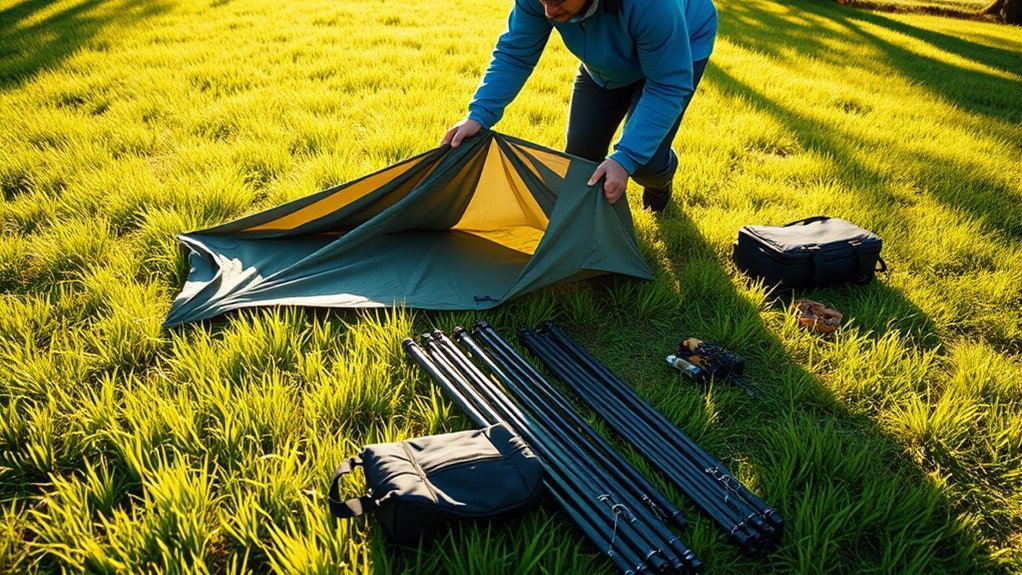
Disassemble the tent on a clean, dry surface where small parts cannot disappear into grass, gravel, or sand. Do not rush this stage; a bent pole joint or missing stake can be difficult to replace at your destination.
- Empty the tent. Remove sleeping gear, trash, dirt, and stones from the floor and pockets.
- Dry the body and rainfly. Shake off condensation and allow both pieces to air-dry completely whenever conditions permit.
- Remove every stake. Count them against the number supplied with the tent and place them directly into the stake bag.
- Release the rainfly and guylines. Untangle guylines and secure them so they cannot knot around other gear.
- Remove poles gently. Do not pull hard against sleeves, clips, or pole hubs. Separate each joint without snapping or bending it.
- Close loose openings. Zip doors and vents without forcing dirty or damaged zippers.
- Inspect the components. Look for cracked pole sections, damaged ferrules, sharp burrs, torn fabric, loose seam tape, and broken clips.
Pro Tip: Photograph the complete tent kit before packing it. The photo provides a quick inventory of the body, fly, poles, stakes, footprint, and bags and can help document preflight condition if checked equipment is damaged.
Organizing the Rainfly
The rainfly often holds more condensation than the inner tent body. Shake it out, wipe away visible moisture with a clean cloth, and let it dry before placing it against the tent floor or mesh. Packing damp coated fabric can create odor, mildew, staining, and coating damage.
Lay the clean rainfly and tent body together only after both are dry. Tuck in guylines, webbing, clips, and buckles so they cannot catch on mesh or press directly against waterproof fabric.
| Packing Strategy | Benefit | Maintenance Check |
|---|---|---|
| Fold and roll as directed | Creates an orderly bundle for tents designed for this method | Confirm that the body and fly are fully dry |
| Loosely stuff when recommended | Avoids repeatedly stressing the same fold lines | Check the manufacturer’s care instructions |
| Use a clean stuff sack | Separates fabric from dirty or abrasive luggage contents | Remove grit and moisture from the sack |
| Tuck away clips and webbing | Reduces snagging and pressure points | Inspect clips and buckles for cracks |
Folding the Tent for Packing
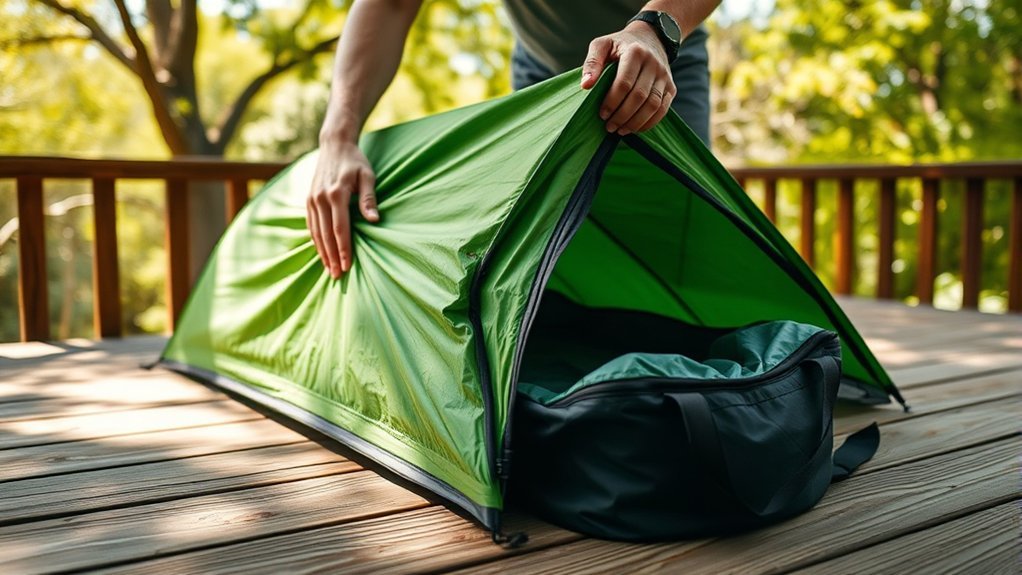
There is no single correct folding method for every tent. Follow the care instructions supplied by the manufacturer. The Big Agnes packing method, for example, folds the dry rainfly and body to approximately the length of the collapsed pole set before rolling them together.
For a tent designed to be folded and rolled, spread the rainfly and body flat, smooth out trapped air, and fold the sides inward until the bundle fits the stuff sack or luggage compartment. Keep hard clips, buckles, and pole hubs away from thin mesh and coated floor fabric.
Note: Some ultralight-tent manufacturers recommend loosely stuffing instead of repeatedly folding along the same lines. Check the product manual before changing the packing method that came with the tent.
Rolling Technique for Protection
If the tent is designed to be rolled, start at the closed end of the folded fabric and press out excess air as you move toward the open edge. Keep the roll straight, but do not force it into an extremely small diameter. Excessive compression can push buckles, pole ends, or trapped debris into the fabric.
Tuck guylines and webbing into the bundle as you roll. If the manufacturer instructs you to roll the fabric around the pole bag, confirm that every pole end is covered and that no sharp ferrule or damaged section can press against the tent. Otherwise, keep poles in a separate protective sleeve.
Rolling does not guarantee that a tent will avoid damage. Protection comes from combining the manufacturer’s packing method with dry fabric, covered hardware, a secure stuff sack, and a durable outer piece of luggage.
Securing the Rolled Tent
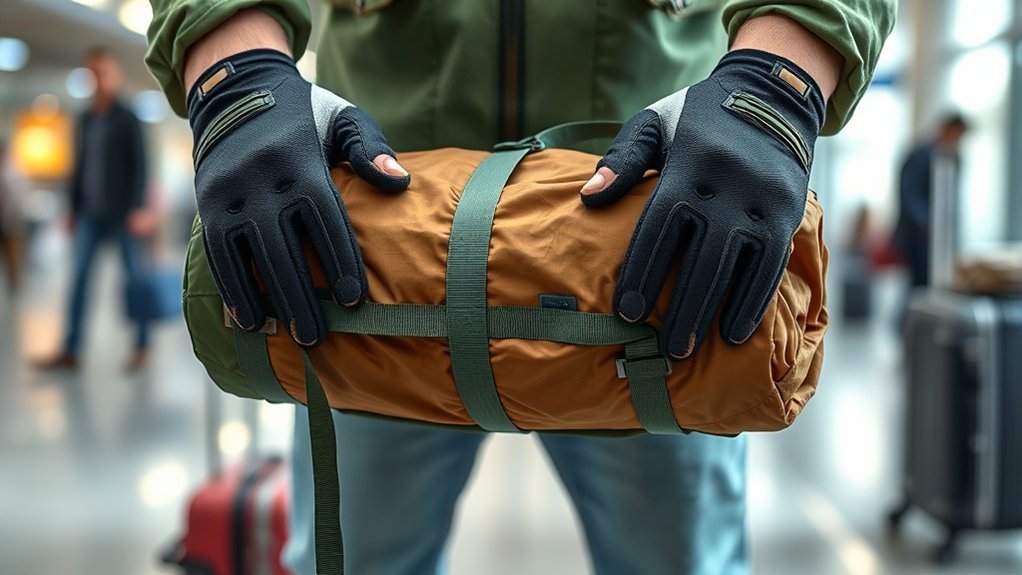
Place the tent in its stuff sack before tightening external straps whenever possible. Soft hook-and-loop straps can keep the bundle from expanding, but they should be snug rather than crushing. Keep strap hardware away from thin fabric and mesh.
Use Velcro or Hook-and-Loop Straps
Wrap straps around the filled stuff sack instead of directly around bare coated fabric. One strap near each end is usually enough for a long bundle. A center strap can help with a larger tent, but excessive tightening does not create better impact protection.
| Strap Type | Recommended Use |
|---|---|
| Standard soft strap | Small and medium tent sacks |
| Heavy-duty strap | Large sacks that need moderate support |
| Adjustable strap | Bundles that change size between trips |
| Multiple soft straps | Long bundles that need support at both ends |
Store in a Backpack or Other Luggage
Place the tent inside the bag, close to the center, and surround it with soft clothing or other nonabrasive items. Horizontal placement may work in a wide duffel, while vertical placement may fit a backpack better. Choose the orientation that prevents bending and leaves enough room to close the bag without force.
For checked baggage, close or cover every shoulder strap, hip belt, buckle, cord, and side pocket. Do not leave the tent or pole bag attached to the outside. For carry-on baggage, confirm that the full packed bag—not only the tent sack—meets the airline’s dimensions.
Packing Poles and Stakes Separately
Place collapsed poles in their original pole bag or a padded sleeve. Cover both ends and protect hubs or pre-bent sections from direct pressure. A rigid mailing tube or purpose-made pole tube can add protection for fragile or expensive poles, but its size may affect baggage charges.
A pole sleeve may go inside a carry-on when it fits and screening permits it. If the backpack will be checked, do not rely on an open side pocket. Put the closed pole sleeve inside the main bag or a protected case.
Count the stakes, place them in a durable stake bag, cover sharp tips, and pack the closed bag inside checked luggage. Do not position stakes directly against the tent floor, rainfly, sleeping pad, or other puncture-sensitive equipment.
Warning: The Federal Aviation Administration prohibits camp stove fuels in both carry-on and checked baggage. This includes compressed fuel canisters, liquid fuels, and solid fuel tablets. Do not place them in the tent or stake bag.
What to Do If the Tent Is Wet
Whenever possible, delay final packing until the tent is dry. Shake off water, separate the body from the rainfly, wipe both pieces with an absorbent cloth, and spread them in moving air. Pay close attention to folded seams, pole sleeves, pockets, and the underside of the rainfly.
If departure time makes complete drying impossible, isolate the wet fabric in a waterproof bag so it does not soak the rest of the luggage. This is a temporary transport measure, not a storage method. Open the bag and dry the tent fully as soon as you reach the destination.
Do not apply an unfamiliar waterproofing spray or seam sealer immediately before flying. Some products contain solvents or flammable propellants, and the wrong treatment can damage the tent’s coating. Use only a product approved for the tent material, allow it to cure completely, and verify aviation restrictions before packing it.
Protecting a Tent in Checked Baggage
- Use a durable outer bag. A zippered travel duffel, suitcase, or fitted backpack cover protects straps and pockets.
- Do not overpack. The bag should close without placing extreme pressure on zippers, seams, poles, or tent hardware.
- Cushion vulnerable parts. Place clothing around pole hubs, ends, and rigid buckles.
- Label the bag twice. Put contact details both outside and inside in case the external tag is lost.
- Remove old baggage tags. Old routing labels can cause confusion during handling.
- Keep critical items elsewhere. Carry identification, medicine, keys, and essential travel documents in the cabin.
The safest packed tent is dry, fully enclosed, free of loose hardware, and protected by luggage that meets the operating airline’s rules.
Inspect the Tent After Landing
Check checked baggage before leaving the airport. Look for torn luggage, missing pole or stake bags, bent sections, cracked hubs, punctures, and damaged buckles. The Department of Transportation advises reporting baggage problems to the airline before leaving the airport and obtaining a written record of the report.
At the hotel, home, or campsite, unpack the tent even when the luggage appears dry. Air out the fabric, confirm that every component arrived, and test-fit any pole section that looks bent. Repair or replace damaged parts before relying on the tent in remote or severe weather.
Frequently Asked Questions
Can I bring my tent as a carry-on item?
A tent may generally pass through U.S. security in carry-on baggage, but the packed bag must meet the airline’s dimensions. Tent stakes cannot be placed in a U.S. carry-on. Tent poles are generally permitted under special instructions, subject to screening and airline limits.
What is the weight limit for a packed tent?
There is no universal tent or federal baggage weight limit. The allowance depends on the airline, fare, route, cabin, aircraft, and whether the bag is carried on or checked. Review the operating carrier’s current baggage page for every segment.
Will airport security allow tent stakes through?
TSA does not allow tent stakes or spikes in carry-on baggage. They may be placed in checked baggage when their points are covered and they are securely wrapped or contained. Rules outside the United States may differ.
Should tent poles go in carry-on or checked baggage?
TSA generally permits tent poles in either type of bag. Carry-on may reduce handling risk when the pole sections fit the airline’s limits. Checked poles should be placed in a closed sleeve inside the luggage or in a strong protective case.
How do I prevent my tent from getting wet in transit?
Pack the tent completely dry inside a clean stuff sack and a closed piece of luggage. If the tent is already wet, isolate it temporarily in a waterproof bag and unpack it for complete drying immediately after arrival.
Do I need to declare my tent at check-in?
An ordinary tent does not normally require a special declaration. Speak with the airline when the package is oversized, overweight, unusually shaped, or contains equipment subject to additional restrictions.
Can I attach the tent to the outside of a checked backpack?
It is safer to place the tent and poles inside a closed travel cover or duffel. External sacks, poles, straps, and cords can snag or separate from the backpack during baggage handling.
Can I pack a camp stove or fuel with the tent?
Camp stove fuels are forbidden in carry-on and checked baggage. A stove that has contained fuel may be accepted only when it contains no fuel residue or vapors, and an airline may still refuse it. Check current FAA and airline guidance before packing a stove.
Conclusion
To pack a tent for air travel without unnecessary damage, begin with current security and airline rules. Dry and inspect the fabric, count every component, protect poles in a closed sleeve, and put covered stakes in checked baggage. Follow the manufacturer’s folding, rolling, or stuffing method instead of forcing every tent into the same shape.
Keep the full kit inside durable luggage, avoid excessive compression, and inspect checked equipment before leaving the airport. These steps cannot guarantee perfect baggage handling, but they reduce preventable moisture, puncture, snagging, and bending risks.
Sources
- Transportation Security Administration: Tent — carry-on and checked-bag guidance, including the checked-bag requirement for tent stakes.
- Transportation Security Administration: Tent Poles — screening guidance for poles in carry-on and checked baggage.
- U.S. Department of Transportation: Avoiding Baggage Problems — airline-specific limits, packing, labeling, and damage-reporting advice.
- Federal Aviation Administration: PackSafe Fuels — prohibition on camp stove fuels in passenger baggage.
- Big Agnes: How to Pack Your Tent — drying, organizing, folding, and rolling manufacturer guidance.
- NEMO Equipment: Caring for Ultralight Gear — manufacturer guidance on loosely stuffing appropriate tents and separating poles.

