
Last Updated on July 29, 2026 by Mason Reed
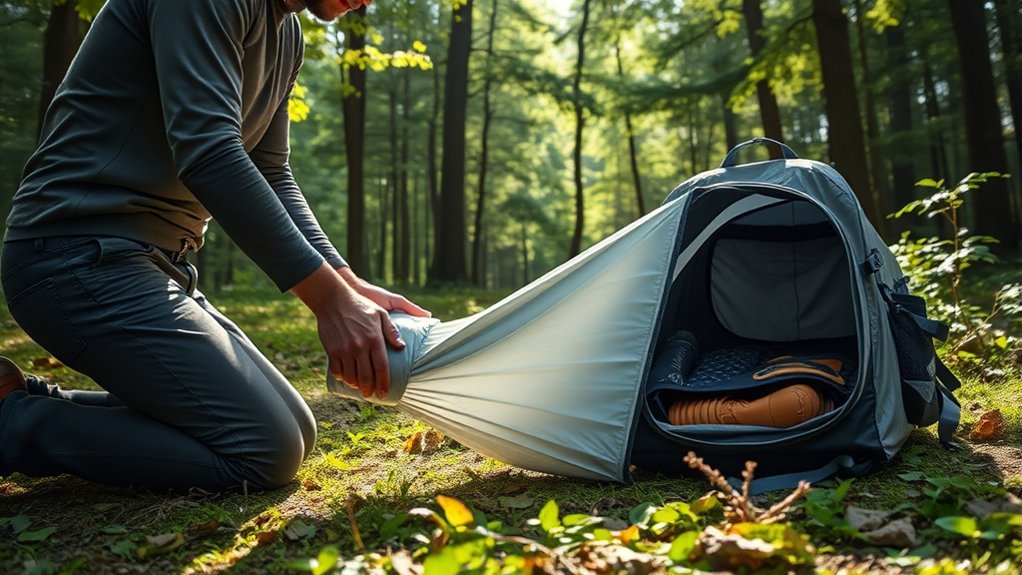
Packing a tent into a backpack is less about forcing it into the smallest possible bundle and more about controlling moisture, protecting the fabric and hardware, and placing the shelter where it will not throw off your load. The best method depends on your tent, its stuff sack, your backpack, and whether you expect to need the shelter quickly.
Quick Answer
Shake out dirt, dry the tent as much as conditions allow, and pack the poles and stakes in protective sacks. Fold, roll, or stuff the body and rainfly according to the manufacturer’s guidance. Place the soft fabric inside the pack, keep sharp hardware isolated, and secure the load so it cannot shift.
Key Takeaways
- Dry the tent before packing when possible; if it must go away wet, separate it from dry gear and dry it fully at the first opportunity.
- Folding, rolling, and stuffing can all work. Follow the tent maker’s instructions and avoid forcing fabric into an undersized sack.
- Keep stakes in a stake bag and poles in their pole sack so metal edges cannot puncture the tent, sleeping bag, or backpack.
- Tent placement is flexible: balance the pack first, then choose a top, core, vertical, or exterior position based on weather and access needs.
- Compact trail packing is temporary. At home, store the tent completely dry and loosely packed in a cool, dry place.
At a Glance
| Time Required | About 5–15 minutes after practice |
| Difficulty | Easy |
| Tools Needed | Tent stuff sack or straps, pole sack, stake bag, and an optional pack liner or waterproof sack |
| Cost | $0 with the included sacks; about $5–$15 for optional straps or a replacement stake pouch |
Disclosure: As an Amazon Associate I earn from qualifying purchases. Some links on this page are affiliate links, at no extra cost to you.
Preparing Your Tent for Packing
Begin by emptying the tent and closing its doors so loose fabric and zipper pulls are easier to control. Shake out sand, leaves, and grit. Brush off dry debris rather than grinding it into the floor coating. If the body, footprint, or rainfly is damp, shake off water and give each piece time to air-dry before it enters your pack.
Next, collect every component: tent body, rainfly, footprint, poles, stakes, guylines, pole splint, and repair items. Count the stakes before leaving the campsite. Collapse shock-corded poles by starting near the middle and working toward the ends, which distributes tension more evenly along the cord. REI includes this method in its current tent-care guidance.
Warning: Do not remove every stake and then leave loose fabric unattended in strong wind. Keep one or two windward corners controlled until the poles are down and you have a firm hold on the tent and rainfly.
Lay the body and fly on a clean footprint, groundsheet, or dry patch of ground. Do not place the rainfly inside a muddy tent simply for convenience. Combine the pieces only after both sides are reasonably clean and dry.
The Right Folding Technique
There is no single folding pattern for every tent. Some manufacturers show a folded-and-rolled “burrito” that matches the collapsed pole length, while other tents are designed to be stuffed directly into a sack. Start with the instructions for your model and the dimensions of its original stuff sack.
Folding, rolling, and stuffing are all acceptable when the tent maker allows them; dryness, clean fabric, and protection from sharp hardware matter more than achieving a perfect fold.
If you choose to fold, spread the rainfly flat and fold it into a long strip. Repeat with the tent body. Make the strip slightly narrower than the stuff sack opening or approximately as wide as the packed pole set if the manufacturer’s method rolls the fabric around the pole sack. Smooth the fabric without pulling hard on mesh panels or taped seams.
Pro Tip: Leave a small opening at the far end of the roll so trapped air can escape. A bundle that keeps springing open usually contains air, not excess fabric.
When Stuffing Makes More Sense
Stuffing can be faster and lets soft tent fabric fill empty spaces around other gear. It also avoids creating the same fold lines every trip. REI notes that there is no definitive winner in the fold-versus-stuff debate, and modern tent materials should tolerate either method when handled normally. Do not stuff poles or loose stakes into the same unprotected bundle.
Rolling Your Tent for Efficiency
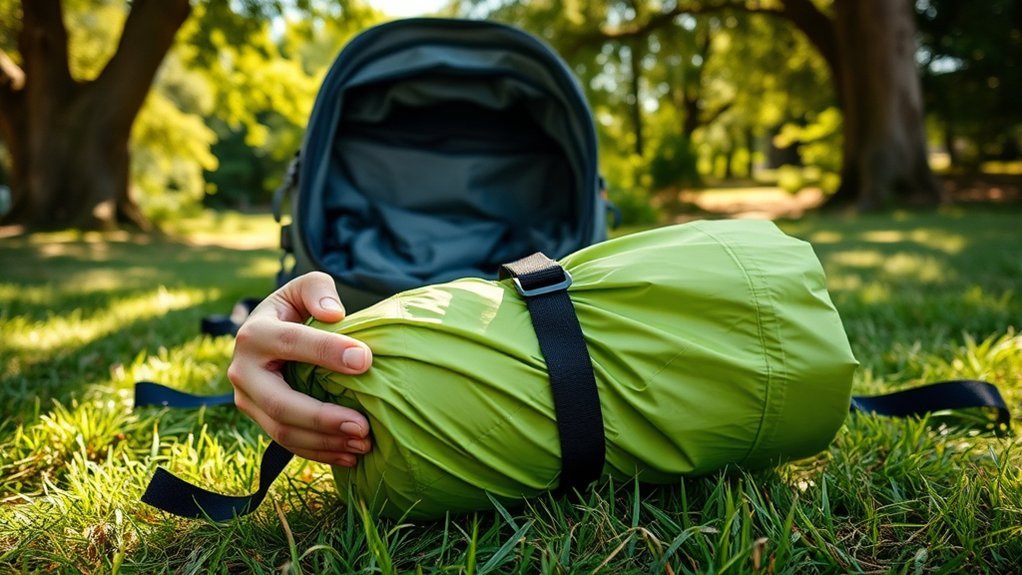
Rolling works well when your tent’s original sack is cylindrical or when the manufacturer recommends wrapping the body and fly around the protected pole set. Big Agnes, for example, instructs users to dry and clean the tent, fold the body and fly to the pole-set width, and then roll them together in its tent-packing guide. That method should not be assumed for every brand or tent design.
- Align the pieces. Place the folded rainfly and tent body together without trapping stones, twigs, or wet ground between them.
- Position protected hardware only if directed. Put poles in their pole sack before using them as the center of a roll. Keep stakes in a separate stake pouch.
- Roll steadily. Start at the closed or narrow end and push air toward the open end as you roll.
- Control loose parts. Tuck guylines, clips, and webbing inward so they do not snag.
- Test the fit. Slide the bundle into the sack without kneeling on it or forcing the zipper or drawcord.
Proper Folding Techniques
Fold both sides inward until the strip fits the sack or selected space in your backpack. For a backpack without a dedicated tent compartment, a shorter, wider bundle may fit horizontally, while a long, narrow bundle may fit vertically. Match the shape to the available space rather than treating backpack width as the only correct measurement.
- Keep mesh panels inside the fold where they are less likely to snag.
- Avoid hard creases through bulky zipper sliders, vents, and plastic clips.
- Keep the footprint’s dirty side away from the clean inner tent.
- Do not use your full body weight to compress coated fabric.
Secure Rolling Methods
Use the original stuff sack, light hook-and-loop straps, or the pack’s compression system to keep the bundle from opening. Tighten only enough to hold its shape. Excessive compression can stress seam tape, coatings, buckles, and zippers without producing much useful space.
| Step | What to Do |
|---|---|
| Choose the width | Match the stuff sack or the space available inside your pack. |
| Roll out air | Roll evenly while pushing trapped air toward an open edge. |
| Secure gently | Use the sack or straps to prevent unrolling without crushing hardware. |
Securing the Rolled Tent
A secured bundle is easier to position and less likely to expand while you load the rest of the backpack. Before tightening anything, check that no zipper pull, pole tip, clip, or stake is trapped against the fabric.
Use Velcro Straps
Reusable hook-and-loop straps are helpful when the original sack is missing or when you divide the tent among hiking partners. Place one strap near each third of the bundle. Snug them evenly; do not cinch so tightly that the edges cut into coated fabric.
- Choose straps wide enough that they do not create narrow pressure points.
- Cover the hook side before it touches mesh, because exposed hooks can snag fine fabric.
- Inspect reusable straps for burrs, grit, and sharp debris before wrapping the tent.
Horizontal Placement Tips
Horizontal placement can work when the bundle fits fully inside the pack and does not press against your spine. It is not essential. A tent can also sit vertically along one side, fill gaps around denser gear, or ride in an exterior pocket when wet. Keep the left and right sides balanced, and make sure the load does not bulge or sway.
Maintaining Backpack Organization
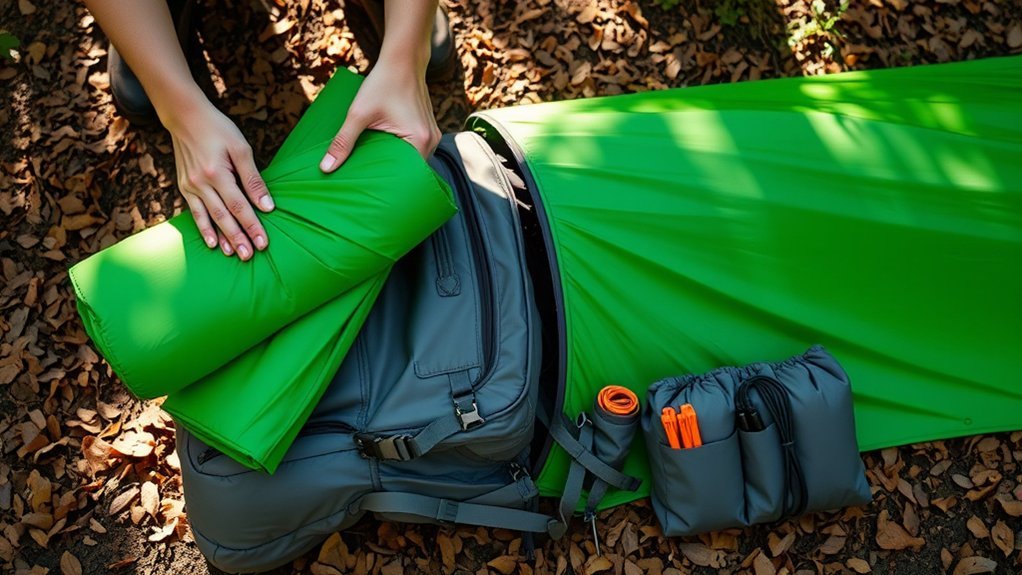
Keep each shelter component in a predictable location. A simple system is tent body and fly inside the main compartment, poles in their protected sack along an interior wall or in a tall side pocket, and stakes in a puncture-resistant pouch. Guylines, a pole splint, patches, and seam-repair items can share a small repair pouch.
Note: Exterior storage is convenient but exposes equipment to branches, falls, and loss. Any pole sack carried outside the pack should be captured by both a side pocket and one or more compression straps.
Packing Tent Accessories Separately
Separate accessories protect the tent and speed up setup. Put poles in the pole sack and stakes in the stake bag before either item enters the backpack. Never leave bare stakes loose in the main compartment, where their points can damage the tent, sleeping bag, pack liner, or hydration reservoir.
If the pole set fits inside the backpack, place it vertically against a side wall where it will not press into your back. If it must ride outside, seat the lower end in a deep side pocket and secure the upper section with compression straps. Check that the sack cannot slide downward when the pack is turned upside down.
Place the stake pouch where soil will not contaminate clean gear. A front shove-it pocket or a dedicated outer pocket often works well. For nonfreestanding tents that depend on stakes and trekking poles, keep the pitching hardware together and easy to reach.
Packing a Tent in Wind or Rain
Bad weather changes the order of operations. In wind, keep part of the shelter anchored until you control the loose fabric. In rain, pack dry items first under cover, then handle the wet fly and footprint last.
- Remove personal gear and protect the sleeping bag and clothing inside a pack liner or dry sack.
- Take down the inner tent under the rainfly when the design allows it.
- Keep one or two windward anchors in place while collapsing poles and gathering fabric.
- Shake off water and pack the wet fly in a separate waterproof sack or exterior pocket.
- Re-pitch, drape, or hang every damp piece to dry as soon as weather and location permit.
Warning: A wet tent may be carried temporarily, but it should not remain sealed with a sleeping bag or stored wet after the trip. Moisture can promote mildew and damage waterproof coatings.
Utilizing Backpack Space Effectively
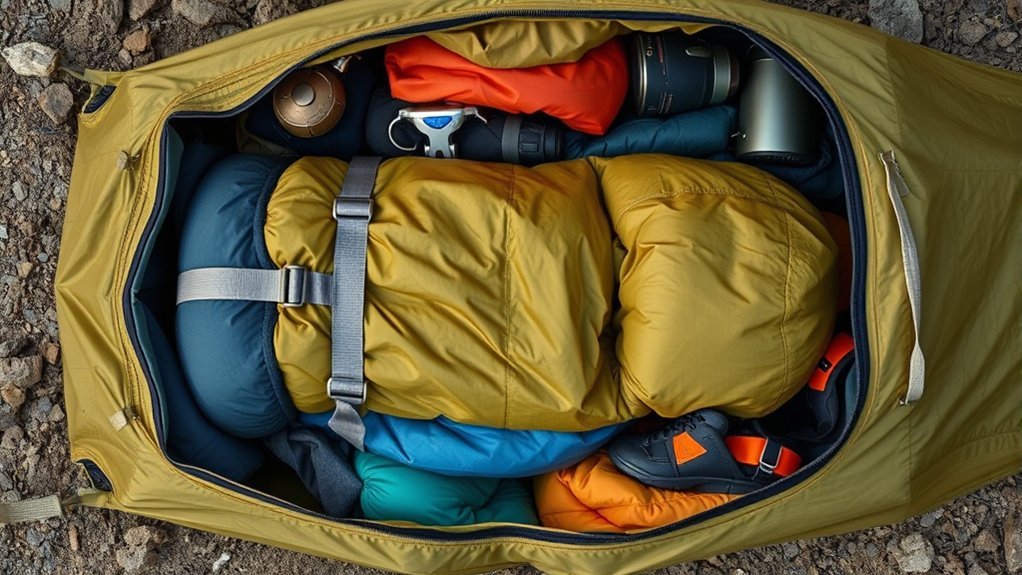
A tent does not have to remain in one cylindrical package. Removing the soft body, fly, and footprint from the stuff sack can help those pieces fill gaps around dense gear. REI’s backpack-loading guide specifically lists the tent body, footprint, and rainfly as soft items that can cushion and stabilize gear in the pack’s core.
- Inside the core: Use clean, dry tent fabric to fill gaps around food, a cook kit, or other dense items while keeping weight centered.
- Near the top: Place the shelter high when rain is likely or when you expect to set it up during a stop.
- Vertically: Slide a long bundle along an interior side wall when that shape fits the pack better.
- Outside the pack: Reserve exterior pockets for a wet fly or securely restrained pole sack, not an exposed tent body that can snag.
When hiking with a partner, split the load: one person can carry the body and fly while the other carries poles, stakes, and the footprint. Keep all parts labeled or use a checklist so nothing is left behind.
Organizing Your Backpack for Easy Access
Pack for the conditions you expect, not by a rigid rule. If the tent will stay packed until camp, it can fill stable spaces in the core. If a storm is approaching, place the rainfly and shelter where you can reach them without unloading food, clothing, or the sleeping bag.
Keep urgent items such as a rain jacket, first-aid kit, navigation tools, and water treatment accessible. The tent should not displace those essentials unless shelter is the immediate priority. After loading, tighten the backpack’s compression straps and check that the pack stands balanced, rests comfortably on your hips, and does not sway when you walk.
Tips for Different Tent Sizes
- One- and two-person backpacking tents: The complete shelter may fit inside one stuff sack, but separating poles and stakes often makes the soft bundle easier to shape.
- Three- and four-person tents: Divide the body, fly, poles, and stakes among group members. Avoid attaching one oversized bundle to only one side of a backpack.
- Large family or car-camping tents: These are usually too bulky and heavy for a standard backpacking pack. Use a vehicle, gear duffel, portage system, or a shelter designed for human-powered travel.
- Trekking-pole shelters: Keep stakes, guylines, and the correct support poles together because the shelter may not stand without them.
- Single-wall tents: Pay extra attention to condensation and drying because the same fabric serves as both the shelter wall and weather barrier.
Troubleshooting a Tent That Will Not Fit
The Roll Is Too Large
Unroll it and check for trapped air, bunched doors, and bulky zipper sliders. Make a strip that matches the sack rather than repeatedly squeezing the finished roll. If the manufacturer allows stuffing, try packing the fabric directly into the sack instead.
The Stuff Sack Is Too Tight
Confirm that the footprint, optional gear loft, extra stakes, and repair items were not added to a sack sized only for the basic tent. Use a slightly larger sack rather than forcing a drawcord or zipper. A larger bundle can still fit well when the soft pieces are packed separately inside the backpack.
The Poles Do Not Fit Inside the Pack
Use a tall side pocket and compression straps, or split the pole sections only as the manufacturer designed. Do not modify, bend, or shorten pole segments. Make sure no pole end extends above the pack where it can catch branches.
The Tent Is Wet or Muddy
Shake off loose soil, separate the wet material from insulation and clothing, and use an exterior pocket or waterproof sack for the hike. Clean and dry the tent after the trip instead of sealing mud and moisture into long-term storage.
Maintenance and Care for Your Tent
Trail compression is temporary. After every trip, unpack the shelter and make sure the body, fly, footprint, guylines, pole sack, and stake pouch are completely dry. REI advises storing tents loosely in a cool, dry place, and NEMO warns that long-term compression in the trail stuff sack can damage materials and seam tape. See the current REI tent-storage guide and NEMO tent-care instructions.
For routine care, shake or brush out debris and spot-clean only where needed with cold water, a soft sponge, and a mild non-detergent soap approved for outdoor gear. Do not machine-wash or machine-dry a tent unless the manufacturer of that exact model explicitly says it is safe. Clean zipper teeth with a soft brush, inspect seam tape and coatings, and repair small tears with a compatible patch.
Store the dry tent loosely in a breathable bag, large cotton sack, or mesh bag away from direct sunlight, high heat, and damp conditions. Keep poles clean and dry. If space allows, store shock-corded poles partially assembled; otherwise, collapse them from the middle toward the ends.
Frequently Asked Questions
Can I pack my tent without removing the rainfly?
You can leave the rainfly attached if the manufacturer permits it and both pieces are clean and dry. Separating them is often better in wet weather because it keeps the inner tent drier and lets you pack the wet fly away from sleeping gear.
What if my tent is wet when packing?
Shake off as much water as possible, separate the wet tent from dry insulation and clothing, and carry it in a waterproof sack or exterior pocket. Dry it fully as soon as conditions allow and always before long-term storage.
How do I prevent my tent from getting dirty in the backpack?
Shake out debris, keep the footprint’s dirty side folded inward, use a clean stuff sack or pack liner, and isolate muddy stakes in their own pouch. Do not pack the tent beside leaking food, fuel, or exposed sharp hardware.
Is it necessary to use a stuff sack for the tent?
No. A stuff sack keeps components together, but clean, dry tent fabric can also be packed loosely around other gear. Use the original sack when it is convenient, and use a larger breathable bag for long-term storage at home.
Can I pack my sleeping bag with the tent?
They can share the main compartment only when the tent is clean and dry and the sleeping bag is protected by a pack liner or waterproof sack. Never bundle a damp tent directly with insulation because moisture can reduce warmth and make drying harder.
Should I fold, roll, or stuff my tent?
Use the method recommended for your model. Folding and rolling create a tidy bundle, while stuffing is fast and fills irregular spaces. Whichever method you choose, remove debris, protect hardware, avoid excessive force, and dry the tent before storage.
Where should the tent go in a backpack?
Place it where the load stays balanced and the shelter is accessible when needed. Dry fabric can fill gaps in the core, a long roll can sit vertically, and the tent can ride near the top when rain or a quick setup is likely.
Sources
- REI Co-op: How to Clean, Waterproof and Care for a Tent — breakdown, drying, pole handling, cleaning, and fold-versus-stuff guidance
- Big Agnes: How to Pack Your Tent — an example manufacturer method for folding and rolling a compatible tent
- REI Co-op: How to Pack and Hoist a Backpack — load zones, balance, compression, and using soft tent pieces around core gear
- REI Co-op: How to Store a Tent — complete drying and loose, cool, dry storage
- NEMO Equipment: Cleaning, Repairing and Storing Your Tent — long-term storage and protection of tent materials and seam tape
Conclusion
Efficient tent packing comes from a repeatable system, not maximum compression. Remove debris, manage moisture, protect poles and stakes, choose a fold, roll, or stuffing method that suits the tent, and position the shelter where your backpack remains balanced. Once home, unpack it, dry every component, and store it loosely so it is ready for the next trip.
