
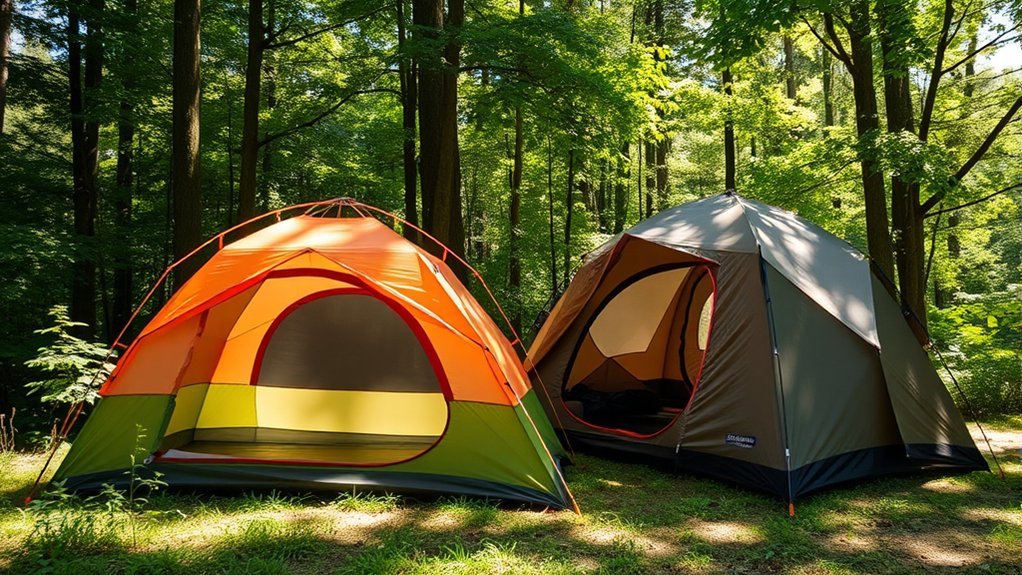
When choosing between a 3-season and a 4-season tent, take into account the weather conditions you’ll face. 3-season tents excel in mild temperatures and light snow, with a lightweight design and enhanced ventilation. In contrast, 4-season tents are built for extreme weather, featuring a sturdier frame and limited mesh to retain warmth against heavy snowfall and high winds. Understanding these differences guarantees you select the right tent for your camping needs. There are more factors to take into account, too.
Understanding 3-Season Tents

When you’re choosing a tent for your outdoor adventures in spring, summer, and fall, a 3-season tent might be the perfect fit. These tents are crafted with lighter tent materials, weighing between 2 to 4 pounds, making them ideal for backpacking. For instance, the REI Co-op Quarter Dome SL 1 weighs just 2 lbs 6 oz. Designed with increased mesh for airflow, 3-season tents effectively manage condensation while keeping you comfortable in milder weather.
However, they perform best in low winds and light precipitation, as they aren’t suited for heavy snowfall or extreme winter conditions. Key features include a compact size with limited headroom and vestibule space, prioritizing lightweight design over durability against severe weather. For maximum use, consider these camping tips: pitch your tent in sheltered areas and guarantee adequate ventilation to enhance your outdoor experience.
Understanding 4-Season Tents
If you’re planning to venture into harsher climates or tackle winter landscapes, a 4-season tent is specifically designed for those extreme conditions. These tents are built to withstand high winds and heavy snowfall, making them ideal for winter camping and alpine environments. You’ll notice that they generally feature a more rigid frame and thicker denier nylon for enhanced durability.
| Feature | Description | Benefits |
|---|---|---|
| Frame Structure | Rigid and sturdy | Stability in storms |
| Mesh Panels | Reduced or eliminated | Better warmth retention |
| Vestibule Size | Larger for gear storage | Enhanced functionality |
While four-season tents offer distinct benefits for extreme conditions, they may not be markedly warmer than their three-season counterparts. Managing ventilation is vital to prevent moisture buildup. Understanding these aspects can help you choose the right gear for your adventures.
Key Features of 3-Season Tents
When you choose a 3-season tent, you’ll benefit from its lightweight and packable design, making it ideal for backpacking trips. These tents excel in high ventilation and airflow, with mesh panels that help manage condensation during warm weather. However, keep in mind their weather resistance limitations, as they’re not built to withstand extreme winter conditions.
Products Worth Considering
Extremely Lightweight: Weighing only 2 pounds for the single-person tent, this is a camping essential for backpackers, allowing for a significant reduction in load and freeing up more energy to carry other equipment
Spacious Ultralight Design - Award-winning backpacking tents with extended dimensions for taller adventurers. Revolutionary HyperBead fabric creates a waterproof tent that's significantly lighter and stronger than traditional materials, with breathable nylon ripstop and mesh body for optimal comfort during tent camping
EASY SETUP FREE STANDING TENT: With one set of aluminum alloy tent poles, the tent is super easy to assemble, it takes less than two minutes for anyone with no experience.The double-Y structure can make it self standing without peg nails. It is the easiest tent you have ever put up. Perfect 3 person tent for Backpacking, cycling, Hiking, Bikepacking, Mountaineering, Fishing or Car Camping. And The Tent comes with a instruction manual.
Lightweight and Packable Design
Although many camping enthusiasts prioritize durability and weather resistance, the lightweight and packable design of 3-season tents remains a standout feature for those who venture into the great outdoors. Typically weighing between 2 to 4 pounds, these tents are perfect for backpacking and multi-day trips. They utilize lightweight materials, including thinner groundsheets and flysheets, which reduce bulk and enhance packability for easier transport. Their smaller size and limited headroom not only contribute to this lightweight design but also make them ideal for summer camping conditions. Many 3-season tents come in darker colors, allowing you to blend into natural environments, perfect for stealth camping. With these packable designs, you can explore more without being weighed down.
High Ventilation and Airflow
High ventilation and airflow are essential for 3-season tents, ensuring you stay comfortable during your spring, summer, and fall adventures. These tents utilize effective ventilation techniques to manage airflow, enhancing your camping experience. Key features include:
- Mesh panels that promote circulation while keeping insects out.
- Double-wall construction, effectively reducing condensation buildup.
- Thinner ground and fly sheets, allowing for increased airflow and reduced bulk.
- Limited headroom and vestibule space, optimizing packability for backpackers.
With these features, 3-season tents are designed to prevent overheating and provide adequate fresh air circulation, making them an ideal choice for enjoying the great outdoors. Prioritize airflow management, and you’ll enhance your overall comfort in warmer climates.
Weather Resistance Limitations
While 3-season tents excel in moderate weather conditions, they do have limitations in weather resistance that campers should consider. These tents are designed for spring, summer, and fall, but they struggle with heavy snowfall and extreme winter weather. The lightweight materials and increased mesh for ventilation can lead to condensation issues in colder conditions. Additionally, the thinner groundsheet and flysheet reduce durability against harsh weather. While they can handle light rain and some snow, 3-season tents lack the structural integrity necessary for high winds and significant snow accumulation. Their steep pitch design helps with water and snow shedding, but without the robust wind resistance found in 4-season tents, you might find yourself in a tricky situation.
Key Features of 4-Season Tents
When you’re venturing into extreme weather territory, understanding the key features of 4-season tents is essential for ensuring your safety and comfort. These tents are built to handle harsh conditions, providing you with reliable shelter. Here are four standout features:
- Fabric Durability: Made with thicker denier nylon, these tents resist abrasion and last longer in alpine environments.
- Insulation Techniques: Reduced mesh panels help retain warmth, ensuring a cozy interior even in frigid temperatures.
- Snow Flaps: These flaps help manage snow ingress, keeping your living space clear and accessible.
- Larger Vestibules: They offer additional storage space for gear, preventing clutter and providing ease of access.
With these features, you can confidently tackle extreme weather, knowing your 4-season tent prioritizes warmth and stability.
Wind Protection in Tents
As you prepare for outdoor adventures, understanding wind protection in tents becomes crucial, especially in exposed environments. Wind stability is a significant factor to take into account in tent design. While 3-season tents can handle low winds, they often struggle in moderate to high winds, making them unsuitable for harsh conditions. In contrast, 4-season tents boast features like an X-frame structure and steep pitches that enhance their stability, enabling them to withstand strong gusts effectively.
Additionally, larger flysheets on 4-season tents prevent snow accumulation, which is essential for maintaining warmth and comfort during winter camping. To further bolster wind protection, building snow walls around your tent can create an effective barrier against drifting snow and reduce wind exposure. Ultimately, choosing the right tent design for your adventure guarantees you stay safe and comfortable, regardless of the weather challenges you face.
Packability and Weight Considerations
Packability and weight are critical factors to evaluate when choosing between 3-season and 4-season tents for your outdoor excursions. Understanding how tent materials and weight distribution impact your decision can streamline your packing process.
Here are key considerations:
- Weight: 3-season tents usually weigh between 2–4 pounds, ideal for backpacking. In contrast, 4-season tents range from 5 to 10 pounds due to sturdier materials.
- Packability: 3-season tents are compact and easy to stow, while 4-season options may sacrifice this for added stability.
- Durability: Thicker materials in 4-season tents enhance wind resistance but contribute to extra weight.
- Lightweight Alternatives: Some lightweight 4-season tents, like the MSR Advance Pro 2 (2 lb 14 oz), balance durability and packability for extreme conditions.
Choose wisely based on your adventure needs and packing limitations.
Specialized Options for Extreme Conditions
When facing extreme conditions, single-wall tents offer ultralight options that prioritize weight and packability over breathability. These designs often feature thicker denier nylon for enhanced durability, making them ideal for harsh alpine environments. While they excel in minimizing bulk, be aware that they may also lead to condensation issues due to limited ventilation.
Products Worth Considering
1 PERSON TENT: If trekking or backpacking personal in the backcountry, you will need a quality one person tent to keep you protected from the elements. Polyester rain fly&bathtub with PU 5000 coating is better in waterproof and firmer than you expected. Weatherproof material with factory-sealed seams keeps you dry and comfortable in all season&all weather conditions! You need an appropriate lightweight solo tent for backpacking!
[Easy to Carry] the single tent weighs only 1.95kg (4.3lb), which is very portable, light and compact. It is suitable for camping, backpacking, hiking, mountain climbing and other occasions.
1 PERSON TENT: If trekking or backpacking personal in the backcountry, you will need a quality one person tent to keep you protected from the elements. Polyester rain fly&bathtub with PU 5000 coating is better in waterproof and firmer than you expected. Weatherproof material with factory-sealed seams keeps you dry and comfortable in all season&all weather conditions! You need an appropriate lightweight solo tent for backpacking!
Single-Wall Tents
Single-wall tents are engineered for extreme conditions, providing ultralight solutions that cater to adventurers traversing high-altitude and alpine environments. Here are some key points to evaluate:
- Single wall advantages: They’re lightweight and compact, making them easy to carry and pitch in challenging locations, like snow ledges.
- Single wall disadvantages: They sacrifice breathability, often leading to increased condensation inside.
- Durability: Constructed from waterproof materials, they withstand abrasive environments and harsh weather.
- Visibility: Models like those from MSR feature bright colors for enhanced visibility in stormy conditions, reducing accident risks.
While single-wall tents excel in specific situations, they may not offer the warmth retention of traditional four-season tents, limiting their versatility in varied climates.
Ultralight Options
For those venturing into extreme conditions, ultralight options can greatly enhance your experience without compromising on protection. These tents often incorporate ultralight materials and single-wall designs, sacrificing some breathability for significant weight savings. Ideal for alpine performance, they can be pitched in challenging spots like snow ledges.
| Tent Model | Weight (lbs) | Key Features |
|---|---|---|
| MSR Winter Tent | 5-10 | High visibility, storm protection |
| Mountain Hardwear | 4-8 | Durable fabrics, compact design |
| Big Agnes | 3-7 | Zippered mesh “windows” |
| REI Co-op | 4-9 | Excellent wind resistance |
These specialized tents guarantee you stay warm and dry while keeping your pack light, empowering you to conquer the wild.
Tent Selection Based on Environment
Selecting the right tent for your camping environment is essential for ensuring a safe and comfortable experience. When considering environmental factors and your chosen camping locations, keep the following points in mind:
- Weather Conditions: If you’re camping in milder weather, a 3-season tent is sufficient, as it can handle light snow and rain.
- Temperature Range: For winter adventures, opt for a 4-season tent, designed to withstand heavy snowfall and extreme winds.
- Ventilation Needs: 3-season tents emphasize airflow with more mesh, while 4-season tents limit mesh to retain warmth.
- Stability Requirements: Evaluate wind resistance; 4-season tents typically offer better stability in harsh weather compared to their 3-season counterparts.
Products Worth Considering
WATERPROOF & LONG-LASTING: Polyester rain fly & groundsheet & bathtub with PU 5000 coating is firmer than you expected. Weatherproof material with factory-sealed seams keeps you dry and comfortable in all season&all weather condition! Better material but more affordable! You really need an appropriate lightweight 2 person tent for backpacking!
【Waterproof Camping Tent】Geertop 2 person 4 season tent made of 20D PU8000 mm waterproof coated nylon for Outer tent & 210T PU 5000 mm waterproof coating polyester for tent floor, be able to resist strong wind or snow in high altitude camping situations
Easy Four-Person Tent Setup & Weatherproof: Free-standing 2-pole aluminum design for quick setup of this 4 person tent (Base: 8'6" L x 7'6" W, Center Height: 4'4"). Stay dry with 75D 1500mm fly & 75D 2000mm floor, plus sealed seams for superior weather protection in any outdoor tent conditions
Tent Maintenance and Care Tips
Although camping can be an exhilarating adventure, maintaining your tent is essential for prolonging its lifespan and guaranteeing your comfort during future outings. Start with regular tent cleaning; after each use, wipe down both the interior and exterior with a mild soap solution to eliminate dirt, oils, and residues that can degrade the fabric over time.
Before storing your tent, verify it’s completely dry to prevent mold and mildew, which weaken the material. For effective storage tips, keep your tent in a cool, dry place and use a breathable storage sack instead of the original compression bag to avoid fabric damage.
Don’t forget to regularly check the tent’s seam seals and waterproof coatings, reapplying seam sealant as needed. Finally, minimize exposure to direct sunlight, as UV rays can greatly shorten your tent’s lifespan. By following these steps, you’ll keep your tent in top shape for your next adventure.
Recommendations for Winter Camping
When winter camping, understanding your tent options is vital for guaranteeing safety and comfort in harsh conditions. Choosing the right shelter can make a significant difference, so consider the following recommendations:
- Opt for a 4-season tent if you anticipate heavy snowfall or high winds; its durable construction will provide better protection.
- Evaluate your camping area’s conditions; a well-set-up 3-season tent may suffice in milder winter weather.
- Invest in quality winter gear, including a good sleeping pad to insulate against ground heat loss; this is essential for staying warm.
- Prioritize camping safety by packing extra supplies; make sure you have enough food, water, and emergency gear to handle unexpected situations.
With these tips, you’ll enhance your winter camping experience, keeping safety and comfort at the forefront of your outdoor adventures.
Products Worth Considering
FOUR SEASON TENT: While other 3 season tents are only available for spring, summer and fall, this extreme weather tent is suitable for all seasons of the year. In winter, the snow skirt of this 2 person tent makes sure that it can keep snow away. The roll-able design makes it convenient when there is no snow around. In other seasons, the mesh design of the 4 season backpacking tent keeps bugs away while the double-layer door ensures ventilation
Lightweight and Durable: The OneTigris STELLA Camping Tent features a lightweight and durable 20D Nylon outer fabric with a single-layer silicone coating, making it both sturdy and easy to carry at only 4.4lb/2kg. Suitable for backpackers, bushcrafters, everyday campers, and families Waterproof: With a 3000mm waterproof rating, the STELLA camping tent is perfect for use in all weather conditions. The removable blackout outer tent allows for greater flexibility in use.
【Premium Material & Cozy Camping】Crafted from 20D single-sided silicone-coated nylon, our hot tent with stove jack ensures durability and lightness, providing a reliable shelter for camping. Equipped with a stove jack, it offers a cozy space for solo campers, while accommodating a wood stove may make it a bit crowded for two person.If you carry a tent stove, It is recommended to use single person.
Frequently Asked Questions
Can I Use a 3-Season Tent in Winter Conditions?
You can use a 3-season tent in winter camping, but its insulation might not handle extreme cold well. Consider adding extra layers or insulation to improve warmth and protect against harsh winter conditions effectively.
How Do I Choose Between 3-Season and 4-Season Tents?
To choose between tents, consider that 70% of campers prefer versatility. Evaluate tent features like ventilation and insulation based on seasonal factors; your comfort and safety depend on matching these elements to your adventure’s conditions.
What Is the Average Lifespan of a 3-Season Tent?
A 3-season tent typically lasts around 5 to 10 years, depending on tent durability and your camping frequency. Regular maintenance and proper storage can greatly extend its lifespan, ensuring many adventures ahead.
Are There Hybrid Tents Available for Varying Seasons?
Yes, there are hybrid tents designed for seasonal adaptability, blending features from both 3-season and 4-season tents. These tents typically offer enhanced ventilation and insulation, providing versatility for various weather conditions during your adventures.
How Much Should I Expect to Spend on a 4-Season Tent?
You can expect to spend between $300 to $800 on a 4-season tent. Budget options offer basic protection, while premium features enhance durability and weather resistance, ensuring your adventures remain comfortable and safe in extreme conditions.
Conclusion
When choosing between a 3-season and 4-season tent, it’s essential to take into account your camping environment and the conditions you’ll face. While 3-season tents are great for warmer months, a 4-season tent can be your lifeline in harsh winter weather. Don’t gamble with your safety; invest in the right gear for your adventures. Remember, the right tent can make or break your experience, so choose wisely to guarantee you’re sheltered from the storm.