

Last Updated on July 30, 2026 by Mason Reed
A tent zipper that sticks, splits open behind the slider, or loses its pull can often be repaired without replacing the whole tent. The key is to identify the failed part first. Clean out grit, free trapped fabric, and test the zipper before using pliers or removing any hardware. Never force the slider or cut the zipper tape as a first step.
Quick Answer
To fix a tent zipper, brush away dirt, release any snagged fabric, and move the slider slowly. If the zipper closes but splits behind the slider, gently tighten the slider with needle-nose pliers or replace it with the correct size. Damaged coil, teeth, tape, or stitching usually needs professional repair.
Key Takeaways
- A missing pull tab, worn slider, dirty coil, and torn zipper tape are different problems and require different fixes.
- Clean and test the zipper before tightening or replacing the slider.
- Use pliers in tiny increments; overcrimping can jam or break the slider.
- Do not place duct tape or repair tape over the zipper coil or teeth.
- Replace the slider when it is worn; seek professional service when the coil, teeth, zipper tape, or stitching is damaged.
At a Glance
| Time Required | 5–15 minutes for cleaning or a minor adjustment; 20–45 minutes for a compatible slider replacement |
| Difficulty | Easy for cleaning and pull-tab replacement; moderate for slider replacement |
| Tools Needed | Soft brush, clean cloth, zipper cleaner/lubricant, needle-nose pliers, and a compatible replacement slider or pull cord |
| Cost | About $0–$25 for common DIY supplies; professional zipper work varies by tent and damage |
Disclosure: As an Amazon Associate I earn from qualifying purchases. Some links on this page are affiliate links, at no extra cost to you.
Common Tent Zipper Problems and Causes

Tent zippers commonly fail because grit collects in the coil or slider, fabric gets trapped, the slider wears and spreads apart, or the zipper is pulled while the door is under tension. Sand, dust, mud, and salt can increase friction and wear. Outdoor-gear manufacturers therefore recommend keeping the zipper clean, moving it gently, and avoiding force. See the care guidance from REI and NEMO Equipment.
Before repairing anything, identify the part that failed:
- Pull tab or puller: The handle you hold. A missing tab does not mean the slider is broken.
- Slider: The moving body that joins or separates the zipper coil. A worn slider often causes the zipper to split open behind it.
- Coil or teeth: The interlocking elements. Bent, missing, or torn elements usually cannot be fixed by squeezing the slider.
- Zipper tape: The fabric strip sewn to the tent. Tears, loose stitching, and separated seams require sewing or a professional repair.
- Stops: Small parts or sewn barriers that keep the slider from running off the end.
If the zipper closes and then opens again behind the slider, the slider is usually worn or spread. If the slider will not move, first look for dirt, corrosion, bent coil, or trapped fabric.
Match the Symptom to the Repair
| Symptom | Likely Cause | Best First Step |
| Slider is hard to move | Grit, dried mud, salt, or snagged fabric | Back up gently, free the fabric, then brush and clean the zipper |
| Zipper splits behind slider | Worn or spread slider | Clean it, then make a tiny plier adjustment or replace the slider |
| Pull tab is missing | Broken puller only | Add a short cord loop or replacement pull tab |
| Visible coil, teeth, tape, or seam damage | Structural zipper damage | Stop forcing it and contact the tent maker or a gear-repair shop |
Quick Fixes for Tent Zipper Malfunctions
Free a Snagged Zipper
- Stop pulling as soon as the slider jams.
- Hold the zipper tape with one hand to remove tension.
- Move the slider backward a small amount while gently pulling trapped fabric away from the opening.
- Inspect both sides for loose thread or damaged fabric before trying again.
Warning: Do not yank a stuck slider. Force can tear lightweight tent fabric, deform the coil, or break the slider. Keep fingers clear when using pliers or cutting tools.
Clean a Sticky or Gritty Zipper
- Open the zipper as far as it will move without force.
- Use a dry toothbrush or other soft brush to remove loose grit from both sides of the coil and from the slider opening.
- Wipe the area with a damp cloth. Let it dry.
- Apply a small amount of zipper cleaner/lubricant that is suitable for outdoor gear, following the product directions.
- Move the slider back and forth several times, then wipe away excess product.
A purpose-made zipper product is safer than cooking oil, petroleum jelly, lip balm, or heavy wax. Oily home remedies can collect dirt and may stain or affect coated fabric. GEAR AID’s zipper-care guide recommends brushing away grit before applying cleaner and lubricant.
Replace a Missing Pull Tab
If only the handle has broken off, thread a short loop of thin cord through the slider’s pull attachment. Tie a compact overhand knot and trim the ends. A small split ring or purpose-made replacement pull also works if it moves freely and does not catch the mesh. This repair does not require cutting the zipper tape or removing the slider.
Use Pliers for a Separating Zipper
If the zipper closes but immediately separates behind the slider, clean it first. Then use needle-nose pliers to make a very small adjustment:
- Move the slider to an easy-to-reach straight section.
- Look at the slider from the side and check whether the top and bottom plates have spread apart.
- Place the pliers on one side of the slider body and squeeze very gently.
- Repeat on the other side so the adjustment stays even.
- Test the zipper after each tiny squeeze. Stop as soon as the coil stays joined.
REI and NEMO both describe gentle plier adjustment as a useful fix, but overcrimping can jam or break the slider. Treat this as a temporary repair if the slider is visibly worn. A properly matched replacement slider is the better long-term solution.
Align the Slider and Remove Door Tension
A tent door can pull the zipper sideways when the shelter is pitched too tightly or unevenly. Before blaming the zipper, loosen the nearest stake or guyline slightly and support the door with your free hand. Keep the coil as straight as possible while moving the slider. If the two sides remain out of step, the slider may have come off or the coil may be damaged; do not cut the zipper tape to force realignment.
Pro Tip: Use two hands: one to guide the slider and one to hold the zipper tape together. This reduces sideways load and helps prevent fabric from entering the slider.
Step-by-Step Guide to Replacing a Worn Zipper Slider
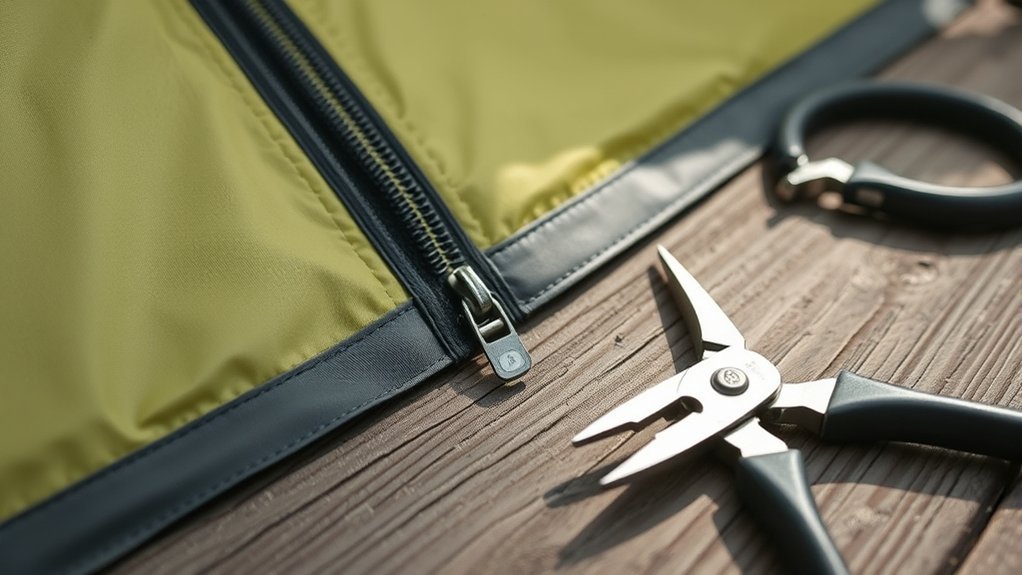
Slider replacement is appropriate when cleaning and a light plier adjustment do not stop the zipper from separating. The correct method depends on the tent’s zipper design. Some manufacturers provide snap-on or screw-on replacements, while conventional sliders may require removing a stop or opening and resewing the end of the zipper.
Required Tools and Materials
- A replacement slider that matches the zipper type, gauge, and orientation
- Needle-nose pliers
- End nippers only if the approved repair method requires removal of a metal stop
- Small brush and clean cloth
- Compatible replacement stop, manufacturer-supplied slider, or temporary screw-on slider
- Phone camera to record the original slider direction before removal
Match the Replacement Slider
Check the back of the old slider for a size or model marking, then confirm the part with the tent manufacturer. Coil size, slider shape, lock style, and direction must match. A slider that is too small may jam; one that is too large may fail to join the coil. Big Agnes, for example, asks owners to provide the tent model and year when selecting a replacement slider.
Do Not Cut the Zipper Tape by Default
There is no universal rule to cut the zipper tape one inch above a seam. Doing so can damage the bug mesh, coated fly fabric, seam construction, or zipper stop. Follow the tent maker’s instructions for that exact model. If the slider cannot be installed without opening stitches or removing a sewn stop, a gear-repair shop can complete the work and restore the end stop correctly.
Install and Secure the New Slider
- Clean the zipper and photograph the old slider’s direction.
- Remove the worn slider only by the method approved for the replacement part. Do not cut the zipper coil or tape.
- Place both sides of the coil evenly into the new slider, keeping the ends level.
- Move the slider slowly through a short test section. If the coil bunches or separates, stop and reseat it.
- Install the correct top stop or restore the sewn stop so the slider cannot run off the end.
- Open and close the zipper several times with the tent fabric relaxed, then test it again with the tent pitched.
Note: A screw-on replacement slider can be useful for an on-trail emergency, but some tent manufacturers consider it temporary. A model-matched slider installed with the proper stop is the stronger repair.
Securing Your New Zipper for Longevity
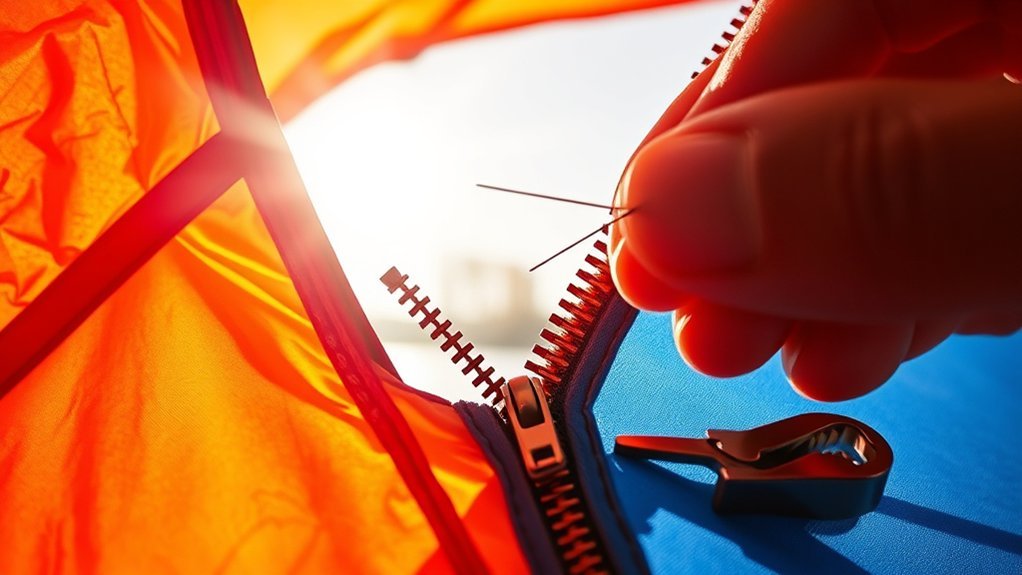
Repair tape is not a substitute for a zipper stop, slider, coil, or sewn seam. Do not wrap DCF tape, duct tape, or fabric tape across the moving coil. Adhesive residue can collect grit and block the slider. Use material-compatible tent tape only to stabilize a tear in the surrounding fabric, and keep it clear of the zipper’s moving path.
After any repair, test the zipper in stages. First work it while the tent is loose. Then pitch the tent and check that the door is not under excessive sideways tension. Finally, close the door fully and inspect the entire coil for gaps. If the zipper separates again, replace the slider rather than repeatedly tightening it.
Additional Tips for Effective Zipper Repairs
Pack a Small Zipper Repair Kit
- Soft toothbrush
- Small zipper cleaner/lubricant
- Short length of thin cord for a replacement pull
- Needle-nose pliers
- Manufacturer-approved spare slider or correctly sized temporary slider
- Material-compatible repair tape for nearby fabric tears, not for the zipper coil
Know When to Stop the DIY Repair
Contact the tent manufacturer or an outdoor-gear repair shop when you find missing or torn coil elements, split zipper tape, failed stitching, a damaged waterproof zipper coating, repeated misalignment, or a slider that cannot be matched. Replacing a worn slider is common; replacing the entire sewn-in zipper is a larger job. Big Agnes notes that damaged teeth or coil may require complete zipper replacement rather than another slider adjustment.
Make a Temporary Field Closure
If the zipper cannot be restored at camp, close the door as far as possible and reduce strain on the opening. A compatible temporary slider is the best field option. Otherwise, use small clips on the zipper tape or existing loops to hold the door together until you can arrange a proper repair. Keep sharp pins and adhesive away from coated rainfly fabric, mesh, and the zipper coil.
Preventive Measures for Zipper Care
- Brush after dirty trips: Remove sand, dust, mud, and plant debris before storage.
- Clean before lubricating: Lubricant applied over grit can trap abrasive particles.
- Do not force the slider: Back up and free the obstruction.
- Use two hands: Guide the slider while supporting the zipper tape.
- Reduce pitch tension: Adjust a nearby stake or guyline if the door pulls sideways.
- Dry the tent fully: Store it loose in a cool, dry place after cleaning.
- Inspect before travel: Look for coil gaps, loose stitches, slider wear, and missing stops while repairs are still easy to arrange.
Regular cleaning and careful handling can slow wear, but lubricant will not repair a spread slider or damaged coil. Use it to improve movement after the zipper is clean, not as a cure for every failure.
Frequently Asked Questions
Can I use duct tape for a tent zipper repair?
Do not place duct tape over the zipper coil or teeth. It stops the slider from moving and can leave residue that collects grit. Tape may temporarily stabilize torn fabric beside the zipper if it is compatible with the tent material and stays clear of the moving parts.
How can I prevent tent zipper issues in the future?
Brush away sand and dirt, clean the coil before lubricating it, use two hands, avoid forcing snags, and reduce door tension before zipping. Dry the tent fully and inspect the slider, stops, coil, tape, and stitching before each trip.
What materials are best for temporary zipper fixes?
Carry thin cord for a missing pull tab, a soft brush, zipper cleaner/lubricant, needle-nose pliers, and a correctly sized temporary or manufacturer-approved replacement slider. Use repair tape only for compatible surrounding fabric, never across the coil.
Can weather affect my tent zipper’s performance?
Weather affects zippers mostly through sand, dust, mud, salt, ice, and moisture left on the tent. These can increase friction or contaminate the slider. Brush or rinse away debris as the manufacturer directs, let the tent dry, and avoid forcing a frozen or dirty zipper.
Is it worth replacing the entire zipper?
Replace the slider first when the zipper splits but the coil and tape are intact. Full zipper replacement becomes reasonable when the coil, teeth, tape, or stitching is badly damaged and the tent is otherwise worth repairing. Ask the manufacturer or a gear-repair shop for an estimate.
Can a tent zipper with missing teeth or torn coil be fixed?
A slider adjustment cannot restore missing teeth or torn coil. Stop using force and contact the tent maker or a repair specialist. Depending on the design and damage, the entire zipper may need replacement.
How do I find the correct replacement slider size?
Look for a size or model marking on the back of the slider, then confirm it with the tent manufacturer using the tent model and year. Match the zipper type, gauge, lock style, and slider direction rather than choosing by appearance alone.
Conclusion
Most tent zipper problems become manageable once you identify the failed part. Clean grit and free snags first. Replace a missing pull tab with cord, gently adjust a spread slider only in tiny steps, and install the correct replacement slider when wear returns. Leave damaged coil, teeth, tape, or stitching to the tent maker or a qualified repair shop. Careful use and regular cleaning will give the repair the best chance to last.
Sources
- REI: How to Clean, Waterproof and Care for a Tent — gentle zipper use and careful slider tightening
- REI: How to Repair a Tent — cleaning and lubricating a sticky tent zipper
- NEMO Equipment: Zipper Not Closing Properly — cleaning and cautious plier adjustment
- Big Agnes: DIY Tent Repairs — slider replacement, part matching, and repair limits
- GEAR AID: Zipper Cleaning and Care — brushing debris before applying zipper cleaner and lubricant
- YKK: Understanding Zipper Pullers and Sliders — correct zipper-part terminology
