
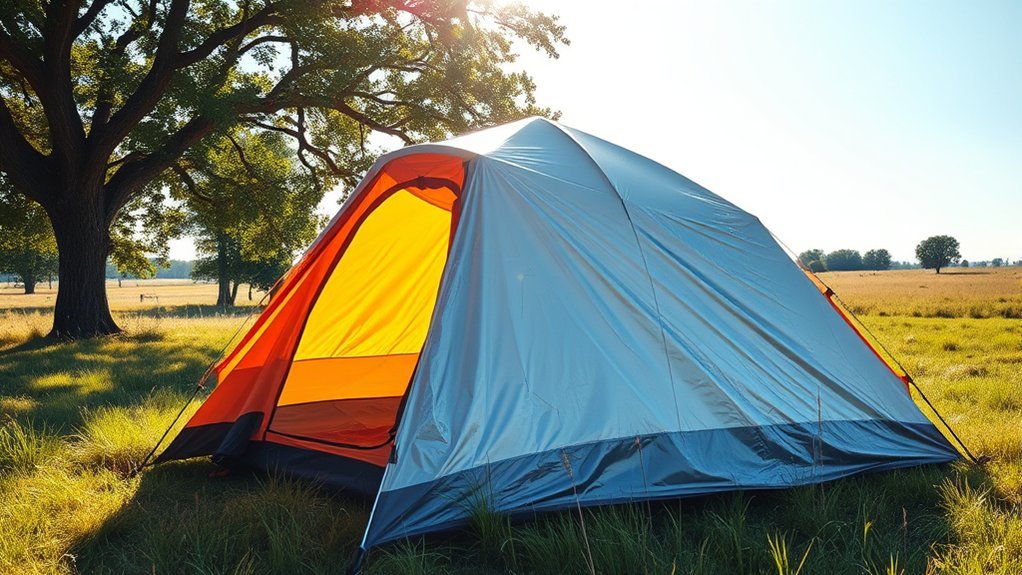
Using a reflective tarp over your tent really does keep you cooler. It deflects sunlight, creating a shaded area that considerably lowers temperatures underneath. The tarp’s thickness matters too; thicker options minimize heat transmission more effectively. For best results, position the tarp directly above your tent in sunlight, allowing it to acclimate. You’ll notice a marked difference in temperature compared to direct sunlight. Discover more tips on maximizing your tarp’s cooling benefits and enhancing your outdoor experience.
Understanding the Basics of Reflective Tarps

Reflective tarps serve as important tools for managing heat in outdoor settings, particularly when camping or in survival situations. These tarps utilize reflective materials designed to bounce sunlight away, effectively reducing heat accumulation beneath them. The thickness of the tarp plays a key role; while all tarps permit some heat to pass through, reflective tarps considerably minimize this effect. For enhanced cooling, placing a reflective space blanket on one side amplifies the tarp’s ability to direct sunlight away, resulting in a noticeably cooler area on the shaded side. Practical applications in survival training demonstrate that the temperature difference is tangible, enabling you to experience firsthand the tarp’s effectiveness. To maintain peak performance, proper tarp maintenance is essential, ensuring longevity and sustained cooling benefits. Experimenting with the setup in direct sunlight allows you to grasp its functionality fully, empowering you to manage heat exposure effectively during your outdoor adventures.
Products Worth Considering
Application - Insulated tarp is great for use as ground tarp, shelter, tent or survival blanket for camping, or to have in your car for a serious, multi-hour breakdown in winter. It helps keeping the heat out when needed.
ALL WEATHER BLANKET: This unique blanket features a Mylar reflective side which can be used to reflect heat, create a radiant barrier, or signal for help. The other side is made of two layers of polypropylene, which creates a waterproof barrier and can be used as a blanket, tarp or shelter.
[PREMIUM MATERIAL] This rain poncho is made from lightweight yet durable and rip-resistant polyester material. Seams are sealed with waterproof backing material to guarantee no rain will leak from them. Each corner is reinforced and comes with a grommet. Quality buttons along the side are added to help in windy weather. A brim is incorporated in the hood to help you see better
How Reflective Tarps Work to Reduce Heat
When you set up a reflective tarp, its design effectively channels sunlight away, greatly reducing heat on the shaded side. The tarp incorporates a reflective space blanket that excels in heat reflection, preventing sunlight absorption by the tent below. This simple yet powerful mechanism creates a noticeable temperature difference; the shaded area remains much cooler than the side exposed to direct sunlight. Thicker tarps contribute even more to this effect, as they limit heat transmission and enhance overall performance. Although the ambient air temperature might stay consistent on both sides, your experience of heat will vary considerably. The ideal placement of a reflective tarp in direct sunlight maximizes its efficiency, making it a critical tool for managing heat during summer outings. Utilizing these principles allows you to thrive in challenging environments, ensuring your comfort and survival.
Setting Up Your Reflective Tarp for Maximum Effect
To achieve maximum cooling efficiency, position your reflective tarp directly above your tent in sunlight. This setup creates a barrier that reflects heat away, keeping the tent cooler. For enhanced results, use a reflective blanket on one side of the tarp to minimize heat transmission.
| Tarp Color Options | Reflective Blanket Usage | Ideal Positioning |
|---|---|---|
| Silver | Reflects 90% of heat | Directly overhead |
| White | Good for lighter shades | Slightly angled |
| Black | Absorbs heat | Avoid direct contact |
Allow this configuration to remain under the sun for a while to assess its effectiveness. Experiment with different tarp thicknesses and positions to discover what works best in your environment. This approach will liberate you from discomfort during hot days, ensuring a more enjoyable outdoor experience.
Products Worth Considering
ALL WEATHER BLANKET: This unique blanket features a Mylar reflective side which can be used to reflect heat, create a radiant barrier, or signal for help. The other side is made of two layers of polypropylene, which creates a waterproof barrier and can be used as a blanket, tarp or shelter.
Enough for Daily Use: you will get 2 pieces of thermal blanket for camping in green with 8 pieces of iron stakes, which can satisfy your daily use and emergency demands, bringing convenience to your life
【Durability Shade Cloth】:Aluminum Shade Cloth from high density polyethylene which,high shade rate,boast superior resistance against tear, UV, wind, and temperature impact,,it can abetter keep the air circulation,Provide a comfortable and cool environment for your pets, plants.
Comparing Temperature Differences: Shaded vs. Non-Shaded Areas
Shaded areas under a tarp can greatly lower temperatures compared to regions exposed to direct sunlight. This is evidenced by hands-on demonstrations in survival classes, where participants consistently feel stark temperature variations between the shaded side of the tarp and the non-shaded areas. Even when the ambient air temperature remains constant, the shade effectiveness of a reflective tarp considerably minimizes heat transfer.
The reflective properties of the tarp, especially when paired with a space blanket, work to deflect sunlight, creating a cooler environment beneath. However, it’s essential to recognize that not all tarp materials provide the same level of protection; even thicker tarps can allow some heat transmission. Consequently, understanding how sunlight interacts with various materials is key to maximizing shade effectiveness and ensuring cooler conditions during your outdoor adventures.
Products Worth Considering
Material:70%-80% Aluminum Foil Shade Cloth,Made from high density polyethylene which is lightweight but durable,provides maximum airflow and stretch-ability.It brings 70%-80% the shadow,20%-30% of the sunshine can through it
HIGH SHADING, COMPLETE SUN PROTECTION: Our aluminet shade cloth has 85% shading, which can effectively block the sunlight. With up to 10 size options, we can satisfy your needs. Suitable for car roof sun protection, pet shading, or used as a blackout curtain in outdoor activities, providing you with a cool and comfortable space.
HIGH SHADING, COMPLETE SUN PROTECTION: Our aluminet shade cloth has 85% shading, which can effectively block the sunlight. With up to 10 size options, we can satisfy your needs. Suitable for car roof sun protection, pet shading, or used as a blackout curtain in outdoor activities, providing you with a cool and comfortable space.
Practical Tips for Using a Reflective Tarp in Different Conditions
When using a reflective tarp, consider ideal placement strategies to maximize its heat-reflective properties. The thickness of the tarp also plays an essential role in insulation, so choose a material that suits your specific conditions. Finally, regularly monitor temperatures on both sides of the tarp to gauge its effectiveness throughout the day.
Products Worth Considering
All-Weather Protection for Outdoor Survival: Built with a durable 3-layer design, this all-weather survival blanket combines reflective Mylar and rugged polypropylene to help retain body heat while blocking wind and moisture. Ideal for camping, hiking, hunting, or emergency preparedness when dependable protection matters.
[PREMIUM MATERIAL] This rain poncho is made from lightweight yet durable and rip-resistant polyester material. Seams are sealed with waterproof backing material to guarantee no rain will leak from them. Each corner is reinforced and comes with a grommet. Quality buttons along the side are added to help in windy weather. A brim is incorporated in the hood to help you see better
Reinforced Grommets: Upgraded 6.3 inch Stainless Steel Grommets, engineered for a more secure connection and greater durability to prevent falls.
Tarp Placement Strategies
Proper placement of a reflective tarp can greatly enhance your camping experience by keeping your tent cooler. Start by ensuring the reflective side faces the sun to effectively deflect heat. Experiment with different tarp types and angles to find ideal shading techniques; even slight adjustments can yield significant temperature changes. Once you’ve set it up, allow the tarp to acclimate in direct sunlight before judging its cooling efficiency, as immediate readings may misrepresent its effectiveness. Additionally, consider environmental factors like wind direction and surrounding vegetation, as these can impact heat management. By strategically positioning your tarp, you can maximize shade and create a more comfortable camping environment.
Material Thickness Considerations
Choosing the right material thickness for your reflective tarp can greatly impact its performance in various conditions. Thicker tarps block more heat but can add to tarp weight, affecting portability factors. Here are some practical tips to contemplate:
- Test different tarp thicknesses to understand their effects on temperature management.
- Position the tarp in direct sunlight to maximize heat-reflecting properties.
- Enhance reflectivity with a reflective space blanket on one side.
- Regularly monitor temperature differences between the reflective and shaded sides.
Temperature Monitoring Techniques
To effectively assess the performance of your reflective tarp, it is crucial to implement precise temperature monitoring techniques. Start by setting up your tarp in direct sunlight, allowing it to acclimate before examining the shaded area beneath. Use a thermometer or infrared thermometer to measure the ambient temperature on both the reflective and shaded sides, quantifying the cooling effect. Regularly compare temperature readings throughout the day, as sunlight intensity can impact shading effectiveness. Conduct experiments in varying environmental conditions, such as humidity levels and times of day, to understand how these factors influence heat retention and dissipation. Incorporating these temperature measurement techniques into your survival practice sessions empowers you to maximize the benefits of using a reflective tarp for shade and heat management.
Real-World Applications and Experiences in Survival Training
While traversing the challenges of survival training, understanding the practical applications of a reflective tarp can greatly enhance your ability to manage heat exposure. In survival scenarios, you’ll learn firsthand how effective a reflective tarp can be in mitigating heat. Here’s what you can expect:
- Setup Techniques: Discover how to position a tarp with a space blanket for ideal shade.
- Temperature Demonstrations: Experience significant temperature differences between the tarp’s reflective side and shaded area.
- Hands-On Learning: Engage in practical exercises that illustrate the tarp’s effectiveness in real-world conditions.
- Experimentation: Test different setups under varying sunlight conditions to improve your heat management skills.
This hands-on experience is invaluable, reinforcing the critical role of reflective tarps in enhancing your survival capabilities. Mastering these techniques not only prepares you for extreme conditions but also empowers you with essential skills for any outdoor adventure.
Products Worth Considering
6 PACK EMERGENCY BLANKETS: Designed for outdoor use, emergency blankets are perfect for hiking, camping, and mountaineering. They retain body heat, are windproof, waterproof, and provide reliable protection in emergencies to help ensure your safety.
All-Weather Protection for Outdoor Survival: Built with a durable 3-layer design, this all-weather survival blanket combines reflective Mylar and rugged polypropylene to help retain body heat while blocking wind and moisture. Ideal for camping, hiking, hunting, or emergency preparedness when dependable protection matters.
All-Weather Protection for Outdoor Survival: Built with a durable 3-layer design, this all-weather survival blanket combines reflective Mylar and rugged polypropylene to help retain body heat while blocking wind and moisture. Ideal for camping, hiking, hunting, or emergency preparedness when dependable protection matters.
Frequently Asked Questions
Can I Use Any Tarp, or Does It Have to Be Reflective?
You can use any tarp, but reflective materials enhance temperature regulation. Non-reflective tarps may trap heat, making your space warmer. For ideal cooling, choose a tarp specifically designed for reflecting sunlight and reducing heat absorption.
How Much Cooler Can I Expect My Tent to Be With a Tarp?
You can expect your tent temperature to drop by 10-20 degrees Fahrenheit with a reflective tarp. This significant reduction enhances your camping comfort, allowing you to enjoy your outdoor adventure without the oppressive heat.
Does Wind Affect the Effectiveness of a Reflective Tarp?
Yes, wind greatly influences a reflective tarp’s effectiveness. If you position it against the wind direction, it can enhance cooling. However, poor tarp placement may result in reduced airflow, negating its benefits.
Can I Leave My Tarp up During Rain or Storms?
You can leave your tarp up during rain or storms, but make certain it’s durable enough for harsh conditions. Proper weather protection helps maintain your tent’s integrity, preventing leaks and damage from prolonged exposure to moisture.
Is It Safe to Use a Reflective Tarp in Winter Camping?
Yes, using a reflective tarp in winter camping can be safe, enhancing winter insulation. However, be cautious of condensation issues; guarantee proper ventilation to prevent moisture buildup inside your tent, maintaining a comfortable environment.
Conclusion
Incorporating a reflective tarp over your tent can greatly enhance your comfort during hot weather. Think of it as a shield against the sun’s relentless heat, creating a cooler oasis beneath. By understanding how these tarps work and setting them up effectively, you can transform your camping experience. So, whether you’re out in the wilderness or preparing for survival training, don’t underestimate the power of shade—it could be the difference between sweltering and serene.