
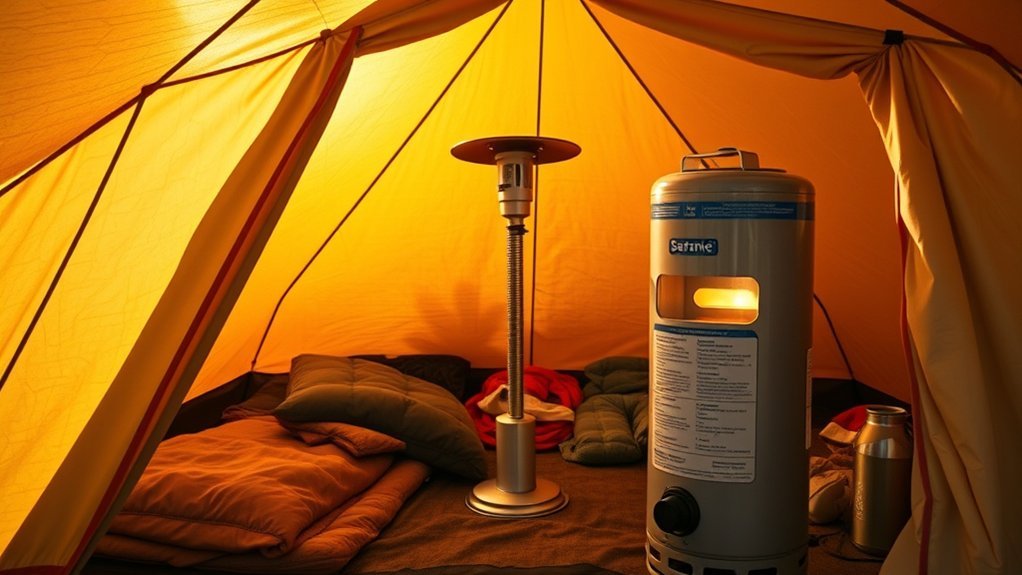
Using a propane heater in a tent requires careful attention to ventilation and safety. Keep vents and windows slightly open for adequate airflow. Choose a heater specifically designed for tents and equipped with safety features. Regularly check for gas leaks and monitor carbon monoxide levels with detectors. Be aware of symptoms like headache or dizziness, which indicate danger. Following these guidelines enhances your safety and comfort. For a deeper understanding, you’ll discover more essential tips next.
Reasons To Use Propane As A Fuel Source

When considering a fuel source for heating a tent, propane stands out due to its numerous advantages. This clean energy option is a healthier choice for indoor heating, producing considerably fewer particulates compared to wood. With little to no smoke, it minimizes health risks associated with inhalation in enclosed spaces like tents, ensuring you breathe easier.
Another of the propane advantages is its ability to leave no ash or soot, simplifying cleanup and maintaining a cleaner environment. You’ll appreciate how efficiently it distributes heat, providing consistent warmth throughout your tent during cold weather. Additionally, propane boasts a long shelf life, allowing you to store it for extended periods without degrading, which makes it a reliable option for your camping trips. Ultimately, choosing propane for heating your tent enables you to enjoy a cleaner, safer, and more efficient camping experience.
Products Worth Considering
PORTABLE PROPANE HEATER:Take the warmth of home anywhere you go with our portable propane heater. Camping heater is lightweight and convenient, yet strong enough to handle even the most challenging environments. Portable heater runs on propane tank not Included. It's the perfect companion for camping heater,patio heater,outdoor heater,space propane heater,camping heater,hunting heater,gas heater.Provides powerful outdoor heat.Making it suitable for working and relaxing
🔥【Multi-Function Camping Heater】MOZODAWN is proud to introduce our 2-in-1 heater and stove, perfect for your outdoor use. This portable propane heater allows you to cook and heat your surroundings with ease.
Shop With Confidence: Please note that Amazon’s system may incorrectly classify this item as "non-returnable." Don't worry! We provide a Full Refund or Free Replacement (No Return Required) for any quality issues. To get help, please SKIP the standard return process and contact us via "Your Orders" -> "Contact Seller." Our dedicated support team will fix everything for you within 24 hours!
Tips for Safe Propane Use
To guarantee a safe camping experience with propane, you must adhere to specific guidelines for handling and storing propane tanks. Always store propane cylinders outside in a well-ventilated area to prevent gas accumulation and leaks. Regularly inspect your tanks for rust, damage, or leaks using a soap-and-water solution; this confirms they’re safe to use. Keep propane tanks upright on stable surfaces to avoid tipping, which can cause dangerous gas leaks. It’s essential to keep these tanks away from direct sunlight, heat sources, and open flames to minimize fire hazards. Also, store your propane out of reach of children and pets, never in enclosed spaces. Equip yourself with appropriate safety equipment, such as fire extinguishers, and maintain clear protocols for safe propane storage. By following these steps, you’ll enhance your safety while enjoying the liberation of outdoor adventures.
Products Worth Considering
Split Door Design for Easy Access : Unique split-door construction allows flexible opening without disturbing other cylinders. Ideal propane tank storage cage for tight spaces, frequent access, and organized cylinder management
Quality Cylinder Storage Cabinet: Our 2-tier horizontal cylinder storage cabinet measures 788x763x889 mm/31.02x30.04x35 in. It boasts strong load-bearing capacity and is easy to install with complete accessories. Suitable for storage warehouses or factory workshops. Secure packaging ensures product integrity during delivery.
Multi-Tank Capacity:4 Cylinder Capacity Storage Cabinet.31" L x 30" W x 35" H will accept Common size
Choose a Heater Designed Specifically for Tents
When you choose a propane heater for your tent, prioritize models with essential safety features like oxygen depletion sensors and automatic shut-off systems. Opt for lightweight and portable options to guarantee easy transport and setup. This combination enhances safety while providing efficient heat, creating a comfortable camping environment.
Products Worth Considering
Emits 4,000 or 9,000 BTU/hr radiant heat
4,000- to 9,000-BTU radiant heater for spaces up to 225 square feet. Approved for outdoor use; clean-burning; nearly 100-percent efficient
Emits 4,000 BTU/hr for up to 5.5 hours
Heater Safety Features
Choosing the right propane heater for your tent is essential, especially if you want to guarantee safety while staying warm. Look for heaters that comply with safety regulations and feature automatic shut-offs for low oxygen levels and tip-over protection. Prioritizing models specifically designed for indoor use guarantees effective heater maintenance and minimizes risks.
| Safety Feature | Purpose | Importance |
|---|---|---|
| Automatic Shut-Off | Prevents operation in low oxygen | Essential for safety |
| Tip-Over Protection | Shuts off if the heater falls | Reduces fire hazards |
| Emergency Shut-Off Valve | Stops gas flow during emergencies | Prevents carbon monoxide buildup |
| Efficient Heat Distribution | Guarantees even warmth | Increases comfort and safety |
Always consult the manufacturer’s instructions for ideal usage.
Portable and Lightweight Options
Finding the right propane heater designed specifically for tent use can make a significant difference in your camping experience. Look for models like the Mr. Heater Little Buddy, which feature a lightweight design and portable features that simplify transport and setup. These heaters not only provide efficient heat distribution but also come with essential safety elements, such as automatic shut-off functions. This guarantees you stay safe from overheating or low oxygen levels while enjoying your outdoor adventure. Always adhere to the manufacturer’s guidelines for installation and operation to maximize safety and effectiveness. Choosing the right heater transforms your tent into a cozy refuge, allowing you to fully embrace the liberation of camping in comfort.
Ensure Proper Ventilation
Proper ventilation is essential for safely using a propane heater in a tent, as it prevents the buildup of carbon monoxide and maintains adequate oxygen levels. You should keep vents, doors, and windows slightly open to facilitate fresh air circulation. Avoid using propane heaters in specialized winter tents with limited ventilation, as this increases the risk of oxygen depletion and dangerous gas accumulation. Implement effective ventilation techniques by utilizing both top and bottom vents to enhance airflow. If necessary, consider using a battery-operated fan to further improve airflow management. Regularly monitor oxygen levels while heating, as low oxygen can lead to serious health risks. When sleeping in a tent with a propane heater, prioritize airflow; it’s advisable to turn off the heater or guarantee it’s safely ventilated. By taking these precautions, you empower yourself to enjoy a warm, safe camping experience without compromising your well-being.
Products Worth Considering
【24000mAh Super Large Battery】FRIZCOL Portable Rechargeable Fan with unique advanced cell technology. It is equipped with 24000mAh rechargeable batteries for 16-60 hrs super-long endurance. You can also use it as a power bank for your phone, tablet, or laptop in an emergency.
20000mAh Battery with Power Bank Function - ADUST 3 in 1 Rechargeable battery powered fan, equipping with a light, power bank and fan, has 20000mAh longevity large capacity battery with high conversion rate. 100% power can be used continuously for 12-138 hours depending on different options. The portable camping fan have 5V/3A Type-C input/output and 5V/3A USB output charging port. Therefore you can use the battery operated fan as a large portable charger to reverse charging 2 phones for emergency using.
Battery Operated Fan for Camping: This 5 inch battery fan works with 4 D-cell batteries (not included), which is ideal for camping, travel, power outages and emergency needs. There are 3 settings and the fan can last for 214 hours with low speed, 46 hours with medium speed, and 12 hours with high speed!
Follow Instructions for Proper Use
When using a propane heater in a tent, it’s crucial to follow the manufacturer’s instructions closely to guarantee safety and efficiency. Start by reading the user manual thoroughly; it outlines proper maintenance and operational guidelines. Make sure your tent has adequate ventilation by keeping vents, doors, and windows slightly open to allow fresh air circulation. This prevents carbon monoxide buildup and maintains a safe environment.
Pay attention to specified safety distances from flammable materials to reduce fire hazards while using the heater. Adhere to the maximum operating times recommended by the manufacturer to avoid overheating and unsafe conditions. Finally, always turn off the propane heater when it’s not in use or while you’re sleeping. This simple action minimizes the risk of carbon monoxide exposure and contributes to a safer camping experience. By following these instructions, you empower yourself to enjoy your outdoor adventures without compromising safety.
Invest in Carbon Monoxide Detectors
Investing in carbon monoxide detectors is essential when using a propane heater in your tent. Place these detectors near sleeping areas to guarantee you receive immediate alerts if dangerous gas levels rise. Regularly test and replace the batteries to maintain their effectiveness and protect your safety while camping.
Products Worth Considering
Flexible Installation: Wall-mounted or free-standing; easy to take while traveling
3-IN-1 MULTIFUNCTIONAL: This 3-in-1 portable carbon monoxide detector offers more integrated features and continuous upgrades, with a newly upgraded 43-hole design that not only accurately detects airborne carbon monoxide concentrations (0-500 PPM), but also detects humidity (0 to 90% RH) and temperature (32°F to 122°F), CO Detector's three-segment display system makes safety visible, making it the perfect tool for monitoring air safety in any environment
【Plug-In & Forget】No batteries to change—just plug in and it's always on.
Importance of Detectors
While enjoying the warmth of a propane heater in your tent, it’s essential to prioritize safety by installing carbon monoxide detectors. These devices are important for detecting the presence of this odorless, colorless gas that can accumulate in enclosed spaces. Place detectors close to sleeping areas for prompt alerts, ensuring your safety isn’t compromised. Regular detector maintenance is essential; check batteries before each camping trip and replace them as needed to maintain alarm sensitivity. In larger tents, consider multiple detectors to enhance protection against carbon monoxide exposure. By investing in these safety measures, you empower yourself and your fellow campers to enjoy a warm, secure environment without the lurking dangers of carbon monoxide.
Regular Testing Required
To guarantee your safety while using a propane heater in a tent, regular testing of carbon monoxide detectors is a must. These detectors can save lives by alerting you to dangerous levels of carbon monoxide, which is odorless and colorless. Here’s how to ascertain your detectors are reliable:
- Establish a testing schedule: Test your detectors monthly to confirm they’re functioning properly.
- Prioritize detector maintenance: Replace batteries at least once a year and follow the manufacturer’s guidelines for upkeep.
- Stay informed: Familiarize yourself with the specific requirements for your detector model to ascertain accurate readings.
Placement Near Sleeping Areas
Placement of carbon monoxide detectors near sleeping areas is essential for guaranteeing safety when using a propane heater in a tent. In your tent layout, strategically position the detector within arm’s reach of your sleeping arrangements. This allows for immediate detection of harmful gas levels. Always test the detector before your camping trip, guaranteeing its battery is fresh and functional. Position the propane heater at least six feet away from your sleeping areas to reduce the risk of carbon monoxide accumulation and improve ventilation. If the alarm sounds, exit the tent immediately and seek fresh air; this indicates a potentially dangerous buildup of gas. Prioritizing these safety measures guarantees a more liberating and worry-free camping experience.
Know the Symptoms of Carbon Monoxide Poisoning
Recognizing the symptoms of carbon monoxide poisoning is essential for anyone using a propane heater in a tent, as early detection can prevent serious health risks. Symptoms can often be mistaken for other ailments, making poisoning awareness critical. Here are key carbon monoxide symptoms to monitor:
Recognizing carbon monoxide poisoning symptoms is crucial for tent campers using propane heaters to ensure safety and health.
- Headache and dizziness
- Nausea and shortness of breath
- Mental confusion
Even low levels of carbon monoxide can pose serious risks, and symptoms may worsen with continued exposure. If you experience any symptoms, it’s important to open all doors and windows, exit the tent immediately, and seek fresh air. Additionally, consider having carbon monoxide detectors in the tent, as they can provide an extra layer of safety. By staying alert to these symptoms, you empower yourself to take necessary action for your well-being while enjoying the comfort of your propane heater.
Frequently Asked Questions
Can I Use a Propane Heater in a Closed Tent?
You shouldn’t use a propane heater in a closed tent due to propane safety risks. Tent insulation can trap harmful gases, leading to suffocation. Always prioritize ventilation to guarantee a safe camping experience.
How Long Can I Run a Propane Heater Safely?
You can run a propane heater safely for about two to three hours, ensuring ventilation. For longer durations, monitor oxygen levels and heater conditions. Prioritize safe operation to avoid risks and enjoy your space liberated.
What Is the Best Location for a Propane Heater in a Tent?
Place your propane heater at least three feet away from tent walls and flammable materials. Center it for even heat distribution, ensuring proper ventilation. Prioritize heater safety by regularly checking for gas leaks and blockages.
Are There Specific Types of Propane Heaters for Camping?
Choosing a propane heater for camping is like selecting a trusty compass. You’ll find various types, such as radiant and catalytic heaters, but prioritize camping heater safety to guarantee your adventures remain enjoyable and hazard-free.
How Do I Know if My Tent Is Properly Ventilated?
To guarantee your tent’s properly ventilated, check for airflow through vents or openings. Regularly monitor for condensation and humidity. Implement safety measures by keeping exhaust paths clear, minimizing heat sources, and guaranteeing fresh air circulation.
Conclusion
When using a propane heater in your tent, remember that “an ounce of prevention is worth a pound of cure.” Prioritize safety by ensuring proper ventilation, following the manufacturer’s instructions, and installing carbon monoxide detectors. Being proactive can prevent dangerous situations and enhance your camping experience. Stay aware of the signs of carbon monoxide poisoning, and always prioritize your well-being. With these tips in mind, you can enjoy a warm and safe outdoor adventure.