
Last Updated on July 29, 2026 by Mason Reed
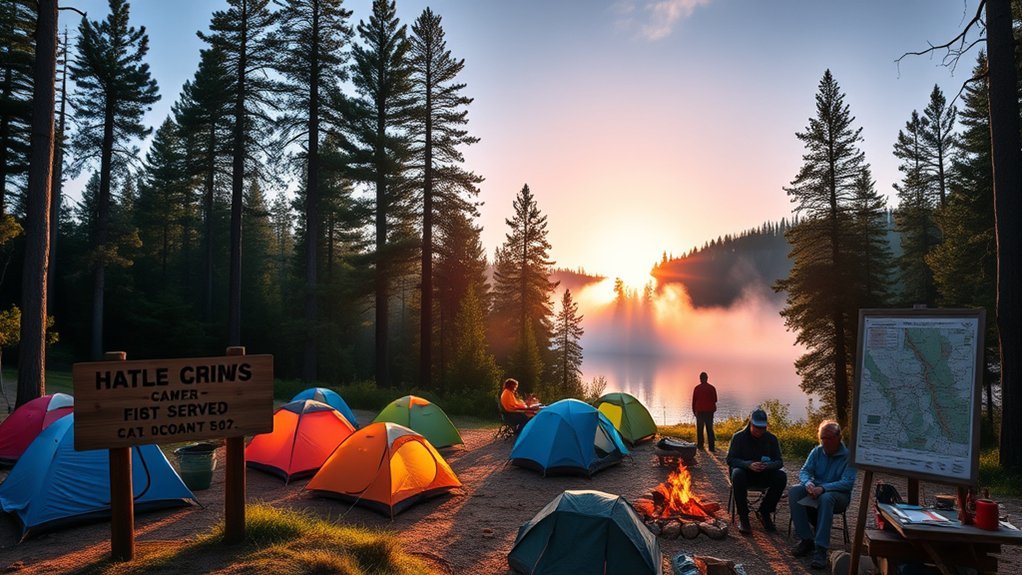
First-come, first-served campgrounds can make a last-minute trip possible, but finding one takes more than driving to a popular park and hoping for an empty site. Campground systems change often, and many former walk-up sites now use reservations or same-day online booking. The safest plan is to check official sources, prepare several backups, and know exactly how the campground assigns and collects payment for open sites.
Quick Answer
Search official land-manager pages and Recreation.gov using the “Only show First-Come First-Served” filter. Then confirm the season, payment method, vehicle limits, and check-out time. Build two or three backups, download any required app before losing service, and arrive near the site-turnover window rather than assuming a dawn arrival guarantees space.
Key Takeaways
- Use an official park, forest, state park, or Recreation.gov page as your final source of truth.
- A same-day reservation is not the same as a true first-come, first-served campsite.
- Check the campground’s check-out time, registration steps, payment rules, equipment limits, pet rules, and fire restrictions.
- Carry a backup list and enough fuel to reach another campground safely.
- Download apps, maps, and instructions before entering an area with weak cellular service.
At a Glance
| Time Required | About 30–60 minutes of planning, plus travel and arrival time |
| Difficulty | Easy in the off-season; moderate to difficult on summer weekends and holidays |
| Tools Needed | Official campground pages, phone or printed notes, offline map, payment method, and backup list |
| Cost | Search tools are usually free; campsite, entrance, vehicle, or reservation fees vary by location |
Disclosure: As an Amazon Associate I earn from qualifying purchases. Some links on this page are affiliate links, at no extra cost to you.
Understanding First-Come, First-Served Camping

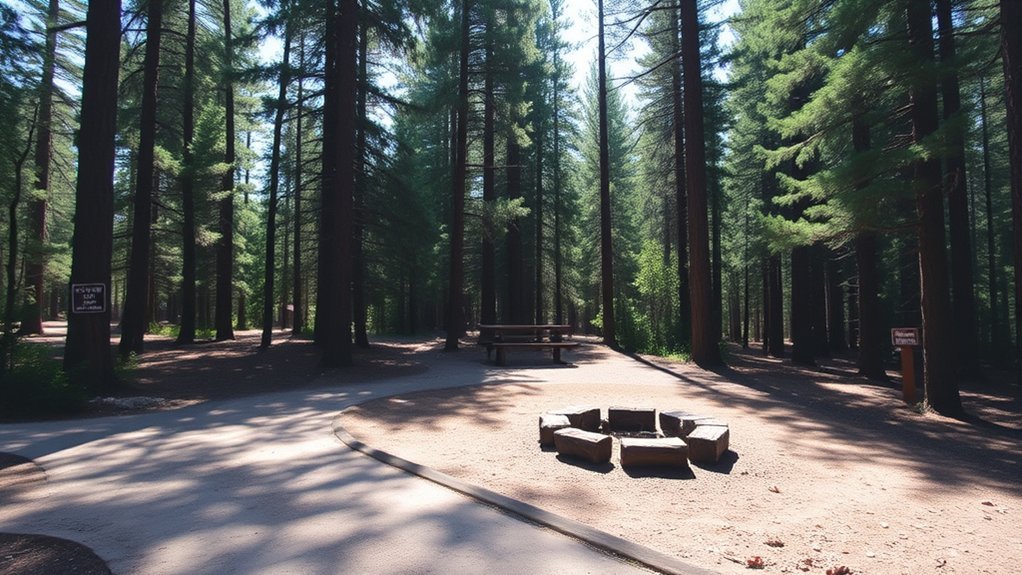
A true first-come, first-served campsite cannot be reserved before arrival. You must physically reach the campground, find a site that is available under the posted rules, and complete the required registration and payment process. Depending on the location, that may involve a staffed office, fee envelope, self-registration kiosk, automated machine, or the Recreation.gov mobile app.
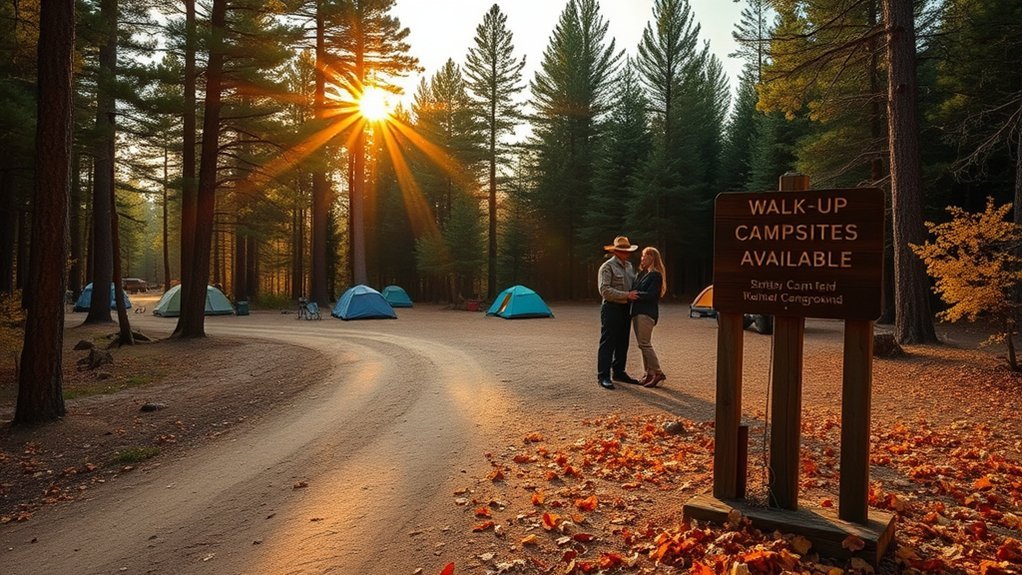
Do not confuse a walk-up site with a same-day reservation. Some campgrounds release sites online on the morning of arrival or allow visitors to book an unreserved site from a phone while standing in the park. Those sites are still assigned through a reservation system, so another camper may book one before you finish checking out.
Note: “Walk-up,” “first-come,” “same-day,” and “scan-and-pay” do not always mean the same thing. Read the individual facility page and the campground information board before occupying a site.
Advantages of First-Come, First-Served Camping
First-come camping gives flexible travelers a chance to stay without booking months ahead. It can work well for midweek trips, shoulder-season travel, road trips with flexible routes, and smaller tents or vehicles that fit a wider range of sites.
These campgrounds may also lead you toward quieter public lands outside the most famous destinations. However, a walk-up site is not automatically cheaper or less crowded. Most locations still charge nightly camping fees, and popular first-come campgrounds can fill quickly.
How to Find and Secure a First-Come Campsite
1. Search Official Campground Inventories
Start with the National Park Service campground finder, the website for the state park system you plan to visit, or the Recreation.gov campground search. Recreation.gov includes a filter for locations that are first-come, first-served and not reservable in advance.
Search a wider area than your main destination. National forests, Bureau of Land Management sites, national recreation areas, state parks, county parks, and private campgrounds can provide useful backups.
2. Verify the Current Rules
Open the individual campground page and confirm all of the following:
- Opening and closing dates
- Which loops or site numbers are first-come
- Check-in and check-out times
- Nightly fee and accepted payment methods
- Maximum vehicle or trailer length
- Occupancy and stay limits
- Pet, food-storage, generator, and quiet-hour rules
- Fire restrictions and whether potable water is available
Warning: Never rely on an old blog post, screenshot, or map label as proof that a campground still accepts walk-ups. High-demand campgrounds regularly change to advance or same-day reservations.
3. Build a Backup List
Choose at least two or three alternatives within a safe driving distance. Write down each campground’s address, route, season, fee, equipment limits, and registration method. Check fuel availability and avoid creating a backup plan that requires a long nighttime drive on unfamiliar roads.
4. Prepare Before Losing Cellular Service
Download the Recreation.gov mobile app, sign in, save payment details, and download offline maps before leaving reliable service. At select campgrounds, the app’s Scan & Pay feature is used for on-site first-come fees. Keep a second payment method because other campgrounds may use a card machine, fee envelope, cash, or check.
5. Arrive Near the Site-Turnover Window
“Arrive early” does not always mean arriving before sunrise. A better approach is to learn the campground’s check-out time and arrive before or during the period when departing campers are leaving. Ask a ranger or camp host about the day’s pattern, but do not block roads, circle occupied loops aggressively, or pressure campers to leave.
Pro Tip: Midweek arrivals outside holiday periods usually give you better odds. A local ranger station or campground host may also know whether sites filled early on recent comparable days.
6. Claim and Register the Site Correctly
Use the campground’s posted process. An open site may be identified by an empty permit clip, no receipt tab, and no belongings, but the exact signs vary. Once you choose an eligible site, register and pay immediately. Display the receipt or permit where required. Do not assume that placing a chair or cooler on a site completes registration, and do not save a second site for someone who has not arrived unless the rules clearly allow it.
The campground’s current facility page and on-site instructions—not last year’s routine—determine whether a site is truly available.
National Park Examples and Current Walk-Up Rules
National park policies can change by season and year. These examples show why checking the current park page matters:
| Park or Campground | Current Planning Point |
|---|---|
| Yellowstone National Park | Most campsites require advance reservations. Mammoth Campground offers first-come sites only during its listed winter period, currently October 15 through April 1. |
| Mather Campground, Grand Canyon | The South Rim campground recommends peak-season reservations and lists a limited number of first-come sites released at the campground office at 8 a.m. |
| Shenandoah National Park | Mathews Arm, Lewis Mountain, and Loft Mountain may have first-come sites. Campers must be on site to claim them, and the park offers campsite-availability text updates. |
| Glacier National Park | Some smaller campgrounds remain first-come. Registration methods vary, and Cut Bank uses Recreation.gov Scan & Pay. |
| Yosemite National Park | Wawona and Hodgdon Meadow may operate first-come in the late-fall and winter period, while reservations are required during the busier season. |
| Great Smoky Mountains National Park | All frontcountry campgrounds require reservations. The park does not hold a general supply of walk-up sites, although unsold inventory may be reserved in person at a staffed campground. |
Always recheck the official park page shortly before departure. Weather, construction, staffing, fires, and seasonal closures can change access even when a campground normally accepts first-come campers.
State Parks Offering Walk-Up Campsites
State park systems use different rules, and policies may vary from one park to another. The table below provides a current starting point rather than a guarantee of availability.
| State | How Walk-Up Camping Works |
|---|---|
| Nevada | Unreserved reservable campsites may generally be paid for on a first-come basis one night at a time. Some parks also retain designated walk-up sites. |
| Alaska | Many Alaska State Park campgrounds are first-come unless the campground list specifically marks sites as reservable. Check current open status before driving. |
| Oregon | Some campgrounds are first-come seasonally or year-round. At reservable campgrounds, open sites may instead require a same-day online booking. |
| Wyoming | Most locations list at least some walk-in sites during the reservation season, while off-season rules vary by park. Use the current statewide FCFS list. |
Iowa is no longer a reliable statewide example of unreserved camping. Beginning with the 2026 season, the Iowa Department of Natural Resources made regular state park campsites reservable online or by phone. Individual primitive or hike-in areas may have separate instructions, so check the specific park page.
Tips for Finding Last-Minute Availability
Last-minute camping includes both true first-come sites and reservable sites that reopen after cancellations. Use the right method for each type.
Use Official Search and Alert Tools
Official systems should be your final checkpoint. Third-party services such as Campsite Tonight may help surface cancellation openings, but they do not replace the campground’s official rules or guarantee that an on-site first-come space is vacant.
| Tool | Best Use |
|---|---|
| Recreation.gov website | Filter federal campgrounds, check reservation inventory, and read facility notices. |
| Recreation.gov mobile app | Book sites, store trip details, and use Scan & Pay where offered. |
| NPS app and park websites | Confirm operating dates, closures, alerts, and park-specific campground rules. |
| State reservation system | Find same-day openings and state-specific walk-up policies. |
| Third-party cancellation alert | Receive notices about reservable inventory, then complete the booking through the official system. |
Monitor Cancellation Updates
Check reservation pages several times during the week before your trip. Openings may appear when another camper cancels or when a facility releases short-window inventory. Be ready to complete the official checkout process immediately; seeing an open site on a search page does not hold it for you.
- Search flexible dates and nearby campgrounds.
- Look for one-night gaps that are easier to secure.
- Check the evening before arrival and again early on arrival day.
- Read the cancellation and modification rules before paying.
Explore Alternative Locations
If the main campground is full, look beyond the park boundary. National forests, BLM campgrounds, state parks, county parks, and private campgrounds may have space. The Bureau of Land Management and the U.S. Forest Service also allow dispersed camping in many areas, but local closures, stay limits, fire rules, road conditions, and designated-site requirements still apply.
Dispersed camping is not simply parking anywhere. Use an area where camping is legal, stay on durable or previously disturbed ground, pack out all waste, and follow the local land office’s rules.
Essential Gear for a Walk-Up Camping Trip
A first-come trip requires normal camping equipment plus a few planning items that help you adapt when your preferred site is full.
Must-Have Camping Equipment
- A tent, sleeping bag, and sleeping pad suited to the forecast
- Enough drinking water or a treatment method approved for the water source
- A stove and food-storage setup that follows local fire and wildlife rules
- A headlamp with spare batteries
- An offline map, written backup list, and enough fuel for alternate campgrounds
- A phone with required apps already installed, plus a charging bank
- More than one accepted payment method
Essential Safety Gear
Carry a first aid kit, weather-appropriate clothing, sun and insect protection, and any personal medications. Check fire restrictions before using a stove or campfire. Store food, trash, pet food, and scented items exactly as the campground requires, especially in bear country.
Follow the Leave No Trace principles: plan ahead, use durable surfaces, dispose of waste properly, leave natural objects in place, reduce campfire impacts, respect wildlife, and be considerate of other visitors.
Frequently Asked Questions
What time do first-come, first-served campgrounds fill up?
There is no universal fill time. A famous campground may fill early on a summer weekend, while a remote site may remain open all day. Check the campground’s check-out time, recent park alerts, and local advice. Arriving near the turnover period is often more useful than arriving in the dark before anyone has left.
Are pets allowed at first-come, first-served campgrounds?
Many developed campgrounds allow pets, but leash rules, restricted trails, campground loops, and food-storage requirements vary. Check the facility page before leaving and never assume a pet-friendly campsite means pets are allowed on nearby trails.
Can I reserve a first-come, first-served site in advance?
No. A true first-come site is assigned after you arrive. However, some campgrounds use same-day online reservations instead of a traditional walk-up system. Read the exact listing so you know whether you must claim the site in person or book it online on arrival day.
How can I tell whether a campsite is open?
Follow the campground information board and site-post system. An open site may have no current receipt, permit tab, or belongings, but signs differ by campground. If anything is unclear, ask the host or ranger before setting up.
Can I save a campsite for someone arriving later?
Usually, the registered occupant must be present and the site must be occupied under local rules. Do not claim extra sites with unattended gear unless the campground specifically allows it. Site-saving can violate occupancy rules and prevent other campers from using available space.
What should I do if I cannot find a site?
Move to your prepared backup campground, check official same-day cancellation inventory, or use a legal dispersed camping area if you understand the local rules and have suitable equipment. Do not sleep in a trailhead, picnic area, roadside pullout, or closed campground unless overnight use is expressly allowed.
Are there fees for first-come, first-served campgrounds?
Often, yes. A walk-up site may have a nightly fee plus park entrance, extra-vehicle, utility, or local taxes. Payment may be collected by card, cash, check, fee envelope, kiosk, or Scan & Pay. Confirm accepted methods before reaching the campground.
Conclusion
First-come, first-served camping can still deliver the freedom of a spontaneous trip, but success depends on current information and a flexible route. Search official inventories, separate true walk-up sites from same-day reservations, verify the claim-and-pay process, and carry several realistic backups. With those steps in place, you can enjoy the adventure without turning an uncertain campsite search into an unsafe late-night drive.
Sources
- National Park Service — Find a Campground — official park campground search and planning guidance
- Recreation.gov — Campground Search — federal campsite inventory and first-come filter
- Recreation.gov Mobile App — reservations and Scan & Pay information
- Glacier National Park — First-Come Campgrounds — example claim, registration, and payment procedures
- Bureau of Land Management — Camping on Public Lands — developed and dispersed camping rules
- Leave No Trace — Seven Principles — low-impact camping practices
