
Last Updated on August 26, 2026 by Mason Reed
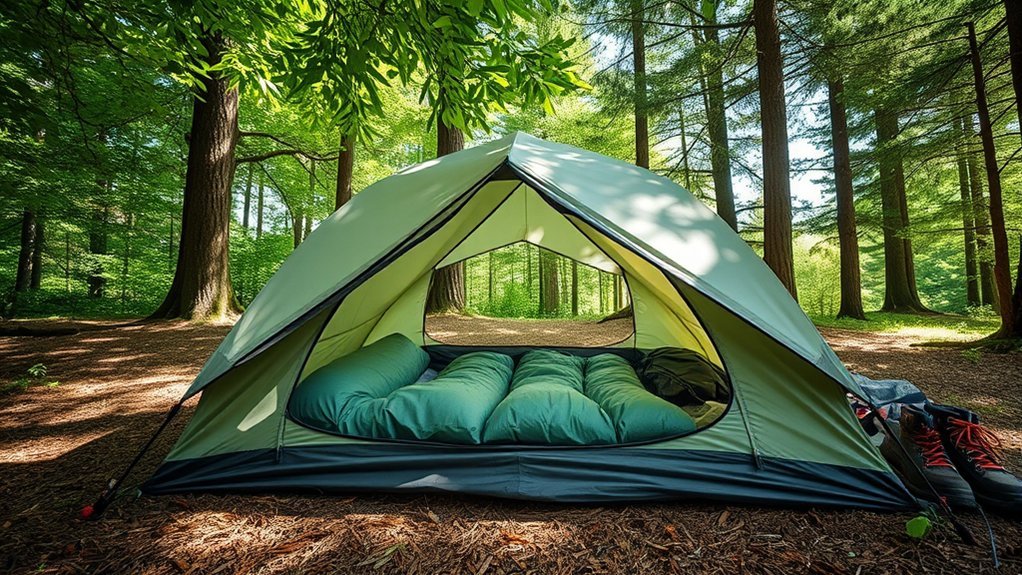
Yes, a 2-person tent can fit two people, but “fits” and “feels comfortable” are not always the same thing. Tent capacity ratings tell you how many sleepers a shelter is designed to accommodate; they do not guarantee extra room for backpacks, wide sleeping pads, pets, or changing clothes. For many couples, a 2-person tent works well for backpacking, while a 3-person tent is more comfortable when weight is less important.
Quick Answer
Yes. A 2-person tent is designed to sleep up to two people, but that does not guarantee roomy comfort. Fit depends on the tent’s exact floor width and length, sleeping-pad sizes, body size, vestibule storage, and trip style. For car camping or extra gear, many couples are happier in a 3-person tent.
Key Takeaways
- Two people can sleep in a 2-person tent when their pads and bodies fit the actual floor dimensions.
- There is no universal industry standard for per-person tent dimensions, so compare individual models rather than relying only on the capacity number.
- Two 20-inch sleeping pads need at least 40 inches of usable width; two 25-inch pads need at least 50 inches before allowing any extra space.
- Vestibules, two doors, interior pockets, wall shape, and floor taper can matter almost as much as total floor area.
- For car camping, pets, bulky gear, or extra personal space, a 3-person tent is often the more comfortable choice for two adults.
Disclosure: As an Amazon Associate I earn from qualifying purchases. Some links on this page are affiliate links, at no extra cost to you.
Understanding Tent Capacity Ratings

When you compare tents, treat the capacity number as a starting point rather than a guarantee of spaciousness. According to REI’s backpacking-tent guidance, there is no industry standard that defines a fixed amount of space for each sleeper. Two tents labeled “2-person” can therefore have noticeably different widths, lengths, wall shapes, and vestibule areas.
Current specifications illustrate the difference. The NEMO Dagger OSMO 2P lists 30.6 square feet of floor area and an 88 x 50-inch floor. The Big Agnes Copper Spur UL2 uses a tapered floor that becomes narrower toward one end. That taper matters because two sleeping pads may fit easily at the shoulders but leave little unused space near your feet.
A “2-person” rating tells you the intended sleeping capacity. It does not promise two people plus backpacks, wide pads, a dog, and extra living space.
For backpacking, that close fit can be useful because a smaller tent generally reduces carried weight and bulk. For car camping, where you do not have to carry the shelter for miles, sizing up is easier to justify. REI’s current camping-tent guidance notes that many campers choose a tent at least one capacity larger when they want additional comfort or room for gear and pets.
Space Requirements for Two People
The best way to decide whether two people will fit is to start with the equipment that actually touches the tent floor: your sleeping pads or mattresses. Measure their widths and lengths, add them together, and compare those measurements with the tent’s floor plan.
For example, the Therm-a-Rest NeoAir XLite NXT is 20 inches wide in Regular size and 25 inches wide in Regular Wide size. That creates these basic minimums:
| Sleeping-Pad Combination | Combined Pad Width | What to Check |
|---|---|---|
| Two 20-inch pads | 40 inches | Tent should provide at least 40 inches of usable width where both pads lie. |
| One 20-inch + one 25-inch pad | 45 inches | Check both shoulder and foot width if the tent tapers. |
| Two 25-inch pads | 50 inches | A narrow or strongly tapered 2P floor may not accept both comfortably. |
Those measurements are minimum pad widths, not comfort targets. A few unused inches can make it easier to keep sleeping bags away from damp tent walls, retrieve small items, and get in or out without disturbing your partner.
Length matters too. Compare your pad length and your own height with the tent’s stated floor length. Sloping end walls can reduce usable space for tall sleepers even when the published floor length looks adequate.
Pro Tip: Before a trip, lay both sleeping pads side by side inside the pitched tent at home. Then add the sleeping bags you actually use and sit up, turn over, enter each door, and test where your backpacks will go. This reveals comfort problems that a floor-area number cannot show.
The Impact of Gear Storage
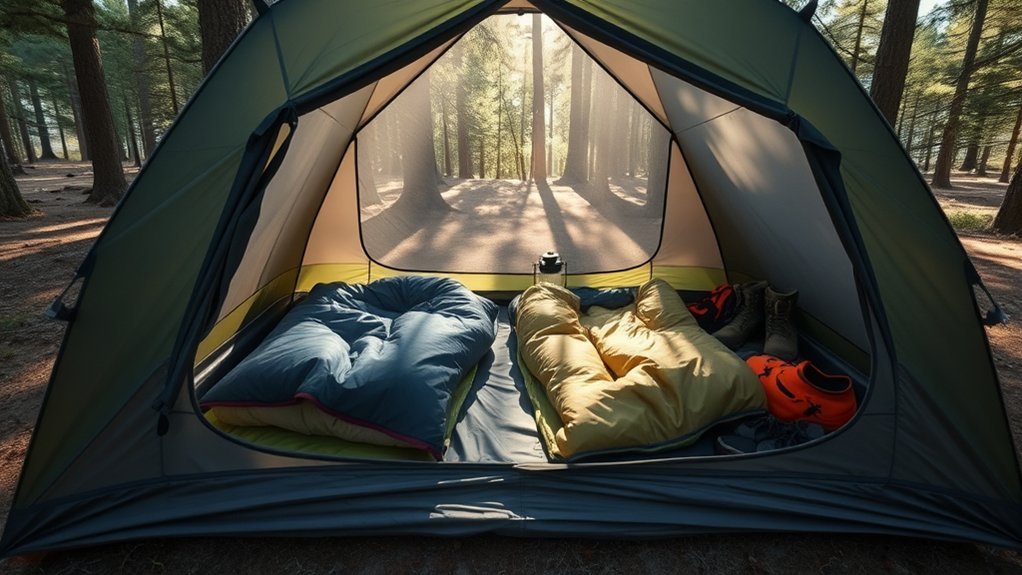
Two sleeping pads may fit perfectly while backpacks, boots, wet jackets, and other equipment make the same tent feel crowded. That is why vestibule area and interior storage are important when two people share a small shelter.
When weather permits, vestibules can keep boots, packs, trekking poles, and other suitable equipment out of the sleeping area while still protecting them from direct precipitation. Interior pockets and gear lofts move smaller items such as headlamps, glasses, and electronics off the floor.
Compression sacks can reduce the bulk of soft equipment, but avoid packing sleeping bags or insulated clothing so tightly during camp that they cannot loft properly when needed. Also keep frequently used items near a door so one person does not need to crawl across the other sleeper.
Warning: “Store gear outside” does not mean leaving food, garbage, toiletries, pet food, or other scented items beside the tent. In bear country and other wildlife areas, follow the campground or land manager’s food-storage rules. The National Park Service advises campers not to store food in tents or backpacks and to secure scented items appropriately.
Comfort vs. Capacity: What to Expect
A 2-person tent can accommodate two adults, but the amount of personal room varies considerably. Instead of assuming that every 2P model will feel cramped—or roomy—consider these four factors:
- Rated Capacity: A 2P model is intended to sleep up to two people, but the rating does not include a universal allowance for extra living space.
- Sleeping Setup: Two narrow pads can fit easily in tents that may struggle with two wide pads or a double camping mattress.
- Trip Style: Backpackers may accept close quarters to save weight. Car campers can usually size up with fewer consequences.
- Personal Preference: Couples comfortable sleeping close together may enjoy a compact 2P tent, while light sleepers, larger adults, or people who move frequently at night may prefer a 3P shelter.
So, a 2-person tent is not automatically “better for one.” Many are genuinely designed for two sleepers. The more useful question is whether the specific 2-person model fits your two sleeping systems and your preferred amount of personal space.
Measuring Tent Dimensions

Total floor area can help compare tents, but it should not be your only measurement. Two shelters with the same square footage can feel very different if one has vertical sidewalls while the other tapers sharply.
| Tent Measurement | Why It Matters for Two People |
|---|---|
| Floor Length | Must accommodate your body and sleeping pad without pushing your sleeping bag against sloping end walls. |
| Shoulder Width | Determines whether two pads fit comfortably where sleepers are widest. |
| Foot Width | Important on tapered backpacking tents; a wide listed head width does not guarantee equal width at the foot. |
| Floor Area | Useful for broad comparisons, but shape determines how much of that area is easy to use. |
| Peak Height and Wall Shape | More vertical walls and useful headroom make sitting up, changing, and moving around easier. |
| Vestibule Area | Provides sheltered space for appropriate gear without taking up sleeping-floor area. |
| Number of Doors | Two doors let each camper enter or leave with less climbing over the other person. |
Do not assume a single “typical” dimension fits every 2-person tent. For example, the NEMO Dagger OSMO 2P uses an 88 x 50-inch floor, while other models taper or use different widths. Compare the actual specifications for the tent you plan to buy.
Alternative Tent Options for Couples
If a compact 2-person tent does not match your camping style, several alternatives can provide more usable space:
- Canvas Tents: Canvas models are often aimed at comfortable base camping and can provide durable, roomy interiors. However, material alone does not guarantee more floor space, so compare dimensions and capacity just as you would with any other tent.
- Cabin Tents: Straighter walls and taller ceilings can make a cabin-style shelter feel substantially larger and are useful when standing room or easier clothing changes matter.
- 3-Person Tents: A 3P shelter often gives two adults more room for wider sleeping pads, clothing, and personal items. The tradeoff is usually additional weight, packed size, and sometimes cost.
- Tents With Generous Vestibules: A well-designed 2P tent with two vestibules can feel more practical than a larger floor with little protected gear storage.
Your best choice depends on how you travel. Backpackers may value a lighter 2P shelter, while car campers can prioritize headroom, floor space, and convenient storage.
Tips for Choosing the Right Tent Size
Instead of automatically adding one person to the capacity rating, compare your actual use case. Sizing up is useful, but it is a comfort strategy rather than a universal requirement.
| Situation | Usually Makes More Sense | Reason |
|---|---|---|
| Two backpackers using compact pads | 2-person tent | Saves weight and packed volume if the exact floor dimensions work. |
| Two adults car camping | 3-person tent | Extra room usually matters more than carrying weight. |
| Two 25-inch-wide pads | Check exact 2P dimensions or size up | The pads alone require 50 inches of usable width. |
| Two adults plus a dog | Usually 3P or larger | A pet reduces usable sleeping and gear space. |
| Frequent wet-weather camping | Roomy 2P with large vestibules or 3P | Wet clothing and protected gear require more organization. |
Also check peak height, floor length, number of doors, vestibule area, interior pockets, and packed weight. A slightly wider or more vertical 2-person tent can sometimes be more comfortable than a nominally larger shelter with an inefficient floor plan.
Manufacturer Ratings vs. Real-Life Experience
Manufacturer capacity ratings are useful, but they answer a narrow question: how many sleepers the tent is designed to accommodate. Your real-world comfort depends on more variables than the number printed in the model name.
Rating Optimism Discrepancies
It is more accurate to think of capacity ratings as close sleeping-capacity labels rather than generous comfort ratings. Keep these points in mind:
- There is no universal industry standard assigning a fixed amount of floor space to each sleeper.
- Ultralight backpacking tents often use efficient, tapered shapes to reduce weight.
- Two people with narrow pads may fit easily where two wide pads do not.
- Campers who want extra room for a pet, gear, or movement can consider a model rated for one additional person.
This does not mean manufacturers are necessarily exaggerating capacity. It means rated sleeping capacity and your preferred comfort level are different measurements.
Real-Life Space Assessment
A practical test is more valuable than guessing from square footage. Pitch the tent, place both sleeping pads inside, inflate them fully, and put your sleeping bags on top. Then check whether either sleeper touches the walls, whether you can sit up, and whether each person can reach a door.
Next, decide where backpacks, footwear, jackets, water bottles, and other equipment will go. If most of your non-scented gear fits in vestibules and pockets, a 2P floor can remain comfortable. If everything has to sit between or beside the sleeping pads, the same tent can feel crowded quickly.
Personal habits matter too. Side sleepers who turn frequently, broad-shouldered campers, tall sleepers, or people who strongly value personal space will usually appreciate a wider shelter more than campers who sleep still and pack lightly.
Making the Most of Your Tent Space
If you already own a 2-person tent, good organization can make a noticeable difference. The goal is to reserve the floor for sleeping while moving appropriate equipment to vestibules, pockets, and vertical storage.
Tent Layout Optimization
Use these strategies to improve space efficiency:
- Sleeping-Pad Placement: Position pads according to the tent’s floor shape. In a tapered tent, make sure the wider parts of both pads align with the widest usable area.
- Gear Arrangement: Put suitable bulky items such as packs or shoes in vestibules when conditions and wildlife rules allow.
- Vertical Storage: Use built-in pockets, hanging loops, or a compatible gear loft for lightweight items.
- Door Access: Keep each door or the main entrance clear so nighttime exits do not require moving equipment.
Gear Storage Solutions
Choose compact gear where it provides a real benefit, and take advantage of the storage features already built into your tent. Small essentials such as glasses, headlamps, phones, and gloves are good candidates for wall pockets or overhead storage.
Vestibules are particularly useful for footwear and packs because they keep dirt and bulk away from sleeping pads. Make sure stored equipment does not block the tent’s vents or press against the rainfly in a way that interferes with airflow.
A tent footprint serves a different purpose. It is normally placed beneath the tent to protect the floor from abrasion and wear. A properly sized footprint should not extend well beyond the tent floor because exposed material can collect rainwater underneath the shelter. If you want a separate clean area for equipment outside the tent, use an appropriate separate groundsheet rather than relying on the footprint already beneath your tent.
Sleeping Arrangements Considerations
Focus on the dimensions of your actual sleep systems:
- Sleeping-Pad Width: Two 20-inch pads total 40 inches; two 25-inch pads total 50 inches. Compare this with the tent’s usable width, including any taper.
- Sleeping-Pad Length: Make sure the tent is long enough for both your pad and sleeping bag without forcing insulation against sloping walls.
- Pad Thickness: Very thick mattresses raise you closer to inward-sloping walls, which can reduce shoulder or head clearance even when the floor itself is wide enough.
- Couple Dynamics: Discuss how much personal space each sleeper needs. A setup that feels cozy to one couple may feel restrictive to another.
Pitch orientation also affects comfort. Follow the tent manufacturer’s setup guidance, keep vents functional, and use stakes and guylines appropriately for the expected weather rather than orienting the tent solely for interior space.
Frequently Asked Questions
What materials affect the comfort of a 2-person tent?
Fabric is only one factor. Mesh panels, vents, a well-designed rainfly, wall shape, and double-wall construction can improve airflow and help manage condensation. Breathable materials can reduce moisture buildup, but no tent fabric can guarantee a condensation-free interior in every combination of humidity, temperature, and ventilation.
How do weather conditions impact tent space requirements?
Rain, snow, mud, and cold weather can make extra protected space more valuable because clothing and equipment may need to stay sheltered. A 2P tent with generous vestibules can handle this better than one with minimal storage, while a 3P tent provides more interior flexibility when weight is not a major concern.
Can pets fit comfortably in a 2-person tent with us?
Sometimes, but a pet uses part of the same floor area as the two human sleepers. For two adults plus a dog, a 3-person tent is often easier to manage. Consider the pet’s size, sleeping position, claws, your sleeping-pad layout, and whether the tent has vestibule space for appropriate gear.
What accessories can enhance comfort in a small tent?
Compact pillows, appropriately sized sleeping pads, interior organizers, compatible gear lofts, and efficient stuff sacks can reduce clutter. Vestibules are especially valuable because they let suitable boots and packs stay outside the sleeping floor while remaining sheltered.
How do I choose a sleeping pad for a tight space?
Check pad width and length before focusing on thickness or packed size. Two 20-inch pads require at least 40 inches of floor width, while two 25-inch pads require at least 50 inches. Measure the tent at both the head and foot because many backpacking floors taper.
Is a 3-person tent better than a 2-person tent for two adults?
A 3-person tent is often more comfortable for two adults, especially for car camping, wide sleeping pads, pets, or longer trips. A 2-person tent can still be the better choice for backpacking when lower weight and smaller packed size matter more than extra living space.
Can two 25-inch sleeping pads fit in a 2-person tent?
Yes, but only if the tent provides at least 50 inches of usable width where both pads lie. Check the complete floor dimensions rather than only the maximum listed width because tapered 2P tents may be wide enough at the head but narrower at the foot.
Conclusion
A 2-person tent really can fit two people, but capacity alone does not tell you whether you will find it comfortable. Check the actual floor width and length, sleeping-pad dimensions, wall shape, doors, vestibules, and storage before buying. For lightweight backpacking, a well-sized 2P tent can be an efficient choice for a couple. For car camping, wide pads, pets, bulky gear, or more personal room, moving up to a 3-person tent is often worth the extra size and weight.
Sources
- REI Co-op — How to Choose a Backpacking Tent — capacity ratings, lack of an industry-wide per-person dimension standard, and sizing-up guidance.
- REI Co-op — How to Choose a Camping Tent — car-camping capacity, comfort, vestibules, floor dimensions, and sizing considerations.
- NEMO Equipment — Dagger OSMO Tent Specifications — current 2-person floor area, floor dimensions, vestibule area, and peak height.
- Therm-a-Rest — NeoAir XLite NXT Specifications — current 20-inch and 25-inch sleeping-pad widths and pad lengths.
- REI Co-op — What Is a Tent Footprint? — proper footprint purpose, fit, and rainwater considerations.
- U.S. National Park Service — Bear Safety: Storing Food — safe storage of food, garbage, and scented items around campsites.
