
Last Updated on July 23, 2026 by Daniel Globe
Every year, hikers underestimate altitude and end up dealing with headaches, nausea, exhaustion, or an early retreat. Reduced oxygen can affect anyone, including strong and experienced hikers. Preparing well means training for the physical workload, planning a gradual ascent, packing for rapidly changing conditions, and knowing exactly when to stop climbing or descend.
Quick Answer
Prepare for high-altitude hiking by training for at least several weeks, choosing an itinerary with gradual sleeping-elevation gains, packing the Ten Essentials, and learning the signs of altitude illness. Fitness helps you handle the trail but does not prevent acute mountain sickness. Stop ascending if symptoms appear, and descend if they worsen.
Key Takeaways
- Altitude illness becomes a practical concern around 8,000 feet, although susceptible hikers can develop symptoms lower.
- Good fitness improves endurance and stability, but it does not protect you from acute mountain sickness.
- Above about 9,800 feet, limit sleeping-elevation gain to roughly 1,600 feet per day and add regular acclimatization days.
- Drink and eat enough for your workload, but do not force excessive fluids in an attempt to prevent altitude sickness.
- Never move to a higher sleeping elevation while symptoms are present. Worsening symptoms, confusion, poor coordination, or breathlessness at rest require descent.
At a Glance
| Time Required | Usually 8 to 12 weeks of training, plus acclimatization days built into the trip |
| Difficulty | Moderate to very demanding, depending on elevation, terrain, weather, pack weight, and trip length |
| Tools Needed | Layered clothing, suitable footwear, navigation, water and treatment method, food, first aid, illumination, sun protection, shelter, and communication equipment |
| Cost | Varies with existing gear, transportation, permits, guides, travel insurance, and evacuation coverage |
What’s in This Article
- Understanding the Effects of High Altitude
- Assessing Your Risk and Planning the Ascent
- Physical Preparation for High-Altitude Hiking
- Packing the Right Gear
- Hydration and Nutrition
- Acclimatization Techniques
- Altitude Sickness and Safety Precautions
- Mental Preparation
- Environmental Considerations
- Frequently Asked Questions
- Sources
Disclosure: As an Amazon Associate I earn from qualifying purchases. Some links on this page are affiliate links, at no extra cost to you.
Understanding the Effects of High Altitude
Altitude illness becomes a meaningful risk for many unacclimatized travelers at sleeping elevations around 8,000 feet or 2,450 meters. Symptoms can sometimes occur lower, and risk generally increases as sleeping elevation and ascent speed increase.
Atmospheric pressure falls as you climb, which reduces the partial pressure of oxygen available with each breath. According to the CDC Yellow Book, inspired oxygen pressure at about 10,000 feet is roughly 69% of its sea-level value. Your maximum exercise performance will remain lower at altitude even after you acclimatize.
Strong fitness can help you carry a pack and climb efficiently, but it does not make you immune to altitude sickness.
Your first response to altitude is faster and deeper breathing. During the first three to five days, ventilation, oxygenation, cerebral blood flow, and plasma volume change as your body adjusts. Increased red-blood-cell mass is a slower adaptation and is not the main reason you feel better during the first few days.
Altitude can also disturb sleep, increase breathing-related fluid loss, intensify ultraviolet exposure, and expose you to cold and rapidly changing weather. Periodic breathing, with alternating deep and shallow breaths, becomes common during sleep at higher elevations and may cause frequent waking.
Assessing Your Risk and Planning the Ascent
Your itinerary is more important for preventing altitude illness than your athletic ability. The main risk factors are how high you sleep on the first night, how quickly your sleeping elevation increases, how hard you exert yourself, and whether you have developed altitude illness before.
Review Your Personal Risk
A previous episode of AMS, HACE, or HAPE is one of the best clues to how you may respond on a similar future trip. However, a successful previous climb does not guarantee that you will remain symptom-free on another route.
Consult a clinician familiar with altitude medicine before the trip if you have significant heart or lung disease, low blood oxygen, severe obstructive sleep apnea, sickle cell disease or trait, poorly controlled medical conditions, a history of HAPE or HACE, or concerns about pregnancy or prescription medicines. Stable conditions do not always prevent high-altitude travel, but they may require an individualized plan.
Plan Around Sleeping Elevation
Altitude illness is more closely related to where you sleep than to the highest point you briefly reach during the day. Whenever practical, avoid traveling directly from low elevation to a first-night sleeping elevation above about 9,000 feet.
The Wilderness Medical Society’s 2024 guideline recommends that once you are above 3,000 meters, or about 9,800 feet, you limit sleeping-elevation gain to no more than 500 meters, or about 1,600 feet, per day. Include a rest day with no sleeping-elevation gain every three to four days. Slower schedules may be necessary if you develop symptoms or have a history of altitude illness.
Warning: Never move to a higher sleeping elevation while you have symptoms that may be caused by altitude illness. Stay at the same elevation for mild symptoms and descend if they worsen or fail to improve.
Build spare days into the itinerary. Weather, fatigue, illness, and individual acclimatization can all slow the trip. A schedule that leaves no room for an extra rest day encourages people to hide symptoms and keep climbing.
Physical Preparation for High-Altitude Hiking
Physical preparation helps you handle steep terrain, long days, a loaded pack, and difficult descents. It does not reproduce true acclimatization unless you spend time at real or simulated altitude, and it does not prevent AMS.
For many hikers, starting training at least 8 to 12 weeks before the planned hike provides enough time to build endurance without rushing. Increase duration, elevation gain, and pack weight gradually rather than changing all three at once.
Build Cardiovascular Endurance
Use brisk walking, hiking, cycling, swimming, running, stair climbing, or another activity you can perform consistently. Include mostly steady, moderate sessions and one harder hill or interval session when your fitness allows. The goal is to sustain movement for several hours, not to exhaust yourself in every workout.
Strengthen Your Legs and Core
Squats, step-ups, lunges, calf raises, hip hinges, loaded carries, and core exercises prepare you for climbing and descending. Controlled step-downs are particularly useful because long descents place repeated stress on your thighs and knees.
Practice With Your Pack
Complete progressively longer hikes while wearing the footwear, clothing, and pack you plan to use. Begin with a light load and increase it gradually toward your expected trail weight. Practice eating, drinking, adjusting layers, using trekking poles, and accessing essential equipment without unpacking everything.
Use a Simple Weekly Structure
- Two or three endurance sessions: Moderate walking, running, cycling, swimming, or stair climbing.
- Two strength sessions: Focus on legs, hips, back, and core.
- One long hike: Add time, hills, and pack weight gradually.
- One mobility or recovery session: Use easy walking, stretching, or yoga.
- At least one full rest day: Allow your body to recover and adapt.
Reduce training volume during the final week before departure. Arriving rested is more useful than completing one last exhausting workout.
Packing the Right Gear for High-Altitude Hiking
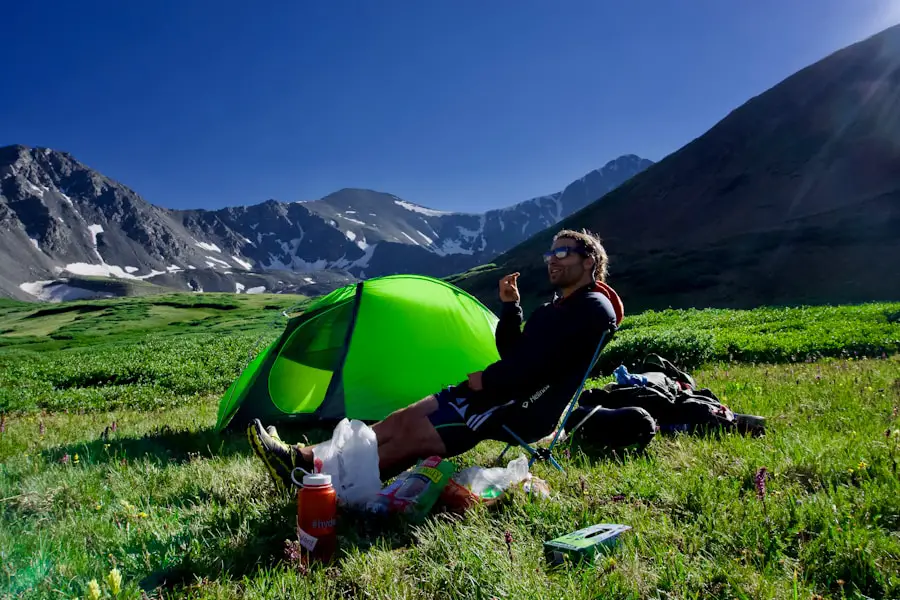
Start with a well-fitted backpack that carries your expected load comfortably. Keep frequently needed items, including water, snacks, navigation, gloves, sunscreen, and your rain shell, within easy reach.
Use a moisture-managing base layer, an insulating mid-layer, and a waterproof and wind-resistant outer shell. Carry enough insulation for an unexpected stop, not just for the temperature you expect while moving. A warm hat, gloves, and dry spare layers can become essential if weather changes or someone in the group becomes ill.
Choose footwear that fits well, has suitable traction, and matches the terrain. Break it in before departure and test it with the same socks you will wear on the hike. Trekking poles can improve stability on loose or steep ground and may make long descents more comfortable.
Pack the Ten Essentials
The National Park Service Ten Essentials provide a strong foundation:
- Navigation, including a map, compass, GPS device, and offline route
- Sun protection, including sunscreen, sunglasses, and protective clothing
- Insulation and extra clothing
- Illumination with spare power or batteries
- First-aid supplies and personal medication
- Fire-starting equipment where fires are legal and appropriate
- Repair tools, tape, and a knife or multitool
- Extra food beyond the planned amount
- Water and a reliable treatment or purification method
- Emergency shelter, such as a bivy sack or emergency blanket
Add route-specific equipment such as traction devices, an ice axe, helmet, avalanche equipment, insect protection, or technical climbing gear only when the route and your training require it. Carry a whistle and a satellite messenger or personal locator beacon when mobile coverage is unreliable.
Pro Tip: Keep your waterproof shell, warm layer, headlamp, first-aid kit, and emergency communication device where you can reach them without emptying your pack.
Hydration and Nutrition for High-Altitude Hiking
| Area | Practical Guidance |
|---|---|
| Water Intake | Carry enough for the route and drink regularly. Adjust for temperature, effort, body size, food, and access to safe refill points rather than forcing a fixed daily volume. |
| Calories | Energy needs vary widely. Pack enough food for the planned workload plus an emergency reserve. |
| Carbohydrates | Use easy-to-eat carbohydrate foods as the main source of energy during sustained hiking. |
| Protein | Include protein in meals and recovery snacks, especially on multi-day trips. |
| Fat | Energy-dense foods such as nuts, nut butter, cheese, and olive-oil-based meals help reduce food weight. |
| Electrolytes | Replace sodium when sweating heavily or drinking large amounts, using food, broth, or an appropriate electrolyte product. |
Cold, dry air and faster breathing can increase fluid loss, but there is no good evidence that drinking excessive water prevents altitude sickness. Dehydration can cause headache and fatigue that resemble AMS, while overhydration can dilute blood sodium and cause dangerous hyponatremia.
Note: Headache, nausea, weakness, and confusion can result from altitude illness, dehydration, overhydration, infection, exhaustion, or another medical problem. Do not assume that drinking more water will solve every symptom.
Carry water where you can access it easily and confirm refill locations before departure. Treat water from streams, lakes, and springs using an appropriate filter, disinfectant, or boiling method.
Choose foods that remain appealing when your appetite drops. Useful options include oats, rice, tortillas, dried fruit, nuts, nut butter, cheese, crackers, energy bars, soup, and drink mixes. Eat small amounts regularly instead of waiting for one large meal at the end of the day.
Acclimatization Techniques for High-Altitude Hiking
Acclimatization gives your body time to adapt before you sleep higher or work harder. The most effective approach is a conservative itinerary rather than a supplement, breathing technique, or fitness shortcut.
Spending two or three nights around 8,000 to 9,000 feet before going substantially higher can reduce risk when your schedule allows. Above about 9,800 feet, control the increase in sleeping elevation and add regular rest days.
“Climb high, sleep low” means reaching a higher elevation during the day and returning to a lower camp to sleep. This can provide useful exposure without raising sleeping elevation as quickly. Keep the daytime effort moderate because heavy exertion during early acclimatization can increase risk.
For the first 48 hours after arriving at a substantially higher elevation, keep activity light, avoid alcohol, and do not use opioids or unapproved sedatives to force sleep. Regular caffeine users may prefer to maintain their normal intake so that caffeine withdrawal does not cause a confusing headache.
Pro Tip: Record each night’s sleeping elevation before the trip. This reveals aggressive altitude gains that may be hidden by a route description based only on daily mileage.
Ask a Clinician About Acetazolamide
Prescription acetazolamide can speed acclimatization and reduce AMS risk in selected travelers, especially when a rapid ascent is unavoidable or the itinerary creates moderate to high risk. It is not a substitute for gradual ascent and should be discussed with a qualified clinician who can review your medical history, other medicines, allergies, and trip plan.
Dexamethasone and medicines used for HAPE prevention or treatment are generally reserved for specific medical situations. They should not be taken casually or used to continue climbing through serious symptoms. Emergency medication must never delay descent or evacuation.
Altitude Sickness and Safety Precautions
Altitude illness includes acute mountain sickness, high-altitude cerebral edema, and high-altitude pulmonary edema. Symptoms commonly begin within several hours to three days after arrival at a new sleeping elevation.
| Condition | Warning Signs | What to Do |
|---|---|---|
| Possible AMS | Headache with nausea, poor appetite, dizziness, unusual fatigue, or reduced ability to complete normal activities | Stop ascending. Rest at the same elevation, monitor closely, and descend if symptoms worsen or fail to improve. |
| Possible HACE | Poor coordination, inability to walk heel-to-toe, confusion, altered behavior, severe drowsiness, or inability to care for oneself | Descend immediately with assistance and seek emergency medical care. Do not let the person descend alone. |
| Possible HAPE | Breathlessness that is excessive for the effort, breathlessness at rest, worsening cough, chest congestion, severe weakness, blue lips or skin, or pink frothy sputum | Begin urgent descent, minimize exertion, use sustained supplemental oxygen if available, and seek emergency care. |
Warning: Confusion, loss of coordination, altered behavior, breathlessness at rest, blue lips, or rapidly worsening respiratory symptoms can indicate HACE or HAPE. Descend immediately and seek emergency help. Rest alone is not adequate treatment.
Mild AMS does not always require immediate descent if symptoms remain mild and stable. The person should stop ascending, rest at the same elevation, and be watched closely. Descent becomes necessary when symptoms worsen, become severe, or do not improve with appropriate rest and care.
A pulse oximeter can provide useful trend information, but it cannot diagnose or rule out AMS by itself. Cold fingers, movement, poor circulation, nail products, device quality, and expected altitude-related oxygen changes can affect readings. Base decisions primarily on symptoms, function, and the clinical situation.
Small over-the-counter oxygen cans contain too little oxygen for sustained treatment and should not be relied upon for an altitude emergency. Proper supplemental oxygen and portable hyperbaric chambers may help when descent is delayed, but neither should delay evacuation when descent is possible.
Create an Emergency Plan
- Leave your route, camps, vehicle information, and expected return time with a responsible person.
- Know the nearest lower camp, road, clinic, ranger station, and evacuation route.
- Carry emergency contact numbers in both your phone and a waterproof written copy.
- Confirm whether mobile service exists and carry satellite communication when necessary.
- Buy insurance that covers your planned elevation, trekking activity, emergency treatment, and evacuation when applicable.
- Agree before departure that any group member can call for a stop, rest day, turnaround, or descent.
Mental Preparation for High-Altitude Hiking
Mental preparation helps you make conservative decisions when fatigue, summit pressure, or group expectations begin to influence your judgment. Decide before the trip that reaching a summit is optional but returning safely is not.
Break long days into smaller sections and use a pace that allows steady breathing and regular eating. Visualization, calm breathing, and short mindfulness exercises can reduce anxiety, but they should never be used to dismiss physical warning signs.
Discuss communication and decision-making with your group before departure. Everyone should know the symptoms of AMS, HACE, and HAPE and should feel able to report a headache, nausea, weakness, or unusual breathlessness without embarrassment.
Set firm turnaround times for exposed passes, summits, and remote sections. A turnaround time should account for weather, daylight, route-finding, the slowest member of the group, and the extra time needed if someone becomes ill.
Environmental Considerations for High-Altitude Hiking
High-altitude environments expose you to cold, low humidity, strong ultraviolet radiation, snow glare, wind, and rapid weather changes. Check an official local forecast before departure and continue monitoring conditions during the trip when possible.
Wear broad-spectrum sunscreen, protective clothing, a brimmed hat, and UV-protective sunglasses. Snow can reflect ultraviolet radiation toward your face and eyes, increasing total exposure.
High-altitude ecosystems can recover slowly from trampling and careless camping. Follow the Leave No Trace Seven Principles: plan ahead, travel and camp on durable surfaces, dispose of waste properly, leave natural objects in place, minimize fire impacts, respect wildlife, and consider other visitors.
Check local rules for permits, camping, human waste, food storage, fires, protected wildlife, drones, and seasonal trail closures. Stay on established trails where required and use existing campsites when available.
If you plan an overnight trip, choose a sleeping bag rated for the coldest realistic conditions rather than the average forecast. A lightweight, compressible option from this guide to the best sleeping bag for backpacking travel may help you compare suitable designs. Pair it with an insulated sleeping pad because the ground can draw away substantial body heat.
Love travel? Join Our Facebook Community For More Tips.
Frequently Asked Questions
What elevation counts as high altitude for hiking?
Altitude illness becomes a practical concern for many unacclimatized hikers around 8,000 feet, or 2,450 meters, although symptoms can occur lower. Risk increases with sleeping elevation, rapid ascent, heavy exertion, and previous altitude illness.
How do I prepare my body for high-altitude hiking?
Build endurance, leg strength, core stability, and experience carrying your expected pack. A training period of 8 to 12 weeks works well for many hikers. Training improves trail performance but does not prevent altitude sickness, so you still need a gradual ascent schedule.
Can very fit hikers get altitude sickness?
Yes. Physical fitness does not reliably protect against AMS, HACE, or HAPE. Fit hikers may place themselves at greater risk when they ascend quickly, carry a heavier workload, or dismiss early symptoms because they expect to perform well.
What are the symptoms of acute mountain sickness?
Typical AMS symptoms include headache with nausea, reduced appetite, dizziness, unusual fatigue, or reduced ability to complete normal activities after a recent ascent. Stop ascending and monitor symptoms closely. Descend if they worsen or fail to improve.
Can I keep climbing if I have a mild headache?
Do not move to a higher sleeping elevation until the headache and any related symptoms have resolved. A headache may have another cause, but continuing upward before you understand it can allow altitude illness to worsen.
How much water should I drink at high altitude?
There is no safe universal daily amount for every hiker. Carry enough for the route, drink regularly, and adjust for temperature, exertion, body size, food, and refill access. Avoid both dehydration and forced overhydration, which can cause dangerously low blood sodium.
Should I take acetazolamide before the hike?
Acetazolamide may be useful when gradual ascent is impossible or your itinerary and history place you at moderate or high risk. Ask a qualified clinician whether it is appropriate for you. It does not replace acclimatization or make it safe to ignore worsening symptoms.
Does climb high, sleep low prevent altitude sickness?
It can support acclimatization because sleeping elevation is a major factor in altitude-illness risk. However, it is not a guarantee. Avoid excessive exertion during the higher daytime climb and continue controlling your overall sleeping-elevation gain.
Can a pulse oximeter diagnose altitude sickness?
No. It can show oxygen-saturation trends, but readings vary with altitude and can be affected by cold hands, movement, poor circulation, nail products, and device quality. Symptoms, recent ascent, and ability to function are more important than one isolated reading.
What gear is essential for high-altitude hiking?
Carry navigation, sun protection, insulation, illumination, first aid, repair tools, extra food, water and treatment supplies, emergency shelter, suitable footwear, weather protection, and reliable communication. Add technical or snow equipment when the route requires it.
Medical Disclaimer: This article is for informational purposes only and does not constitute professional medical advice. High-altitude hiking carries real health risks. Consult a qualified doctor before attempting a high-altitude trip if you have a heart, lung, blood, sleep-breathing, or other relevant medical condition, take prescription medicine, are pregnant, or have previously experienced serious altitude illness.
The most important preparation is an itinerary that gives your body time to adjust. Fitness, equipment, food, and mental readiness support that plan, but none makes a rapid ascent safe. Train early, control your sleeping elevation, report symptoms honestly, and be ready to stop or descend before a manageable problem becomes an emergency.
Sources
- CDC Yellow Book: High-Altitude Travel and Altitude Illness – Acclimatization, risk factors, symptoms, medications, sleep, and emergency treatment
- Wilderness Medical Society Clinical Practice Guidelines: 2024 Update – Ascent schedules, AMS, HACE, HAPE, descent, oxygen, and medication guidance
- UIAA Medical Commission Factsheet on Altitude Sickness – Fitness, hydration, overhydration, risk factors, and safe ascent principles
- Government of Canada: High-Altitude Illnesses – Travel planning, symptoms, gradual ascent, insurance, and medical precautions
- National Park Service: Ten Essentials – Hiking equipment, emergency preparation, navigation, food, water, and shelter
- Leave No Trace Seven Principles – Minimum-impact hiking, camping, waste, wildlife, and fire practices
