
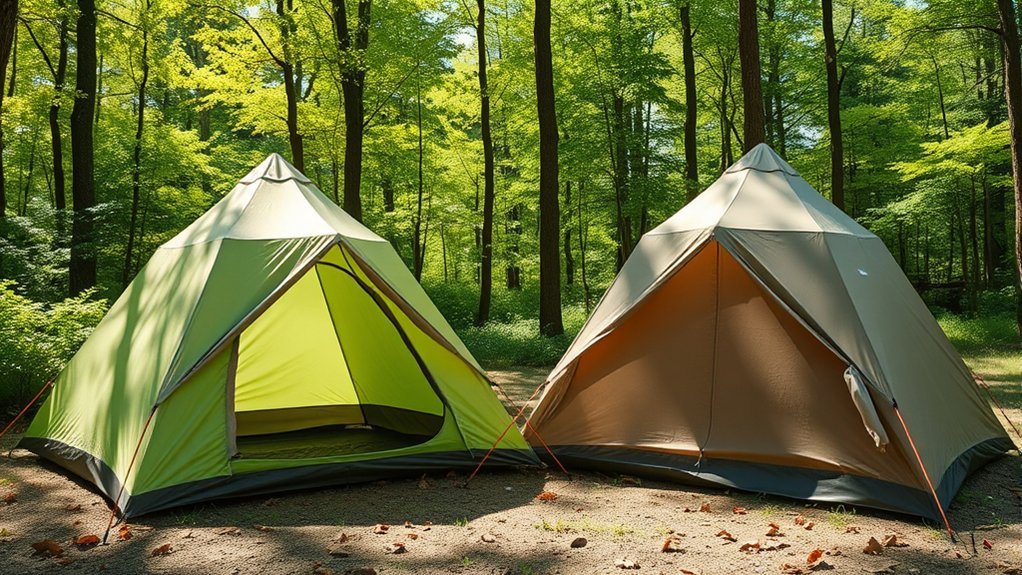
When choosing between nylon and polyester tents, consider your camping needs. Nylon is lightweight and strong, making it a top choice for ultralight backpacking. Polyester offers durability and UV resistance, which is better for family camping and wet conditions. Nylon can sag and weaken under the sun, while polyester keeps its shape and dries quickly. Your specific adventure will determine the best option for you.
Quick Answer
In a hurry? Here is the breakdown of which fabric to choose:
- Choose Nylon if: You are backpacking, need the lightest gear possible, and prioritize strength over sun resistance.
- Choose Polyester if: You are car camping, expect rain or heavy sun, and want a tent that stays taut without sagging.
- Key Difference: Nylon stretches when wet; polyester does not.
Products Worth Considering

Spacious Ultralight Design - Award-winning backpacking tents with extended dimensions for taller adventurers. Revolutionary HyperBead fabric creates a waterproof tent that's significantly lighter and stronger than traditional materials, with breathable nylon ripstop and mesh body for optimal comfort during tent camping
A MUST FOR TENT: An extra tent tarp doesn't just give you extra waterproofing, it is used as ground cloths under tents to prevent wear and tear. There’s no question that an insulated tent footprint is a great idea to help protect your investment, definitely, the choice to extend your tent's life
Upgraded Larger Size: this 2 person tent offers a roomy 86.6 x 53.1 x 41.3 inch interior size, Outer Tent: 90.5 x 96.4 x 43.3inch, perfect for couples or solo backpackers who need larger space to sleep more comfortable.
Overview of Tent Fabrics
When picking a tent for your next trip, you should know the differences between fabrics. Each type changes how you experience the outdoors. The three main choices are nylon, polyester, and polycotton.
Nylon is very strong for its weight. This makes it a great fit for lightweight backpacking. However, it can sag when wet and break down under UV rays. This means you need to stay on top of tent maintenance and fabric care.
Polyester tents do not sag in the rain. They also absorb very little water. While they are reliable, they usually have a lower tear strength than nylon. Finally, polycotton blends cotton and polyester. It breathes well and resists fire. It is heavier and costs more, but it is very comfortable for long stays.
Products Worth Considering
Easy to Assemble:This single person tent is very easy to set up, just cross the two lightweight aluminum poles to complete the simple frame. Even first-time campers can easily assemble this solo tent without referring to the instructions, once they are familiar with it. As a very lightweight tent, assembling it is also easy and hassle-free. The structure is simple, and it is very easy to take down
Revolutionary Fabric Technology - Experience superior HyperBead technology across our ultralight tent line. This proprietary waterproof tent fabric outperforms traditional materials without added chemicals. The breathable combination of solution-dyed nylon ripstop and polyester mesh is engineered for lasting performance whether you choose a 2 person tent or larger family camping tent
Enhanced Ventilation and Spacious Design: The upgraded Cloud Up UL backpacking tent features a ventilation window above the front door, minimizing condensation for a dry and airy interior. Its spacious layout with a large, high front door offers ample room for camping gear and comfortable entry and exit.
Advantages of Nylon Tents
Nylon has major benefits for outdoor trips. Its lightweight build makes it easy to carry. The strength-to-weight ratio allows for a tough tent without the extra bulk. It also resists scrapes and scuffs well during tough camping trips.
Products Worth Considering
Reliable material: Our down jacket repair patch are different from others in that backpacking patch kit are made of nylon material and specially selected with the best adhesive in the market, so clothing patches patches are very durable and safe to use
Lightweight and Durable: The OneTigris STELLA Camping Tent features a lightweight and durable 20D Nylon outer fabric with a single-layer silicone coating, making it both sturdy and easy to carry at only 4.4lb/2kg. Suitable for backpackers, bushcrafters, everyday campers, and families Waterproof: With a 3000mm waterproof rating, the STELLA camping tent is perfect for use in all weather conditions. The removable blackout outer tent allows for greater flexibility in use.
Easy to Assemble:This single person tent is very easy to set up, just cross the two lightweight aluminum poles to complete the simple frame. Even first-time campers can easily assemble this solo tent without referring to the instructions, once they are familiar with it. As a very lightweight tent, assembling it is also easy and hassle-free. The structure is simple, and it is very easy to take down
Lightweight and Portable
Nylon tents are popular with backpackers who want to save weight. The fabric is naturally stretchy, which helps it handle stress without tearing. Since it weighs much less than polyester, you can find ultra-lightweight versions for minimalist camping.
| Fabric Type | Weight (grams) |
|---|---|
| 7D | 100 |
| 10D | 150 |
| 15D | 200 |
Even though thin nylon is light, it still resists abrasion well. This helps your tent last in high-stress areas. The light weight reduces the strain on your back while you hike.
What Does Denier (D) Mean?
You will often see a number followed by a “D” when looking at tent specs, such as 15D or 40D. This stands for Denier. It measures the thickness of the individual threads in the fabric. A lower number means the thread is finer and lighter. A higher number means the fabric is thicker and usually more durable. For example, a 7D nylon tent is incredibly thin and light, while a 75D polyester tent feels much heavier and tougher.
Products Worth Considering
MULTIPURPOSE PRIVACY TENT - This versatile shelter with a removable bottom can be used as an outdoor shower enclosure, changing room, portable bathroom, or pop up privacy tent for sporting events, conventions, camping, or road trips.
Roomy 6 People Family Tent: Spacious design offers enough room for 6 people family, with a size 10' x 9' x 78"(H) (90 sq ft),2 air mattresses or 6 sleeping bags are well fit in the tent,78 inch center height is enough for you to stand up changing.
WATER REPELLENT SPRAY: Two Scotchgard Outdoor Water Shield Sprays, 10.5 oz cans, that protects fabrics against the elements
Exceptional Strength Ratio
Nylon is a top pick for hikers who need lightweight options. Because the fabric stretches, it spreads out stress. This lowers the chance of a sudden tear. Ripstop nylon uses a special crosshatch pattern to stop small holes from getting bigger. This makes the fabric very efficient. Just remember that nylon can be damaged by UV rays, especially if you camp at high altitudes where the sun is stronger.
Abrasion Resistance Benefits
Nylon is a leader in the gear market because it handles abrasion so well. This is helpful when you are on rough ground. The ripstop design lets you handle the tent without worrying about every sharp object. While it is sensitive to the sun, the physical toughness makes it a reliable shelter for active hikers.
Disadvantages of Nylon Tents
Nylon has some water absorption issues. This can make the tent heavier and cause it to sag during a storm. Also, UV damage can shorten the life of a nylon tent quite a bit. These factors can affect how well your tent works over time.
Water Absorption Issues
Water can be a problem for nylon tents. When it gets wet, the fabric can grow by about 3.5% in length. This causes sagging, which makes the tent hard to keep tight. Sagging also leads to more condensation inside. Unlike polyester, nylon needs waterproof coatings to stay dry. These coatings can wear off, so you will need to reapply them eventually.
UV Degradation Risks
Nylon faces a big challenge from the sun. Long periods of UV exposure can weaken nylon fibers. In some cases, it can lose half its strength after 200 hours of direct sun. This makes it more likely to tear and can ruin waterproof coatings. To help your tent last, store it in a cool, dark place and avoid leaving it set up in the sun all day when you aren’t using it.
Advantages of Polyester Tents
Polyester tents are a popular choice for many reasons. They are cost-effective and offer great performance for the price. They are excellent at resisting weather. They keep their shape even when they are soaking wet. This means you won’t have to go outside in the rain to tighten your tent stakes.
Polyester also handles UV rays much better than nylon. It does not absorb much water and dries very quickly. This makes it much easier to pack up and go after a rainy night. These features give you more confidence when the weather is unpredictable.
Products Worth Considering
MULTIPURPOSE PRIVACY TENT - This versatile shelter with a removable bottom can be used as an outdoor shower enclosure, changing room, portable bathroom, or pop up privacy tent for sporting events, conventions, camping, or road trips.
HIGH QUALITY: The large duffel bag is made of high-quality 600D water-resistant and ripstop polyester material for durability. No damage or tearing even when filled with items. The lining fabric has an extra waterproof coating to keep the contents of the bag dry.
✔ Spacious 2-Person Tent – Measures 77” x 57” x 41” (L x W x H), offering ample room for two campers while remaining lightweight at just 2.56 lbs – perfect for backpacking & hiking.
Disadvantages of Polyester Tents
Polyester has some downsides. It usually has lower tear strength than nylon. Because of this, the fabric must be thicker to be just as tough, which adds weight. These tents can also have poor breathability, which leads to condensation on the inside walls. This can make the tent feel damp at night. Polyester is also heavier, so it is not the best for ultralight hikers. Finally, dark colors can sometimes fade or bleed onto lighter parts of the tent if it stays wet for too long.
Choosing the Right Fabric for Your Camping Needs
Picking the right fabric depends on your trip. Think about the weather and how long you want the tent to last.
| Fabric | Best For |
|---|---|
| Nylon | Backpacking and light setups |
| Polyester | Car camping and wet weather |
If you are hiking long miles, nylon is great because it is light. Just be ready for it to sag in the rain. Polyester is better if you want a stable tent that stays tight. It is more resistant to sun damage and mold, which makes it a solid choice for general camping.
Frequently Asked Questions
Can I Waterproof My Nylon or Polyester Tent Further?
Yes, you can add more waterproofing. You can use sprays or seam sealants made for tent fabrics. Regular cleaning and drying your tent before you store it will also help it stay waterproof for longer.
How Do I Clean and Maintain My Nylon or Polyester Tent?
Use a gentle soap and water solution. Do not use harsh chemicals or a washing machine. Rinse it well and make sure it is 100% dry before you pack it away. This stops mildew from growing.
Are There Eco-Friendly Options for Nylon and Polyester Tents?
Yes, some brands now use recycled plastics to make tent fabrics. Look for labels that mention recycled content or sustainable manufacturing. This helps you enjoy nature while reducing your impact on the planet.
How Do Temperature Changes Affect Nylon and Polyester Tents?
Cold or heat can make nylon stretch or shrink. This changes how tight the tent feels. Polyester is more stable and keeps its shape much better when the temperature drops at night.
What Is the Average Lifespan of Nylon Versus Polyester Tents?
Most quality tents last between 5 to 10 years depending on use. While nylon is physically stronger, it breaks down faster in the sun. If you camp in sunny areas often, a polyester tent might actually last longer before the fabric becomes brittle.
Final Verdict
The best choice between nylon and polyester depends on your style of camping. If you need to stay light for a long hike, nylon is the way to go. If you want a tent that stays taut in the rain and handles the sun well, polyester is the winner. Think about your next adventure and choose the fabric that will keep you most comfortable outdoors.