

Last Updated on July 29, 2026 by Mason Reed
Keeping bugs out of a tent does not require sealing every vent and sleeping in stale, humid air. The best setup combines intact fine mesh, a fully zipped inner tent, smart campsite placement, clean food habits, and proven bite protection. The goal is to let air move through screened openings while removing the easy routes and attractants that bring insects inside.
Quick Answer
Keep bugs out without blocking ventilation by using intact fine-mesh panels, opening rainfly vents, staking the fly away from the tent body, and keeping every door zipped. Camp on dry, established ground away from standing water, store food outside the sleeping area, and use an EPA-registered repellent as directed.
Key Takeaways
- Ventilate through screened doors, windows, roof mesh, and rainfly vents—not through an unzipped tent door.
- Repair even small mesh holes and check zipper corners, seams, and floor edges before each trip.
- Choose a dry, established site away from standing water, dense brush, and low spots where damp air settles.
- Keep food, trash, dirty dishes, and scented items out of the sleeping tent and follow local food-storage rules.
- Use EPA-registered skin repellents and label-approved 0.5% permethrin treatments instead of relying on household oils, vinegar, or smoke.
At a Glance
| Time Required | 10–20 minutes during setup, plus a quick check before bed |
| Difficulty | Easy |
| Tools Needed | Mesh repair patch or tape, sealed food storage, EPA-registered repellent, and optional battery fan |
| Cost | $0–$30, depending on supplies already owned |
Disclosure: As an Amazon Associate I earn from qualifying purchases. Some links on this page are affiliate links, at no extra cost to you.
Utilize Mesh Screens for Maximum Airflow
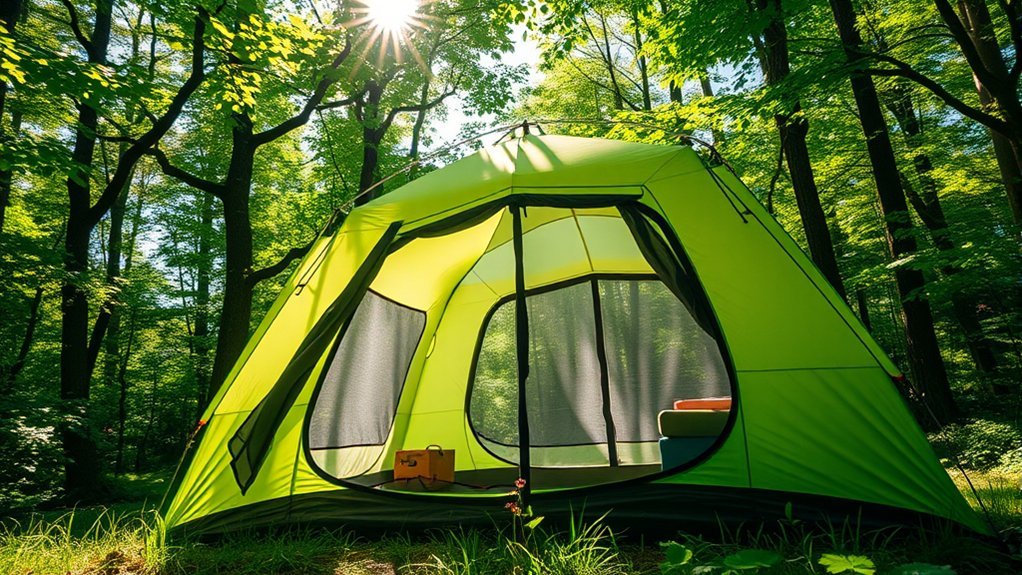
Mesh is the main barrier that lets air pass while blocking mosquitoes, flies, moths, and many other insects. Use the tent’s screened doors, windows, roof panels, and low vents as the airflow path. Keep the solid fabric panels open when weather allows, but leave the mesh layer fully zipped.
Before pitching the tent, hold each mesh panel up to the light. Check the corners, zipper tracks, pole clips, and places where mesh meets solid fabric. A hole that looks tiny in daylight can be large enough for mosquitoes or small gnats. Patch damage with a repair product made for tent mesh, then test the zipper from end to end.
- Open screened vents: Uncover roof mesh, window mesh, and adjustable vents.
- Guy out the rainfly: Create a gap between the fly and inner tent so warm, damp air can escape.
- Keep mesh taut: A properly tensioned tent reduces folds around doors and zipper corners.
- Match the mesh to local insects: In areas with biting midges or no-see-ums, choose a tent or replacement panel specifically labeled for those smaller insects.
Pro Tip: Set up the tent at home before the trip, darken the room, and shine a flashlight from inside. Pinholes and zipper gaps are easier to spot when light passes through them.
Choose the Right Tent Design
A well-ventilated tent does not need extra open doors. It needs large screened areas, adjustable rainfly vents, enough space between the fly and inner tent, and zippers that close cleanly. Three-season double-wall tents often balance weather protection, airflow, and insect control better than shelters with large unscreened openings.
Mesh Screens and Adjustable Vents
Look for mesh on more than one side of the tent so air can move across the sleeping area. Roof mesh helps warm air rise out, while lower vents pull cooler air in. A rainfly with covered vents allows some airflow during light rain without exposing the inner tent.
Full-mesh inner tents offer excellent warm-weather ventilation, but the rainfly still needs to be staked correctly. If the fly rests against the mesh, airflow drops and condensation can transfer inward.
Doors, Vestibules, and Entry Habits
Multiple doors can make a shared tent easier to use, but they do not automatically keep bugs out. Every additional opening is another zipper that must seal properly. Choose a layout that lets campers enter without crawling over gear, and use vestibules to store shoes and packs without placing food inside the sleeping area.
When entering, unzip only as far as needed, step through, and close the mesh immediately. Avoid leaving the door folded open while organizing gear.
Weather Protection and Durable Materials
Waterproofness and insect protection solve different problems. A bathtub-style floor and a properly fitted rainfly help keep splash and runoff outside, while intact mesh and closed zippers stop insects. There is no universal 3,000 mm waterproof rating that every camper needs; compare the manufacturer’s floor and fly specifications with the weather and trip length you expect.
Durable fabric, reinforced corners, protected zipper tracks, and replaceable pole sections matter more than a single fabric number. Follow the tent maker’s care instructions because harsh cleaners, prolonged sun exposure, and improper storage can weaken coatings and mesh.
Position Your Tent Strategically
Choose a legal, established tent pad on firm, dry ground. Low areas collect cool, damp air and may channel water during rain. Standing water can support mosquito breeding, while dense brush and leaf litter can increase contact with ticks and other insects. You do not need to eliminate every bug nearby; you only need to avoid the most obvious habitat when another established site is available.
Orient the door away from strong wind and wind-driven rain, then open protected vents on more than one side to maintain crossflow. In calm weather, face a screened opening toward the breeze. Avoid pitching beneath dead limbs, unstable trees, or any overhead hazard just to gain shade.
Note: Mosquitoes can bite during the day or night. Some species are most active around dusk and dawn, so keep the tent zipped at all times rather than relying on a single “safe” time window.
Keep Bugs Out During Entry and Exit
Most insects enter while a person is using the door. A simple routine protects ventilation better than closing every vent:
- Turn off or dim bright lights near the doorway before opening it.
- Brush insects from clothing, hats, and packs before stepping inside.
- Open only the mesh door you need and keep the solid door arranged so it does not block the opening.
- Step in, pull gear through, and close the zipper immediately.
- Check the lower zipper corners, where small gaps are easy to miss.
Keep shoes in the vestibule if conditions allow, but shake them out before wearing them. Inspect bedding and clothing that was left outside. Do not spray aerosol insecticide inside a closed tent unless the product label specifically permits that use and gives ventilation instructions.
Maintain a Clean Campsite
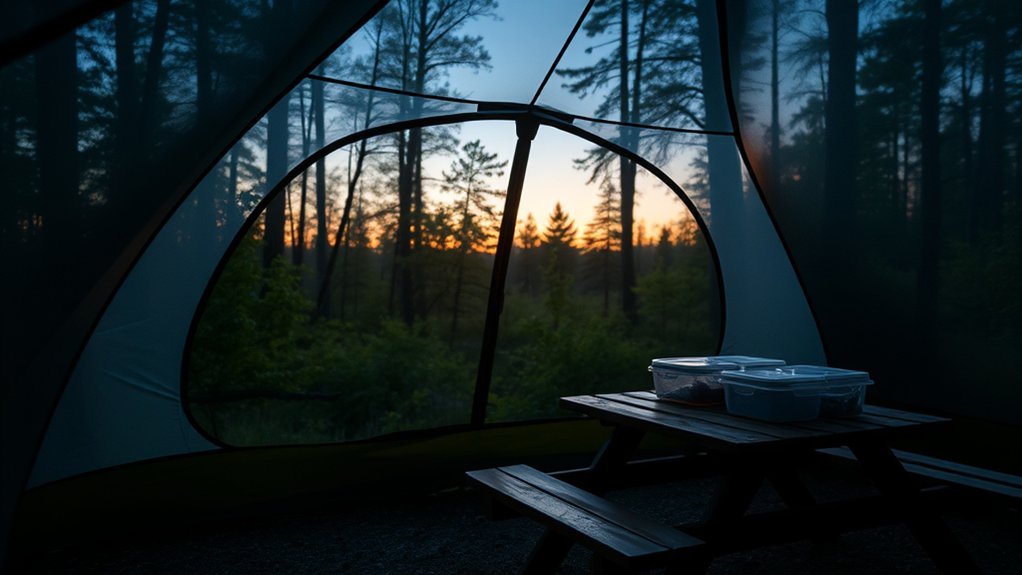
Food scraps, sugary spills, trash, and dirty cookware can attract ants, flies, wasps, and wildlife. Clean the eating area soon after meals and store food according to campground rules. The National Park Service advises campers to secure food, collect scraps and packaging, and avoid taking food inside the tent.
- Store food, trash, pet food, toiletries, and other scented items in the required locker, vehicle, or approved animal-resistant container.
- Wash dishes promptly and strain food particles from wastewater where local rules require it.
- Wipe tables and pick up crumbs before dark.
- Keep drink cans, snack wrappers, and cooking clothes out of the sleeping tent.
- Inspect the tent perimeter for spills, dropped food, and open trash before bed.
Warning: Food storage is also a wildlife-safety issue. Never assume a sealed plastic container is enough in bear country. Follow the exact rules for the park, forest, or campground you are visiting.
Use Proven Repellents and Treat Natural Options as Supplemental
For exposed skin, choose an EPA-registered insect repellent and follow the label for application, age limits, reapplication, and use with sunscreen. EPA registration means the product has been evaluated for safety and effectiveness when used as directed.
For clothing and gear, the CDC says 0.5% permethrin can be used on boots, clothing, and camping gear when the product label allows it. Treat gear before the trip, allow it to dry fully, and never apply permethrin directly to skin.
Household essential oils, vinegar, citrus peels, and herb smoke may have an odor people notice, but they should not replace screened shelter, protective clothing, or a registered repellent. EPA notes that some unregistered plant-oil products have not been evaluated for effectiveness. “Oil of lemon eucalyptus” or PMD in an EPA-registered product is not the same as applying lemon eucalyptus essential oil from a diffuser bottle.
| Method | What the Evidence Supports | Best Use |
|---|---|---|
| EPA-registered skin repellent | Evaluated for safety and effectiveness when used according to the label | Exposed skin and clothing, as the label directs |
| 0.5% permethrin | Kills or repels mosquitoes and ticks on treated clothing and gear | Label-approved tents, clothing, boots, packs, and nets—never skin |
| Household essential oils or citrus peels | Protection is inconsistent, formulation-dependent, or not evaluated by EPA | Scent preference only; do not rely on them for bite prevention |
| Vinegar spray | Not a dependable tent or skin repellent and may affect coatings or leave odor | Skip unless the tent manufacturer specifically approves it for cleaning |
| Burning herbs, candles, or coils | Smoke protection is limited and open flame adds fire risk | Do not use inside or next to a tent; obey local fire restrictions |
Warning: Never burn sage, rosemary, citronella candles, coils, or any other flame inside a tent. Keep ignition sources away from tent fabric and check current fire restrictions. The U.S. Forest Service warns against lighting stoves or lanterns inside tents.
Create Airflow Without Opening the Door
If the tent feels hot or damp, improve the designed ventilation before unzipping the entrance:
- Open every protected vent: Make sure bedding or gear is not blocking low vents.
- Stake the rainfly fully: A loose fly can collapse against the inner tent and stop airflow.
- Roll back approved fly panels: In dry weather, expose more roof or door mesh while keeping the insect screen closed.
- Use a small battery fan: Aim it across the sleeping area or toward an upper vent. Keep it clear of fabric and follow its charging instructions.
- Reduce indoor moisture: Store wet rain gear and damp shoes in the vestibule rather than beside your sleeping bag.
Condensation does not always mean the tent lacks ventilation. Humid weather, wet ground, breathing, wet clothing, and a large temperature drop can all add moisture. Ventilation reduces buildup, but it may not remove it completely.
Implement Proper Tent Maintenance
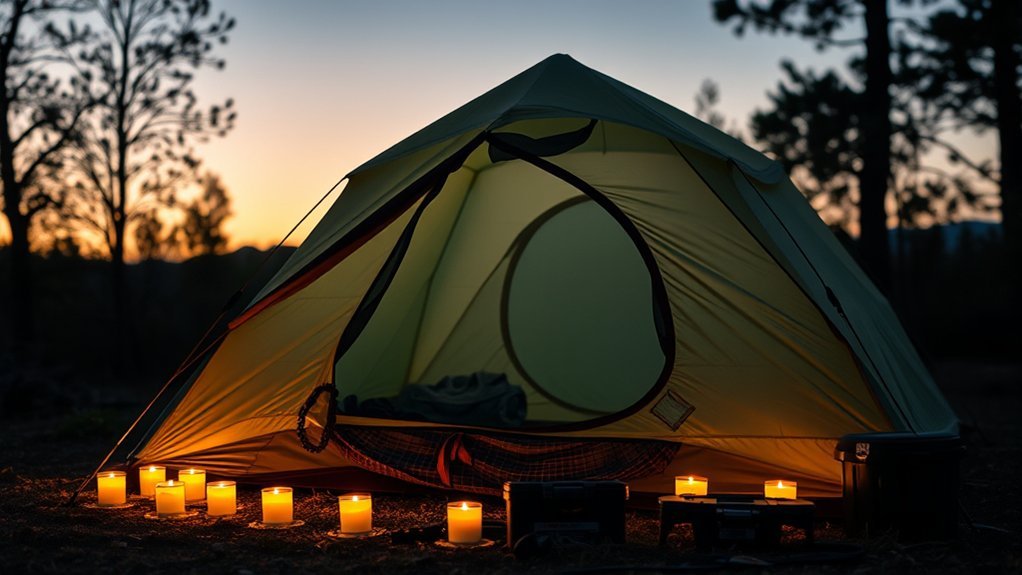
Regular care keeps the tent’s insect barrier working. Inspect it after each trip and again before the next one. Dry the tent completely before storage, remove dirt with the method approved by the manufacturer, and avoid storing it compressed while damp.
- Repair mesh promptly: Clean and dry the area, then apply a mesh patch or repair tape according to its directions.
- Clean zipper tracks: Remove sand, pine needles, and grit that can prevent the sliders from closing fully.
- Check zipper sliders: If the teeth separate behind the slider, use the manufacturer’s repair guidance or a qualified repair service.
- Inspect floor and seam junctions: Crawling insects can enter through holes at corners, stake loops, and worn floor edges.
- Verify net treatment: If using a treated mosquito net or permethrin-treated gear, follow the product label for retreatment intervals and washing limits.
Keep the inner mesh door closed whenever the tent is unattended. Before bed, sweep out insects that entered during setup and check that sleeping bags, clothing, or cords are not caught in the zipper.
Troubleshooting Common Bug and Ventilation Problems
| Problem | Likely Cause | Fix |
|---|---|---|
| Mosquitoes appear after dark | Door left open, zipper corner gap, or mesh tear | Check the door routine, inspect with a flashlight, and patch the opening |
| Tiny gnats pass through mesh | Mesh openings are too large for local midges or no-see-ums | Use a manufacturer-labeled no-see-um inner tent or net |
| Tent feels stuffy with all mesh closed | Rainfly is not guyed out, vents are blocked, or solid panels remain closed | Create a fly gap, open protected vents, and move gear away from airflow paths |
| Ants gather near the tent | Food crumbs, sweet spills, trash, or an ant trail crossing the pad | Clean the site, store scented items correctly, and move only to another legal established pad |
| Rain enters when vents are open | Vent faces wind-driven rain or fly tension is poor | Close the windward vent, keep the leeward vent open, and retension the fly |
The best bug-proof ventilation strategy is simple: move air through intact mesh, not through an open doorway.
Frequently Asked Questions
Can I use a regular tarp instead of a tent fly?
A tarp can provide overhead rain or shade protection, but it is not a perfect replacement for a fitted rainfly. Pitch it high enough to preserve airflow, angle it so water drains away, and do not let it press against the tent mesh. In exposed wind or heavy rain, the manufacturer’s fly usually offers better coverage and stability.
How often should I check my tent for damage?
Inspect the tent after every trip, before packing for the next trip, and after any storm or rough setup. Check mesh, zipper corners, floor edges, pole attachment points, and seams. Repair small problems before they grow or allow insects and rain inside.
Do certain tent colors attract more mosquitoes?
Color may influence mosquito behavior, but it is not a reliable stand-alone control. A 2022 laboratory study of Aedes aegypti found that carbon dioxide triggered attraction to specific wavelengths and dark, high-contrast objects. Choose color for heat, visibility, and campsite needs, then rely on mesh, clothing, and registered repellent for protection.
Are there specific times when bugs are more active?
Activity varies by species, weather, and location. Some mosquitoes are most active around dusk and dawn, while others bite during the day. Warm, calm, humid conditions can feel especially buggy. Keep the tent zipped continuously and use local public-health guidance when mosquito-borne disease is a concern.
How can I tell whether a natural repellent is effective?
Do not judge protection only by smell, buzzing, or the number of insects you notice. Look for an EPA Registration Number and a label that lists the target insect and protection directions. Products without EPA registration may not have been evaluated for effectiveness, even when their ingredients are described as natural.
Can I spray permethrin directly on my tent?
Only use a permethrin product whose label specifically allows treatment of tents or camping gear. Apply it outdoors before the trip, follow the stated amount and drying time, and keep people and pets away until the item is dry as directed. Never apply permethrin directly to skin.
Why are bugs getting in when the mesh looks intact?
Check the zipper ends, lower door corners, floor seams, and gaps created by trapped fabric or cords. Tiny insects may also pass through mesh that is not designed for no-see-ums. Inspect the tent in a dark room with a light inside, then patch or repair the exact entry point.
Conclusion
You can keep a tent airy and bug-resistant at the same time. Let ventilation pass through intact mesh and protected vents, close doors quickly, pitch on dry established ground, and keep food and scented items out of the sleeping area. Add EPA-registered repellent and label-approved treated gear when biting insects are active. A short inspection before each trip prevents most avoidable entry points.
Sources
- CDC — How to Prevent Mosquito and Tick Bites — supports screens, protective clothing, EPA-registered repellents, 0.5% permethrin, and standing-water guidance.
- CDC — About Permethrin-Treated Clothing and Gear — supports treatment of label-approved clothing, tents, and camping gear and the warning not to use permethrin on skin.
- U.S. EPA — Regulation of Skin-Applied Repellents — explains EPA registration and the limits of unregistered natural-repellent effectiveness claims.
- National Park Service — During Your Stay — supports airtight food storage, campsite cleanup, and keeping food out of tents.
- U.S. Forest Service — Fire Safety — supports keeping flame-producing equipment out of tents and following fire-safe practices.
- Nature Communications — Mosquito Visual Preferences Study — supports the limited, species-specific discussion of color and carbon-dioxide-triggered attraction.
