
Last Updated on July 29, 2026 by Mason Reed
Spiders usually enter a tent through an open door, damaged mesh, loose zipper gaps, or gear carried inside. The best defense is simple: choose a clean, durable campsite, inspect the tent before use, keep the door zipped, store clothing and shoes carefully, and reduce the insects that spiders hunt. No method can guarantee a completely spider-free campsite, but a few habits can make encounters much less likely.
Quick Answer
To keep spiders out of your tent, inspect and repair the mesh and zippers, set up on an established site away from leaf litter and wood piles, keep the door closed, shake out shoes and bedding, and store gear in sealed bags. Treat only label-approved fabrics with permethrin, and do not rely on scent remedies alone.
Key Takeaways
- Physical barriers—sound mesh, working zippers, closed doors, and sealed gear—are more dependable than homemade repellents.
- Use an established, dry campsite and avoid placing the tent beside wood piles, thick brush, deep leaf litter, or clutter.
- Mint oil and chestnuts have shown limited, species-specific effects in laboratory tests; garlic, cucumber, clove, lavender, and citrus claims are not well established.
- Use permethrin only on clothing or gear listed on the product label, never on skin, and let treated items dry fully.
- If a bite causes severe pain, muscle cramps, trouble breathing, vomiting, spreading redness, or a worsening wound, get medical help promptly.
At a Glance
| Time Required | 10–20 minutes during setup, plus a few minutes each day |
| Difficulty | Easy |
| Tools Needed | Headlamp, small brush, tent repair tape or mesh patch, and sealable gear bags |
| Cost | $0–$25 for basic storage and repair supplies; optional fabric treatment costs more |
Disclosure: As an Amazon Associate I earn from qualifying purchases. Some links on this page are affiliate links, at no extra cost to you.
Understanding Spider Behavior
Most spiders do not seek people out. They are predators looking for insects, shelter, and quiet places to rest. A spider may wander through an open tent door or arrive inside a boot, folded chair, sleeping bag, firewood bundle, or backpack. Dark tent corners and gear left undisturbed give it a place to hide.
Bites are uncommon and usually happen when a spider is trapped against the skin, handled, or pressed inside clothing or bedding. The University of California Statewide IPM Program notes that most spiders cannot seriously harm people and that many cannot easily pierce human skin. Black widows and brown recluses can cause medically important bites, but their ranges and habitats vary.
Note: Do not assume that every unexplained red mark is a spider bite. Many skin conditions and other bites look similar, and reliable identification often requires seeing the spider.
Choosing the Right Campsite
Start with the campground rules. In developed campgrounds, use the designated tent pad. In the backcountry, choose an established or naturally durable surface such as bare soil, gravel, rock, or dry grass. Leave No Trace recommends camping about 200 feet from water where local rules allow, but that distance protects shorelines and wildlife access; it is not a proven spider-control radius.
Within the allowed site, choose a dry, level area with as little loose debris as possible. Avoid placing the tent directly beside:
- Wood piles, stacked lumber, logs, or rock piles
- Dense brush, tall grass, or deep leaf litter
- Trash cans, food scraps, or clutter that attracts insect prey
- Visible burrows, heavy webbing, or egg sacs
Do not clear living vegetation or build a new platform just to avoid spiders. Good campsites are found, not made. If the only legal pad has vegetation around it, keep the tent centered on the pad and focus on closing entry points.
Effective Preventive Measures

The most reliable plan combines campsite selection, a sound tent, careful gear storage, and daily inspection. Scent products may be optional, but they should never replace these basic controls.
Natural Repellent Options
Evidence for homemade spider repellents is limited. A small laboratory study tested peppermint oil, chestnuts, and lemon oil against three spider species. Peppermint oil and chestnuts discouraged settlement in some species, while lemon oil had no effect. The results do not prove that a spray or scent sac will protect a tent outdoors.
| Option | Evidence | Practical Use |
|---|---|---|
| Peppermint oil | Limited laboratory evidence; response differed by spider species | Optional supplement only; avoid skin, eyes, food, and untreated tent coatings |
| Chestnuts | Limited laboratory evidence for some species | May be tried in a breathable sac, but do not expect a complete barrier |
| Lemon or citrus oil | No repellent effect in the cited spider study | Do not rely on it for spider control |
| Garlic, onion, clove, cucumber, lavender, or eucalyptus | Little or no direct evidence for keeping spiders out of tents | Treat as unproven; physical exclusion is more dependable |
Scent Sac Techniques
If you still want to test a low-mess scent sac, place chestnut pieces in a breathable cloth pouch or put one or two drops of peppermint oil on a cotton ball inside a closed, ventilated container. Position it near—but not on—the tent door. Replace it when the smell fades.
Do not scatter food-like materials, cucumber slices, onion, or garlic around camp. They can create litter, odors, and wildlife problems. Keep any essential oil away from children, pets, cookware, sleeping surfaces, and direct contact with the tent until you know the fabric maker allows it.
Proper Tent Setup
- Inspect before pitching: Check the tent body, mesh, floor, zipper tracks, zipper sliders, and seams for openings.
- Repair entry points: Patch torn mesh and fabric with a compatible repair product. If the zipper separates behind the slider, clean the track and repair or replace the slider.
- Use a footprint correctly: A footprint can protect the floor and keep it cleaner, but it is not a sealed barrier against spiders. Tuck it fully under the tent so it does not collect rain.
- Stake and tension the tent: Stakes anchor the tent; they do not lift it off the ground. Proper tension helps doors and zippers align without leaving gaps.
- Close the door immediately: Open only the section needed to enter or exit, then zip both sliders completely into their intended closed position.
Pro Tip: After dark, pause before opening the door and scan the zipper, rainfly, and ground with a headlamp. Brush away insects or spiders before they can move inside.
Natural Repellents and Scents
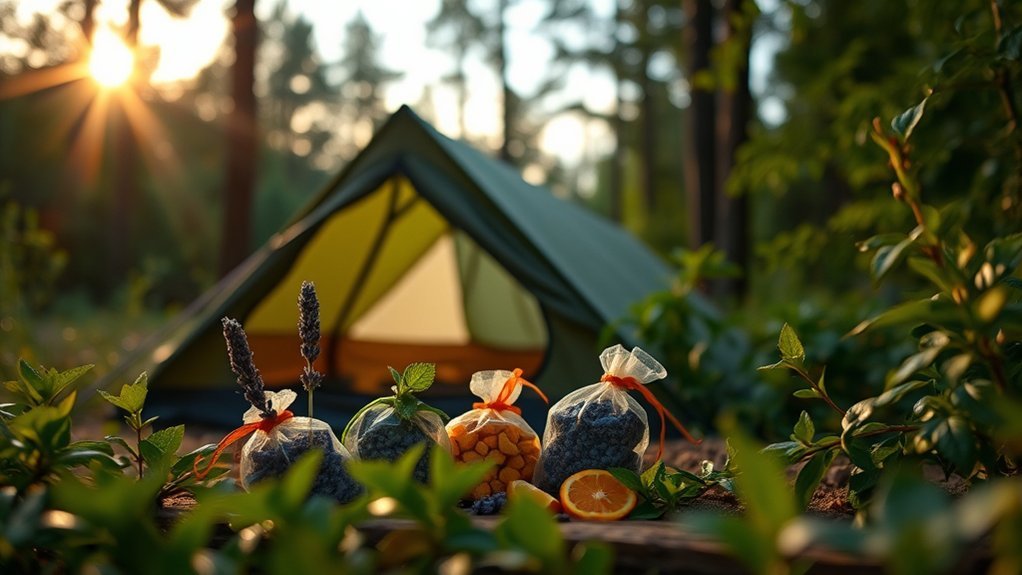
Natural does not automatically mean proven, harmless, or safe for every tent material. Essential oils can irritate skin and eyes, trigger symptoms in sensitive people, affect pets, and leave residues. Solvents or concentrated oils may also harm some waterproof coatings or plastics.
The best-supported natural approach is not a fragrance—it is habitat control. Keep loose gear organized, remove webs with a brush, store firewood away from the tent, avoid bringing leaf litter inside, and reduce bright lighting at the entrance. Outdoor lighting attracts insects, and more insect prey can make the area more attractive to spiders.
If you use peppermint oil or chestnuts, treat them as a small extra layer rather than a guaranteed repellent. The published spider-repellent study found mixed, species-specific results under controlled conditions.
Creating Spider Scent Sacs
A scent sac is optional, and it should be simple, contained, and easy to remove without leaving waste.
- Choose the material: Use a reusable cloth pouch or a coffee filter secured inside a small mesh bag.
- Add one tested option: Use dry chestnut pieces, or place a cotton ball with one or two drops of peppermint oil inside the pouch. Do not soak the pouch.
- Place it carefully: Hang it near the outside of the door or vestibule without touching the tent fabric, food, bedding, or cooking equipment.
- Remove it before packing: Dispose of the cotton ball properly and pack out every piece of material.
Note: Cloves, garlic powder, onion powder, cucumber peels, lavender, and eucalyptus are often recommended online, but reliable evidence that they keep spiders out of tents is lacking.
Utilizing Permethrin Spray
Permethrin is a synthetic pyrethroid insecticide designed to act like natural pyrethrins. Some products are registered for treating clothing and camping gear, including tents, and some labels list spiders among the target pests. Product directions differ, so the label—not a universal “six-week” rule—determines what you may treat, how much to apply, and how long protection lasts.
The Centers for Disease Control and Prevention advises using 0.5% permethrin products made for clothing and gear and following the product label. Apply only outdoors or in a well-ventilated area as directed, never while clothing is being worn, and let every treated item dry completely before handling or using it.
Warning: Never apply permethrin fabric treatment to skin. Do not spray a tent unless that exact product label allows tent or camping-gear treatment. Keep children and pets away during application and until the material is fully dry.
Permethrin is optional. A repaired tent, closed door, clean campsite, and sealed gear remain the first line of defense.
Regular Tent Maintenance
Routine maintenance closes the small entry points that spiders and insects can use.
A tent with intact mesh, aligned zippers, and no stored debris offers a stronger defense than any scent spray.
- Inspect for damage: Look for torn mesh, pinholes, worn seam tape, bent zipper sliders, and gaps at zipper ends.
- Clean gently: Shake out loose dirt and use the tent maker’s cleaning instructions. Avoid harsh detergents, bleach, and strong fragrances unless the manufacturer approves them.
- Dry completely: Air-dry the tent before storage. Moisture can damage coatings and create musty hiding areas.
- Store sealed and off the floor: Use a clean storage bag in a dry location. Check garages, sheds, and closets for webs before putting the tent away.
- Inspect before each trip: Unroll the tent in daylight, shake it out, and remove any webbing, egg sacs, or insects before packing.
Additional Tips for a Bug-free Experience
- Store shoes and clothing: Keep footwear, jackets, and spare clothes in zipped bags or closed bins. Shake them out before use.
- Keep bedding contained: Do not leave a sleeping bag spread on the ground. Check folds before getting in.
- Manage food and trash: Follow campground food-storage rules and keep crumbs, wrappers, and trash out of the tent.
- Move lights away from the door: Place lanterns a short distance from the entrance when safe, or use the lowest useful setting to reduce insect activity at the zipper.
- Check carried items: Inspect firewood, chairs, packs, and ground cloths before bringing them into the vestibule or sleeping area.
- Follow fire rules: Keep campfires at the required distance from tents for fire safety. A campfire is not a dependable spider-control method.
Skipping strongly scented personal products may reduce attraction for some insects, but it is not a proven spider barrier. Likewise, garlic capsules are not a reliable pest-control method and should not be taken solely to prevent spider encounters.
Enjoying Nature Without Pests
A completely pest-free campsite is neither realistic nor necessary. Spiders help control insects, and most species are harmless to people. The goal is to keep them out of your sleeping space while leaving the surrounding habitat undisturbed.
Use this short routine each evening:
- Scan the tent exterior, rainfly, vestibule, and zipper with a headlamp.
- Brush away webs or spiders from outside without using bare hands.
- Check shoes, clothing, and bedding before use.
- Remove food and trash, then close every zipper fully.
- Keep rarely used gear sealed instead of piled in a corner.
What to Do If a Spider Gets Inside
Stay calm and avoid grabbing the spider. Put on shoes and use a headlamp so you can see where it moves. If possible, place a cup or container over it, slide a stiff card underneath, and release it away from the tent. You can also guide it out with a long-handled brush.
After removal, inspect the nearby corner, bedding, clothing, and gear. Look for a torn mesh panel, open zipper, web, or egg sac. If you cannot find the spider and are concerned, move bedding and clothing into sealed bags, shake each item outside in daylight, and inspect the tent again before sleeping.
Caution: Do not handle an unknown spider with bare hands or try to capture a medically important species at close range. A clear photo taken from a safe distance may help with identification.
Spider Bite First Aid and When to Get Help
If you think a spider bit you, move away from the area, wash the skin with soap and water, and apply a cold, damp cloth or wrapped cold pack for 10–20 minutes. Elevate the area when practical. Do not cut the wound, squeeze it, or try to remove venom.
Seek urgent medical help for trouble breathing, facial or throat swelling, faintness, severe or spreading pain, muscle cramps, repeated vomiting, fever, rapidly increasing redness or swelling, a blistering or darkening wound, or a suspected black widow or brown recluse bite. The Poison Control guidance on insect and spider bites also recommends help when symptoms worsen significantly or affect more than the bite area. In the United States, Poison Control is available at 1-800-222-1222.
Frequently Asked Questions
Can spiders enter through tent zippers or seams?
Yes. A partially closed zipper, damaged zipper track, torn mesh, open vent, or separated seam can create an entry point. Inspect these areas before every trip and close zipper sliders in their intended position.
What types of spiders are common around campsites?
Orb weavers, wolf spiders, jumping spiders, cobweb spiders, and funnel weavers may occur around campsites, depending on the region and habitat. Most are not medically important. Black widows and brown recluses have limited habitat and range patterns, so local identification matters.
Do spider repellents affect other insects?
They can. Broad-spectrum pesticides may kill or repel insects that are not the intended target. Use the least-toxic method that works, follow the label, avoid spraying flowers or water, and rely on exclusion and cleanup before chemical control.
Is it safe to use essential oils in a tent?
Not automatically. Concentrated oils can irritate skin and eyes, bother sensitive campers, affect pets, and damage some coatings or plastics. Check the tent manufacturer’s care instructions and keep oils off skin, bedding, food-contact items, and tent fabric.
How can I identify spider webs near my campsite?
Orb webs are wheel-shaped, funnel webs narrow into a tube, sheet webs form a flat or curved mat, and cobwebs look irregular and tangled. Check under the rainfly, around poles, beneath picnic tables, near rocks, and beside wood piles without touching the web.
Can spiders bite through tent fabric?
A spider outside an intact tent is unlikely to bite through the fabric. Bites are more likely when a spider is already inside and becomes trapped against skin in clothing, shoes, or bedding.
Should I use a bug bomb or indoor fogger in my tent?
No unless a product label specifically authorizes that exact use, which is uncommon. Foggers can create inhalation, fire, residue, and fabric risks in a small enclosed tent. Remove the spider physically and correct the entry point instead.
Conclusion
Keeping spiders out of a tent is mostly a matter of exclusion and good camp habits. Choose a legal, durable site; inspect the tent; repair mesh and zippers; keep the door closed; shake out gear; and avoid clutter around your sleeping area. Natural scents have limited evidence, and permethrin should be used only when the label permits it. These steps cannot guarantee zero spiders, but they can greatly reduce the chance of an unwanted visitor.
Sources
- University of California Statewide IPM Program: Spiders — spider behavior, exclusion, habitat reduction, and physical removal.
- CDC/NIOSH: Venomous Spiders at Work — bite prevention, medically important spiders, symptoms, and first aid.
- Poison Control: Insect and Spider Bites — bite care and signs that require medical help.
- CDC: Permethrin-Treated Clothing and Gear — safe use of 0.5% permethrin on label-approved clothing and camping gear.
- Journal of Economic Entomology: Natural Compounds as Spider Repellents — limited laboratory evidence for mint oil and chestnuts and no effect from lemon oil.
- Leave No Trace: Travel and Camp on Durable Surfaces — campsite selection and the reason for the 200-foot water guideline.

