
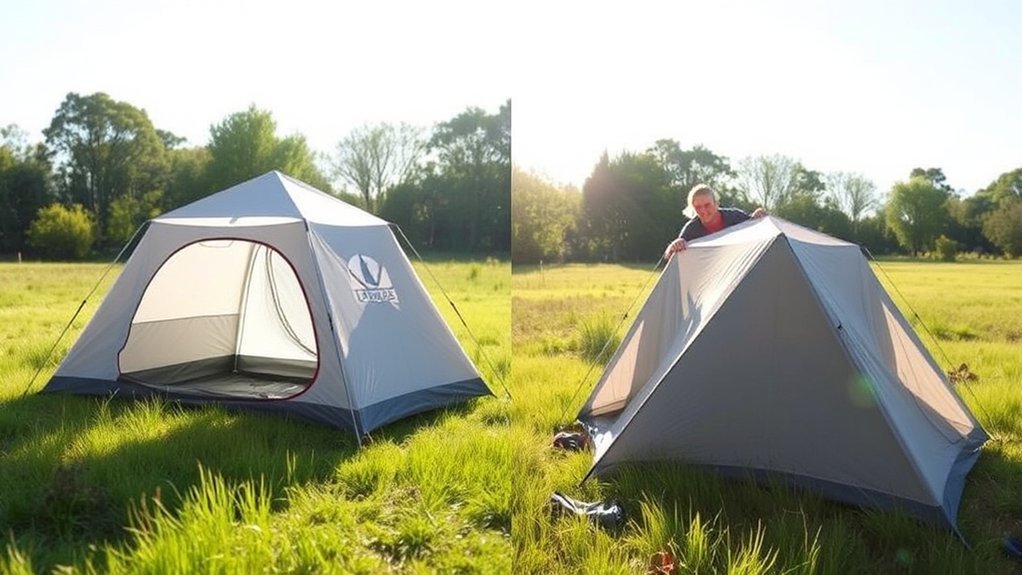
When you’re choosing between instant tents and traditional tents, consider how you camp. Instant tents set up in seconds, perfect for spontaneous trips but usually last 3 to 7 years. Traditional tents require more time to assemble, taking up to 22 minutes, yet last longer and withstand harsher conditions. Both options have distinct benefits and drawbacks, depending on your needs and preferences. Discovering more about these features can help you make the best choice for your adventures ahead.
Understanding Instant Tents

When you’re looking for quick and hassle-free camping solutions, understanding instant tents is essential. These pop-up tents can be set up in as little as 15 seconds, making them a breeze compared to traditional tents that take 7 to 22 minutes. However, their construction involves thinner fiberglass poles, which can break more easily, leading to a lifespan of only 3 to 7 years.
While instant tents offer the convenience of rapid setup, they come with trade-offs. Their packed sizes are often larger and bulkier, making storage in vehicles a challenge. Additionally, ventilation options are limited, which can result in condensation issues. Keep in mind that stability is also a concern; these tents typically withstand wind speeds of only 20 to 30 mph, unlike traditional tents that endure much stronger gusts. Understanding these factors can help you make informed choices for your camping adventures.
Products Worth Considering
2 PERSON TENT - This lightweight two-person small tent has enough space for you and a friend. This tent for camping is ideal for hiking, fishing, weekend music festivals, or as a beach tent, making it the perfect addition to your camping essentials.
Easy Setup Tent: 𝟐𝟎𝟐𝟔 𝐍𝐞𝐰 𝐔𝐩𝐠𝐫𝐚𝐝𝐞𝐝 Mimajor Camping Tent features an advanced Automatic Hydraulic System, enabling a hassle-free 40-second setup – no tools or special skills required. Spend less time pitching your tent and more time enjoying your outdoor relaxation.
【Quick Setup】: The 6 person camping tent has a pre-attached pole structure that can be easily set up in 60 seconds. The easy set up tent poles are made of thickened metal,galvanized on the outside to strengthen it and prevent rust.And the red button on the poles uses a high-strength spring inside, which can withstand thousands of presses. High quality poles combined with a quick set up system allow you to enjoy camping more safely and quickly!
Advantages of Instant Tents
When you choose an instant tent, you’re opting for a hassle-free camping experience with a setup process that takes as little as 15 seconds. This quick assembly and simplified storage make them perfect for families with busy schedules, allowing for spontaneous trips without the usual setup stress. Plus, their design guarantees that you can pack up in just a few minutes, maximizing your outdoor enjoyment.
Quick Setup Process
Although traditional tents require considerable time and effort for setup, instant tents revolutionize the camping experience with their remarkably quick assembly process. With instant tents, you can bypass the typical pitching challenges and enjoy more outdoor fun. Here’s what makes the setup techniques of instant tents so appealing:
- Rapid Assembly: Set up in as little as 15 seconds, allowing for spontaneous adventures.
- Single-Person Management: No need to fumble with poles; one person can handle the setup easily.
- Maximized Fun Time: Spend less time assembling and more time enjoying nature, perfect for families on the go.
The ease of setup transforms your overall camping experience, making instant tents a liberating choice for outdoor enthusiasts.
Convenient Storage Options
While traditional tents often require meticulous folding and careful packing to avoid damage, instant tents offer a more streamlined storage solution that simplifies the entire process. Their design eliminates the need to remove poles from clips, allowing you to pack up in just 1.75 to 3.5 minutes. This quick packing means you can hit the road sooner, maximizing your adventure time. Instant tents typically have a bulkier packed size, but their circular or rectangular shapes make them easier to store in your vehicle. With fewer packing techniques required, you’ll reduce the risk of damage, ensuring your gear stays in great condition. Embrace the convenience of instant tents and enjoy more freedom on your camping trips.
Ideal for Families
Instant tents are a game-changer for families who want to spend more time enjoying the outdoors and less time setting up camp. With setup taking just 1.5 to 3.5 minutes, you can dive right into family bonding and create memorable camping experiences together.
Consider these advantages:
- Quick Dining Setups: Spend more time eating together and less time assembling your tent.
- Simplicity for Busy Families: One person can easily set it up, freeing you to focus on fun.
- Compact Storage: Without removable poles, packing is a breeze, perfect for families with limited vehicle space.
Disadvantages of Instant Tents
Many campers find instant tents appealing for their quick setup, but they come with notable disadvantages that can impact your outdoor experience. First, they typically last only 3 to 7 years, while traditional tents can endure 5 to 10 years, meaning you might face higher tent maintenance costs sooner. The fiberglass poles in instant tents are thinner and more prone to breaking, risking structural failures when you need reliability the most. Additionally, these tents offer limited wind protection, withstanding gusts of only 20 to 30 mph, which poses a risk during stormy weather considerations. Pre-attached rainflies can cause increased condensation, leading to a stuffy atmosphere inside. Finally, the higher initial costs might deter budget-conscious campers, sacrificing long-term value for convenience. Ultimately, while instant tents simplify setup, weighing these disadvantages is essential for a satisfying camping experience.
Exploring Traditional Pole Tents
When you’re considering your camping options, traditional pole tents stand out for their durability and robust design. These tents offer unique pole tent features that enhance your camping experience, making them ideal for long-term use and larger gatherings.
- Durability: Built with thicker materials and sturdy poles, they can last 5 to 10 years.
- Wind Protection: Designed to withstand winds of 30 to 50 mph with multiple pole intersections and heavy-duty stakes.
- Group Capacity: Accommodating 2 to 10+ persons, they’re perfect for family camping trips.
Their compact packed size allows for easier storage and transport, especially for larger models. Additionally, traditional pole tents are simpler to clean, minimizing the chance for dirt to accumulate. If you value longevity and versatility in your camping gear, traditional pole tents can truly liberate your outdoor adventures.
Products Worth Considering
Comprehensive Package: include a comprehensive set of 1 set of tent replacement poles (8 poles included); This reliable and durable set offers robust support to your tent, ensuring an easy and simple installation and a sturdy setup
KEY INFO - Total length of FEMALE pole is 14 ft 7 in (175 inch) after assembled; total length of MALE pole is 14 ft 8.7 in (176.7 inch) after assembled. OUTER DIAMETER: 0.33 in / 8.5mm.
Key Specs - Total assembled length is 12 ft (143.7 in) and the pole weighs 0.8 lb (366 g). It consists of 12 fiberglass sections connected by a durable elastic cord, with male tips on both ends for easy extension. Each section measures 1 ft (13.1 in) with an outer diameter of 5/16 in (8 mm). Made of black fiberglass for strength and flexibility. Package includes 1 fiberglass tent pole.
Benefits of Traditional Pole Tents
When you choose traditional pole tents, you’re opting for durability and longevity that can last up to 10 years. These tents are built to withstand harsh weather, making them a reliable choice for various conditions. Plus, their cost-effectiveness shines through as they offer ample space for larger groups, ensuring everyone can enjoy the great outdoors comfortably.
Longevity and Durability
Although instant tents offer convenience, traditional pole tents excel in longevity and durability, making them a superior choice for serious campers. Here’s why you should consider them:
- Material Quality: Traditional tents use thicker, more durable materials that withstand harsh conditions without ripping.
- Long Lifespan: Expect 5 to 10 years of use, far outlasting the typical 3 to 7 years of instant tents.
- Cost-Effective Maintenance: Finding replacement parts for damaged poles is easier, enhancing long-term usability.
Weather Resistance
While you might appreciate the convenience of instant tents, traditional pole tents shine in weather resistance, making them a wise investment for those who face unpredictable conditions. These tents are designed to excel in severe weather performance, with the ability to withstand gusts of 30 to 50 mph. Their thicker aluminum or steel poles enhance stability and wind resistance, greatly reducing damage risks during storms. Multiple pole intersections and guylines add to their structural integrity, keeping the tent secure in challenging conditions. With a lifespan of 5 to 10 years, traditional pole tents endure harsh environments without rips or tears. Proper ventilation also minimizes condensation, ensuring a comfortable interior during wet weather, making them a reliable choice for outdoor enthusiasts.
Cost-Effectiveness
Cost-effectiveness is an essential factor to evaluate when choosing between traditional pole tents and instant tents. For families looking for long-term value, traditional tents often present a better value comparison. Here are some key benefits:
- Durability: With a lifespan of 5 to 10 years, traditional tents outlast instant options, minimizing replacement costs.
- Space Efficiency: Traditional tents can accommodate larger groups, reducing the need for multiple setups and associated fees.
- Availability of Parts: Replacement parts for traditional tents are generally easier to find, ensuring your investment lasts longer.
Drawbacks of Traditional Pole Tents
When you’re planning a camping trip, the last thing you want is to struggle with a complicated setup, and traditional pole tents often deliver just that. Their time-consuming setup can take anywhere from 7 to 22 minutes, especially for larger models requiring multiple people. If you’re camping solo or with kids, this cumbersome design can quickly become a hassle.
| Drawbacks | Impact |
|---|---|
| Time-consuming setup | Delays your adventure |
| Cumbersome design | Frustrates ease of use |
| Higher initial investment | Strains budget-conscious campers |
Moreover, traditional tents involve assembling poles and managing rainflies, complicating the setup. While they may be durable, their intricate design can deter campers who prioritize simplicity and quick deployment. If you value liberation in your camping experience, consider alternatives that prioritize ease and efficiency.
Comparing Setup Times
The setup time is a critical factor to evaluate when choosing between instant tents and traditional tents, especially if you’re enthusiastic to hit the trails. Instant tents shine in setup efficiency, allowing you to pitch your shelter in as little as 15 seconds. In contrast, traditional tents often take between 7 to 22 minutes due to their complex assembly.
Here’s a quick time comparison:
- Instant tents: Fully set up in 1.5 to 3.5 minutes, including staking.
- Traditional tents: Require time for pole assembly and rainfly setup.
- Convenience: Instant tents are perfect for situations when every minute counts.
Choosing the right tent can enhance your camping experience, especially when you want to maximize your adventure time. With instant tents, you can focus on enjoying nature instead of wrestling with complicated setups.
Products Worth Considering
【Easy Setup】Instant pop-up tent with pre-assembled poles sets up in seconds, simply open the bag and let go,So easy and enjoyable and set up the tent. No need to waste nice camping time to set up tents,Even if it rains suddenly, you don’t have to be flustered.
【Upgraded PU4500mm Waterproof】Made of high-quality 190T polyester with upgraded PU4500mm waterproof coating, the tent effectively keeps rain out. All seams are heat-sealed with waterproof tape to keep the interior dry in light to moderate rain. Sturdy fiberglass poles, reinforced pegs and guylines enhance wind resistance for reliable outdoor shelter.
【QUICK & EASY SETUP】 Take the pop up tent out of the package, unstrap the tent, throw it into the air, it will be opened automatically in second. In just 3 seconds, our tent will bring you a pleasant camping experience.
Durability and Longevity
While instant tents offer remarkable convenience for quick setups, their durability often falls short compared to traditional tents. Typically, instant tents last about 3 to 7 years due to their reliance on thinner fiberglass poles, which are more likely to break under stress. In contrast, traditional pole tents are built for longevity, utilizing thicker materials that can endure harsh conditions for 5 to 10 years. This difference in material quality greatly impacts their overall performance.
To maximize the lifespan of your tent, regardless of type, follow some essential maintenance tips. Regularly inspect for tears, clean the fabric after use, and store it in a cool, dry place. If you’re seeking a reliable option for extended adventures, traditional tents provide better durability, ensuring you can enjoy your camping experiences without the worry of premature wear and tear.
Suitability for Different Campers
Choosing the right tent can make all the difference in your camping experience, especially as different campers have unique needs and preferences. Understanding camper demographics is essential in selecting the right tent features for your adventure. Here’s how instant and traditional tents cater to various campers:
- Instant Tents: Perfect for single parents or those with physical limitations, offering a quick setup in minutes.
- Traditional Tents: Ideal for budget-conscious campers, providing durability that lasts 5 to 10 years, plus ample space for larger families.
- Quality Seekers: If you prioritize sturdiness and weather resistance, traditional tents are built to withstand harsher conditions without damage.
Ultimately, whether you value speed, budget, or durability, there’s a tent style that aligns with your individual camping needs. Make your choice wisely, and enjoy the liberating experience of camping your way.
Products Worth Considering
60 Seconds Set Up: You can set up the instant tent in under 60 seconds, thanks to its pre-installed poles and seamless construction. The quick and easy installation makes it the ideal companion for beginner campers, allowing you and your family to enjoy more time with nature
DARK TENT: The blackout design camping tent is perfect for sleeping in and allows you to have privacy on outdoor adventures; It also keeps out most temp changes with the blackout fabric
Making the Right Choice for Your Needs
Selecting the right tent hinges on understanding your specific camping needs and preferences. If you’re seeking convenience for quick getaways, an instant tent may be your best option, as they set up in a mere 15 seconds. However, if durability and weather resistance are your priorities, traditional tents shine, lasting 5 to 10 years and offering superior wind protection. Consider the tent materials: traditional tents often utilize stronger poles, while instant tents may feature thinner ones.
Additionally, think about storage. Traditional tents pack down more compactly, making them easier to transport along with your camping accessories. While instant tents can be pricier, they provide immediate gratification. Ultimately, weigh your desire for quick setup against the long-term value of a sturdy shelter. Your choice should reflect your unique camping style, ensuring you’re equipped for both spontaneous adventures and enduring experiences in nature.
Products Worth Considering
INSTANT POP UP TECHNOLOGY: Pre-attached poles lock into place for setup in 2 minutes or less
60 Seconds Set Up: You can set up the instant camping tent in under 60 seconds, thanks to its pre-installed poles and seamless construction. The quick and easy installation makes it the ideal companion for beginner campers, allowing you and your family to enjoy more time with nature
Sets up in under 5 minutes thanks to pre-attached poles
Frequently Asked Questions
Can Instant Tents Withstand Severe Weather Conditions?
Instant tents can handle moderate weather, but their durability often lacks compared to traditional tents in severe conditions. For ideal weather resistance, consider the durability comparison and choose based on your adventure’s demands and potential risks.
How Much Do Instant Tents Typically Weigh?
Instant tents typically weigh between 5 to 20 pounds, offering significant portability. These instant tent advantages make them perfect for spontaneous adventures, allowing you to set up quickly and enjoy the great outdoors without hassle.
Are Traditional Pole Tents More Environmentally Friendly?
Traditional pole tents can be more environmentally friendly, especially when made from sustainable materials. Think of them as a strong tree, offering eco-friendly options that support nature rather than relying on synthetic components that harm the environment.
What Sizes Do Instant Tents Come In?
Instant tents come in various sizes, accommodating small families with compact options or large groups needing spacious setups. You’ll find models ranging from 2-person to 10-person or more, ensuring comfort for any adventure.
Can Instant Tents Be Repaired if Damaged?
Yes, you can repair instant tents. Common repair techniques include patching tears and replacing poles. While they have durability issues, quick fixes can extend their life, liberating your camping adventures from sudden setbacks.
Conclusion
In the world of camping, “you get what you pay for” rings true. Instant tents offer convenience and quick setup, making them ideal for spontaneous trips. However, traditional pole tents provide durability and a classic camping experience, perfect for those who value longevity. Ultimately, the choice between instant and traditional tents hinges on your camping style and needs. Weigh the pros and cons, and pick the tent that best aligns with your adventures. Happy camping!