

Last Updated on July 27, 2026 by Mason Reed
Rain does not have to turn your tent into a damp, stuffy shelter. The goal is to keep humid air moving out while the rainfly, vestibule, and protected vents keep wind-driven water from getting in. Good ventilation will not eliminate condensation in every storm, but the right pitch, campsite, and moisture habits can reduce it dramatically.
Quick Answer
To ventilate a tent in the rain, open every vent that remains protected by the rainfly, keep the fly properly tensioned, and crack a sheltered door or vestibule opening when conditions allow. Face the main door away from driving rain, keep wet gear out of the sleeping area, and never seal the tent completely unless weather makes it necessary.
Key Takeaways
- Breathing, damp clothing, wet gear, and humid ground all add moisture that can become condensation overnight.
- In gentle weather, protected openings can catch a breeze; in wind-driven rain, point the main door away from the weather and rely on sheltered vents.
- Mesh provides airflow and insect protection, but the rainfly, vestibule, or awning is what shields mesh openings from rain.
- Keep fuel-burning stoves, grills, lanterns, and ordinary camping heaters out of sleeping tents and away from tent fabric.
- Use naturally well-drained campsites. In applicable backcountry settings, Leave No Trace recommends camping at least 200 feet from lakes and streams.
At a Glance: Ventilating a Tent in the Rain
| Time Required | About 5–10 minutes during setup, plus brief checks if wind or rain direction changes |
| Difficulty | Easy — mostly campsite selection, tent orientation, and moisture management |
| Tools Needed | Tent stakes and guylines; optional fitted footprint, tarp, dry sacks, and small camp towel |
| Cost | Usually no added cost if you use your tent’s existing vents and rainfly; optional accessories vary by shelter and campsite |
Disclosure: As an Amazon Associate I earn from qualifying purchases. Some links on this page are affiliate links, at no extra cost to you.
Understanding Tent Condensation
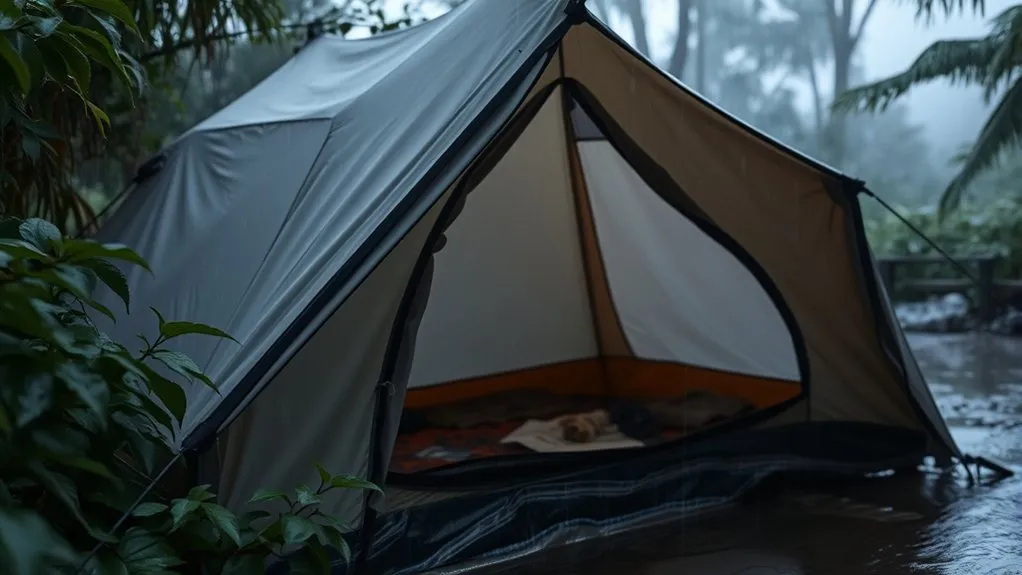
Understanding tent condensation makes rainy-weather ventilation much easier. Condensation forms when humid air reaches a surface that is cold enough for water vapor to become liquid droplets. Inside a tent, moisture from breathing, damp clothing, wet ground, and humid outside air can collect on the cooler inner surface of the rainfly or tent wall.
Outdoor manufacturers sometimes estimate that a sleeping camper can release a large amount of moisture through breathing overnight. The exact amount varies, so the practical lesson is more important than a fixed number: every sleeper continually adds moisture to a small enclosed space. Sea to Summit’s condensation guidance recommends reducing indoor moisture and maximizing airflow rather than trying to eliminate condensation completely.
The temperature difference between the tent interior and the outside air also matters. When nights become cool and humid, condensation may occur even with a good shelter and correct ventilation. Your goal is to move humid air out, limit additional moisture inside, and keep condensation on the rainfly away from your bedding.
Note: Condensation and leaks can look similar. Widespread moisture on a cool fly or wall is often condensation. Water repeatedly entering from the same seam, zipper, floor edge, or damaged spot is more likely to indicate a leak that needs inspection or repair.
Effective Ventilation Techniques
During rain, use the openings your shelter can keep protected. Open roof vents, fly vents, and covered windows first. Then increase ventilation through a vestibule or door only as far as conditions allow. The rainfly should remain fully positioned wherever it is needed to stop rain from reaching the inner tent.
Open Protected Vents and Windows
Keep rainfly vents open unless wind is forcing water directly through them. Opposing vents are especially useful because they can create cross-flow. A protected door can also be unzipped slightly to release humid air.
Do not assume that every opening should stay open in a storm. If wind direction changes and rain begins blowing through a vent or doorway, reduce that opening and increase ventilation on the sheltered side instead.
Use Mesh Panels Correctly
Mesh panels allow air to move while keeping insects out, but mesh itself is not waterproof. In rainy weather, the mesh needs to sit behind a rainfly, vestibule, awning, or another weather-protected opening.
Keep mesh panels clear of packs, sleeping bags, clothing, and other gear. Blocking them reduces airflow and can leave humid pockets around your sleeping area.
Position Your Tent Relative to Wind and Rain
Wind orientation depends on the weather. REI’s condensation guidance notes that a gentle breeze can improve ventilation when a tent opening faces it. However, its tent-pitching guidance also recommends pointing doors away from the wind when the goal is to keep blowing rain out.
- During a light breeze with little risk of wind-driven rain, position a protected opening so it can catch airflow.
- During driving rain, point the main doorway away from the incoming weather.
- Keep protected vents on the sheltered side open whenever possible.
- Follow your tent manufacturer’s orientation instructions when its vents or poles are designed for a particular direction.
Pro Tip: Pitch the tent and rainfly taut, then recheck the tension after the fabric becomes wet. A properly tensioned fly preserves the air gap around a double-wall tent and is less likely to sag against the inner canopy.
Step-by-Step: How to Ventilate a Tent in the Rain
- Choose naturally draining ground. Avoid depressions, dry streambeds, obvious runoff channels, and other places where rainwater can collect.
- Check overhead and storm hazards. Do not trade a wet low spot for an exposed ridge, lightning-prone location, or a site beneath dead or unstable branches.
- Orient the shelter for the current weather. Keep the main entrance away from driving rain while allowing protected vents to catch usable airflow.
- Stake and tension the rainfly correctly. On double-wall tents, maintain the designed gap between the fly and inner tent.
- Open weather-protected vents. Use opposing vents when possible and crack a sheltered vestibule or door only as far as rain conditions allow.
- Reduce moisture inside. Keep wet clothing and gear out of the sleeping compartment and change out of damp layers before bed.
- Check the setup if conditions change. A shift in wind can turn a previously sheltered vent into a rain inlet, so adjust openings when necessary.
Positioning Your Tent for Optimal Airflow
Where you pitch matters as much as how far you open the vents. Look for established or durable, naturally well-drained ground instead of the bottom of a depression. Cold, damp air can settle in low areas overnight, and those same low spots may collect runoff during heavy rain.
That does not mean pitching on the highest exposed point. The National Park Service recommends checking campsites for hazards such as flash flooding, strong wind, lightning exposure, and dead branches before setting up.
For a double-wall tent, stake the rainfly far enough from the inner canopy to preserve the air gap built into the shelter. If the fly sags against the inner tent, condensation on the fly can wet the inner fabric or gear touching it.
When camping in the backcountry, also protect waterways and riparian areas. Leave No Trace recommends camping at least 200 feet from lakes and streams, or roughly 70–80 adult steps, unless local rules specify otherwise.
Managing Moisture Inside the Tent
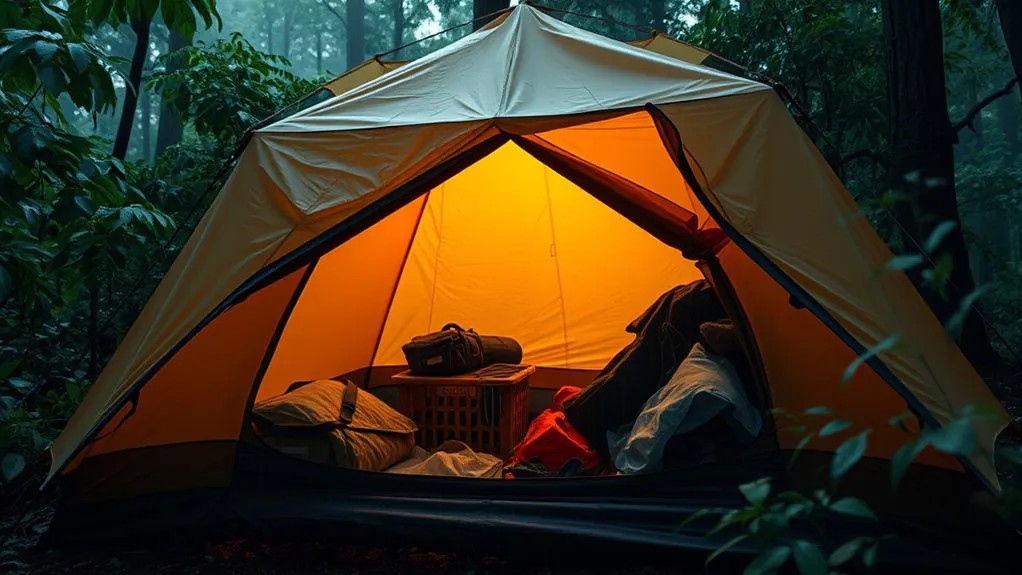
Ventilation works best when you also limit the amount of moisture entering the sleeping area. Breathing is unavoidable, but many other sources are easy to control.
Every sleeper adds moisture to tent air through breathing. Ventilation gives that humid air somewhere to escape before more of it condenses on a cold rainfly or wall.
- Do not cook or boil water inside the sleeping tent.
- Keep wet rain jackets, shoes, and clothing in a sheltered vestibule or sealed bag rather than beside your sleeping bag.
- Change out of sweaty or rain-soaked clothing before settling into bed.
- Keep sleeping bags and other absorbent gear from pressing against tent walls.
- During a dry break, open the shelter and let trapped humidity escape.
- If the tent must be packed wet, separate the wet fly from the inner tent when practical and dry everything thoroughly as soon as conditions allow.
Warning: Carbon monoxide is colorless, odorless, and potentially fatal. The U.S. Consumer Product Safety Commission warns about portable fuel-burning heaters, lanterns, and stoves in enclosed camping spaces. Keep ordinary camp stoves, grills, charcoal, and similar fuel-burning appliances outside sleeping tents and away from tent fabric. Never use a fuel-burning heater or lantern while sleeping in a tent.
Cooking also creates humidity and food odors. Use a designated cooking area when one is provided. In backcountry settings, follow the land manager’s food-storage and cooking-distance rules; National Park Service camping guidance emphasizes keeping food preparation away from sleeping areas where required.
Single-Wall vs. Double-Wall Tents
A double-wall tent has an inner canopy plus a separate rainfly. Moist air can pass through the inner tent and condense on the cooler fly. Correct staking keeps the wet fly separated from the inner canopy and sleeping gear.
A single-wall tent combines weather protection and the interior wall into one layer, so condensation forms directly on the surface facing the sleeper. Vent placement, avoiding contact with the walls, and wiping excess moisture become especially important.
Neither design is condensation-proof. A double-wall shelter generally gives moisture somewhere to collect away from the sleeper, while a well-designed single-wall tent relies heavily on effective venting and careful site selection.
Using the Rainfly, Vestibule, and Mesh Screens
The rainfly and vestibule are the main weather barriers that allow ventilation to continue during rain. Open fly vents that have hoods or overlapping fabric above them. If the vestibule door can be opened on only one side, use the side sheltered from the rain.
Some tents include awnings, drip edges, or manufacturer-designed rain gutters around their doors. These features can direct runoff away from the entrance while allowing the door or mesh panel beneath them to remain partly open.
Mesh screens still play an important role because they allow airflow and keep insects out. They simply need weather protection above or outside them. If wind-driven rain begins striking exposed mesh, close that opening until conditions improve.
Additional Tips for Staying Dry While Camping
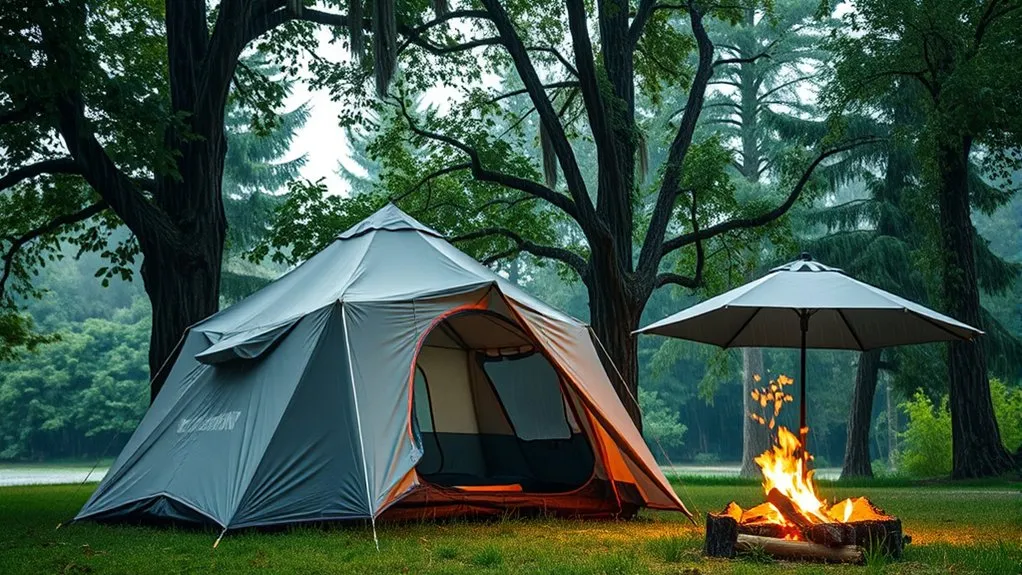
Ventilation is only one part of wet-weather camping. A good campsite, correctly sized ground protection, and a sheltered place for wet gear can prevent many problems before they reach the tent interior.
Choose Well-Drained Ground
Look for an established site that is slightly above obvious depressions and naturally sheds water without requiring you to reshape the ground.
- Avoid puddle-prone hollows and runoff channels.
- Avoid fragile vegetation when a durable established surface is available.
- Stay away from exposed ridges during lightning or severe wind.
- Check above the tent for dead or unstable branches.
- Follow local regulations for campsite and water-source setbacks.
Note: Do not dig trenches or drainage gutters around the tent. Leave No Trace recommends finding a suitable campsite rather than altering the soil. If runoff is reaching the doorway, move the tent or change the tarp and rainfly pitch.
Use Protective Tarps
A separate tarp above or beside the entrance can create a useful transition area where you can remove wet clothing before entering the tent. Pitch the tarp so water runs away from the tent rather than toward it.
Keep the tarp taut enough that rain cannot pool in the fabric, and do not arrange it so closely around the tent that it blocks the shelter’s vents. In strong wind, a large tarp can catch substantial force, so use secure anchor points and take it down if conditions exceed what the setup can safely handle.
Maintain Gear Dryness
- Hang wet clothing under a sheltered tarp when conditions allow.
- Use a fitted footprint or groundsheet beneath the tent floor.
- Make sure a generic groundsheet is tucked completely beneath the tent instead of protruding beyond its edges.
- Store wet items away from bedding in a dry sack or other contained area.
- Keep a dedicated dry sleeping layer protected from rain.
A footprint that extends beyond the floor can catch rain and funnel it underneath the tent. REI’s tent-care guidance recommends a fitted footprint or tucking excess groundsheet material beneath the tent.
What to Do If Condensation Is Already Dripping
If you wake up to droplets inside the shelter, you do not necessarily have a leak. Work through these steps without exposing the interior to driving rain:
- Open another protected vent or slightly increase an existing opening.
- Move sleeping bags and packs away from wet walls.
- Check whether the rainfly has sagged and is touching the inner tent.
- Retension the fly or guylines if you can do so safely.
- Move wet clothing or shoes out of the sleeping compartment.
- Use a small towel or absorbent cloth to wipe heavy condensation before it drips onto bedding.
If water keeps appearing from one seam, zipper, or patch of fabric after the weather clears, inspect that location for a leak. When resealing is necessary, match the treatment to the fabric. REI notes that silicone-treated fabrics require a different sealer from polyurethane-coated fabrics, so check the tent manufacturer’s instructions before applying a product.
Frequently Asked Questions
Can I use a tarp for additional rain protection?
Yes. A properly pitched tarp can create a sheltered entry area so you can ventilate through a protected doorway. Slope the tarp away from the tent, keep it from blocking vents, and make sure rain cannot pool in the fabric.
How can I prevent water pooling near the tent entrance?
Choose naturally well-drained ground, keep the footprint completely beneath the tent floor, and angle the rainfly or tarp so runoff moves away from the doorway. Do not dig a drainage trench around the tent; relocate the shelter if the site is collecting water.
Should I close the tent windows during heavy rain?
Close any window that is letting wind-driven rain through, but keep protected roof vents, fly vents, or sheltered mesh openings open when possible. Sealing every opening traps humid air and usually increases condensation.
Should the tent door face into the wind?
It depends on the conditions. A protected opening facing a gentle breeze can improve ventilation. During wind-driven rain, point the main door away from the incoming weather and ventilate through protected openings on the sheltered side.
Is it safe to use a heater inside the tent?
Do not use an ordinary fuel-burning camping heater or lantern while sleeping in a tent. Fuel-burning equipment can produce carbon monoxide, and tent fabric can also present a fire hazard. Only use specialized equipment exactly as its manufacturer and the shelter manufacturer permit; never improvise an indoor heating setup.
Why is my tent wet inside if it is not leaking?
The moisture may be condensation. Humid air from breathing, wet gear, and the surrounding environment can condense on a colder rainfly or wall. Increase protected ventilation, keep wet gear away from the sleeping area, and maintain separation between the rainfly and inner tent.
What materials are best for waterproofing a tent?
Use a treatment made for the specific fabric and coating on your tent. Silicone-treated fabrics require silicone-compatible seam sealers, while polyurethane-coated fabrics use different products. Check the tent manufacturer’s care instructions before applying any sealer or waterproof coating.
Conclusion
Good rainy-weather ventilation is a balance between airflow and weather protection. Use protected vents, keep the rainfly taut, orient the shelter for the actual wind and rain direction, and limit the amount of wet gear inside. Choose a safe, well-drained campsite and give a double-wall tent enough space between its inner canopy and rainfly.
Some condensation can still occur on cold, humid nights. That does not mean your setup failed. The aim is to keep moisture manageable, protect your sleeping gear, and prevent avoidable water from entering the tent while the weather passes.
Sources
- Gossamer Gear: Tips to Prevent and Manage Tent Condensation — condensation causes, airflow, campsite choice, and cooking away from the tent
- Redverz Gear: Reducing Condensation in Your Tent — rainfly tension, double-wall separation, ventilation, and wet-gear management
- Sea to Summit: 7 Ways to Manage Tent Condensation — double-wall pitching, campsite selection, ventilation, and drying practices
- Coleman: How to Avoid Moisture in Your Tent — ventilation, wet gear, ground moisture, and condensation basics
- U.S. Consumer Product Safety Commission: Portable Heaters & Camping Equipment — carbon-monoxide risks from fuel-burning camping equipment
- Leave No Trace: Travel & Camp on Durable Surfaces — campsite selection and the 200-foot water-source guideline

