
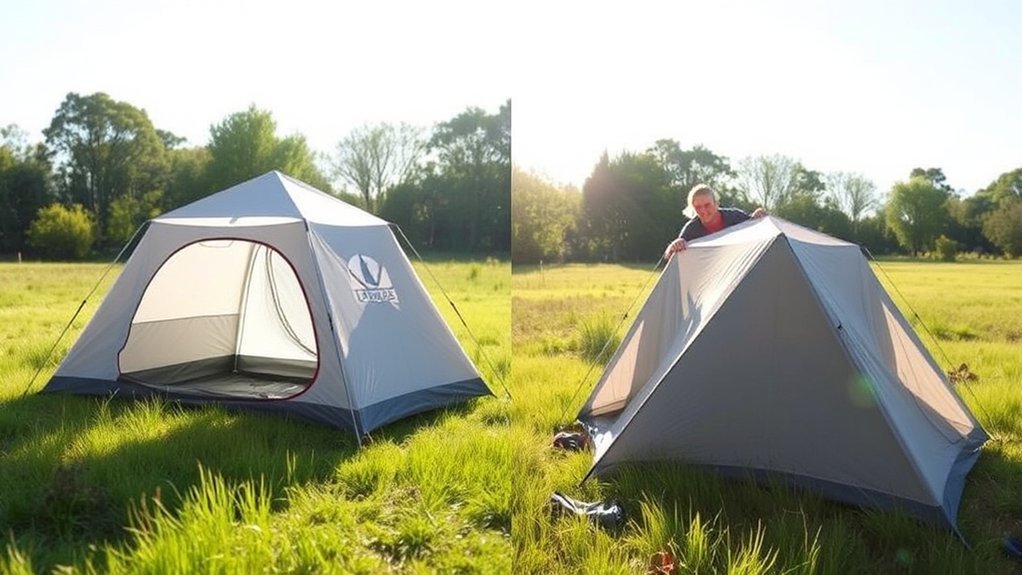
Last Updated on September 10, 2026 by Daniel Globe
Choosing between an instant tent and a traditional pole tent is not as simple as choosing speed over strength. Instant designs are usually faster to pitch, while traditional tents often pack smaller and offer more choices for backpacking or rough weather. The better option depends on the exact model, your campsite, group size, storage space, and how often you camp.
Quick Answer
Choose an instant tent for fast, simple car-camping setup. Choose a traditional pole tent when packed size, lower carrying weight, repair options, or a wider range of weather-ready designs matters more. Do not judge either type by setup style alone; compare the specific tent’s season rating, materials, rainfly, ventilation, weight, and warranty.
Key Takeaways
- Instant tents win on speed: Pre-attached or integrated poles reduce assembly steps.
- Traditional tents usually pack more efficiently: Separate pole sections fold down smaller and are often better for limited trunk space or backpacking.
- Weather performance is model-specific: Tent shape, season rating, pole structure, rainfly coverage, stakes, and guylines matter more than the instant-versus-traditional label.
- Lifespan cannot be predicted by tent type alone: Care, storage, UV exposure, fabric quality, coatings, hardware, and repairability all affect service life.
- Compare real specifications: Check packed dimensions, total weight, floor area, peak height, ventilation, warranty, and replacement-part support before buying.
Instant vs. Traditional Tents at a Glance
| Setup | Instant: Usually faster because the frame is attached or preassembled. Traditional: Requires connecting poles, attaching the body, and often adding a separate rainfly. |
| Packed Size | Instant: Often longer or bulkier because the frame stays attached. Traditional: Usually packs into a shorter bag because pole sections fold separately. |
| Weight | Instant: Commonly designed for car camping and may be heavy for its capacity. Traditional: Available from heavy family cabins to ultralight backpacking shelters. |
| Weather Protection | Instant: Varies from fair-weather cabins to models with full rainflies and strong frames. Traditional: Offers the widest range, including 3-season and 4-season designs. |
| Ventilation | Both: Compare mesh area, low and high vents, window coverage, and the gap between the tent body and rainfly. |
| Repairs | Instant: Fabric can often be patched, but damaged hubs or telescoping joints may need model-specific parts. Traditional: Separate pole sections are often easier to splint or replace. |
| Best Fit | Instant: Drive-up campsites, festivals, family weekends, and short stays. Traditional: Backpacking, small vehicles, frequent travel, exposed sites, and campers who want more design choices. |
Disclosure: As an Amazon Associate I earn from qualifying purchases. Some links on this page are affiliate links, at no extra cost to you.
Understanding Instant Tents
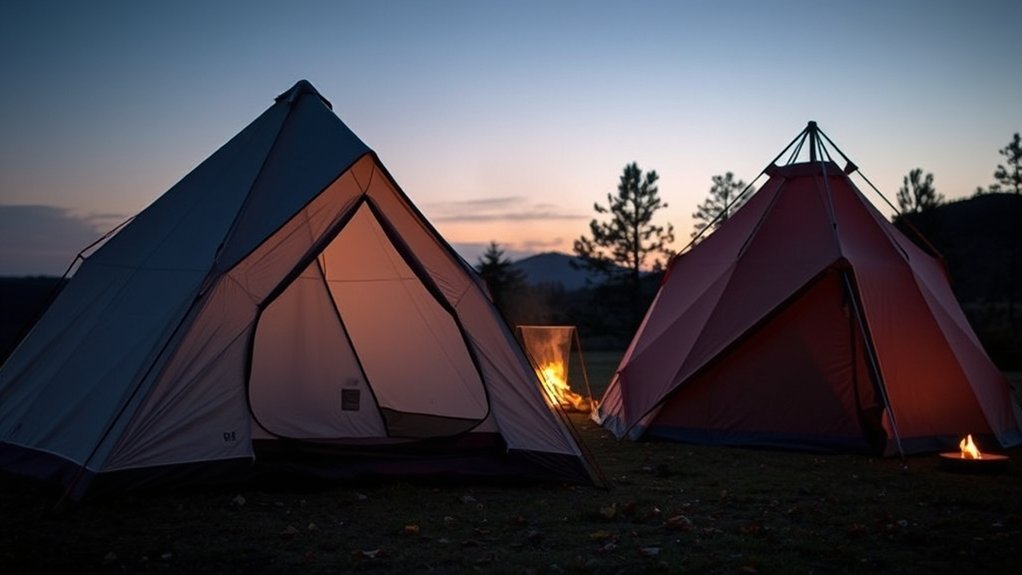
An instant tent uses an integrated or pre-attached frame to reduce the number of setup steps. Some models use telescoping poles that extend and lock. Others are spring-loaded pop-up tents that unfold when released. These are different designs, so their packed shape, strength, setup method, and price can vary widely.
The main advantage is convenience. For example, Coleman advertises a 4-person instant cabin tent that can be unfolded, extended, and secured in about 60 seconds. That claim applies to that model and does not include every possible task, such as choosing a campsite, laying a footprint, staking corners, tensioning guylines, and arranging gear.
Instant tents are most common in the car-camping market. Because the frame remains attached, the packed bag may be longer or bulkier than a similar-capacity traditional tent. That does not make every instant tent difficult to store, but it makes the packed dimensions just as important as the floor size.
Note: “Instant” does not mean “no staking required.” Follow the manual and use every required stake and guyline. An unstaked tent can shift, collapse, or blow away even in weather that feels mild.
Advantages of Instant Tents
Instant tents remove several steps that frustrate new or hurried campers. They are especially useful when you arrive late, need one adult to manage the shelter, or plan to move camp often during a road trip.
Quick Setup Process
The frame is already connected to the tent body, so you do not need to identify separate pole sections or feed them through long sleeves. Depending on the design, setup may involve unfolding the tent, extending the legs, locking the joints, adding the rainfly if it is separate, and securing the shelter.
- Fewer loose parts: The attached frame reduces the chance of leaving a main pole at home.
- Easier solo pitching: Many smaller and midsize models can be raised by one adult, although large cabins may still be easier with two people.
- Less setup stress: A simple frame can help when children, darkness, rain, or a tight schedule demand attention.
Setup speed still depends on tent size, ground conditions, experience, and whether the stated time includes the rainfly, stakes, guylines, and footprint. Treat manufacturer setup times as model-specific demonstrations rather than universal guarantees.
Convenient Storage Options
Instant tents can be simple to take down because the poles stay connected to the fabric. You usually collapse the joints, fold the frame in the order shown in the manual, and place the unit in its bag. This reduces pole sorting, but it does not always reduce storage space.
Before buying, measure the trunk, cargo box, shelf, or closet where the tent will be stored. Pay attention to the packed length, not only the packed volume. A long instant-tent bag may fit easily in an SUV but poorly in a small sedan or roof box.
Ideal for Families
Instant tents can work well for families because one adult may be able to raise the shelter while the other supervises children or unloads gear. Cabin-style models also tend to offer tall walls and generous headroom.
However, the printed person capacity is a sleeping-pad count, not a comfort guarantee. REI explains that a tent’s listed capacity generally reflects how many sleeping pads fit on the floor. Families using wide air mattresses, cots, a portable crib, or indoor gear storage should review the actual floor dimensions and may prefer a tent rated for one or two more people than the group size.
- Good for: Drive-up campgrounds, weekend trips, festivals, and late arrivals.
- Check first: Door height, floor dimensions, room dividers, rainfly coverage, and packed length.
- Plan for help: Large instant cabins can catch wind during setup and may be easier to control with two adults.
Disadvantages of Instant Tents
The convenience of an attached frame creates trade-offs. Telescoping legs, plastic hubs, hinges, and locking joints add moving parts. If one of these components bends or breaks, the repair may require a brand-specific part rather than a universal pole section.
Instant tents are also commonly built for car camping. Their packed bags can be long, and their total weight can be high for carrying far from a vehicle. This makes them a poor match for most backpacking trips, even when the shelter is easy to pitch.
Condensation is another model-by-model issue. An integrated rainfly does not automatically cause condensation. Moisture builds when humid air meets a cool surface and cannot escape. Mesh panels, high and low vents, open fly vents, good site selection, and correct fly tension improve airflow. REI’s tent-condensation guidance recommends opening vents and maintaining space between the fly and tent body.
Warning: Do not rely on a generic wind-speed claim for any recreational tent. Wind performance changes with the exact model, pitch direction, soil, stakes, guylines, exposure, rain, and gusts. Check the forecast, follow the manual, use a sheltered legal campsite, and leave the tent for a substantial building or vehicle when dangerous weather approaches.
Exploring Traditional Pole Tents
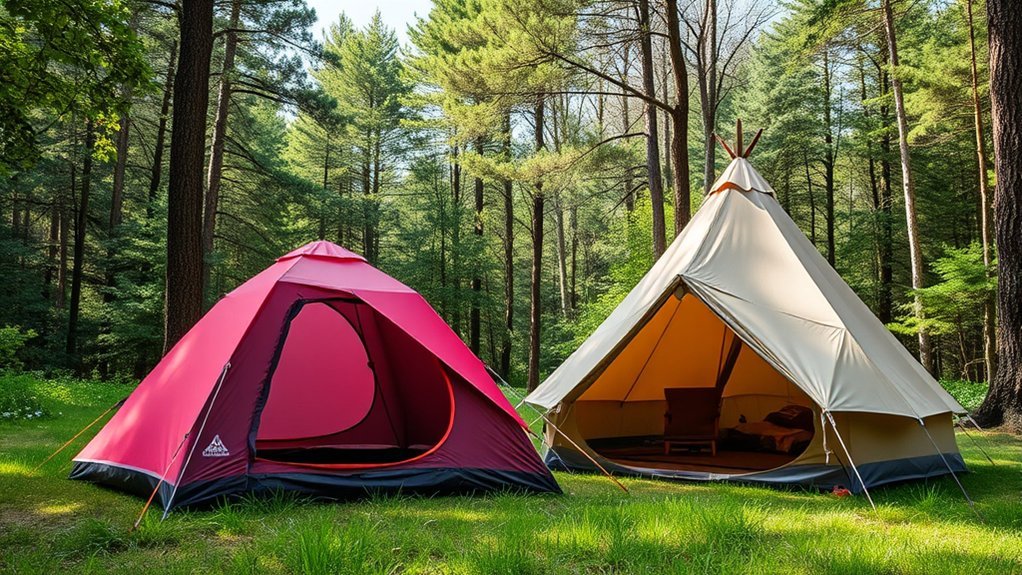
A traditional pole tent uses separate poles that connect to the tent body through sleeves, clips, or both. The poles may be fiberglass, aluminum, steel, or a mix of materials. The category includes low-cost dome tents, family cabins, ultralight backpacking tents, and expedition shelters.
This range is important. A basic traditional dome tent is not automatically stronger than an instant tent, and a 3-season recreational tent should not be treated like a 4-season mountaineering shelter. REI’s current camping-tent buying guide recommends comparing capacity, seasonality, livability, setup, materials, and rainfly coverage rather than relying on one label.
- Compact packing: Shock-corded pole sections fold into a shorter bundle.
- Broad selection: Traditional frames are available for car camping, backpacking, winter use, and high-wind designs.
- Component access: Separate poles, clips, stakes, and guylines can make some repairs or replacements more practical.
Benefits of Traditional Pole Tents
Traditional tents offer the widest choice of shapes, weights, materials, and season ratings. They are often the better starting point when portability or specialized weather performance matters more than the fastest possible pitch.
Longevity and Durability
No fixed lifespan applies to all traditional tents. A lightly used budget tent stored dry may outlast a premium tent that is left wet, exposed to strong sun, or repeatedly pitched on abrasive ground. Fabric denier, coating quality, zipper construction, pole material, seam design, and repair support all matter.
Traditional tents can have a practical repair advantage because a damaged segmented pole may be splinted in the field or replaced by section. Many manufacturers also sell pole, stake, shock-cord, and fabric-repair parts. Still, availability varies by brand and model, so check replacement support before purchase.
Weather Resistance
Traditional construction allows manufacturers to build low-profile domes, crossed-pole structures, full-coverage rainflies, and 4-season shelters. These features can improve stability and rain protection, but they must be evaluated on the specific tent.
For wet or exposed campsites, look for:
- A season rating that matches the expected conditions.
- A full or near-full rainfly for wind-driven rain.
- Multiple secure guy-out points and adequate stakes.
- A lower, aerodynamic shape rather than tall vertical walls.
- Strong pole geometry and clear manufacturer pitching instructions.
- Vents that can remain open during rain.
A correctly pitched tent is also safer and more comfortable. REI’s tent setup guide covers site choice, footprints, poles, rainflies, stakes, and guylines.
Cost-Effectiveness
Neither design is always cheaper. Prices change with size, materials, waterproof construction, brand, warranty, and features. A low-cost traditional dome may cost less than a large instant cabin, but technical backpacking and 4-season pole tents can cost much more than either one.
For a fair value comparison, consider:
- Cost per trip: Divide the purchase price by the number of trips you realistically expect to take.
- Repairability: Check whether poles, hubs, rainflies, and other parts can be replaced.
- Transport cost: A lighter or smaller shelter may be worth more when cargo space is limited.
- Useful features: Pay for ventilation, weather protection, doors, vestibules, and floor space you will actually use.
Drawbacks of Traditional Pole Tents
Traditional tents require more assembly steps. New campers may need time to identify pole sections, orient the tent body, attach clips, position the rainfly, and tension the pitch. Large family tents can also require two people, especially in wind.
| Drawback | Practical Impact |
|---|---|
| More setup steps | A first pitch may take longer and require the manual. |
| Loose components | Poles, stakes, or a rainfly can be misplaced if gear is not inventoried. |
| Learning curve | Incorrect pole orientation or loose fly tension can reduce comfort and weather protection. |
| Large models need teamwork | Tall cabin tents can be awkward for one person, especially in gusty conditions. |
These drawbacks are manageable. Color-coded poles, clips instead of long sleeves, hubbed frames, and pre-bent sections can make a traditional tent much easier to pitch than older designs.
Comparing Setup Times
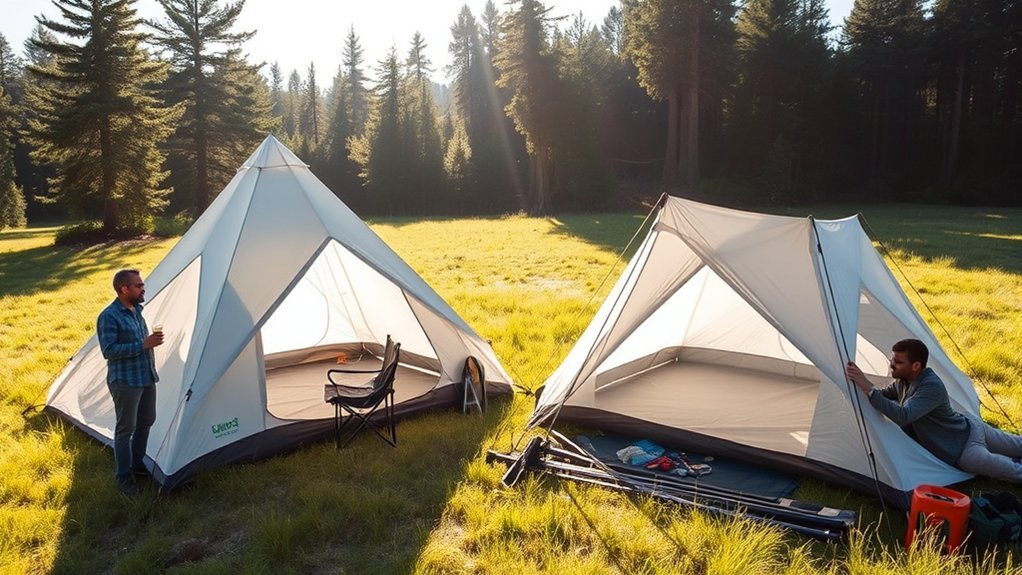
Instant tents are generally faster, but a fair comparison must define what “setup” includes. A frame may stand in one minute, while a storm-ready pitch takes longer because you still need to choose the site, position the door, lay the footprint, secure stakes, tension guylines, and organize the interior.
Traditional tents also vary. A small freestanding dome with two color-coded poles may be ready quickly after practice. A large multiroom cabin or technical 4-season tent may require more time and careful tensioning.
The useful comparison is not “15 seconds versus 22 minutes.” It is the time you need to create a fully staked, correctly tensioned shelter that is ready for the expected weather.
Pro Tip: Pitch a new tent at home before the first trip. Confirm that every pole, stake, guyline, clip, rainfly, and repair item is present, then practice the takedown sequence while the fabric is clean and dry.
Durability and Longevity
Durability depends more on construction and care than on whether the frame is instant or traditional. UV exposure can weaken fabric. Dirt can abrade coatings and zippers. Damp storage can lead to mildew and coating damage. Forced joints can bend, crack, or tear attachment points.
Use these habits with either tent type:
- Dry it fully: Never store the tent damp. Coleman’s tent care guide recommends hand cleaning rather than machine washing and stresses dry storage.
- Remove grit: Shake or sweep out sand, leaves, and dirt before packing.
- Protect the floor: Clear sharp debris and use a correctly sized footprint when appropriate.
- Handle poles and hubs gently: Do not force a joint that is misaligned or packed with sand.
- Inspect seams and coatings: Repair small tears and seam problems before they spread.
- Reduce sun exposure: Do not leave a tent pitched for weeks unless it is designed for long-term use.
- Keep a repair kit: Carry fabric patches, suitable tape, a pole splint if applicable, spare cord, and instructions for the model.
Before buying, check the warranty and parts page. A tent that can be repaired may provide better long-term value than one with a slightly lower purchase price.
Suitability for Different Campers
The best design depends on how the tent will be transported and used.
- Occasional car campers: An instant tent can remove setup stress and is often worth the larger packed bag.
- Families with young children: Fast setup and tall cabin walls are useful, but check floor dimensions instead of trusting the person rating alone.
- Solo campers or campers with limited mobility: A small instant tent may reduce bending and pole assembly. Test the locking force and packed weight before relying on it.
- Backpackers, cyclists, and paddlers: A compact traditional backpacking tent is usually more practical because weight and packed size matter throughout the trip.
- Frequent campers: Compare hardware quality, repair support, warranty terms, and ease of cleaning.
- Campers expecting wind, heavy rain, or snow: Choose by season rating, shape, pole geometry, fly coverage, and manufacturer guidance—not by setup category.
- Festival and fair-weather users: A simple pop-up tent may be convenient, but it should still have adequate ventilation, secure anchoring, and rain protection for the forecast.
People with hand, shoulder, or back limitations should test both setup and packed weight. A tent can be easy to raise but difficult to lift from a trunk or compress into its bag.
Making the Right Choice for Your Needs
Start with the trip, not the tent label. Answer these questions before comparing models:
- How will you transport it? Record the maximum packed length and weight you can manage.
- How many people and beds must fit? Compare floor dimensions with your actual pads, cots, or air mattresses.
- What weather is realistic? Match the season rating, fly coverage, ventilation, and frame design to the campsite and forecast.
- Will one person pitch it? Review the manual or a manufacturer demonstration for the exact size.
- How often will you move camp? Fast setup matters more on road trips with frequent one-night stops.
- Can it be repaired? Look for replacement poles, hubs, rainflies, stakes, and warranty support.
- Where will it be stored? Make sure the packed bag fits your vehicle and can be kept completely dry at home.
Choose an instant tent when quick, low-confusion setup is the top priority and the packed size works for your vehicle. Choose a traditional pole tent when you need compact packing, lower trail weight, more repair options, or a specialized 3-season or 4-season design.
Warning: Never use a charcoal grill or portable fuel-burning stove, lantern, or heater inside a tent unless the appliance is specifically designed and instructed for enclosed use. The U.S. Consumer Product Safety Commission warns that carbon monoxide from camping equipment can be deadly in tents, campers, and vehicles. See the CPSC camping-equipment guidance.
Frequently Asked Questions
Can instant tents withstand severe weather conditions?
Some instant tents handle ordinary 3-season campground weather, but the setup style does not prove severe-weather performance. Check the exact model’s season rating, frame geometry, rainfly coverage, stakes, guylines, and instructions. For exposed sites, winter conditions, heavy snow, or major storms, use a shelter specifically designed for those conditions and change plans when forecasts become unsafe.
How much do instant tents typically weigh?
There is no dependable weight range for the whole category. Small pop-up shelters can be fairly light, while large instant cabin tents can weigh well over 20 pounds. Check the manufacturer’s total packaged weight and packed dimensions. Most instant tents are better suited to car camping than backpacking.
Are traditional pole tents more environmentally friendly?
Not automatically. Environmental impact depends on materials, manufacturing, coatings, product life, repairability, shipping, and disposal. A durable tent that is maintained, repaired, and used for many trips may create less waste than a frequently replaced shelter, regardless of its setup method. Review the manufacturer’s material and repair information rather than assuming one category is greener.
What sizes do instant tents come in?
Instant tents are sold in small pop-up sizes and large family cabin sizes, including models labeled for two people, four people, six people, and larger groups. Capacity labels describe how many sleeping pads may fit, so compare floor dimensions, peak height, door layout, and space for gear before deciding.
Can instant tents be repaired if damaged?
Often, yes. Small fabric tears can usually be patched, seams can sometimes be resealed, and some manufacturers offer replacement frame parts. The challenge is that hubs, hinges, and telescoping legs may be model-specific. Confirm parts availability before buying and contact the manufacturer when a structural joint fails.
Are instant tents good for backpacking?
Most are not. Integrated frames often make instant tents heavier and bulkier than purpose-built backpacking tents. A fast pitch is helpful, but trail weight and packed volume matter for every mile. Compare the complete packaged weight and bag dimensions with a traditional backpacking model before choosing.
Do instant tents have more condensation?
Not simply because they are instant tents. Condensation is affected by humidity, temperature, campsite location, the number of sleepers, wet gear, mesh area, vents, and rainfly spacing. Open protected vents, tension the fly correctly, and avoid low damp ground when possible.
Conclusion
Instant tents are a strong choice for campers who value speed, simple setup, and drive-up convenience. Traditional pole tents offer a broader range of packed sizes, trail weights, repair options, and weather-focused designs. Neither category has a guaranteed lifespan or wind limit. Compare the exact model, practice the pitch, secure every required stake and guyline, and store the tent completely dry. The best tent is the one that fits your real trips, your vehicle, and the conditions you are prepared to handle.
Sources
- Coleman 4-Person Cabin Camping Tent with Instant Setup — model-specific instant setup claim and integrated-frame design.
- REI Co-op: What to Look for in a Camping Tent — capacity, seasonality, rainfly coverage, livability, and buying criteria.
- REI Co-op: How to Set Up a Tent — campsite choice, footprints, poles, rainflies, stakes, and guylines.
- REI Co-op: How to Prevent Condensation in a Tent — ventilation, rainfly tension, and campsite practices.
- Coleman Tent Care and Cleaning Guide — cleaning, pole handling, waterproofing care, and dry storage.
- U.S. Consumer Product Safety Commission: Portable Heaters and Camping Equipment — carbon-monoxide hazards from fuel-burning equipment in tents and enclosed spaces.
