
Last Updated on September 10, 2026 by Daniel Globe
Pop-up tents can be a smart choice when fast setup matters more than compact packing or maximum flexibility. They work especially well for fair-weather car camping, festivals, backyard sleepouts, and short family trips. However, the label “pop-up” covers tents with very different weather ratings, ventilation systems, packed sizes, and frame designs, so the specifications of the individual model matter more than the category name.
Quick Answer
Pop-up tents are good for fair-weather car camping, festivals, backyard sleepouts, and campers who value speed over packability. They are usually fast to pitch but can be bulky when packed and harder to repair. For backpacking, exposed campsites, frequent storms, or longer trips, a conventional pole tent is usually the better choice.
Key Takeaways
- Some pop-up frames open in seconds, but complete setup still includes choosing a safe site, positioning the tent, and installing stakes and guylines.
- Many spring-frame pop-up tents pack into a wide disc that is convenient for a vehicle but awkward for a backpack.
- Waterproofing and wind resistance are model-specific. Check the manufacturer’s test results rather than relying on the words “pop-up” or “regular.”
- Floor dimensions, ventilation, packed size, replacement parts, and warranty coverage are more useful buying criteria than setup speed alone.
- Practice opening and folding the tent at home before taking it on a trip.
Disclosure: As an Amazon Associate I earn from qualifying purchases. Some links on this page are affiliate links, at no extra cost to you.
What Is a Pop-Up Tent?
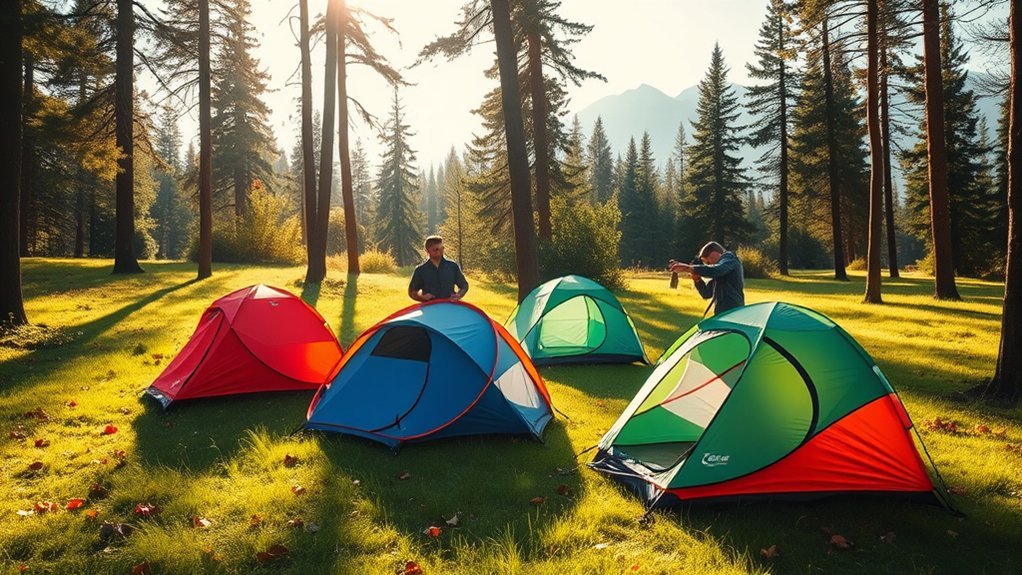
A pop-up tent is a shelter with a flexible, pre-attached frame that unfolds into shape when it is removed from its bag and released. The exact mechanism and frame material vary by manufacturer. Some models spring open automatically, while others use straps, hinges, or release buttons to control the opening process.
Setup claims can be very fast. For example, Decathlon advertises a two-second pitching system on a specific Quechua model. That figure refers mainly to opening the structure. Selecting a safe spot, orienting the shelter, installing stakes, tensioning guylines, and arranging the interior add more time.
Note: Retailers sometimes use “pop-up,” “instant,” and “quick-pitch” interchangeably. A true pop-up tent normally uses a flexible spring frame. An instant tent often has pre-attached telescoping poles or a central hub and may pack into a longer, narrower bag.
Spring-frame models often fold into a flat circular or oval package. That shape can fit easily in a car trunk or garage but may be awkward to carry on a narrow trail or attach to a backpack. A pop-up tent is not automatically lighter than a conventional tent, so always compare the listed tent weight and packed dimensions.
Advantages of Pop-Up Tents
The main benefit of a pop-up tent is convenience. The frame is already connected, so there are fewer loose pole sections to identify and assemble. This can reduce frustration when arriving late at a campground or setting up a temporary shelter for an event.
- Fast frame setup: Many models open in seconds or a few minutes.
- Simple assembly: Pre-attached components reduce the number of separate parts.
- Useful for short stays: Quick pitching is valuable when the shelter will be used for only one night.
- Beginner-friendly design: Clear color coding, straps, or release mechanisms can make the process easier to learn.
- Convenient for car travel: A wide packed disc may be manageable when it does not need to fit inside a backpack.
- Good emergency practice shelter: A familiar quick-pitch tent can provide convenient temporary shelter when used within its stated weather limits.
Pop-up tents can also reduce the chance of losing an individual pole section because much of the frame remains attached to the fabric. However, stakes, guylines, repair materials, and other accessories must still be tracked.
Pro Tip: Practice the complete opening and folding sequence at home at least twice. Folding is often less intuitive than pitching, and learning the sequence before your trip helps prevent bent frames and rushed packing.
Disadvantages of Pop-Up Tents
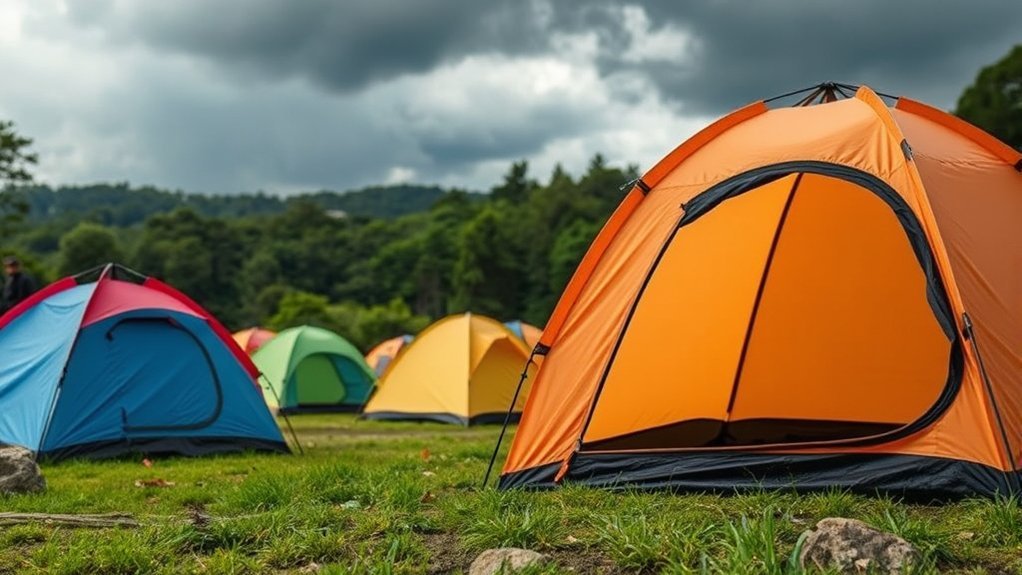
The convenience of an integrated frame creates several trade-offs. The most noticeable is often the packed shape. A circular package may take up more wall or floor space than the narrow bag used by many conventional tents.
- Bulky packed dimensions: A wide disc can be difficult to carry through brush, place in a small vehicle, or attach securely to a backpack.
- Folding learning curve: Some frames must be twisted into overlapping loops in a precise sequence.
- Integrated-frame repairs: A damaged frame may be harder to remove or replace than a separate conventional pole section.
- Variable ventilation: Some models have generous mesh and adjustable vents, while others have limited airflow when fully closed for rain.
- Variable weather performance: Low-cost festival tents and tested camping tents should not be treated as if they offer the same protection.
- Possible storage challenges: The package should not be crushed, sharply bent, or stored while damp.
There is no reliable universal lifespan for either a pop-up tent or a conventional tent. Longevity depends on construction quality, frequency of use, ultraviolet exposure, wind damage, abrasion, coating condition, cleaning, drying, storage, and the availability of replacement parts. According to REI’s tent-care guidance, limiting prolonged sun exposure, using a suitable footprint, cleaning carefully, and storing the shelter dry can help extend its useful life.
A fast-pitch label describes how the frame opens. It does not, by itself, tell you how well the tent handles rain, wind, condensation, or repeated use.
Ideal Use Cases for Pop-Up Tents
Pop-up tents are most useful when the campsite is easy to reach and the weather forecast is mild. Their convenience is especially valuable when the shelter will be moved frequently or used for a short period.
Good Uses for a Pop-Up Tent
- Backyard camping and children’s sleepouts with adult supervision
- Festivals where the tent must be pitched after arrival and packed quickly at departure
- Fair-weather car camping for one or two nights
- Beach or park use when the product is specifically sold as a sun shelter
- Temporary changing, privacy, or gear-storage shelters
- Campers with limited experience assembling separate poles
When a Conventional Tent Is Usually Better
- Backpacking trips where low weight and narrow packed dimensions matter
- Exposed, alpine, coastal, desert, or other consistently windy campsites
- Trips with frequent or prolonged rain
- Cold-weather camping that requires a purpose-built seasonal shelter
- Long trips where repairable poles and replaceable components are valuable
- Family camping that requires standing room, multiple rooms, or large vestibules
A well-designed and correctly anchored pop-up tent may perform better than a poorly designed conventional tent. Choose according to the individual product specifications, not the label alone.
Weather Resistance and Anchoring
Do not assume that every pop-up tent is limited to dry weather. Some models undergo controlled rain and wind testing. Decathlon explains that its tents are tested for waterproofness and in wind tunnels, while also directing customers to the individual product sheet for the exact rating. Its current two-person 2 Seconds model is advertised with a model-specific wind-tunnel rating of about 30 mph when properly pitched.
Those results apply only to the tested model and conditions. Real-world stability can change with:
- The number and placement of stakes and guylines
- Stake holding power in soil, sand, or loose ground
- Whether the broad or narrow side faces the wind
- The tent’s shape and frame condition
- Sudden gusts, shifting wind, or falling branches
- Whether doors, vents, and rainfly panels are secured correctly
Warning: Always install the supplied stakes and guylines outdoors, even when the frame stands by itself. Leave an exposed campsite when conditions exceed the tent manufacturer’s guidance or when the shelter begins to deform. A tent is not a safe lightning shelter; seek a substantial building or an appropriate enclosed vehicle when thunder is heard.
The National Park Service campsite guidance recommends checking for wind, lightning, flash-flood areas, dead branches, and other hazards. It also recommends level ground that is not in a low area where water can collect.
Comparison With Regular Tents
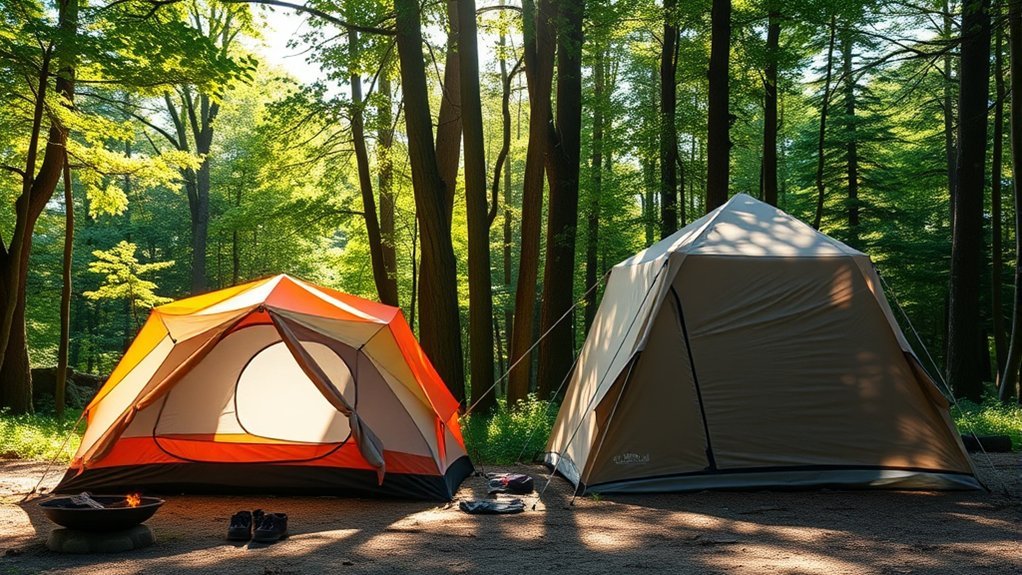
Choosing between a pop-up tent and a conventional pole tent involves more than comparing pitch times. The better choice depends on transportation, campsite exposure, trip length, available storage, sleeping space, and how often the shelter will be used.
| Feature | Pop-Up Tent | Conventional Pole Tent |
|---|---|---|
| Frame setup | Often seconds or a few minutes, depending on the mechanism | Usually requires assembling or extending poles |
| Complete pitching | Still requires positioning, staking, and guying | Requires positioning, staking, rainfly installation, and guying |
| Packed shape | Often a wide, flat disc or oval | Usually a narrower cylindrical or rectangular bag |
| Backpacking suitability | Usually poor because of packed dimensions; check exact weight and size | Many lightweight and compact backpacking models are available |
| Weather performance | Ranges from basic festival shelters to wind- and rain-tested camping models | Ranges from basic summer tents to specialized four-season shelters |
| Ventilation | Varies; inspect mesh area, low vents, and rain-protected openings | Often offers more fly, mesh, and vent configurations, but design still varies |
| Takedown | Fast after the folding sequence is learned, but forcing the frame can cause damage | More steps, but the process is often easier to understand without a special folding sequence |
| Repairability | Integrated frames may require brand-specific parts or service | Separate pole sections may be easier to splint or replace, depending on the model |
| Best use | Short, accessible trips where speed and simplicity are priorities | Backpacking, longer trips, exposed sites, or campers who want more design choices |
How to Choose a Pop-Up Tent
Start by deciding where and how you will use the tent. A festival shelter, family car-camping tent, beach sun shelter, and backpacking shelter have different requirements.
Check the Complete Packed Dimensions
Do not look at weight alone. Measure the packed diameter, length, and thickness, then confirm that the package will fit in your vehicle and storage area. A light but very wide package can still be difficult to transport.
Compare Usable Sleeping Space
A person rating is not a structural weight limit. Tent capacity generally describes sleeping space, and there is no universal industry standard for the amount of room assigned to each occupant. REI recommends comparing floor area, floor shape, peak height, and actual sleeping-pad dimensions.
Choose extra capacity when occupants use wide pads, store equipment inside, bring a dog, or want more personal space. A nominal two-person tent may feel tight for two adults and their gear.
Review Weather Specifications
Look for model-specific information about:
- Wind-tunnel or field testing
- Rain-test methods or hydrostatic-head ratings
- Sealed or taped seams
- Rainfly coverage
- Bathtub-style floor construction
- Number and location of guyout points
- Manufacturer restrictions for seasons, altitude, or severe weather
The word “waterproof” should not be your only test. Water can enter through worn coatings, damaged fabric, open vents, poorly sealed seams, incorrect setup, or a groundsheet that extends beyond the tent floor. REI identifies seam sealing, urethane coatings, and durable water-repellent treatment as separate parts of maintaining tent water resistance.
Inspect Ventilation
Look for mesh panels, protected low vents, upper vents, and space between the tent body and rainfly. More ventilation can reduce condensation, but vents must remain protected from wind-driven rain. Condensation alone does not prove that a tent is leaking; moisture from occupants and damp ground can collect on cool fabric.
Check Parts, Repairs, and Warranty Coverage
Confirm whether the manufacturer sells replacement frames, fabric patches, stakes, clips, and storage bags. Read the warranty period and exclusions on the exact product page. Warranty coverage varies significantly: Decathlon publishes its current product-guarantee terms, while Coleman lists separate warranty periods by product category.
Safe Setup, Folding, and Care
- Choose a safe site. Use established, level ground away from low areas, dead branches, cliff edges, fire rings, and obvious drainage channels.
- Clear a controlled opening area. Keep people, pets, and fragile objects away from the flexible frame while releasing it.
- Orient the shelter correctly. Follow the manual’s guidance for facing the strongest section of the tent toward expected wind.
- Stake every required point. A tent that stands without stakes can still move, collapse, or become airborne.
- Install and tension the guylines. Keep lines visible and away from busy walking paths where possible.
- Ventilate the interior. Use protected vents and mesh openings when conditions allow.
- Follow the exact folding sequence. Do not force the frame if it resists. Stop and check the manufacturer’s instructions.
- Clean and dry before storage. Remove dirt, rinse away soap, and let every layer dry fully.
For routine cleaning, use cool or lukewarm water, mild fragrance-free soap when needed, and a nonabrasive cloth or sponge. REI advises against machine washing or machine drying a tent because the movement and heat can damage fabric, mesh, seams, and coatings. Its tent-cleaning instructions also stress thorough rinsing and complete drying before storage.
Frequently Asked Questions
How do I clean and maintain a pop-up tent?
Shake or brush out loose dirt, then spot-clean the fabric with cool or lukewarm water, mild fragrance-free soap, and a soft cloth. Follow the manufacturer’s instructions for deeper cleaning. Do not machine-wash or machine-dry the tent. Let the fabric, seams, floor, and frame dry completely before folding and storing it in a cool, dry place.
Can pop-up tents be used for backpacking trips?
Most spring-frame pop-up tents are inconvenient for backpacking because they fold into a wide disc. A model may be light but still difficult to attach to a pack or carry through narrow terrain. Compare the complete packed dimensions and weight with purpose-built backpacking tents before deciding.
What is the weight limit for a pop-up tent?
Ground tents normally use a person-capacity rating rather than an occupant weight limit. That rating describes how many sleepers may fit, not how much weight the frame supports. Compare the floor dimensions, peak height, door layout, and the width of your sleeping pads because capacity standards and interior shapes vary by manufacturer.
Do pop-up tents come with a warranty?
Many do, but coverage differs by brand, model, country, seller, and type of damage. A warranty may cover manufacturing defects without covering storm damage, normal wear, ultraviolet degradation, poor storage, or misuse. Read the current product page and warranty policy, buy from an authorized seller, and retain the receipt.
Are there waterproof pop-up tents?
Yes. Some pop-up tents are designed and tested for camping in rain. Check the exact model’s rain-test information, fabric coating, floor construction, seam treatment, rainfly coverage, vents, and setup instructions. No tent should be assumed to stay dry solely because its product name includes the word “waterproof.”
Do pop-up tents need to be staked down?
Yes, when they are used outdoors. The frame may stand without stakes, but that does not make the shelter secure. Install the stakes and guylines supplied or recommended by the manufacturer. Use stakes suited to the ground and reassess the shelter if the wind increases or the stakes begin to loosen.
Are pop-up tents safe in strong wind?
Only within the limits stated for the individual model and when it is correctly pitched. There is no universal wind limit for all pop-up tents. Check manufacturer testing, use every required anchor point, choose a sheltered campsite, and leave the tent when conditions worsen or the structure begins to bend or deform.
Why is my pop-up tent difficult to fold?
The frame may not be aligned with the required folding points, or part of the fabric may be trapped between the loops. Move to a clear area, remove gear, flatten the fabric, and restart the manufacturer’s sequence. Do not force or sharply bend the frame because this can cause permanent damage.
Sources
- Decathlon: Quechua 2 Seconds Easy Tent — example of model-specific setup and weather-performance claims
- Decathlon Support: 2 Seconds Tent Instructions and Repairs — waterproofing tests, wind testing, instructions, and maintenance
- REI: How to Set Up and Pitch a Tent — campsite selection, stakes, guylines, wind orientation, and practice pitching
- REI: How to Choose a Backpacking Tent — capacity, floor space, packed weight, and the absence of a universal per-person size standard
- REI: How to Clean a Tent — cleaning supplies, hand washing, rinsing, and complete drying
- National Park Service: Finding and Setting Up a Campsite — wind, flooding, branches, fire, terrain, and campsite safety
Conclusion
Pop-up tents are good when quick setup, simple assembly, and easy car transport are the main priorities. They are well suited to backyard camping, festivals, short fair-weather trips, and other accessible sites. Their common drawbacks include wide packed dimensions, a folding learning curve, and fewer options for frame repair.
A conventional tent is usually the stronger choice for backpacking, longer trips, exposed campsites, or changing weather. Whichever style you choose, compare the individual model’s dimensions, ventilation, anchors, weather testing, replacement parts, and warranty. Practice at home, stake the shelter correctly, and never use a tent as protection from lightning or severe weather.
