
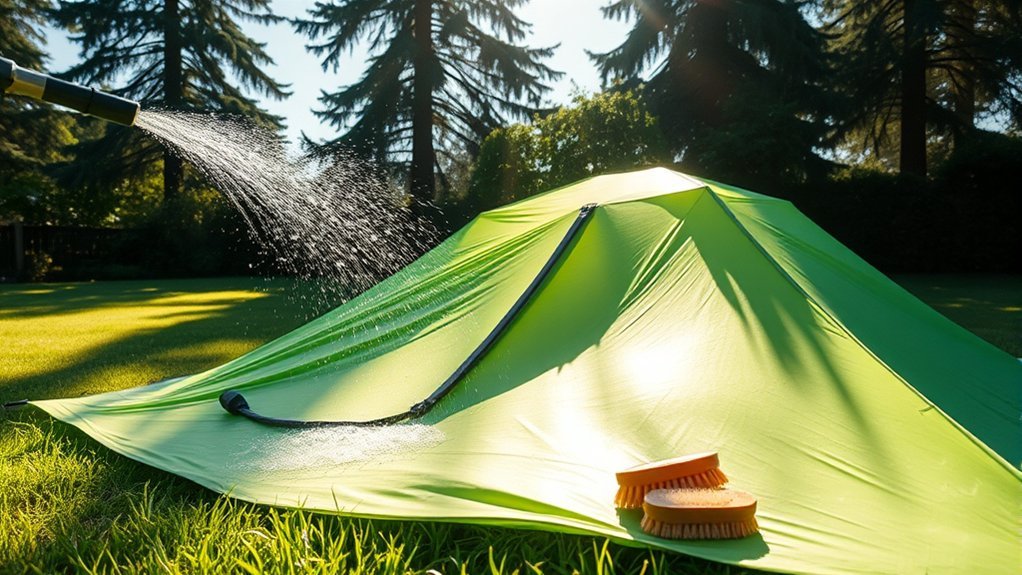
To wash your tent without damaging its waterproof coating, start by ensuring it’s completely dry and free of debris. Use a mild non-detergent soap and a soft sponge for spot cleaning, testing on a small area first. For deeper cleaning, handwash in lukewarm water, rinse thoroughly, and avoid hot water. Allow the tent to air dry in a shaded area. Regularly inspect waterproof coatings and reapply when necessary to keep them effective. You can discover more effective techniques ahead.
Preparing Your Tent for Cleaning

Before you start cleaning your tent, it’s essential to follow a few important steps to guarantee the process goes smoothly. First, make certain the tent is completely dry to prevent mold growth and protect the waterproof coating. Next, remove all items, including stakes and guylines, to avoid any damage during washing. Set up the tent in a clean outdoor area to facilitate rinsing and minimize dirt contamination. Conduct a thorough tent inspection to identify any damage or areas needing repair; addressing these issues before washing will prevent exacerbation during the cleaning process. Finally, gather your cleaning supplies, including a mild non-detergent soap like Dr. Bronner’s or Nick Wax Tech Wash. Make sure you have access to plenty of clean water for rinsing. Following these steps guarantees your tent remains in prime condition, ready for your next adventure.
Products Worth Considering
AVOID COSTLY REPAIRS - Complete kit includes everything shown! Avoid costly repairs by doing it yourself! Super easy!!
Everything you need for emergency tent repairs
Made of high-density nylon, it is not easy to break or deform, has good waterproof properties, can be cleaned by hand or washing machine, and is not easy to fall off after cleaning.
Spot Cleaning Techniques
When it comes to maintaining your tent’s integrity, spot cleaning is an essential technique to remove dirt and stains without compromising its waterproof coating. Utilize gentle spot cleaning methods to effectively tackle common stains. Here’s how:
- Use a sponge or soft cloth with water to avoid damage.
- For stubborn stains, dilute a mild non-detergent soap like Dr. Bronner’s, and always test on a small area first.
- Rinse thoroughly with clean water to eliminate soap residue, which can degrade the waterproof coating over time.
- Avoid abrasive materials or brushes that scratch the tent’s surface.
After cleaning, let your tent air dry completely to prevent mold growth and protect its waterproof layer. By adopting these careful techniques, you guarantee your tent remains a reliable shelter for your adventures, fostering the freedom you seek in the great outdoors.
Products Worth Considering
MICROFIBER SPONGE CLOTHS: Libman’s Microfiber Sponge Cloths have the power of microfiber and the absorbency of a sponge, Includes 3 packs of 3 Microfiber Sponge Cloths for a total of 9 Microfiber Sponge Cloths
Super absorbent sponge cloth: Combines the absorbency of a sponge with the versatility of a cloth, soaking up spills and wiping surfaces with ease.
Cleans walls, blinds, wallpaper, and lamp shades without water
Handwashing Your Tent
After spot cleaning your tent, it’s important to thoroughly wash it to remove any remaining dirt and guarantee its longevity. Start by gathering mild non-detergent soap, like Dr. Bronner’s or Nick Wax Tech Wash, along with your preferred cleaning supplies. Fill a tub with lukewarm water—never hot, as it can damage the waterproof coating. Submerge your tent fabric and use a soft sponge or cloth to gently scrub, focusing on dirtier areas. Avoid applying too much pressure to prevent fabric damage. Make sure to rinse the tent multiple times with clean water, ensuring all soap residue is eliminated; leftover soap can degrade the waterproof coating. After washing, allow your tent to dry completely in a shaded area to protect it from direct sunlight, which can further harm the waterproofing. Following these steps will help maintain your tent’s integrity for future adventures.
Products Worth Considering
Highly Concentrated Formula – Clean up to 20 jackets or 5 sleeping bags with a 10 fl oz pouch; a 1-liter size delivers up to 66 washes for maximum value.
All-in-one, multi-purpose liquid soap for camping, backpacking, and travelling; super-concentrated formula goes a long way
Ultimate cleanliness: Experience the refreshing benefits of hiking soap and camping shampoo biodegradable, designed to keep you feeling fresh and clean during your outdoor adventures without harming the environment
Rinsing and Drying Your Tent
To guarantee your tent maintains its waterproof properties, it is crucial to rinse it thoroughly after washing. Employ effective rinsing techniques, using cool or lukewarm water, as hot water can damage the fabric and its waterproof coating. Rinse multiple times to verify all soap residue is gone; leftover soap can compromise performance.
When it comes to drying methods, air drying is your best bet. Find a shaded area to prevent direct sunlight from degrading the waterproof coating.
- Protect your investment in adventure.
- Enjoy the freedom of a reliable shelter.
- Preserve the memories shared under its canopy.
- Embrace the spirit of the great outdoors.
Avoid wringing or twisting the tent during the drying process, as this can stress the fabric and seams. Once dry, store your tent in a breathable mesh sack to promote air circulation and prevent moisture buildup.
Products Worth Considering
The only cleaner designed to protect against UV damage and revitalize water repllency of all weatherproof textiles
KIT INCLUDES CLEANER + PROTECTANT: This car detailing kit help deep-clean fabric and vinyl convertible tops and shields against everyday grime; includes 16 oz Convertible Top Cleaner and 16 oz Protectant (SKU: HOL_996)
POWERFUL AND RELIABLE: Maintains and improves the water-repellent properties of tents, pavilions and other technical textiles and accelerates the drying of your equipment after rainy weather.
Maintaining Waterproof Coatings
Maintaining the waterproof coatings of your tent is vital for guaranteeing its longevity and performance in wet conditions. Regularly inspect the coating for early signs of breakdown, such as tackiness or flaking. If you notice tackiness, aftermarket waterproofing products can often restore functionality. However, flaking typically requires resealing to maintain the tent’s integrity.
When cleaning, avoid harsh detergents that can damage the coating; instead, opt for a mild soap like Nick Wax Tech Wash. Thoroughly rinse your tent afterward, as soap residue can degrade waterproof coatings, and don’t hesitate to rinse multiple times if necessary.
Proper storage is equally important—keep your tent in a cool, dry place to prevent high humidity from accelerating deterioration and causing hydrolisis. By prioritizing these maintenance practices, you’ll enhance coating longevity and guarantee your tent remains ready for your next adventure.
Products Worth Considering
Permanent Repairs – Seal seams and fix holes in tents, tarps, awnings, rainflies, and gear like Thermarest sleeping pads with a flexible, waterproof adhesive.
High Quality Material: we choose high-density nylon as the base material and use a special adhesive formulation process to make the fabric and the adhesive layer blend perfectly, forming a waterproof, tear-resistant, adhesive, durable and flexible repair patch that effectively extends its service life.
Tent Seam Sealer: Seam sealer tent can quickly and effectively seal seams and repair cracks, holes and other damage on the tent, restore the integrity of the tent fabric, and extend the service life of the tent
Frequently Asked Questions
Can I Use Bleach to Clean My Tent?
No, you shouldn’t use bleach to clean your tent. Instead, consider tent cleaning alternatives like mild soap and water. Follow these tent maintenance tips to guarantee longevity and maintain your tent’s waterproofing effectively.
How Often Should I Wash My Tent?
You should wash your tent regularly, preferably after every few trips or if it gets visibly dirty. Maintaining tent care with this cleaning frequency helps prolong its life and guarantees peak performance during your adventures.
Is It Safe to Dry My Tent in the Sun?
It’s best to avoid prolonged sun exposure when drying your tent, as UV rays can weaken the fabric and waterproof coating. Instead, opt for a shaded area to guarantee effective tent drying without damage.
Can I Machine Wash My Tent if I’m Careful?
You shouldn’t machine wash your tent, even if you’re careful. Over 70% of tent fabrics can be damaged by aggressive washing methods. Instead, opt for gentle hand washing to preserve its integrity and waterproof qualities.
What Should I Do if My Tent Smells Bad?
To remove tent odor, air it out in a well-ventilated area. Use natural deodorizers like baking soda or vinegar. Sprinkle or wipe them on affected areas, then let your tent breathe, restoring freshness effectively.
Conclusion
By following these steps, you’ll keep your tent clean without compromising its waterproof coating. Remember, a well-maintained tent is like a trusty companion on your adventures—reliable and ready to face the elements. Regularly spot clean and wash your tent using the techniques outlined, and always guarantee it’s thoroughly rinsed and dried. With proper care, your tent will serve you well for many camping trips to come, allowing you to focus on the great outdoors rather than leaks or mildew.