
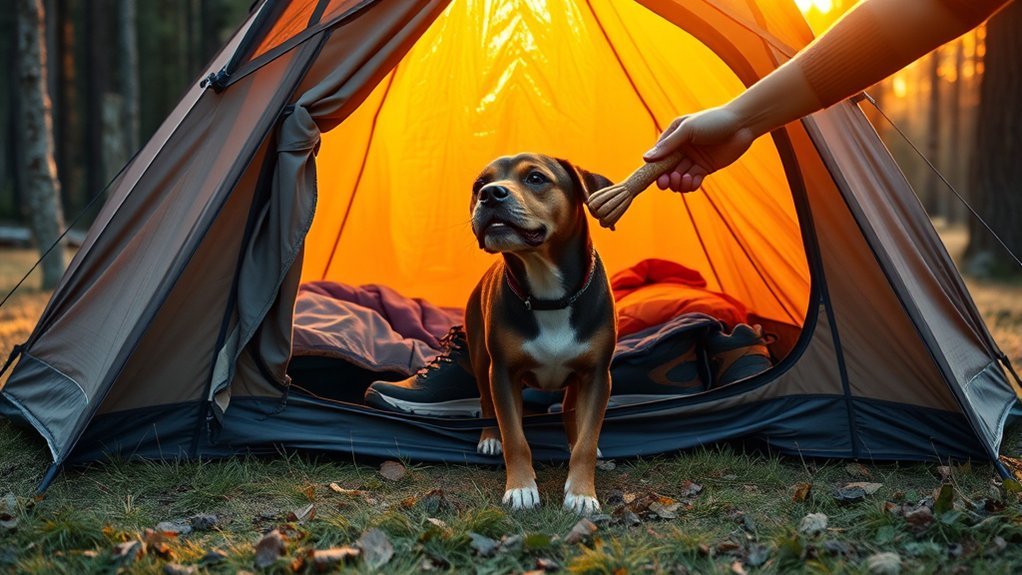
To stop your dog from scratching the tent floor, first understand their behavior—boredom or anxiety may be the cause. Create a cozy sleeping space with their favorite bed and toys. Engage them with puzzle toys and high-value treats to keep their minds occupied. Consistent command training, like “settle,” helps reinforce good behavior. Consider durable ground cover to protect against scratches. Monitoring and adjusting your dog’s environment are key to reducing this habit. Learn more effective strategies to guarantee a peaceful camping experience.
Understanding Your Dog’s Behavior

Understanding why your dog scratches at the tent floor can help you address the behavior effectively. Dogs often scratch due to anxiety triggers or boredom, seeking comfort in an unfamiliar environment. This behavior is rooted in instinctual behaviors; in the wild, dogs scratch to create a resting area or mark their territory. If your dog is a high-energy breed, like a Border Collie, they may scratch when feeling restless or confined, amplifying their anxiety.
To help mitigate this scratching, consider incorporating positive reinforcement and redirection techniques. Encourage alternative activities that channel their energy. Additionally, providing a designated space within the tent, such as a dog bed or mat, can make them feel secure and discourage the scratching. By understanding your dog’s motivations, you can foster a more harmonious camping experience and create an environment that allows both of you to relax and enjoy your time outdoors together.
Creating a Comfortable Sleeping Area
Creating a comfortable sleeping area for your dog is essential for reducing scratching behavior in the tent. Start by placing a designated dog bed or blanket inside the tent, ensuring it’s spacious enough for your dog to lie down comfortably. This setup minimizes restlessness, which can lead to unwanted scratching. Incorporate familiar items, like your dog’s favorite toy or blanket, to create a sense of security that alleviates anxiety-driven behavior. Additionally, consider using a portable, waterproof ground cover or tarp beneath the sleeping area. This helps protect the tent floor while providing a stable surface for your dog. Finally, reinforce calm behavior through positive training techniques to encourage your dog to settle in their designated space. By establishing a cozy and secure environment, you not only enhance your dog’s camping experience but also greatly reduce the likelihood of scratching the tent floor.
Products Worth Considering
Waterproof & Stain Resistant: Our outdoor waterproof dog bed is made from premium Oxford fabric with a double-layer waterproof coating that keeps spills, pet accidents, and drool off your floors or furniture. Wipe it clean in seconds! Say goodbye to messes! Note: Avoid leaving water on the large dog bed for long periods to ensure lasting waterproof performance
Portable Pet Bed: This travel dog bed has a double offset soft to touch quilted quality construction; Measuring 30 x 39 inches, a poly-suede makes the top, and the ripstop on the bottom adds durability
Waterproof and large size: Waterproof dog mat is made of Oxford cloth, water resistant for almost all weather, water or rain drops can be easily wiped off the mat instantly Do not recommend leave the water on the mat for long time. This pad is 43 inch *26 inch, large size for medium and large dogs
Choosing Durable Ground Cover
When you’re camping with your dog, choosing durable ground cover can greatly reduce the risk of scratches on your tent floor. Options like outdoor carpet, typically sized at 8 x 10 feet, offer excellent protection against wear while being easy to transport. Lightweight painters drop cloths serve as another practical choice, providing a portable solution that’s simple to pack. If you’re looking for something more robust, interlocking foam flooring not only protects against scratches but also insulates you from the cold ground. Additionally, using Tyvek or similar materials inside your tent creates an extra barrier against your dog’s claws, enhancing protection. Remember to regularly inspect and maintain your chosen ground cover; this proactive approach will prolong its lifespan and effectiveness, ensuring both you and your furry friend enjoy a scratch-free camping experience. With the right ground cover, you’ll find liberation in your outdoor adventures together.
Products Worth Considering
A MUST FOR TENT: An extra tent tarp doesn't just give you extra waterproofing, it is used as ground cloths under tents to prevent wear and tear. There’s no question that an insulated tent footprint is a great idea to help protect your investment, definitely, the choice to extend your tent's life
A MUST FOR TENT: An extra tent tarp doesn't just give you extra waterproofing, it is used as ground cloths under tents to prevent wear and tear. There's no question that an insulated tent footprint is a great idea to help protect your investment, definitely the choice to extend your tent’s life
A MUST FOR TENT: An extra tent tarp doesn't just give you extra waterproofing, it is used as ground cloths under tents to prevent wear and tear. There's no question that an insulated tent footprint is a great idea to help protect your investment, definitely, the choice to extend your tent’s life
Engaging Your Dog With Toys and Treats
Keeping your dog engaged with toys and treats is essential for fostering a calm environment inside your tent. Interactive play not only distracts your furry friend from scratching but also encourages mental stimulation. Consider using durable chew toys and puzzle feeders that dispense treat rewards, keeping your dog focused and entertained.
| Toy Type | Benefits | Examples |
|---|---|---|
| Chew Toys | Durable, withstands outdoor use | Rubber bones, ropes |
| Puzzle Feeders | Engages mind, dispenses treats | Kongs, treat mazes |
| High-Value Treats | Reinforces positive behavior | Freeze-dried liver, cheese |
Rotate toys regularly to maintain interest and practice “settle” commands with treats to reinforce calmness. By providing these engaging options, you’ll help create a relaxing atmosphere, allowing both you and your dog to enjoy your time in the great outdoors.
Products Worth Considering
Smart Toy for Every Breed: This interactive dog puzzle is a stimulating essential for your pet's development. Perfect for every breed, from small puppies to large dogs, it doubles as a brain game and feeder, keeping them mentally stimulated and physically active. Ideal for those festive day gifts, it promises to enrich your pet’s intelligence and relieve boredom.
[Treat Distribution] Our food dispenser has differently sized spheres at both ends. As dogs push the toy, it moves within a fixed area, allowing dogs to continuously chase and play with it. During movement, food is dispensed from the food holes on both sides of the toy.
Establishing a Routine for Tent Time
Establishing a routine for tent time is essential for your dog’s comfort and behavior. By consistently using command training and designating a relaxation area, you can help your dog understand what’s expected of them during tent time. This approach not only reinforces calm behavior but also builds a positive association with the tent environment.
Consistent Command Training
Implementing a consistent command routine can greatly reduce your dog’s tendency to scratch the tent floor. Start by using specific verbal cues like “settle” or “stay” every time your dog enters the tent, reinforcing the desired behavior. Incorporate positive reinforcement techniques—reward your pup with treats or praise immediately after they comply with your command. Practice command training in a controlled environment at home to build familiarity before moving to the tent, ensuring your dog understands expectations. Gradually increase the duration they must remain settled in the tent, rewarding each successful attempt. Remember, command consistency is key; repeat the same commands and rewards during every camping session to reinforce this behavior and create a positive association with tent time.
Designated Relaxation Area
Creating a designated relaxation area within your tent can greatly enhance your dog’s comfort and reduce the urge to scratch. Set up a cozy dog bed or blanket to encourage settling. Establish a routine by using commands like “settle” or “place” when entering, rewarding calm behavior with treats or praise. Gradually increase the time your dog stays in this spot, reinforcing their success with consistent rewards. Employ a tether or short leash to define their space, making it less likely for them to scratch at the floor. Additionally, practice relaxation techniques in controlled settings before your trip, introducing calming aids like soothing music or pheromone sprays, so your dog feels secure and understands the expected behavior during your outdoor adventures.
Training Commands for Inside the Tent
While camping can be a fun adventure, managing your dog’s behavior inside the tent is essential for a peaceful experience. Teaching commands like “settle” or “stay” can help your dog understand where to position themselves. Use positive reinforcement techniques—treats and praise—to encourage calm behavior and effective command reinforcement. Begin training in controlled environments, gradually introducing distraction techniques to simulate the tent experience. This way, your dog learns to focus even when surrounded by exciting stimuli.
Setting up a designated dog bed or tethered area within the tent establishes a clear space for your dog, reducing their urge to scratch the floor. Consistency is key; regularly practice these commands to help your dog adapt to the tent environment. With patience and practice, you’ll create a serene camping atmosphere, allowing both you and your dog to enjoy the great outdoors without the distraction of scratching.
Managing Dog Energy Levels Before Camping
To guarantee a peaceful camping experience, it’s crucial to manage your dog’s energy levels before hitting the great outdoors. Engaging in vigorous exercise sessions, like running or playing fetch for 30-60 minutes, helps with energy reduction and promotes calmness in your tent. Consider incorporating mentally stimulating activities, such as puzzle toys or training exercises, to complement the physical exercise and tire your dog out mentally.
Leading up to the trip, schedule multiple short walks throughout the day to help acclimatize your dog to the outdoor environment while managing their energy. This approach not only enhances both physical and mental well-being but also maximizes exercise benefits. During the camping trip, provide interactive toys or chew items to keep your dog occupied. Finally, confirm your dog has a designated resting area in the tent, encouraging them to settle down and relax after all that activity.
Using Protective Gear for Your Dog
Often, using protective gear for your dog can make a considerable difference in preventing scratches on your tent floor during camping trips. Start with boot selection; investing in high-quality boots with skid-proof bottoms provides comfort and stability. Confirm they fit snugly to avoid any discomfort that could hinder your dog’s enjoyment. Gradually introduce the boots, allowing your pup time to adjust, which makes the experience less stressful for both of you.
Alternatively, consider nail caps as a practical solution. These can be applied easily after trimming your dog’s nails and offer an additional layer of protection against scratches. Regular nail care is essential, as maintaining short nails considerably reduces the potential for damage. By combining protective boots and proper nail maintenance, you empower your dog to roam freely while keeping your tent floor safe from scratches, allowing you both to enjoy the great outdoors without worry.
Products Worth Considering
Please be sure to measure the width of your dog's paws carefully, it is key to choosing the correct size for your dog, weight can only be used as an additional reference; Size 1: 1.8''x2.3''(W*L) for 11-23 lbs; size 2: 1.9''x2.4''(W*L) for 18-27 lbs; size 3: 2.0''x2.5''(W*L) for 23-33 lb; size 4: 2.2''x2.6''(W*L) for 31-40 lbs; size 5: 2.4''x2.8''(W*L) for 40-55 lbs; size 6: 2.6''x3.0''(W*L) for 52-65 lbs; size 7: 2.8''x3.2"(W*L) for 63-75 lbs; size 8: 3.0''x3.3"(W*L) for 74-88 lbs
【100% Durable & Fully Waterproof】Crafted from premium materials, these women's deck boots deliver reliable waterproof protection to keep your feet dry in rain, mud, or on wet boat decks. The sturdy construction ensures long-lasting durability and comfort for everyday outdoor use.
Regular Maintenance of Tent Floor
To keep your tent floor in good shape, establish a routine cleaning schedule and inspect for any signs of damage after each trip. Addressing wear and tear promptly can save you from larger issues down the line. Additionally, applying protective measures like covers can greatly enhance the longevity of your tent floor, especially with an active dog around.
Products Worth Considering
This waterproof outdoor mat has double sided aluminium foil and inside is made of EPE.
TREADMILL PROTECTION: High-density PVC mat specifically designed to protect floors under treadmills while reducing noise and vibration
Hot Tent Floor Protection – Place under your tent stove to help protect vinyl tent floors from heat exposure during winter camping and hot tent setups
Routine Cleaning Schedule
While enjoying the great outdoors with your dog, maintaining a clean tent floor is essential for preventing scratching behaviors. Establish a routine cleaning schedule after each trip to eliminate dirt, debris, and dog hair that might provoke your pup. Utilize cleaning supplies like a handheld vacuum or a lint roller to swiftly gather loose particles. Wipe down the tent floor with a damp cloth and mild soap to remove odors and allergens. Before setting up camp, inspect and clean the tent floor to address potential irritants. This proactive approach not only enhances your camping experience but also extends the lifespan of your tent through diligent maintenance, ensuring a comfortable environment for both you and your furry friend.
Inspect for Damage
After establishing a routine cleaning schedule, it’s important to regularly inspect the tent floor for any signs of damage. Conducting a thorough tent inspection allows you to perform a proper damage assessment. Look for wear and tear, such as scratches, holes, or punctures, which could compromise the tent’s integrity. Use a flashlight in low-light conditions, as hidden damage can be hard to spot. After each camping trip, clean the floor to remove debris that might lead to further scratching. Additionally, applying seam sealer to visible seams and considering a waterproofing spray can enhance durability. Finally, store your tent properly—ensuring it’s dry and free from dirt or pet hair—to prolong the lifespan of the floor material.
Apply Floor Protection
Protecting your tent floor is essential, especially when camping with a dog that loves to scratch. To create effective protective barriers, consider using outdoor carpets or painter’s drop cloths. These floor coverings are easy to pack and transport, safeguarding against scratches from your dog’s nails. Alternatively, interlocking foam flooring offers durability and insulation, making it a space-efficient option for your gear. Regular maintenance is important; inspect your tent floor for any signs of wear and replace coverings as needed. Establish a designated area within the tent for your dog, like a cozy dog bed, to minimize movement. Reinforce positive behavior by training your dog to lie down and stay settled, reducing the likelihood of scratches on your tent floor.
Monitoring and Adjusting Your Dog’s Space
Creating a calm environment for your dog inside the tent is crucial for preventing scratching behavior. Start by closely monitoring their behavior, noting any signs of restlessness or scratching. Adjusting space is key—designate a specific area using a dog bed or blanket to reinforce comfort and familiarity, which discourages scratching.
Consider tethering techniques to limit your dog’s movement within the tent, making them feel secure while preventing access to areas that might provoke scratching. Incorporate positive reinforcement training to encourage your dog to settle in their designated space, rewarding them for calm behavior.
Regularly assess and adjust your dog’s space and comfort items based on their reactions. By actively monitoring behavior and making necessary changes, you can guarantee that the tent remains a safe and enjoyable environment for both you and your pet, fostering a sense of liberation as your dog learns to relax.
Frequently Asked Questions
Can Certain Dog Breeds Scratch More Than Others?
Yes, certain dog breeds do have tendencies towards scratching behavior. Breeds like terriers and hounds may scratch more due to their instincts. Understanding these traits helps you manage their behavior effectively and compassionately.
How Can I Clean Scratches on the Tent Floor?
To clean scratches on your tent floor, use a gentle fabric cleaner and soft cloth. Regular scratch repair and tent maintenance guarantee longevity, allowing you to enjoy your outdoor adventures without worrying about damage.
What if My Dog Continues to Scratch Despite Distractions?
If your dog still scratches despite distractions, try alternative distractions and focus on behavioral training. Gradually reinforce positive behavior, and be patient; consistent practice can help redirect their energy towards more appropriate activities.
Are There Specific Toys That Help Reduce Scratching?
Interactive toys can effectively reduce scratching by engaging your dog’s mind and energy. Consider scratching alternatives like puzzle feeders or chew toys that keep them occupied, providing both stimulation and distraction to minimize unwanted behavior.
How Do I Know if My Dog Is Uncomfortable in the Tent?
You’ll notice your dog’s discomfort through body language—tail tucked, ears back, or excessive panting. Tent anxiety can manifest as restlessness. Observing these signs helps guarantee your furry friend feels secure and relaxed in their environment.
Conclusion
By understanding your dog’s behavior and creating a comfortable space, you can transform your camping experience from chaotic to calm. Just as you wouldn’t want to sleep on a rough floor, your dog deserves a cozy spot too. Remember, a happy dog leads to a happy campsite. So, invest the time to engage and manage your dog’s energy, ensuring both of you enjoy the great outdoors without unnecessary distractions. After all, harmony in nature starts with understanding.