
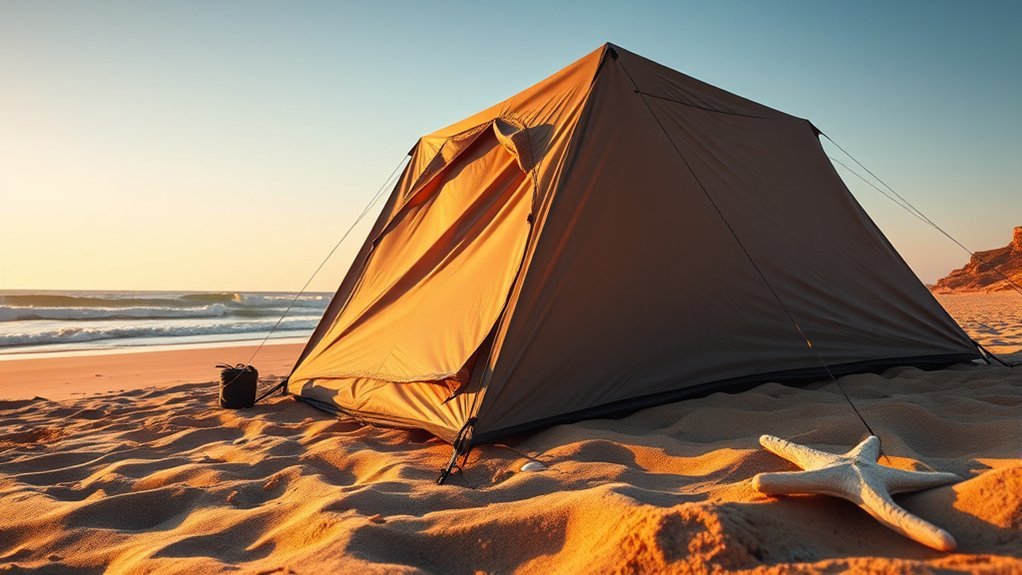
Last Updated on July 29, 2026 by Mason Reed
Sand gives ordinary tent stakes far less resistance than firm soil, so a secure beach pitch depends on larger anchors, correct guyline placement, and frequent checks. Before setting up, confirm that camping is allowed, choose a site above the high-tide line, and check the forecast. No stake or sandbag can make a tent safe during severe weather.
Quick Answer
Use one-foot sand or snow stakes, corkscrew anchors, or buried deadman anchors made from filled sacks. Place each anchor in line with its load, attach the tent’s structural guylines, compact the sand, and pull-test every point. Leave the tent and seek sturdy shelter if high-wind, severe-thunderstorm, or lightning hazards develop.
Key Takeaways
- Check local camping rules, tide predictions, coastal-flood conditions, and weather warnings before pitching.
- Long, broad sand stakes and buried deadman anchors hold better than the short stakes supplied with many tents.
- There is no universal 20-pound sandbag rule, 36-inch guyline rule, or required burial depth.
- Use every structural guyout needed for the conditions, tension the shelter evenly, and test each anchor with a firm pull.
- A tent is not safe shelter from lightning, severe thunderstorms, tornadoes, or a High Wind Warning.
At a Glance
| Time Required | About 15–30 minutes, plus periodic checks |
| Difficulty | Easy to moderate |
| Tools Needed | Sand stakes, corkscrew anchors, or fillable anchor bags; guylines; tensioners; small trowel; stake mallet |
| Cost | No added cost with suitable existing gear; otherwise varies by anchor type and quantity |
Warning: Do not remain in a tent during a High Wind Warning, severe-thunderstorm warning, tornado threat, or nearby lightning. The National Weather Service advises seeking a sturdy building during high-wind warnings, and a tent provides no lightning protection.
Disclosure: As an Amazon Associate I earn from qualifying purchases. Some links on this page are affiliate links, at no extra cost to you.
Choose a Safe Place to Pitch
Before thinking about stakes, make sure the location itself is legal and safe. Beach access does not automatically include permission to camp, and rules may change with the season, wildlife activity, storms, or erosion.
- Check local rules and closures: Confirm whether overnight camping, tents, digging, fires, pets, and vehicles are allowed. Some beaches permit daytime shelters but prohibit overnight tents.
- Know the tides: Use NOAA Tides and Currents or the land manager’s recommended tide source. Pitch well above the visible high-tide line and account for high surf, storm surge, and wind-driven water.
- Stay off dunes and vegetation: Do not pitch on dune crests, beach grass, restoration areas, or posted nesting habitat.
- Avoid unstable objects: Do not camp beside leaning trees, eroding bluffs, large drift logs that waves can move, or objects that could become airborne.
- Plan an exit: Know where the nearest sturdy building or hard-topped vehicle is before weather deteriorates.
The National Park Service advises coastal campers to know the tides and camp above the high-tide line. Local instructions take priority because tides, surf, wildlife restrictions, and legal camping zones differ by beach.
Effective Anchoring Techniques for Sandy Terrain
1. Position and Orient the Tent
Lay out the tent with its lowest, narrowest, or structurally strongest end facing the prevailing wind, depending on the tent manufacturer’s instructions. Keep doors and large vestibule openings away from direct gusts when possible. Do not place the broadest wall squarely into the wind unless the tent was designed to be pitched that way.
In breezy conditions, keep control of the tent from the moment it leaves its bag. Stake or hold the windward corners before inserting all the poles so the body cannot act like a sail.
2. Secure the Corners First
Stake the tent body at the corner loops and tension the floor evenly. A freestanding tent can stand without stakes, but it can still slide, roll, collapse, or blow away if it is not anchored. Semi-freestanding and non-freestanding shelters also depend on correct anchor placement to maintain their intended shape.
3. Choose the Right Sand Anchor
- Long, broad sand or snow stakes: These are usually the best simple option. Their length and surface area resist movement better than short wire pegs. The National Park Service recommends stakes about one foot long for sandy camping at Cape Lookout.
- Corkscrew anchors: Spiral anchors can work well when they can be screwed deeply into reasonably compact sand. Test them carefully because very dry, loose sand may crumble around the spiral.
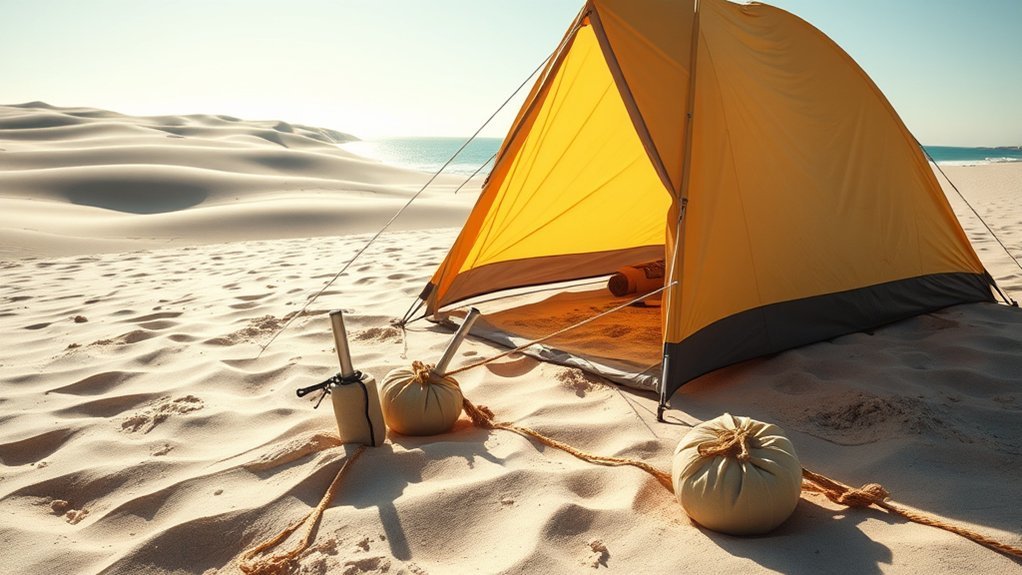
- Buried deadman anchors: Fill a strong stuff sack or purpose-built anchor bag with sand, tie the guyline securely around its attachment point, bury it horizontally, compact the sand above it, and test it before loading the shelter.
- Long stakes used as deadmen: A long stake can be buried horizontally across the direction of pull. Attach the line near the middle, place the stake across the trench, cover it fully, and compact the sand.
- Above-ground sandbags: These can add ballast, especially for a beach shelter, but the required weight depends on the shelter and manufacturer. There is no universal 20-pound-per-corner rule.
On sandy coastal campsites, the National Park Service recommends tent stakes about one foot long because ordinary short stakes may release in high winds.
4. Install a Deadman Anchor
- Dig a trench perpendicular to the expected pull.
- Fill an anchor bag with local sand or place a long stake horizontally in the trench.
- Attach the guyline to the anchor’s central attachment point before burial.
- Run the line through a narrow channel toward the tent so it does not lift the anchor upward.
- Cover the anchor completely and compact the sand with your hands or feet.
- Pull hard on the line in the same direction the tent will load it.
- If the anchor shifts, use a larger anchor, bury it deeper, move to firmer sand, or add a separate anchor.
Do not rely on pouring water around a weak stake. Moist sand may compact temporarily, but an undersized anchor can still loosen as it rocks under repeated gusts.
Pro Tip: Mark each buried anchor with a visible cord loop or small piece of your own gear. This makes the anchor easier to find during teardown and reduces the chance of leaving it behind.
5. Pull-Test Every Anchor
After installation, pull each corner and guyline firmly in the direction it will be loaded. The anchor should not creep, rotate, rise, or cut rapidly through the sand. A setup that fails a hand pull is unlikely to improve when the wind increases.
Recommended Tent Stakes for Sand
The best tent stake for sand is usually long and broad enough to develop resistance over a large area. Match the anchor to the sand and expected load rather than choosing only by weight.
- Broad aluminum sand or snow stakes: A strong all-around option for loose beach sand. Use the broad face against the expected pull and follow the stake maker’s installation directions.
- Heavy-duty plastic sand stakes: Their wide blades can hold well, but inspect them for cracks and avoid striking them with excessive force.
- Beach-specific corkscrew stakes: Useful in compact or slightly damp sand where the spiral can engage consistently.
- Long aluminum stakes: Stakes around 9–12 inches may work in firmer sand, but broader one-foot models provide a better starting point for exposed coastal sites.
- MSR Groundhog Stakes and similar Y-stakes: These are effective in many firm soils and may work in damp, compact sand. They are not the first choice for very loose, dry beach sand because their holding area is smaller than a broad sand stake or buried anchor.
- Fillable anchor bags: Useful for deadman anchors because they are light while being carried and can be emptied before leaving.
Note: Beach canopies and shade shelters can create much more wind drag than low-profile sleeping tents. Follow the canopy manufacturer’s required anchors and weights, and take the structure down before conditions exceed those instructions.
Best Practices for Using Guylines
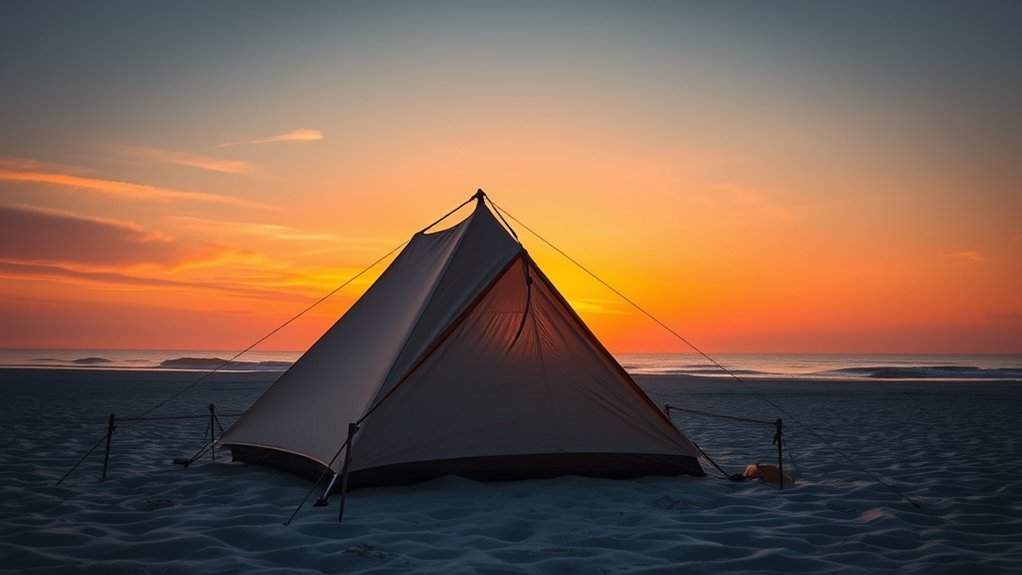
Guylines support the tent’s pole structure and transfer wind loads to the ground. They work best when attached to reinforced guyout points, aligned with the nearby pole or structural seam, and tensioned evenly.
- Use the correct attachment points: Connect guylines to the reinforced loops identified in the tent instructions. Do not attach them to mesh, zippers, door toggles, or unreinforced fabric.
- Run each line in the direction of support: Pull outward from the pole or panel the line is intended to stabilize.
- Use enough distance: The line should reach a strong anchor without being nearly vertical. There is no universal ideal length such as 36 inches.
- Keep the anchor aligned: Position the anchor so the guyline loads it in its strongest direction rather than twisting it sideways.
- Tension gradually: Tighten opposite sides in small steps so one line does not distort the poles or pull the tent off center.
- Use separate anchors when needed: In stronger wind, each major guyline should have an anchor capable of carrying its own load.
- Recheck the setup: Inspect the lines after the tent settles, after rain or heavy dew, and whenever the wind changes direction or speed.
A taut-line hitch can provide adjustable tension when a line tensioner is unavailable. A trucker’s hitch can create more tension, but it is easy to overtighten light tent fabric or poles. The goal is a stable, evenly tensioned shelter—not the tightest possible line.
Choosing the Right Tent Type for Windy Conditions
No tent is safe in every wind condition, and “freestanding” does not mean “windproof.” Choose a shelter whose structure, pole layout, fabric, and guyout system match the environment.
- Low-profile shape: A lower tent generally presents less surface area to direct wind than a tall cabin-style tent.
- Strong pole structure: Multiple crossing poles and secure pole-to-fly connections can improve support.
- Full rainfly: A correctly tensioned fly can distribute loads more evenly and protect the inner tent from blowing sand.
- Multiple reinforced guyout points: These let you support the pole structure from more than one direction.
- Manageable size: Larger tents and vertical walls catch more wind and require stronger anchors.
- Repairable components: Carry a pole sleeve, repair tape, spare cord, and extra anchors appropriate for the shelter.
Freestanding dome tents are convenient and easy to reposition, but they still require anchors and guylines in sandy or windy conditions. Non-freestanding shelters can be very stable when pitched correctly, yet their shape may collapse if even one critical anchor fails. Pop-up shelters are quick to deploy but may flex, tumble, or invert in gusts unless their manufacturer specifically supports the conditions.
Warning: Leave before the shelter begins failing. Repeated anchor movement, sharply bending poles, tearing sounds, collapsing panels, airborne sand that prevents safe movement, rising water, or an official warning are reasons to take the tent down or seek safer shelter.
Troubleshooting Loose or Failing Anchors
The Stake Creeps Through the Sand
Replace it with a longer or broader stake, rotate the broad face against the load, or convert to a buried deadman. Compact the surrounding sand and test again. Do not keep tightening the guyline against an anchor that is already moving.
The Deadman Anchor Lifts Upward
The line may be leaving the trench at too steep an angle, or the anchor may be too small or shallow. Deepen the trench, enlarge the buried object, and run the line through a lower channel toward the tent.
The Wind Changes Direction
Inspect every side of the tent, not only the original windward side. Add or reposition guylines so the pole structure remains supported from the new direction. Rebalance tension rather than tightening only one side.
The Rainfly Flaps or Touches the Inner Tent
Check that the corner straps are even, fly-to-pole attachments are connected, and structural guylines are tensioned. Do not overtighten one corner, which can distort the fly and reduce clearance elsewhere.
A Sandbag Slides Across the Surface
Use a manufacturer-approved attachment point, increase the bag’s size if permitted, place it where the line pulls across rather than upward, or bury a suitable fillable anchor as a deadman. A loosely filled bag resting on dry surface sand may slide even when it feels heavy.
Sand Blows Into the Tent
Face doors and large vents away from direct gusts when ventilation needs allow. Keep unused doors closed, maintain the rainfly gap, and store loose gear inside. Do not dig trenches or construct new dunes around the tent. Choose an existing legal windbreak only when it does not place the tent near falling branches, unstable bluffs, vegetation, or tide hazards.
Environmental Considerations When Camping on Sand
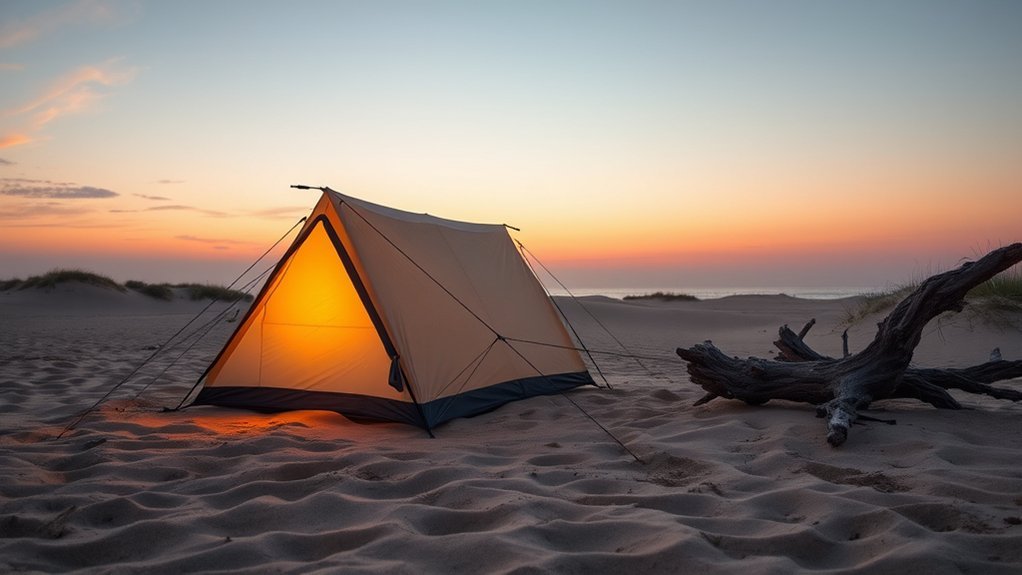
Sandy environments can contain fragile plants, buried organisms, nesting wildlife, and natural material that helps stabilize the shore. Use established campsites or durable bare sand where camping is permitted.
- Stay off dune vegetation and use established paths through dunes.
- Obey wildlife closures, signs, fencing, and lighting restrictions.
- Bring sand stakes or fillable bags instead of depending on rocks, logs, or driftwood.
- Leave rocks, shells, wood, plants, and other natural objects where you found them unless the land manager specifically authorizes their use.
- Dig only the small holes needed for anchors; do not trench around the tent or reshape the campsite.
- Retrieve every stake, bag, cord, and buried anchor.
- Refill anchor holes, smooth the surface, and pack out all trash and food scraps.
Leave No Trace advises leaving natural objects in place and minimizing site alterations. Rules can be stricter in national parks, wildlife refuges, turtle-nesting areas, and protected dunes.
Frequently Asked Questions
Can I use regular tent stakes in sand?
Short standard stakes may work in damp, compact sand during calm weather, but they are unreliable in loose beach sand. Long, broad sand stakes, corkscrew anchors, or buried deadman anchors provide more holding area. Pull-test every anchor before relying on it.
How deep should I bury stakes or deadman anchors in sand?
There is no universal depth. A specialty stake about one foot long is a useful starting benchmark on sandy coastal sites. Bury a deadman completely, compact the sand, and deepen or enlarge it until it remains fixed during a firm pull in the expected load direction.
What type of sand provides the best tent stability?
Firm, compact sand generally resists anchor movement better than very dry, loose sand. However, never move closer to the water simply to find damp sand. The campsite must remain safely above the high-tide line and outside coastal-flood or high-surf hazards.
How can I prevent sand from blowing into my tent?
Orient doors away from direct gusts, keep unused openings closed, tension the rainfly, and store loose gear inside. Use only legal, existing terrain for shelter. Do not build sand walls, dig perimeter trenches, damage dunes, or camp beside unstable natural objects.
Is it safe to camp on a beach with high winds?
Not during an official High Wind Warning, severe-thunderstorm warning, tornado threat, or nearby lightning. Seek a sturdy building or follow the land manager’s emergency instructions. Even without a warning, break camp if anchors repeatedly move, poles deform, fabric tears, or the tent can no longer be controlled safely.
Do I need 20-pound sandbags on every corner?
No universal weight applies to every tent or canopy. Required ballast depends on the structure, exposed surface area, anchor design, sand, and manufacturer instructions. Use approved attachment points and verify that each anchor remains fixed during a strong pull.
How do I remove a buried sand anchor without leaving a hole?
Release the guyline, follow its marked end to the anchor, and dig it out rather than yanking the line. Empty fillable bags, retrieve all cord and hardware, refill the hole, compact the surface lightly, and inspect the site for forgotten equipment.
Conclusion
To stake a tent in sand, start with a legal site above the high-tide line and use anchors designed to develop holding power over a large area. Long sand stakes, corkscrew anchors, and buried deadmen can all work when they are correctly aligned, compacted, and pull-tested. Add structural guylines, tension the shelter evenly, and inspect it whenever conditions change.
Anchoring reduces ordinary movement; it does not turn a tent into severe-weather shelter. Leave when weather warnings are issued or when the shelter begins to fail, and restore every anchor hole before departing.
Sources
- National Park Service — Cape Lookout Beach Camping — sandy-site tent selection and one-foot stake guidance.
- National Park Service — Shi Shi Beach — tide planning, high-tide-line camping, driftwood, and coastal site protection.
- National Weather Service — During a High Wind Event — shelter actions during high-wind and severe-thunderstorm warnings.
- National Weather Service — Outdoor Lightning Safety — tents, vehicles, sturdy shelter, and the 30-minute rule.
- NOAA Tides and Currents — official U.S. tide predictions and coastal water information.
- Leave No Trace — Leave What You Find — natural objects, habitat protection, and minimizing campsite alterations.
