
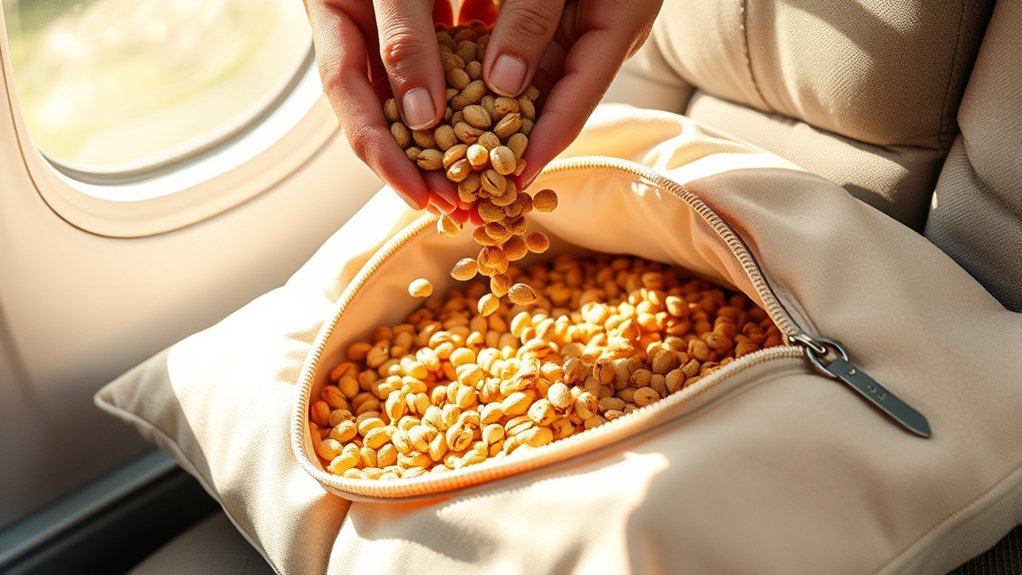
To replace buckwheat hulls in your travel pillow, first locate the invisible zipper on the exterior cover and open it in a clean area. Carefully pour out the old hulls into a container. For filling, use a funnel to add fresh, quality buckwheat hulls, adjusting the amount to achieve your desired firmness. After filling, securely close the zipper to maintain shape. If you want additional tips for maintaining your pillow’s longevity, there’s more to discover.
How to Access and Empty Your Travel Pillow of Buckwheat Hulls?

To access and empty your travel pillow of buckwheat hulls, start by locating the invisible zipper on the exterior cover, which provides easy entry to the filling compartment. Gently open the zipper in a clean area to prevent losing any hulls. Carefully pour out the buckwheat hulls into a container or bag for replacement or disposal, taking care not to spill them. If needed, use a funnel to assist in pouring new buckwheat hulls back into the pillow after emptying it. For effective pillow maintenance, make sure you securely close the zipper after refilling. This zipper care is vital as it keeps the hulls inside, guaranteeing your pillow maintains its shape and provides the support you need for restful travel.
Why Replace Buckwheat Hulls in Your Travel Pillow?
Accessing and emptying your travel pillow of buckwheat hulls is just the first step in maintaining its quality. Over time, hull compression can diminish support and comfort. Here’s why regular replacement is vital:
- Maintain firmness: Fresh hulls provide superior support and prevent flattening.
- Enhance comfort factors: New hulls retain malleability and cooling properties, promoting restful sleep during travel.
- Hypoallergenic benefits: Replacing hulls helps keep allergens and dust at bay, fostering a healthier sleep environment.
- Optimal performance: Regularly updating your hulls every few years guarantees your pillow continues to perform at its best.
Choosing the Best Buckwheat Hulls for Replacement
When it comes to replacing buckwheat hulls in your travel pillow, selecting high-quality options is essential for guaranteeing comfort and support. Look for premium options like Hullo™, which offers 10 and 20-pound bags sourced and milled in the U.S.A. Prioritize organic sources free from chemicals and pesticides.
| Feature | Importance | Recommended Option |
|---|---|---|
| Cleaning | Reduces allergens | Thoroughly cleaned hulls |
| Durability | Maintains shape and loft | High-quality hulls |
| Size | Enhances moldability | Smaller, intact hulls |
| Source | Guarantees quality | U.S.A. sourced |
| Organic Certification | Healthier sleep environment | Certified organic hulls |
Fill Your Pillow to the Desired Firmness
Achieving the ideal firmness in your buckwheat travel pillow is essential for ensuring comfort during your journeys. Start filling your pillow incrementally to explore your customization options. Here are some tips for finding your perfect firmness:
- Add hulls gradually; more hulls create a firmer pillow, while fewer yield a softer feel.
- Test the firmness by lying on the pillow, ensuring your neck and spine align properly.
- Use a funnel for hassle-free filling, minimizing spills.
- Temporarily close the zipper to assess the firmness before finalizing the amount.
Tips for Keeping Your Buckwheat Pillow Lasting Longer
To guarantee your buckwheat pillow remains a reliable source of comfort on your travels, it’s crucial to implement regular maintenance practices. Start by inspecting your pillow every few months for signs of hull degradation, like flattening or loss of loft. To maintain peak firmness, replace the hulls every 2 to 3 years. For effective hull storage solutions, keep extra hulls in a cool, dry place to maintain freshness when refilling. Sun exposure or a few hours in the freezer can help sanitize the hulls and eliminate moisture. Regularly wash the pillowcase and avoid exposing the hulls to water to prevent mold and mildew, which can compromise both hygiene and comfort. Follow these pillow maintenance tips for lasting support.
Frequently Asked Questions
How Often Should I Replace Buckwheat Hulls in My Pillow?
You should replace buckwheat hulls every one to three years, depending on usage. Regular pillow maintenance keeps your sleep environment fresh and supportive, enhancing your overall comfort and wellbeing while promoting a more liberating rest experience.
Can I Mix Different Types of Hulls for My Pillow?
Mixing hulls is like blending flavors in a gourmet dish; it can enhance your pillow comfort. Experiment with different types, but make certain they complement each other for ideal support and a restful night’s sleep.
Where Can I Buy High-Quality Buckwheat Hulls?
You can buy high-quality buckwheat hulls from various online retailers. Check specialized bedding shops or health food sites for sourcing options. Prioritize organic, sustainably sourced hulls to guarantee comfort and support for your travel pillow.
Are There Any Allergies Associated With Buckwheat Hulls?
While buckwheat hulls offer soothing benefits, some may experience allergy symptoms like sneezing or rashes. It’s wise to test your sensitivity first; liberation from discomfort means embracing the right choices for your health and comfort.
How Do I Clean My Travel Pillow After Replacing Hulls?
To clean your travel pillow after replacing hulls, use gentle cleaning techniques like spot cleaning with mild detergent. Regular pillow maintenance guarantees longevity, so remember to air it out and check for any wear regularly.
Conclusion
To summarize, replacing buckwheat hulls in your travel pillow can greatly enhance your comfort during travel. For instance, Sarah, a frequent flyer, swapped her old hulls for fresh ones and noticed a remarkable improvement in neck support and sleep quality. By maintaining your pillow with regular replacements and proper care, you can enjoy restful journeys wherever you go. Remember, a well-filled pillow tailored to your needs can make all the difference in your travel experience.