

Last Updated on September 10, 2026 by Daniel Globe
An old travel pillow does not always belong in the trash. The right choice depends on its condition, filling, cover material, and the rules in your area. A clean pillow may be reused or donated, while a worn pillow may need a specialty textile or foam program. A contaminated pillow should be sealed and discarded safely.
Quick Answer
Clean the pillow according to its care label, then choose reuse, donation, specialty recycling, or trash based on its condition and fill. Call any charity or recycler before visiting because many programs reject used or stuffed pillows. Never donate a pillow with mold, pests, bodily-fluid contamination, strong odor, or exposed filling.
Key Takeaways
- Reuse or donate only a clean, dry, odor-free pillow with intact seams and useful support.
- Check the care label before washing. Many memory foam inserts must not be machine-washed or submerged.
- Travel pillows usually do not belong in curbside recycling, and many textile programs exclude filled items.
- Confirm acceptance with the exact shelter, thrift store, animal rescue, or recycling facility before leaving home.
- Seal and discard pillows affected by mold, pests, bodily fluids, or other contamination according to local waste rules.
At a Glance
| Time Required | About 10 to 45 minutes, plus drying time |
| Difficulty | Easy |
| Tools Needed | Care label, mild detergent, clean cloth, laundry bag if allowed, and a phone or computer to confirm local acceptance |
| Cost | Usually $0 for reuse, donation, or local drop-off; specialty or mail-in services may charge a fee |
Disclosure: As an Amazon Associate I earn from qualifying purchases. Some links on this page are affiliate links, at no extra cost to you.
What to Do With Your Old Travel Pillow
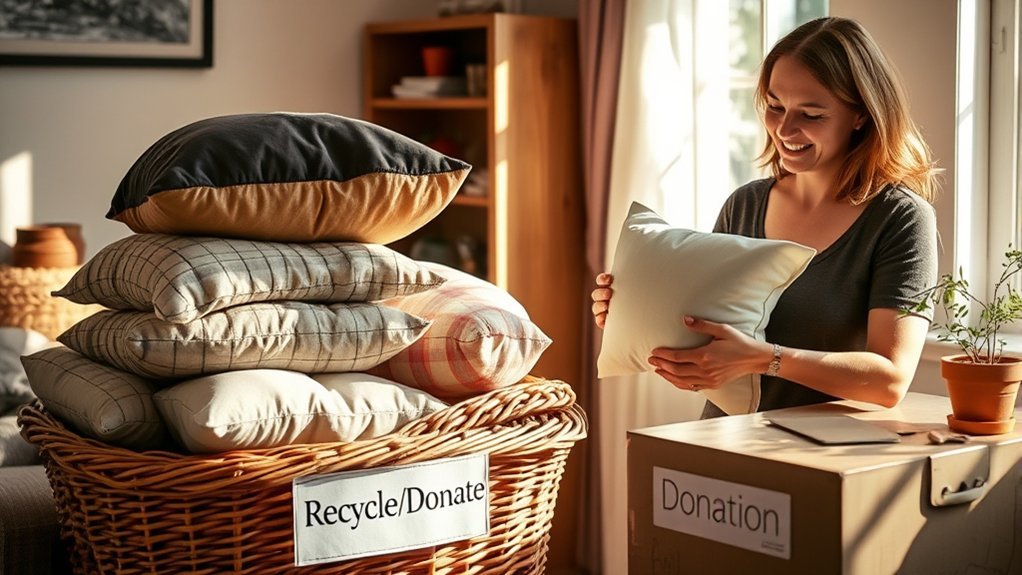
Start with a condition check. If the travel pillow is clean, supportive, and free from damage, you may be able to keep it in use. You could store it with guest bedding, keep it in the car for a passenger, offer it through a local reuse group, or donate it after the recipient confirms that used travel pillows are accepted.
If the pillow is no longer comfortable but is still clean, upcycling may be more practical than donation. The cover may become a small storage pouch, and clean filling may be reused in a craft project when it can be handled safely. If the pillow is worn, stained, contaminated, or made from materials that no local program accepts, place it in household trash according to local rules.
Note: A travel pillow is a mixed-material product. Fabric, foam, plastic fasteners, zippers, valves, and synthetic fill may need different treatment, so a general “textile recycling” label does not guarantee acceptance.
Signs It Is Time to Let Go of Your Travel Pillow
There is no universal replacement schedule for every travel pillow. Frequency of use, storage conditions, construction, and cleaning all affect its useful life. Replace or retire the pillow when its condition, hygiene, or support has clearly declined.
Visible Wear and Tear
Retire a pillow with split seams, frayed fabric, a damaged valve, crumbling foam, leaking microbeads, or exposed filling. These problems can make the pillow uncomfortable and may create a choking, ingestion, or cleanup hazard around children and pets. Minor damage to a removable cover may be repairable, but do not donate an item that another person would need to fix before using.
Persistent Odors or Contamination
A lingering odor after cleaning and complete drying may point to absorbed sweat, smoke, mildew, or material breakdown. Do not donate a pillow with mold, evidence of bedbugs or other pests, bodily-fluid contamination, or a strong smell. Bag the item before disposal if doing so will prevent loose filling, pests, or contamination from spreading.
Loss of Shape or Support
A travel pillow should support your head or neck without collapsing into hard lumps or staying permanently flat. If foam no longer rebounds, an inflatable pillow leaks, or the fill shifts so badly that the pillow cannot be adjusted, reuse it only for a non-support purpose or dispose of it. A pillow that causes discomfort should not be passed to another traveler as a usable support product.
How to Ensure Your Old Pillows Are Safe for Donation
Only prepare a pillow for donation after a local organization says it accepts that type of item. Policies can differ between branches, shelters, and thrift stores. For example, Goodwill states that donation rules vary by location, while The Salvation Army also advises donors to confirm local acceptance.
- Read the care label. Follow the product-specific washing and drying instructions instead of using one method for every pillow.
- Remove and wash the cover when allowed. Use mild detergent and the recommended water temperature. Do not use bleach unless the label permits it.
- Clean the insert correctly. Many memory foam inserts should be spot-cleaned rather than submerged. Some wrap-style pillows have a removable support that must be taken out before washing.
- Dry every part completely. Trapped moisture can lead to odor or mildew. Do not package or donate a damp pillow.
- Inspect it again. Reject it for donation if you find stains, mold, pest evidence, exposed filling, a damaged zipper or valve, or poor support.
- Keep all safe, functional parts attached. Do not remove zippers, tags, valves, or fasteners unless the receiving program specifically asks you to do so.
Warning: Do not machine-wash or soak a memory foam insert unless its manufacturer explicitly allows it. For example, Cabeau instructs users to wash the removable cover but wipe the memory foam insert with a damp cloth and let it air-dry.
Where Can You Donate Your Old Travel Pillows?
Donation is possible in some communities, but it is never automatic. Contact the exact location before cleaning or transporting the pillow, describe it as a used travel or neck pillow, and ask whether it must be new, gently used, washable, or sealed.
- Thrift stores: Some local branches accept bedding or pillows, while others reject used pillows for hygiene or resale reasons. The Salvation Army explains that local rules and needs vary.
- Homeless or emergency shelters: Some request pillows, but many prefer new items or specific sizes. Ask about current needs rather than arriving with an unsolicited donation.
- Animal shelters and rescues: A rescue may use washable bedding, but loose foam, beads, zippers, and torn fabric can be unsafe for animals that chew. Donate only after approval.
- Daycare centers, schools, and community programs: Hygiene policies may prohibit used pillows. Confirm the age group, cleaning standard, and acceptance rule first.
- Local reuse groups: A clean pillow can be offered through a neighborhood giveaway group with an honest description of its age, material, and condition.
Pro Tip: Send a clear photo and the care-label details when asking an organization whether it wants the pillow. This saves staff time and reduces the chance of a rejected drop-off.
Recycling Options for Old Travel Pillows
Most travel pillows cannot go in a household recycling bin. They are often made from several bonded or sewn materials, and filled textiles can jam sorting equipment or fall outside a recycler’s accepted categories. Your best option is a verified textile, foam, or specialty program that specifically lists the pillow’s material and filled construction.
Textile Recycling Programs Available
Some textile recyclers recover fabric from pillows, but acceptance varies. Earth911 notes that fabric may be recoverable through textile programs, while foam options can be limited. Ask whether the program accepts stuffed textiles, not merely clothing or flat household linens.
Do not assume that a paid textile box accepts pillows. TerraCycle’s current U.S. Fabrics and Clothing Zero Waste Box excludes textiles with fill, so it is not a general travel-pillow solution. Always read the current accepted and prohibited item list before paying for or shipping to any program.
Local Recycling Drop-off Options
Start with your city or county solid-waste department. Ask for textile recycling, polyurethane foam recycling, expanded polystyrene recycling, or a bulky-item program, depending on the pillow. Then call the listed facility because online directories can be outdated and material rules can change.
| Travel Pillow Type | Most Likely Route | What to Confirm |
|---|---|---|
| Memory foam with fabric cover | Foam recycler, mattress recycler, or textile program that accepts filled items | Whether polyurethane foam and the sewn cover are accepted together |
| Polyester- or cotton-filled pillow | Stuffed-textile recycler or reuse program | Whether pillows and other filled textiles are accepted |
| Microbead pillow | Specialty foam or plastic program, if available | Whether the specific bead resin is accepted and whether the pillow must stay sealed |
| Inflatable pillow | Specialty flexible-plastic program or household trash | Whether PVC or TPU products, valves, and mixed fabrics are accepted |
Mail-in Recycling Services Offered
Mail-in recycling may be available through a specialty company, brand take-back program, or regional textile service, but acceptance lists change. Before sending anything, confirm all of the following:
- The service accepts pillows or filled textiles, not only clothing and flat fabric.
- Your pillow’s foam, beads, valve, plastic shell, or mixed fill is included.
- The item is clean, dry, and free from mold, pests, and bodily fluids.
- The shipping label, box size, weight limit, and fee are clear.
- The company explains what happens to accepted materials after collection.
If no verified mail-in service accepts the full pillow, do not ship it to a general textile box. Local reuse or proper household disposal may be the more responsible choice.
Creative Ways to Upcycle Old Travel Pillows
Upcycling works best when the pillow is clean and the materials are still stable. Choose a project that keeps loose foam or beads contained and does not create a hazard.
- Make a small cushion: Place an intact pillow inside a washable cover for lumbar, knee, or arm support.
- Create a draft blocker: Use clean polyester or cotton filling inside a tightly sewn fabric tube.
- Reuse the cover: A zippered cover can hold charging cables, sleep masks, or other travel accessories after it is washed.
- Use it for craft stuffing: Reuse only clean, dry fill that is not crumbling or leaking. Keep small pieces and beads away from children and pets.
- Make a pet cushion only when safe: Use intact, washable materials and a durable outer cover. Do not use microbeads, exposed foam, damaged zippers, or anything a pet may swallow.
- Combine clean pillows: Several intact pillows can fill a larger floor cushion, provided the finished cover is strong and washable.
Warning: Do not cut open a microbead pillow unless a confirmed recycler instructs you to separate it. The beads can scatter easily, are difficult to recover, and may be swallowed by children or animals.
Health and Hygiene Considerations for Old Travel Pillows
Travel pillows touch your face, hair, neck, airport seats, cars, and luggage. Sweat, skin oils, dust, allergens, and moisture can collect in the cover and filling. Regular cleaning can reduce buildup, but a damaged or contaminated pillow may not be suitable for reuse or donation.
Dust and Allergen Accumulation
The U.S. Environmental Protection Agency recommends regular cleaning, complete drying, and hot-water washing for washable bedding when dust-mite control is needed. A travel pillow may have different care limits, so follow its label rather than exposing foam, plastic supports, or valves to heat they cannot tolerate. People with asthma or allergies should avoid reusing a pillow that cannot be cleaned thoroughly or that triggers symptoms.
Odor and Stains
A small washable surface mark is different from deep staining or contamination. Spot-clean only when the care label allows it. If odor or staining remains after proper cleaning, retire the pillow. Never use fragrance to hide an odor before donation, and never donate a pillow affected by mold, pests, blood, vomit, urine, or another bodily fluid.
How to Find Local Recycling Centers for Travel Pillows
- Identify the materials. Read the law tag or care label for terms such as polyurethane memory foam, polyester fiberfill, polystyrene beads, PVC, TPU, cotton, or wool.
- Search your local government website. Look for textile recycling, foam recycling, bulky waste, transfer stations, or special collection events.
- Use a recycling directory. Earth911 provides a recycling search tool, but you should still verify the result with the facility.
- Call before traveling. Say that the item is a filled travel pillow and list its materials. Ask whether it must be clean, separated, or bagged.
- Ask what happens if it is rejected. A facility may direct you to household trash, a paid drop-off, or a different specialty recycler.
Pro Tip: Search for the material first and the product second. “Polyurethane foam recycling” or “stuffed textile recycling” often produces better local results than “travel pillow recycling.”
Pillow Disposal Rules at a Glance
- Do not place a whole travel pillow in curbside recycling unless your local program explicitly lists it.
- Do not donate a dirty or damaged pillow. Donation should transfer a useful item, not a disposal problem.
- Do not assume every textile bin accepts pillows. Many programs accept clothing but exclude stuffed items.
- Do not compost mixed-material pillows. Foam, polyester, zippers, elastic, coatings, valves, and synthetic thread do not belong in ordinary compost.
- Do use household trash when no safe reuse or recycling route exists. Bag loose or contaminated filling and follow local instructions.
The Environmental Impact of Responsible Pillow Disposal
Reuse usually keeps a usable product in service with the least extra processing. Recycling can recover some material when a suitable program exists, but mixed construction limits what facilities can handle. The EPA places reduction and reuse ahead of disposal because extending product life can conserve resources and reduce waste.
The EPA’s latest published national textile dataset reports that the United States generated about 17 million tons of textile waste in 2018, and about 11.3 million tons went to landfills.
Those figures cover the broader textile waste stream, not travel pillows alone. Your practical priority should be to keep a safe pillow in use, choose a verified recycler when available, and avoid contaminating donation or recycling streams with an item they cannot process.
Frequently Asked Questions
Can I donate a travel pillow that is slightly stained?
Usually not. A stain may indicate that the pillow cannot be cleaned to the receiving organization’s standard. Try the care-label-approved cleaning method, dry the pillow completely, and ask the organization directly. If the stain remains, choose safe upcycling, verified recycling, or disposal instead.
How do I clean a travel pillow before donating it?
Read the care label first. Wash a removable cover with mild detergent at the recommended temperature. Spot-clean or wipe the insert when required, and never soak memory foam unless the manufacturer allows it. Dry every part completely, then check for odor, stains, mold, pests, seam damage, and support loss.
Which charities accept used travel pillows?
There is no universal list because policies vary by branch and local health rules. Some thrift stores, shelters, or community programs accept clean pillows, while others accept only new bedding. Call the exact location and describe the item as a used travel or neck pillow before visiting.
What materials are travel pillows made from?
Common constructions include polyurethane memory foam, polyester fiberfill, polystyrene microbeads, inflatable PVC or TPU, and covers made from polyester, cotton, nylon, fleece, or blended fabric. Zippers, valves, elastic straps, and plastic supports can make recycling more difficult.
Can I recycle a travel pillow with a plastic covering?
Not through ordinary curbside recycling unless your local program clearly says otherwise. A plastic-coated or inflatable pillow may contain PVC, TPU, fabric, foam, and a valve. Ask a specialty recycler whether it accepts the exact material and whether the item must remain assembled.
Can I compost a natural-fiber travel pillow?
Only when every component you plan to compost is verified as an untreated natural material and your local composting program accepts it. Remove all foam, polyester thread, zippers, coatings, elastic, labels, and plastic parts. When the material is uncertain, do not put it in compost.
What should I do with a moldy or pest-infested travel pillow?
Do not donate, upcycle, or place it in a textile collection bin. Seal it in a sturdy bag to contain spores, pests, or loose filling, then follow your local household-waste or pest-control guidance. Avoid carrying an infested pillow through your home.
Conclusion
Give a clean, supportive travel pillow another use when you can, but do not force it into a donation or recycling stream that does not accept it. Check the care label, identify the filling, confirm local rules, and be honest about the item’s condition. When the pillow is contaminated, damaged, or unrecyclable, sealed household disposal is safer than passing the problem to someone else.
Sources
- U.S. Environmental Protection Agency: Textiles Material-Specific Data — national textile generation, recycling, and landfill data.
- U.S. Environmental Protection Agency: Reducing and Reusing Basics — waste-prevention and reuse guidance.
- Earth911: How to Recycle Pillows — pillow cleaning, textile recovery, and local recycling guidance.
- Goodwill: Donate Goods — confirmation that donation rules vary by location.
- The Salvation Army Thrift Stores: Donation FAQ — local acceptance and donation-condition guidance.
- Cabeau: Travel Pillow Care Instructions — example of washing a removable cover without washing the memory foam insert.
