

Last Updated on September 10, 2026 by Daniel Globe
Storing a travel pillow in a small suitcase is easier when you match the packing method to the pillow’s material. Inflatable pillows can be deflated, soft fiber-filled pillows can usually be rolled or placed in a stuff sack, and some travel-size foam pillows can be packed in their supplied case. For long-term storage, most pillows should be clean, completely dry, and free from heavy compression.
Quick Answer
To store a travel pillow in a small space, check its care label, clean and dry it, then deflate, roll, or lightly compress it as the manufacturer allows. Use vacuum bags only for short trips with suitable pillows. Unpack it after arrival, and store it loose in a breathable bag at home.
Key Takeaways
- Read the care label before compressing or washing a pillow because foam, latex, down, fiber fill, and air bladders need different care.
- Use compression for transportation, not permanent storage, unless the manufacturer specifically allows it.
- A vacuum bag reduces volume but does not reduce the pillow’s weight.
- Keep the pillow dry and protected from dirty seats, floors, luggage compartments, and damp storage areas.
- Unpack the pillow after your trip and store it loosely in a cool, dry place.
At a Glance
| Time Required | About 5–15 minutes, plus any cleaning and drying time |
| Difficulty | Easy |
| Tools Needed | Care label, clean pillowcase, travel pouch or storage bag, and an optional roll-up compression bag, vacuum, or hand pump |
| Cost | Low; you may only need a suitable compression or breathable storage bag if the pillow did not include one |
Disclosure: As an Amazon Associate I earn from qualifying purchases. Some links on this page are affiliate links, at no extra cost to you.
How to Compress Pillows for Travel
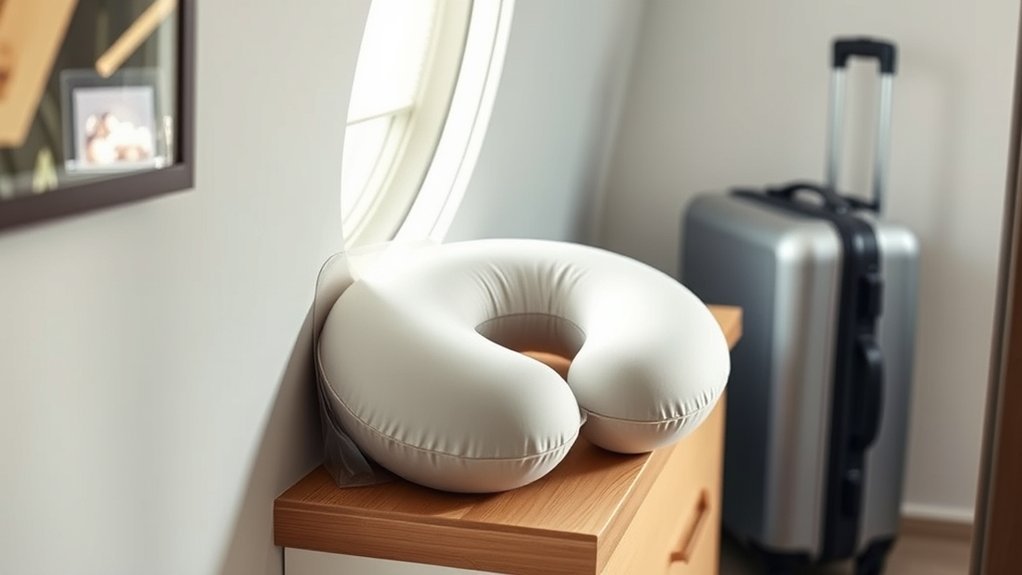
Compressing a pillow can save suitcase space, but the safest method depends on its filling and construction. Start with the storage pouch supplied by the manufacturer. If the pillow did not include one, check its care label or product instructions before using a stronger compression method.
Prepare the Pillow Before Packing
- Identify the material. Check whether the pillow contains memory foam, latex, down, polyester fiber, microbeads, or an inflatable air bladder.
- Read the care label. Look for warnings about folding, rolling, vacuum compression, washing, and drying.
- Remove and clean the cover if needed. Do not wash the core unless the instructions say it is washable.
- Dry every part completely. Trapped moisture can cause odors and encourage mold growth.
- Inspect the pillow. Check the seams, zipper, valve, and storage pouch for damage before applying pressure.
Warning: Do not force a solid foam or latex pillow into a vacuum bag unless its manufacturer says the pillow can be compressed that way. Strong or prolonged compression can damage the core or prevent it from returning to its original shape.
Method 1: Use a Vacuum-Seal Bag for Short-Term Travel
A vacuum bag may work for a soft synthetic, down, feather, or manufacturer-approved foam pillow during a trip. It should not be treated as the default method for every pillow.
- Choose a bag large enough for the pillow to lie inside without straining the zipper or seams.
- Place the clean, dry pillow in the bag and smooth out sharp folds.
- Seal the bag according to its instructions.
- Remove the air slowly. Stop if the pillow forms hard creases, the seams pull, or the core feels distorted.
- Close the valve and check the seal before placing the bag in your suitcase.
- Unpack the pillow when you reach your destination instead of leaving it compressed for the full trip.
The Transportation Security Administration allows vacuum-sealed clothing bags in carry-on and checked luggage, but it does not encourage them. A security officer may need to open a sealed bag if it triggers an alarm or requires inspection.
Pro Tip: Pack an empty roll-up compression bag or large zippered pouch as a backup. You can repack the pillow even if a vacuum-sealed bag is opened during airport screening.
Method 2: Use a Roll-Up Compression Bag
A roll-up bag uses body pressure instead of a vacuum cleaner. It works well when you will not have access to a vacuum at your destination.
- Put the pillow inside the bag and close the zipper seal.
- Lay the bag on a clean, flat surface.
- Press gently while rolling the bag toward its one-way valve.
- Allow the air to escape without kneeling heavily on the pillow.
- Secure the bag and place it near the top of your luggage.
Method 3: Roll or Stuff a Compressible Pillow
Soft down, feather, and synthetic-fill travel pillows can often be placed in a stuff sack for transportation. Push the pillow into the sack a little at a time rather than folding it along one sharp line. You can also wrap the packed pillow in a clean sweater or jacket to protect it from hard objects in the suitcase.
Some memory-foam travel pillows are specifically designed to be rolled into an included case. For example, Cabeau instructs users of certain models to roll the pillow inward and place it in the supplied travel bag. Follow that process only when it matches your pillow’s instructions.
Method 4: Deflate an Inflatable Pillow
- Open the valve and press the pillow gently to release the air.
- Keep the valve open while you roll or fold the pillow loosely.
- Check that no sharp item can press against the air bladder.
- Place the pillow in its pouch with the valve protected.
- After the trip, inflate it briefly and check for slow leaks.
Note: Compressing a pillow changes its volume, not its weight. Check your airline’s baggage weight and size limits even when the pillow fits easily inside your suitcase.
Which Packing Method Fits Each Pillow Material?
| Pillow Type | Best Travel Method | Long-Term Storage | Cleaning Note |
|---|---|---|---|
| Inflatable | Deflate and roll loosely | Store dry with the valve positioned as directed by the manufacturer | Wipe the shell and let the valve dry fully |
| Memory Foam | Use the supplied pouch or roll only when approved | Store flat or loosely shaped without heavy items on top | Wash the removable cover if allowed; spot clean or air the core as directed |
| Latex | Avoid strong vacuum compression unless specifically approved | Store flat, dry, and away from heavy pressure | Many latex cores are spot-clean only |
| Down or Feather | Use a stuff sack or gentle short-term compression | Store loosely in a breathable bag | Follow the care label and dry the filling completely |
| Synthetic Fiber | Roll, stuff, or lightly compress for travel | Store loose in a dry, breathable container | Wash only according to the label |
Tips for Keeping Your Pillow Clean While Traveling
A removable, washable pillowcase is the easiest first layer of protection. Pack at least one spare case for a long trip, especially if you expect hot weather, overnight travel, or several hotel stays.
- Keep the pillow in a clean fabric pouch or washable travel case when you are not using it.
- Avoid placing an uncovered pillow on airport floors, station benches, luggage carts, or hotel carpets.
- Keep toiletries, shoes, damp clothing, and food in separate sealed bags.
- Air the pillow after a long flight, bus ride, or car trip.
- Wash the removable cover according to its label before putting the pillow into long-term storage.
Do not assume that the pillow core is washable. Tempur-Pedic’s pillow-care guidance says not to wash or submerge an insert unless its instructions specifically say it is washable. Purple’s care instructions also vary by model, with some covers being machine washable while certain latex, foam, fiber, and grid components require spot cleaning or should not be washed.
Clean the Pillow According to Its Construction
- Removable cover: Machine wash or hand wash only as directed, then dry it completely before reinstalling it.
- Solid foam or latex core: Spot clean when permitted and allow it to air dry. Do not wring, twist, or machine wash it unless the label allows that process.
- Inflatable pillow: Wipe the shell, remove dirt from the valve, and let the valve and inner surfaces dry as directed.
- Down or synthetic fill: Follow the label carefully because washing and drying methods vary widely.
The U.S. Environmental Protection Agency explains that moisture control is the key to limiting mold growth. Never seal a damp pillow inside a plastic bag or closed suitcase for storage.
Choosing the Most Comfortable Travel Pillow
The best travel pillow depends on how you sleep, how much room you have, and whether you need support while sitting upright or cushioning while lying down. Memory foam often provides more contouring, while inflatable pillows usually pack smaller and let you adjust firmness by adding or releasing air.
| Type | Main Benefit | Storage Ease | Possible Drawback |
|---|---|---|---|
| Memory Foam | Contours around the head and neck | Moderate | Bulkier than a deflated pillow and may retain heat |
| Inflatable | Adjustable firmness and very small packed size | High | Can lose air or be punctured |
| Down or Fiber-Filled | Soft and easy to reshape | High for travel | May offer less firm support when sitting upright |
| Wrap or Structured Support | Helps limit side-to-side head movement | Varies by design | May feel restrictive if the fit is wrong |
Check the Fit Before Your Trip
- Your head should feel supported without being pushed sharply forward.
- The pillow should not press against your throat or make breathing uncomfortable.
- An adjustable closure or air level can help you fine-tune the fit.
- The cover should feel comfortable against your skin and be easy to clean.
- The packed pillow should fit your planned luggage without exceeding the airline’s limits.
Note: A travel pillow should feel supportive, not painful or restrictive. Change its position or stop using it if you notice pain, numbness, throat pressure, or breathing discomfort.
Check Airline and Airport Packing Rules
TSA screening rules and airline baggage rules are separate. TSA determines what may pass through security in the United States, while each airline sets its own carry-on, personal-item, size, and weight limits.
- Vacuum-sealed bags may be opened if they require additional screening.
- A pillow clipped outside a suitcase may still be counted by an airline as an additional item.
- A full-size bed pillow may not fit within a carrier’s personal-item dimensions.
- Keep enough space in your luggage to repack the pillow if its sealed bag is opened.
- Check your airline’s rules before leaving for the airport, especially on low-cost carriers with strict limits.
What to Do After You Unpack the Pillow
- Remove it from the compression bag. Do this when you reach your destination instead of leaving it sealed.
- Open or remove the cover. This allows trapped air and moisture to escape.
- Shake or reshape loose fill. Work gently from one end to the other.
- Let foam rest flat. Give it time to regain its normal shape without placing anything on top.
- Check for moisture or odor. Air the pillow before use if it feels damp or smells musty.
- Inspect the seams and valve. Look for tears, loose stitching, or slow air loss.
If the Pillow Does Not Return to Its Shape
- Remove the cover so it does not restrict expansion.
- Place the pillow flat in a dry, ventilated room.
- Give slow-rebounding foam several hours to recover.
- Gently roll and unroll it only if the manufacturer recommends that method.
- Do not use high heat, aggressive pulling, or heavy beating to force it back into shape.
- Contact the manufacturer if the core remains creased, cracked, lumpy, or flat.
If an Inflatable Pillow Loses Air
- Check that the valve is clean and fully closed.
- Listen for escaping air in a quiet room.
- Apply light pressure and inspect the seams and bladder.
- Use only a repair method approved by the manufacturer.
- Replace the pillow if damage is near the valve or cannot be sealed safely.
Smart Pillow Storage Ideas After Travel
Once you return home, remove the pillow from its travel compression bag. Clean it as directed, let every part dry, and choose a storage location where heavy objects will not press against it.
- Place the pillow in a large cotton, mesh, or other breathable storage bag.
- Use a clean pillowcase as a simple breathable cover.
- Keep the pillow on a closet shelf rather than under a heavy stack of bedding.
- Store the travel pouch beside the pillow so it is easy to find before your next trip.
- Label the storage bag if you own several pillows or keep seasonal bedding together.
- Keep inflatable-pillow repair supplies in a small labeled pouch.
Vacuum-seal bags are better treated as transportation tools than permanent storage containers. Even if a pillow appears to recover after a short trip, repeated or long-term compression may reduce the life of its foam or filling.
Long-Term Pillow Storage Strategies for Travelers
Long-term storage should protect the pillow from moisture, heat, sunlight, pests, dirt, and constant pressure. NEMO’s official care guidance for its foam-based camp pillow recommends drying every component and storing the pillow flat rather than leaving it compressed in its stuff sack.
- Clean the pillow according to its label. Remove body oils, dirt, and spills before storage.
- Dry it completely. Check the cover, filling, seams, valve, and storage bag.
- Release compression. Let the pillow return to its normal shape.
- Use a breathable cover. Choose a roomy bag instead of a tight plastic container when possible.
- Choose a stable location. A cool, dry interior closet is usually better than a damp basement, hot attic, garage, or car trunk.
- Keep weight off the pillow. Do not place luggage, boxes, or heavy bedding on top.
- Inspect it occasionally. Look for moisture, odor, stains, pests, damaged seams, or lost shape.
- Fluff loose fill gently. Rotate the pillow so the same area is not always pressed against the shelf.
Warning: Never place a damp pillow in a sealed bag or closed bin. Dry it first and correct any moisture problem in the storage area.
Frequently Asked Questions
Can I Use Regular Vacuum Bags for Travel Pillows?
Sometimes. A regular vacuum bag may be suitable for short-term travel with a soft pillow or a model whose manufacturer permits compression. Avoid using one for solid foam, latex, or delicate fills unless the care instructions approve it. Unpack the pillow after reaching your destination.
How Long Can a Travel Pillow Stay Compressed?
There is no universal safe time because materials and designs differ. Keep compression limited to the travel period and unpack the pillow when you arrive. Follow any time limit printed on the product, storage pouch, or care label.
Can I Vacuum-Pack a Memory-Foam or Latex Pillow?
Only when the manufacturer says it is safe. Some travel-size memory-foam pillows are designed to roll into a supplied case, but that does not mean every foam or latex pillow can withstand strong vacuum compression.
How Do I Prevent My Pillow From Getting Dirty During Travel?
Use a removable pillowcase and keep the pillow in a separate washable pouch when it is not in use. Avoid placing it on floors, luggage carts, or other dirty surfaces, and keep it away from shoes, damp clothes, food, and leaking toiletries.
What Materials Are Best for Travel Pillows?
Inflatable pillows are usually the most compact and allow firmness adjustment. Memory foam offers close contouring but takes more space. Down and synthetic-fill pillows feel softer and can be compressible, while structured wrap designs may provide more directional support. The best choice depends on your sleep position and luggage space.
Are Inflatable Travel Pillows Worth the Investment?
They can be a good choice when packed size and adjustable firmness are your main concerns. However, an inflatable pillow can lose support if its valve leaks or its air bladder is punctured. Inspect it before important trips and keep it away from sharp items.
How Can I Make My Travel Pillow More Supportive?
Adjust the air level, closure, orientation, or removable filling when the design allows it. Position the thickest support where your head tends to lean. The pillow should hold your head comfortably without pushing your chin sharply downward or pressing against your throat.
Can I Wash a Travel Pillow in a Washing Machine?
Only if the care label allows it. Many removable covers can be machine washed, while solid memory-foam and latex cores often require spot cleaning. Remove the cover and check the instructions for every component before washing anything.
Does a Travel Pillow Count as a Personal Item on a Flight?
Airline policies differ. A small pillow packed inside your approved bag normally uses part of that bag’s space, while a pillow carried or clipped outside the bag may be treated as another item. Check the airline’s current baggage rules before traveling.
What Should I Do If My Pillow Smells Musty After Storage?
Remove it from the bag and inspect it for dampness, stains, or visible mold. Follow the manufacturer’s cleaning instructions and correct the moisture problem in the storage area. Do not use or reseal the pillow while it is damp.
Conclusion
The safest way to store a travel pillow in a small space is to use the least aggressive method that works for its material. Deflate an inflatable pillow, use a stuff sack for suitable soft fill, and roll a foam pillow only when its manufacturer allows it. Keep the pillow clean and dry, unpack it after travel, and store it loosely between trips. These steps save luggage space without risking unnecessary damage to the pillow’s filling, core, seams, or air valve.
Sources
- Transportation Security Administration: What Can I Bring? — airport-screening guidance for vacuum-sealed bags and other packed items
- U.S. Environmental Protection Agency: The Key to Mold Control Is Moisture Control — moisture and mold-prevention guidance
- NEMO Equipment: Cleaning, Repairing, and Storing a Camp Pillow — drying, valve care, foam rebound, and long-term storage guidance
- Tempur-Pedic: How Can I Keep My Pillow Clean? — removable-cover and pillow-insert care instructions
- Purple: Pillow Cleaning Recommendations — model-specific cleaning guidance for covers, foam, fiber fill, grids, and latex cores
- Cabeau: Memory-Foam Travel Pillow Care and Packing — manufacturer instructions for cleaning the cover, protecting the foam insert, and using the supplied travel case
