

Last Updated on September 10, 2026 by Daniel Globe
Between trips, your travel pillow deserves better than getting stuffed into a random suitcase pocket. A little care after each journey — cleaning it according to its care label, letting it dry completely, and storing it in a suitable spot — helps prevent odors, moisture problems, misshapen foam, and avoidable wear.
Quick Answer
To store a travel pillow between trips, clean it according to its care label, dry it completely, and keep it in a cool, dry place. Memory foam is best stored loose rather than tightly compressed; inflatable pillows may need to be stored flat with the valve open. Follow the manufacturer’s instructions when they differ.
Key Takeaways
- Always check the care label before washing or storing a travel pillow because instructions vary by construction.
- Let every part of the pillow dry completely before storage; trapped moisture is a bigger mold risk than the type of storage bag you use.
- Avoid keeping solid memory foam tightly compressed for long periods unless its manufacturer specifically allows it.
- For inflatable pillows, follow the maker’s valve instructions; some are designed to be stored flat and unrolled with the valve open.
- Keep the pillow away from damp spaces, strong heat, direct sunlight, leaking toiletries, and heavy objects that could crush it.
At a Glance
| Time Required | 10–15 minutes, plus complete drying time |
| Difficulty | Easy |
| Tools Needed | Care label, mild detergent or soap if approved, soft cloth, clean storage bag or pillowcase |
| Cost | Usually $0 with supplies you already own; otherwise it depends on the storage case you choose |
Disclosure: As an Amazon Associate I earn from qualifying purchases. Some links on this page are affiliate links, at no extra cost to you.
How to Clean Your Travel Pillow Before Storage
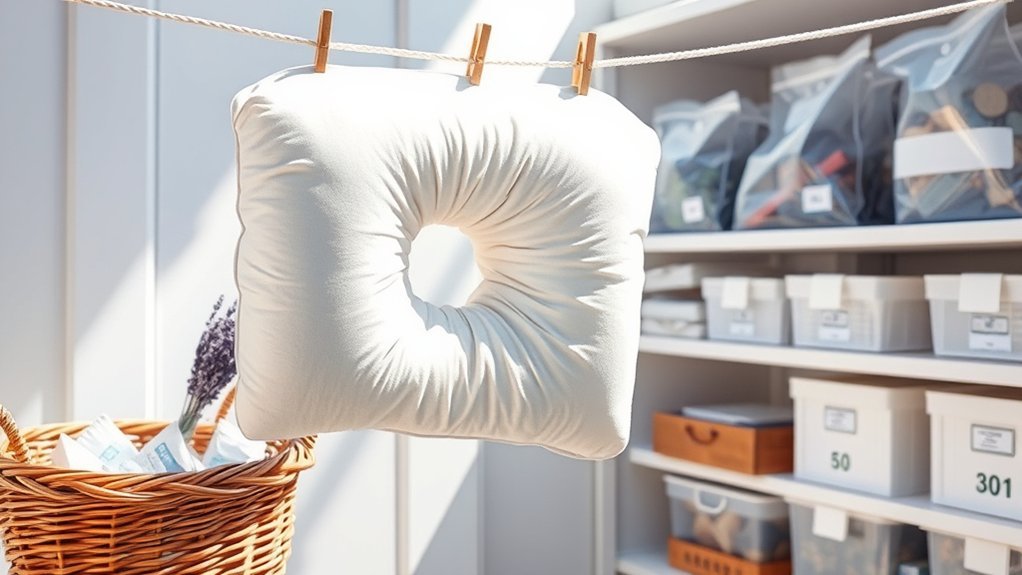
Before you tuck away your travel pillow, clean off the sweat, skin oils, dust, and travel grime it picked up along the way. Start with the care label because there is no single washing method that is safe for every travel pillow.
If the pillow has a removable cover, remove it and wash it exactly as directed. For example, Cabeau says the cover on its Evolution Earth Deluxe can be machine washed on a cool setting and tumble dried on low, while the memory foam insert should only be wiped with a damp cloth and air-dried. Tempur-Pedic similarly tells owners not to wash or submerge its pillow insert unless the individual product instructions specifically say it is washable.
For a solid memory-foam pillow, use only the cleaning method approved by the manufacturer. Avoid automatically soaking or machine-washing the foam. A lightly damp cloth and a small amount of mild detergent may be appropriate for some models, but the label takes priority.
Note: Inflatable pillows need their own care routine. Sea to Summit, for example, recommends hand washing its Aeros pillows with mild soap, air-drying them completely with the valve open, and storing them flat with the valve open. Microbead pillows also vary, so check the sewn-in care label before deciding between spot cleaning and machine washing.
Whatever the construction, do not put the pillow away while any part of it is damp. The U.S. Environmental Protection Agency emphasizes that controlling moisture is the key to controlling mold.
How to Store a Travel Pillow Step by Step
- Read the care label. Confirm whether the cover, insert, bladder, or complete pillow can be washed and how it should be dried.
- Clean the pillow. Wash the removable cover or spot-clean the pillow using the approved method.
- Dry every component completely. Do not reinstall a cover around damp foam or close a damp inflatable pillow into a storage pouch.
- Release unnecessary compression. For long-term storage, let memory foam return to its normal shape unless the manufacturer specifically approves compressed storage.
- Choose the right container. Use the original case if it is intended for storage, or use a clean pillowcase, cotton bag, or mesh bag when airflow is desirable.
- Pick a dry location. A bedroom closet, shelf, or under-bed storage area in a climate-controlled room is usually better than a damp basement, hot attic, garage, or vehicle.
- Check it before your next trip. Make sure the cover is clean, foam has recovered, seams are intact, and inflatable valves still seal properly.
Best Storage Method by Travel Pillow Type
| Pillow Type | Cleaning | Long-Term Storage |
|---|---|---|
| Solid memory foam | Usually clean the cover separately and spot-clean the insert only if the maker permits it. | Let it return to normal shape and avoid prolonged tight compression. |
| Inflatable | Use the maker’s approved soap/washing method and protect the valve and welded seams. | Follow the valve instructions. Some models should be stored flat and unrolled with the valve open. |
| Microbead or fiber-filled | Check the care label; some are washable while others should only be surface cleaned. | Store dry without crushing the seams or placing heavy objects on top. |
Why Proper Storage Matters for Your Travel Pillow
Proper storage helps preserve the pillow’s shape, cleanliness, and usable life. The biggest preventable problem is moisture. A pillow that is packed away damp can develop a musty odor and create conditions in which mold can grow.
Storage also matters mechanically. Foam needs room to recover after it has been compressed for travel, while inflatable pillows can have their own valve and bladder requirements. Keeping the pillow in a clean location also reduces dust and protects it from accidental spills, pests, and physical damage.
Get those basics right and your pillow is far more likely to feel clean, supportive, and ready for your next trip.
How to Properly Compress Your Travel Pillow
Compression is useful when you are trying to save luggage space, but transport and long-term storage are not the same thing. If the manufacturer provides a compression case, follow its packing instructions. Cabeau, for example, designs some of its memory-foam travel pillows to roll into a supplied case for travel.
For long-term storage, however, give foam room to recover. Tempur-Pedic specifically advises against tightly compressing its foam for an extended period.
| Storage Technique | Benefit | Best Use |
|---|---|---|
| Gentle rolling | Reduces bulk | Short-term transport when approved by the maker |
| Manufacturer’s travel case | Fits the pillow’s intended packed size | Flights, trains, road trips, and temporary packing |
| Loose or uncompressed storage | Lets foam maintain or regain its shape | Long-term memory-foam storage |
Warning: Do not assume a vacuum bag is safe for long-term memory-foam storage. Prolonged tight compression can interfere with the foam’s ability to recover its normal shape. Use vacuum compression only when the pillow manufacturer specifically permits it.
After transport, remove a foam pillow from its compressed case and give it time to expand before use or long-term storage.
Choosing the Right Storage Bag or Case for Your Travel Pillow
Start with the case supplied by the manufacturer, if there is one, and check whether it is meant for travel only or for long-term storage as well. Otherwise, choose a clean bag that fits without forcing the pillow into a shape its manufacturer does not recommend.
Size and Dimensions Considerations
Do not rely on a generic travel-pillow bag size. Measure your own pillow in the storage configuration approved by its manufacturer, then compare those measurements with the case dimensions.
For an uncompressed foam pillow, the bag should have enough room to avoid crushing the foam. For a compressible model, use the manufacturer’s stated packed dimensions or supplied case. Handles, clips, and external pockets can be useful during travel, but they are optional for home storage.
Material Durability and Breathability
A clean cotton pillowcase or mesh bag works well for many dry foam pillows because it keeps dust off while allowing airflow. A tightly sealed plastic bag is unnecessary for most indoor storage and can become a problem if any moisture is trapped inside.
Inflatable pillows are different. If the manufacturer tells you to store the pillow flat or with its valve open, follow that instruction instead of sealing it inside a bag.
Pro Tip: If you use a separate washable cover, clean it after a sweaty trip and let both the cover and pillow dry independently before reassembling them. Moisture control matters more than choosing a particular fabric such as cotton or bamboo.
Ideal Conditions for Storing Your Travel Pillow
Store your pillow in a clean, dry, climate-controlled area. For general indoor moisture control, the EPA recommends keeping relative humidity below 60% and ideally around 30–50%.
The most important storage rule is simple: put the pillow away clean and completely dry, then keep it away from excess moisture, heat, and prolonged crushing.
- Use a clean storage case, pillowcase, shelf, or drawer appropriate for the pillow’s construction.
- Avoid keeping memory foam tightly compressed for long periods unless its manufacturer allows it.
- Keep the pillow away from prolonged direct sunlight and strong heat.
- Confirm the pillow and cover are completely dry before storage.
- Avoid damp basements and temperature-extreme locations such as hot attics, garages, or a vehicle trunk used as permanent storage.
- Do not stack heavy luggage or boxes on top of a foam or microbead pillow.
Avoid These Common Travel Pillow Storage Mistakes
The most common mistakes are easy to prevent: putting the pillow away damp, leaving foam tightly compressed for months, ignoring the care label, storing it in extreme heat, or crushing it beneath heavier luggage.
Compressing For Too Long
It can be convenient to keep a memory-foam travel pillow rolled inside its tiny travel case, but a case designed for transportation is not automatically the best place to leave it between trips.
- Let the pillow return to its normal shape after travel.
- Keep it in a dry indoor environment.
- Use a clean loose-fitting bag or pillowcase when appropriate.
- Avoid prolonged tight compression unless the manufacturer’s instructions specifically permit it.
Storing In Direct Sunlight
Long periods of direct sunlight and high temperatures can accelerate aging in fabrics and foams. Purple notes that UV light, high temperatures, pollution, and moisture can influence foam oxidation.
Mold is a separate issue: it depends on moisture and humidity rather than sunlight itself. A shaded, dry, temperature-controlled storage area is therefore the safer choice for both material preservation and moisture control.
Keeping Your Travel Pillow Fresh and Odor-Free
A few simple habits keep your pillow smelling and feeling clean trip after trip:
- Wash the removable cover as directed after sweaty or dirty trips.
- Air out the pillow before putting it away.
- Do not reinstall a cover until both the cover and insert are fully dry.
- Keep the stored pillow away from damp laundry, shoes, food, and leaking toiletries.
- Use sprays or odor products only when they are compatible with the pillow’s care instructions.
If a musty odor appears, take the pillow out of storage immediately. Inspect it for visible mold or dampness and follow the manufacturer’s cleaning directions. Do not simply spray fragrance over a moisture problem and seal the pillow back inside its case.
Organizing Your Travel Accessories With Your Travel Pillow
Give your travel pillow a dedicated spot so it is easy to find when the next trip comes around. A travel-gear bin, closet shelf, or clean drawer works well at home.
Designated Storage Space
A dedicated storage spot keeps the pillow clean and accessible:
- Use a travel-accessories bin, drawer, or closet shelf for quick access.
- Keep the pillow near other travel essentials, but physically separate it from liquids and toiletries that could leak.
- Use its original case or another suitable clean storage cover.
- Avoid putting heavy suitcases or boxes on top of it.
Travel Gear Integration
Your travel pillow does not have to be a standalone item. During a trip, keep it in an accessible compartment or attach its purpose-built travel pouch to your carry-on if the case includes a clip or strap.
A packing cube can also group the pillow with soft, clean comfort items such as an eye mask or blanket. Avoid stuffing socks, toiletries, or other objects inside the pillow itself unless its case was specifically designed as a storage pouch.
| Function | Travel Pillow Integration |
|---|---|
| Dedicated Compartment | Keeps the pillow easy to retrieve |
| Purpose-Built Case | Protects the pillow and may clip to luggage |
| Packing Cube | Groups it with clean, soft travel accessories |
| Temporary Compression | Saves luggage space when the manufacturer permits it |
Signs It’s Time to Replace Your Travel Pillow
There is no universal replacement schedule that fits every travel pillow. Instead, judge the pillow by its condition and whether it can still be cleaned and used as intended.
- It no longer returns to its intended shape or provides the support it once did.
- Persistent musty odor, visible mold, or staining remains after the approved cleaning process.
- Tears, holes, failing zippers, loose seams, or leaking beads compromise the pillow.
- An inflatable model has a valve, bladder, or welded seam that no longer holds air reliably.
- The material has become brittle, badly cracked, lumpy, or otherwise uncomfortable.
If the pillow has deteriorated enough that cleaning or normal use is no longer practical, replacement makes more sense than trying to force more trips out of it.
Quick Access Tips for Your Travel Pillow on Future Trips
Once you have a pillow you are happy with, make it easy to access on future trips. A dedicated side pocket, the top of your carry-on, or a purpose-built pouch clipped to your bag can keep it within reach.
Before leaving home, give it a quick check: make sure the cover is clean, the pillow is dry, foam has regained its shape, straps and fasteners work, and an inflatable pillow still holds air. Pack it only as tightly as its manufacturer recommends.
Frequently Asked Questions
Can I store my travel pillow in a vacuum-sealed bag?
Only if the manufacturer says that type of compression is safe. A vacuum bag may be useful for temporary transport, but it is not a good default for long-term memory-foam storage because extended tight compression can interfere with the foam’s recovery. For long-term storage, let foam return to its normal shape.
Should I use fabric softener when cleaning my travel pillow?
Check the care label first. Do not automatically add fabric softener because many pillow and cover manufacturers specifically advise against it. Use the detergent, temperature, wash cycle, and drying method listed for your particular pillow.
How often should I replace my travel pillow?
There is no reliable one-size-fits-all replacement interval. Replace the pillow when it no longer holds its intended shape or support, cannot be cleaned successfully, develops persistent odor or visible mold, has damaged seams or fabric, or an inflatable bladder or valve no longer works properly.
Is it safe to expose my travel pillow to sunlight?
Brief incidental exposure is different from leaving a pillow in strong sunlight for hours or days. Prolonged UV and heat exposure can age or discolor some foams and fabrics, so a shaded, well-ventilated place is usually the safer choice for drying and storage unless the care instructions say otherwise.
Can I store my travel pillow with scented sachets?
You can keep a lightly scented sachet nearby if you enjoy the fragrance, but it should not replace proper cleaning and drying. Keep oily or strongly fragranced products from resting directly against foam or fabric, and stop using them if the pillow’s care instructions warn against fragrances or cleaning additives.
What should I do if my stored travel pillow smells musty?
Remove it from storage and check for dampness or visible mold. Clean it only using the manufacturer’s approved method and let it dry completely in a well-ventilated area. If visible contamination or persistent odor remains and the material cannot be safely cleaned, replacing the pillow is the safer practical choice.
Conclusion
Storing a travel pillow well comes down to three things: follow its care label, make sure it is completely dry, and do not force it into a storage method that conflicts with its construction. Let memory foam recover after travel, follow valve instructions for inflatable pillows, and keep every type away from dampness and extreme heat. Do that, and your pillow will be clean, comfortable, and ready when the next trip begins.
Sources
- U.S. Environmental Protection Agency: A Brief Guide to Mold, Moisture and Your Home — supports moisture control, complete drying, and indoor humidity guidance.
- Tempur-Pedic: How Can I Keep My Pillow Clean? — supports care-label-first cleaning and avoiding unapproved washing or submersion of foam inserts.
- Tempur-Pedic TEMPUR-Neck Pillow Care — supports avoiding extended tight compression of TEMPUR foam.
- Cabeau Evolution Earth Deluxe Travel Pillow — supports removable-cover cleaning, damp-cloth foam care, and temporary travel-case compression.
- Sea to Summit: How Do I Wash My Aeros Pillow? — supports hand washing, complete air-drying, and flat long-term storage with the valve open for Aeros inflatable pillows.
- Purple DreamLayer Pillow Care Information — supports limiting prolonged UV, heat, and moisture exposure that can accelerate foam oxidation.

