
Last Updated on September 10, 2026 by Daniel Globe
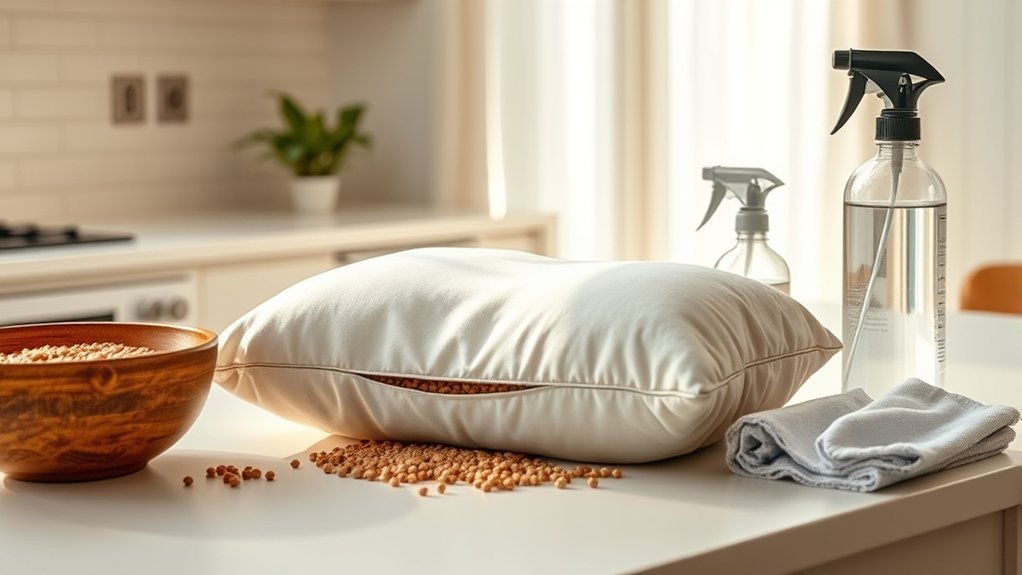
Buckwheat travel pillows need a different cleaning routine from foam, fiberfill, or down pillows. The key is to keep the buckwheat hull filling out of the washing machine. Empty the hulls into a clean, dry container, wash only the removable cover or shell according to its care label, let every part dry completely, and then refill the pillow.
Quick Answer
To clean a buckwheat travel pillow, unzip it and pour the hulls into a clean, dry container. Wash only the empty cover according to its care label; many cotton covers use cool or cold water and air drying. Keep the hulls dry, and refill the pillow only after the cover and hulls are completely dry.
Key Takeaways
- Never machine wash a buckwheat pillow while the hulls are still inside.
- Check the cover’s care label first. Cool or cold washing and air drying are common for washable cotton shells, but instructions vary.
- Slightly damp, water-only hulls may be recoverable if dried quickly with good airflow. Heavily soaked or contaminated hulls are safer to replace.
- Do not seal damp hulls in storage or put them back into a damp pillow cover.
- Buckwheat pillows are not universally hypoallergenic. People with a known buckwheat allergy should avoid exposure to buckwheat-hull filling.
At a Glance
| Time Required | About 15–20 minutes of hands-on work, plus washing and complete drying time |
| Difficulty | Easy |
| Tools Needed | Large clean bowl, box, or bag; mild laundry detergent if permitted by the care label; towel or tray for hulls; drying rack or ventilated drying area |
| Cost | Usually $0 if you already have detergent and a drying area; replacement hull cost varies by pillow size and seller |
Disclosure: As an Amazon Associate I earn from qualifying purchases. Some links on this page are affiliate links, at no extra cost to you.
Before Cleaning: Check the Care Label and Pillow Construction
Before opening the pillow, read the manufacturer’s care label. Buckwheat pillows can use cotton, linen, bamboo-blend, quilted, or multi-layer covers, and their washing instructions are not always the same.
If your travel pillow has a zippered inner shell, you can usually remove the hulls before cleaning. If the hull chamber is sewn shut or the manufacturer says the shell is not machine washable, do not cut it open just to clean it. Spot-clean the exterior according to the manufacturer’s instructions instead.
For example, Hullo’s buckwheat-pillow cleaning guidance recommends removing all hulls, washing its fabric shell in cool water, and air drying it. ComfyComfy’s care instructions likewise emphasize keeping the hulls dry and washing only the empty cover.
Warning: Never put a filled buckwheat pillow in a washing machine or dryer. Water can damage the hulls, and a heavy wet fill can also put unnecessary strain on the appliance.
Benefits of Buckwheat Travel Pillows

Buckwheat travel pillows are known for firm, moldable support. The loose hulls shift under pressure, so you can shape the pillow and adjust its loft by adding or removing fill. Spaces between the hulls also allow air to move through the filling.
A travel-size buckwheat pillow can be compact, but buckwheat fill is generally heavier than foam or polyester fiberfill. That tradeoff may be worthwhile if you prefer a pillow that holds a shaped position rather than collapsing quickly.
Allergy Note: Buckwheat pillows should not be described as universally hypoallergenic. Medical literature documents allergic sensitization and reactions from exposure to buckwheat-husk pillows. If you have a known buckwheat allergy, avoid buckwheat-filled bedding and discuss accidental exposure concerns with your healthcare professional.
Why You Shouldn’t Machine Wash Your Buckwheat Pillow
Machine washing a buckwheat pillow with the hulls still inside can damage both the filling and the pillow. The safest routine is to empty the fill first, clean only the washable fabric components, and return the hulls after everything is dry.
Risk of Moisture and Mold
Buckwheat hulls are meant to stay dry. Once water becomes trapped among thousands of hulls, it can take a long time for the center of the fill to dry. Prolonged dampness can lead to odor, deterioration, clumping, and unwanted microbial growth.
A small amount of clean water is different from a pillow that has been completely soaked. Slightly damp hulls may be recoverable if you remove them immediately, spread them into a thin layer, and dry them thoroughly with good airflow. Hulls saturated with a residue-producing liquid are harder to restore safely.
Damage to Pillow Structure
There are three practical reasons not to wash the whole pillow:
- Hull condition: Soaking can soften, flatten, or otherwise degrade the dry hull structure.
- Appliance load: A buckwheat pillow is already relatively heavy, and a saturated pillow is heavier still.
- Drying difficulty: Even when the outside feels dry, moisture can remain trapped deeper in the fill.
Removing the hulls before washing avoids all three problems.
Step-by-Step Guide to Removing Buckwheat Hulls
Work somewhere that is easy to clean, because dry buckwheat hulls are light enough to scatter if you tip the pillow too quickly. A large bowl, box, paper grocery bag, or clean storage bag makes the transfer easier.
Prepare for Hull Removal
- Start with a dry pillow. Place it on a large towel, table, or clean floor.
- Position the container directly under the zipper. A wide opening reduces spills.
- Open the zipper slowly. Hulls may be packed tightly against it.
- Pour in small batches. Support the pillow with both hands instead of dumping the entire fill at once.
- Turn the empty shell inside out. Gently shake or brush out hulls caught in seams and corners.
- Inspect the fill. Look for unusual moisture, clumping, persistent musty odor, heavy dust, or contamination before setting it aside.
Pro Tip: A second person can hold the cover open while you refill it later. For a small travel pillow, a wide-mouth funnel or a clean paper cone can also help guide the hulls back inside.
Proper Hull Disposal Methods
Do not mix badly contaminated or musty hulls back into clean fill. If only a small portion was affected by a spill, remove that section generously rather than trying to save every hull.
Clean, untreated plant hulls may be suitable for composting where local composting rules allow plant material. Hulls contaminated with chemicals, body fluids, mold, or other questionable material should be discarded with household waste rather than reused around the home.
How to Properly Wash Your Pillowcase
Once every hull has been removed, clean the empty shell or removable cover according to its care label.
- Check the fabric instructions. Do not assume every buckwheat pillow cover can use the same cycle.
- Pre-treat small stains gently. Use a small amount of mild detergent if the label permits it.
- Use cool or cold water when specified. This is common for washable cotton shells and helps reduce shrinkage.
- Select the recommended cycle. A gentle cycle is a safe default only when machine washing is permitted by the manufacturer.
- Wash the empty cover only. Check seams and corners again before it goes into the machine so stray hulls do not end up in the washer.
Note: For a small surface stain, spot-cleaning may be enough. A damp cloth and a small amount of manufacturer-approved detergent can save the cover from an unnecessary full wash.
How to Dry Your Pillowcase Without Shrinking
Air drying is a common recommendation for cotton buckwheat-pillow shells because high dryer heat can shrink the fabric. After washing, reshape the empty cover and hang it or lay it flat in a ventilated area.
Do not refill it just because the surface feels dry. Check the seams, zipper tape, corners, and any double-layer fabric. These areas can hold moisture longer than the main panel.
If the care label specifically permits machine drying, follow that label. Otherwise, air drying is the safer choice.
The most important reassembly rule is simple: the cover and every hull going back inside it should be completely dry.
Handling Wet Buckwheat Hulls
What you should do with wet hulls depends on how wet they became and what caused the spill.
If the Hulls Are Slightly Damp From Clean Water
- Remove the hulls from the pillow immediately.
- Spread them in a thin layer on a clean, dry towel, tray, or other smooth surface.
- Place them where air can circulate around them. Gentle indoor airflow is useful when outdoor drying is not practical.
- Moderate sunlight can help the drying process, but sunlight is not a substitute for getting the entire fill dry.
- Stir or turn the hulls occasionally so different surfaces are exposed to the air.
- Do not refill the pillow until there is no remaining dampness or musty odor.
If the Hulls Are Heavily Soaked or Contaminated
If the pillow was saturated or the spill involved coffee, soda, milk, body fluids, cleaning chemicals, or another substance that can leave residue, replacement is usually the better option. Hullo’s care guidance similarly recommends replacement when the fill has been seriously soiled rather than relying on home washing of the hulls.
Warning: Do not use a microwave or conventional oven to dry buckwheat hulls. Do not return hulls with persistent dampness or a musty odor to the pillow. When you cannot get heavily soaked fill completely dry and clean, replace it.
What to Do About Odor or Possible Mold
A normal buckwheat pillow can have a mild dry plant-like scent. A new persistent musty, sour, or damp odor after the pillow has been wet deserves more attention.
- Dry but stale-smelling hulls: Spread them out and give them good airflow for several hours.
- Slightly damp hulls: Dry them completely before judging the odor.
- Persistent musty odor: Replace the affected fill rather than trying to mask the smell.
- Visible mold or unexplained discoloration: Do not reuse the affected hulls.
Avoid adding perfume, essential oils, powdered deodorizer, or baking soda directly to the fill. Added material can create residue and make it harder to judge whether the original odor is actually gone.
Best Practices for Storing Buckwheat Hulls
Store loose hulls only after confirming that they are completely dry. Put them in a clean, dry bag, box, or other container and keep them away from moisture, spills, and humid storage areas.
Do not seal damp hulls in an airtight container. Manufacturer care guidance commonly favors dry storage and good ventilation. A closet or shelf in a climate-controlled room is generally a better choice than a damp basement, bathroom cabinet, vehicle trunk, or outdoor shed.
Avoid prolonged heat or strong direct sunlight during long-term storage. Sun or airflow can be useful during a short drying session, but the fill does not need to sit in direct sun continuously.
Pro Tip: When you remove hulls to adjust a travel pillow’s height, keep the extras clean and dry. You can add them back later if the pillow loses loft or if you decide you prefer a firmer feel.
Maintaining Your Buckwheat Travel Pillow for Longevity
You do not need to dismantle a buckwheat pillow on a fixed calendar if it remains clean and dry. A few simple habits can reduce how often the inner shell needs a full wash.
- Use a removable outer pillowcase. Wash that outer case regularly so sweat, skin oils, sunscreen, and travel grime do not reach the inner shell as quickly.
- Keep the pillow away from wet gear. Do not pack it against damp towels, swimsuits, rain jackets, or leaking toiletries.
- Air it when needed. If the pillow feels humid after a trip, place it in a dry, ventilated area before long-term storage.
- Check the zipper and seams. Repair or replace a failing shell before it starts leaking hulls.
- Watch the fill condition. Hulls gradually crush and create dust as they are used. Add or replace fill when the pillow no longer holds the loft and shape you prefer.
How Often Should You Clean It?
There is no universal “every few months” rule. Clean the removable outer pillowcase as often as you would other frequently used bedding, and clean the inner shell when it becomes visibly soiled, stained, or odorous.
A pillow used every night may need more cover washing than one used only for flights or road trips. Humid conditions, heavy sweating, cosmetics, and frequent travel can also increase cleaning needs.
When to Replace or Top Up Buckwheat Hulls
Buckwheat hull fill can last for years, but there is no dependable lifespan that applies to every pillow. Usage, humidity, fill quality, shell design, and personal comfort all affect replacement timing. Hullo’s updated replacement guidance notes that fill gradually compresses and that blanket claims of ten years or longer can be overly optimistic.
Consider adding or replacing hulls when:
- The pillow has lost noticeable loft.
- The hulls are heavily crushed or dusty.
- The fill no longer holds a molded shape well.
- The hulls have been badly contaminated by a spill.
- A musty odor remains after thorough drying and airing.
- You simply need more fill to reach a comfortable height.
Frequently Asked Questions
Can I use bleach on my buckwheat pillowcase?
Check the care label first. Avoid chlorine bleach unless the pillow manufacturer specifically allows it, because bleach can weaken or discolor some fabrics. For routine washing, a mild laundry detergent is the safer default when the care label permits machine washing.
How often should I clean my buckwheat travel pillow?
Wash the removable outer pillowcase according to normal bedding needs. The inner shell usually needs cleaning only when it becomes stained, visibly dirty, or odorous. A pillow used frequently in hot or humid conditions may need attention sooner than one used only occasionally.
Are buckwheat hulls hypoallergenic?
Do not assume they are. Buckwheat is a recognized allergen, and medical reports describe reactions linked to buckwheat-husk pillows. People with a known buckwheat allergy should avoid buckwheat-filled bedding. Buckwheat pillows also should not be marketed as universally resistant to dust-mite allergens.
What should I do if the hulls smell bad?
Spread dry hulls into a thin layer and give them several hours of good airflow. If the odor started after the fill became wet, make sure every hull is completely dry. Replace hulls that remain musty, appear moldy, or were contaminated by a difficult spill rather than covering the smell with fragrance or powder.
Can I replace hulls if they become damaged?
Yes. You can refill a zippered buckwheat pillow with clean, dry pillow-grade buckwheat hulls instead of replacing the entire pillow. Add a little at a time and test the loft before filling it completely.
Can I wash buckwheat hulls with water?
Home washing is not recommended. Pillow manufacturers generally tell users to keep the hulls dry because soaking makes them difficult to dry thoroughly and can damage the fill. Wash only the removable fabric components unless your specific manufacturer provides different instructions.
What if my buckwheat pillow does not have a zipper?
Do not cut open a sealed pillow just to follow a generic cleaning method. Use the manufacturer’s care instructions. If the fill cannot be removed, spot-clean the exterior when permitted and keep the entire pillow as dry as possible.
Conclusion
Cleaning a buckwheat travel pillow is straightforward once you separate the washable fabric from the dry hull filling. Empty the hulls before washing, follow the cover’s care label, air dry the fabric fully, and keep the fill away from unnecessary moisture.
If hulls become only slightly damp with clean water, quick drying and good airflow may save them. If they are heavily soaked, contaminated, visibly moldy, or persistently musty, replacement is the safer choice. Instead of relying on a fixed lifespan, judge the fill by its condition, cleanliness, loft, and ability to hold the shape you want.
With a removable outer pillowcase, dry storage, occasional inspection, and careful spill handling, a buckwheat travel pillow can remain useful for years without complicated maintenance.
Sources
- Hullo — How to Clean Buckwheat Pillows — supports removing hulls before washing, cool-water shell washing, air drying, and handling wet or contaminated fill.
- ComfyComfy — Buckwheat Pillow Care Instructions — supports keeping hulls dry, washing the empty cover, and using dry, ventilated storage.
- Hullo — When Should I Replace My Buckwheat Pillow’s Filling? — supports condition-based hull replacement and gradual loss of loft.
- National Library of Medicine — Review of Epidemiological and Clinical Studies on Buckwheat Allergy — supports the warning that buckwheat-husk pillows can be a household allergen exposure route.
- National Library of Medicine — Endotoxin and House Dust Mite Allergen Levels on Synthetic and Buckwheat Pillows — supports correcting claims that buckwheat pillows are universally resistant to dust-mite allergens.

