

Last Updated on July 25, 2026 by Caleb Warren
To use a travel pillow effectively on a train, bus, or airplane, position it snugly against your shoulder or turn a traditional U-shaped pillow backward beneath your chin to prevent forward head drops. Lean your head into the cushion to support your cervical spine, and tighten all adjustable straps for a secure fit. Combining proper neck alignment with an eye mask and earplugs creates a serene environment that prevents waking up with severe neck stiffness during long journeys.
Quick Answer
To use a travel pillow properly, place it on your shoulder for side-leaning support or rotate it backward beneath your chin to support upright sleeping. Tighten the toggles or straps to secure the pillow against your neck, reducing lateral tilting and preventing forward head slumping during transit.
Key Takeaways
- Avoid placing thick pillows behind your neck: Pushing your head forward strains cervical spine muscles during upright transit.
- Use the chin-support technique: Turning U-shaped pillows backward stops your head from falling forward when sleeping fully upright.
- Adjust tension straps tightly: Loose pillows shift during vehicle movement, causing sudden muscle jerks and neck strain.
- Customize inflation levels: Inflatable travel pillows should be filled to 70–80% capacity to remain soft and adaptable to seat angles.
At a Glance
| Setup Time | 1–2 minutes |
| Skill Level | Beginner |
| Recommended Tools | Ergonomic travel pillow, Eye mask, Earplugs |
| Key Ergonomic Goal | Maintain neutral spinal alignment without forward head drop |
Disclosure: As an Amazon Associate I earn from qualifying purchases. Some links on this page are affiliate links, at no extra cost to you.
How to Choose the Best Travel Pillow for Your Needs
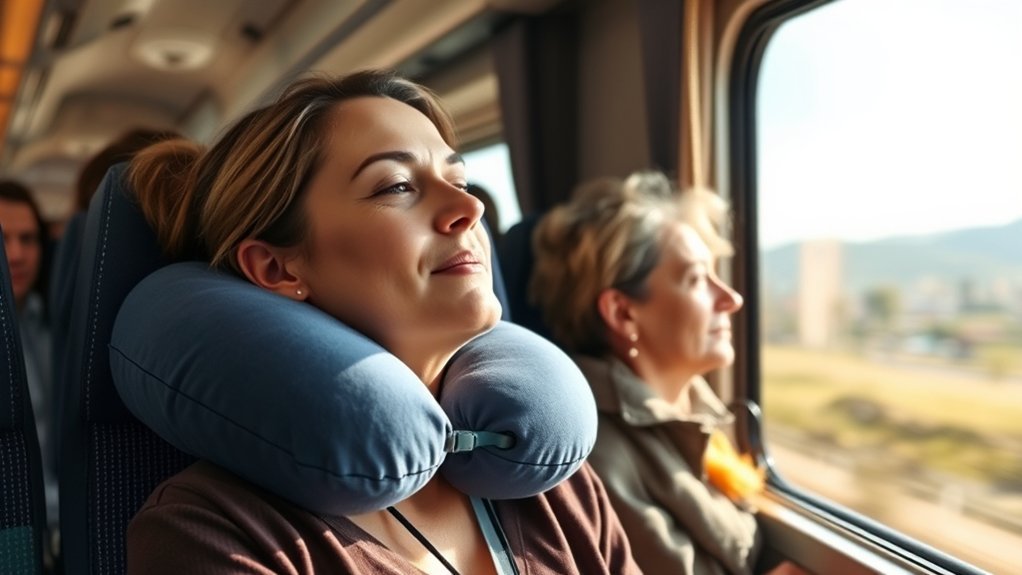
When you’re planning a trip, guaranteeing a good night’s sleep on the go comes down to selecting the right pillow for your body type and seating conditions. Choosing the right travel pillow depends on trip length, seat tilt, and personal sleeping habits. According to ergonomic recommendations from the Sleep Foundation, maintaining neutral cervical spine alignment is crucial to preventing acute muscle stiffness during long-distance transit.
Evaluate your preferred sleeping position before buying:
- Side Sleepers: Benefit from high-density memory foam or wrap-around asymmetrical pillows that fill the gap between the ear and shoulder.
- Upright Back Sleepers: Require firm chin support or flat-backed contour pillows that prevent the head from slumping forward.
- Space-Conscious Travelers: Lightweight inflatable travel pillows pack down small and allow firm adjustments by altering air pressure.
Pro Tip: Look for travel pillows with removable, machine-washable velour or bamboo covers. Public transit seat headrests carry high levels of surface bacteria, making hygiene maintenance essential after every trip.
Proper Placement Techniques for Maximum Comfort
Getting the most out of your travel pillow requires moving away from traditional resting habits. Placing a thick pillow directly behind your neck often pushes your head forward, causing severe strain on the suboccipital muscles. Strategic positioning keeps your spine relaxed and stable throughout transit movement.
Ideal Pillow Positioning Tips
For optimal cervical support, place your pillow directly on your shoulder rather than resting it against the back of the seat. Lean your head laterally toward the cushion so it cradles your neck without excessive tilting. If you are seated in an upright position without seat-recline capabilities, turn your U-shaped pillow 180 degrees so the thickest portion sits directly under your chin. This forward-facing orientation catches your chin as your muscles relax, preventing sudden head drops that wake you up.
Adjusting Straps for Support
Modern travel pillows include adjustable toggles, snap buttons, or Velcro straps. Securing these adjustments creates a snug collar that holds the cushion in place during vehicle turns or turbulence.
| Feature | Ideal Adjustment | Ergonomic Guidance |
|---|---|---|
| Strap Tightness | Snug but non-constricting | Tighten toggles until the pillow stays locked without shifting during lateral motion. |
| Pillow Position | Shoulder or Under-Chin | Avoid direct rear-head placement; align cushion to absorb lateral or forward head drift. |
| Regular Adjustments | Check hourly | Readjust tension after changing seat recline angles or body positions. |
Experimenting With Sleeping Angles
Small shifts in seating angle dramatically reduce pressure on your lower back and cervical spine. When sleeping on a train or bus, recline your seat slightly if permitted, align the pillow to fill the gap created by your shoulder, and rest your torso evenly against the seatback. According to posture studies by the American Chiropractic Association, keeping your head supported within 15 degrees of neutral vertical alignment prevents chronic muscle fatigue.
“For every inch your head moves forward out of neutral alignment, the effective weight of your head on your cervical spine increases by roughly 10 pounds.”
Must-Have Travel Accessories for Extra Comfort
Pairing your travel pillow with supportive accessories helps block external stimuli, turning noisy transportation cabins into restful environments.
Essential Travel Accessories List
- Contouring 3D Eye Mask: Features recessed eye cavities that block light completely without applying pressure to your eyelids or eyelashes.
- Active Noise-Cancelling Headphones or Silicone Earplugs: Reduce low-frequency engine hums and ambient cabin chatter, lowering stress hormones during sleep cycles.
- Compact Travel Blanket: Regulates body temperature when vehicle air conditioning systems run cold.
- Graduated Compression Socks: Encourage venous blood flow in lower limbs, reducing swelling and risk of deep vein thrombosis (DVT) on long trips as recommended by the CDC.
Enhancing Comfort on Journeys
| Travel Accessory | Ergonomic & Physiological Benefits |
|---|---|
| Contouring Eye Mask | Promotes natural melatonin production by blocking artificial cabin lighting. |
| Noise-Cancelling Headphones | Dampens acoustic spikes that disrupt deep REM sleep stages. |
| Travel Blanket | Maintains core body temperature as metabolic rate drops during sleep. |
| Graduated Compression Socks | Improves lower leg circulation during prolonged periods of sitting. |
Top 5 Mistakes to Avoid When Using Travel Pillows
Avoiding these common travel pillow mistakes will significantly increase your comfort and prevent post-trip neck pain:
- Placing the Pillow Directly Behind Your Head: Standard seat headrests already push your head forward. Adding a thick pillow behind your neck forces your head into excessive flexion, causing acute neck strain.
- Ignoring Tension Adjustment Straps: Leaving toggles loose allows the pillow to slide around, forcing your neck muscles to stay tense to keep your head balanced.
- Choosing the Wrong Pillow Type for Your Posture: Using a soft horseshoe pillow when you need firm lateral support causes your neck to bend too far to the side. Select memory foam or structured wrap-around models for firm support.
- Over-Inflating Inflatable Pillows: Filling air pillows to 100% capacity makes them rock-hard, creating pressure points against your jaw and neck. Inflate them to roughly 70–80% for ideal cushion give.
- Failing to Support Your Lower Back: Sleeping comfortably with a travel pillow requires proper spinal support. If your lower back slumps, your upper spine and neck collapse forward regardless of pillow position. Place a rolled jacket behind your lower back for total alignment.
Warning: If you suffer from pre-existing cervical disc herniations or chronic nerve impingement, avoid sudden sharp neck tilts. Consult physical therapy guidelines from clinics like the Mayo Clinic before using rigid chin-locking travel braces.
Tips for a Better Night’s Sleep While Traveling
Establishing proper sleep hygiene habits on long-distance trips enhances the effectiveness of your travel pillow:
- Time Your Sleep Cycles: Aim to sleep in 90-minute blocks to match natural human sleep stages and avoid waking up groggy.
- Limit Caffeine and Alcohol: Avoid heavy caffeinated or alcoholic drinks before boarding; both disrupt REM sleep quality and cause muscle dehydration.
- Optimize Seat Ergonomics: Adjust lumbar support cushions and place your feet flat on the floor or on a footrest to relieve hamstring and lower-back pressure.
Frequently Asked Questions
Can I Use a Travel Pillow Without a Neck Support Feature?
Yes, you can use regular cushions or rolled clothing as travel pillow alternatives. However, standard cushions lack dedicated cervical contouring, meaning your neck muscles must work harder to maintain balance while sleeping upright.
Are Inflatable Travel Pillows More Comfortable Than Traditional Ones?
Inflatable pillows offer superior packability and adjustable firmness by varying air pressure. However, high-density memory foam pillows generally provide better pressure relief and soft contouring for long-haul travel.
How Do I Clean My Travel Pillow After Use?
Unzip and remove the fabric cover, then machine-wash it in cold water with mild detergent. For memory foam cores, spot-clean with a damp cloth and mild soap; never submerge memory foam in water or place it in a dryer.
Can Travel Pillows Be Used on Airplanes as Well?
Yes. Travel pillows work exceptionally well in airplane seats. Turn U-shaped pillows backward or rest them on your shoulder to keep your neck stable against airplane cabin vibrations and turbulence.
What Size Travel Pillow Is Best for Kids?
For children aged 4–10, choose specialized kids’ travel pillows measuring between 12 to 15 inches. Standard adult travel pillows are too bulky for smaller neck circumferences and can push a child’s head forward awkwardly.
Conclusion
As you settle into your seat, the rhythmic hum of the train, bus, or airplane becomes a gentle lullaby, and a properly adjusted travel pillow cradles your head in complete alignment. By positioning your cushion laterally against your shoulder or backward under your chin, tightening tension toggles, and avoiding common head-forward posture mistakes, you transform long transit hours into genuine rest. Embrace these ergonomic placement techniques on your next trip to arrive refreshed, pain-free, and ready for adventure.
Sources
- Sleep Foundation — Ergonomic posture and sleep alignment guidelines during travel.
- American Chiropractic Association — Cervical spine mechanics and posture preservation recommendations.
- Centers for Disease Control and Prevention (CDC) — Travel health, DVT prevention, and compression garment usage.
- Mayo Clinic — Prevention and management of acute neck strain and spinal pressure points.

