
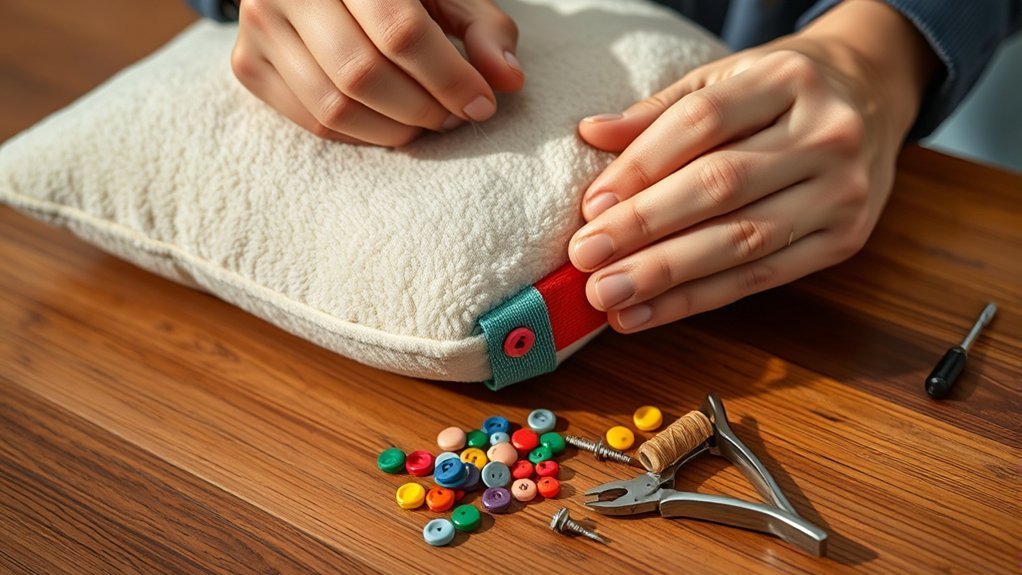
Last Updated on September 10, 2026 by Daniel Globe
A frayed or snapped travel pillow strap doesn’t mean your pillow is done for. With the right webbing, buckle, and a bit of stitching, you can repair it at home in under an hour and get back to comfortable travel.
Quick Answer
To repair a travel pillow strap, remove the damaged webbing using a seam ripper, cut a replacement piece from 25 mm (1 inch) heavy-duty nylon or polyester webbing, and melt the cut ends with a lighter. Thread a matching side-release buckle, reinforce the anchor fabric, and stitch a box-X pattern using bonded nylon or polyester thread.
Key Takeaways
- Most strap failures occur at stress points like buckle slots or anchor seams rather than along the mid-strap length.
- Use 25 mm (1 in) high-density nylon or heavy polyester webbing, cauterizing cut ends with a heat source to prevent fraying.
- Bonded nylon or Tex 70 polyester thread provides superior UV resistance and tensile strength compared to standard cotton thread.
- A Box-X stitch or dense bar tack spreads mechanical tension across the fabric core, preventing future seam pull-outs.
- Always unzip and remove internal memory foam or inflatable bladders prior to sewing or heating to avoid permanent core damage.
At a Glance
| Time Required | 30–60 minutes |
| Difficulty | Beginner to Intermediate (basic hand-sewing or sewing machine) |
| Tools Needed | Fabric scissors, seam ripper, heavy-duty needle (Size 14–16), bonded nylon/polyester thread, ruler, lighter/flame, sewing machine (optional) |
| Cost | Roughly $5–$15 for replacement webbing, buckle, and heavy thread |
Disclosure: As an Amazon Associate I earn from qualifying purchases. Some links on this page are affiliate links, at no extra cost to you.
Recognizing Common Strap Failures in Travel Pillows
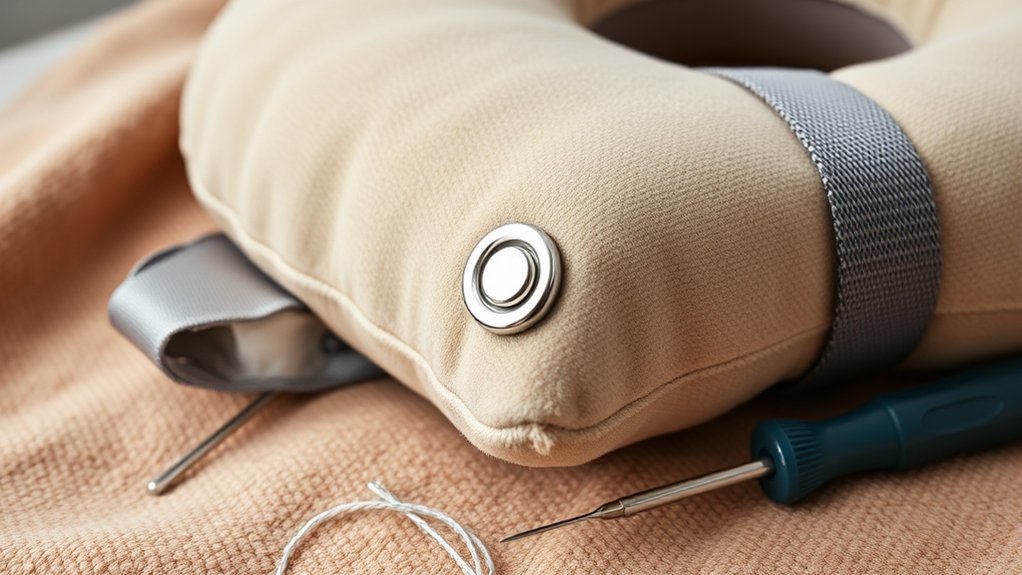
When using a travel pillow, you’ll usually notice strap failures at the buckle interface first. These failures often stem from continuous friction against sharp plastic edges that compromise strap integrity. Anchor point failures are also common, usually caused by thin shell fabric that leads to seam blowouts or tears when mechanical stress concentrates in a single spot. Low-denier polyester webbing is especially prone to quick degradation from UV exposure, friction, and bodily oils, which reduces fabric durability over time.
Budget and mid-tier travel pillows are particularly prone to early strap failure, and design flaws like single-layer fabric anchoring and stitching without bar tacks make things worse. Bar tacks and box stitches spread loads across a wider surface area of fabric, so their absence concentrates stress at a single point and speeds up failure — a good reason to prioritize quality construction and proper repair techniques.
Note: When buying a replacement buckle, match its internal slot width precisely to your webbing width (typically 25 mm or 1 inch). According to National Webbing Products, a mismatch forces the strap to bunch or slip under tension, creating new stress points that lead to repeat failures.
Step-by-Step Guide to Repairing a Broken Strap
Warning: Always unzip the outer pillow cover and completely remove any memory foam core or inflatable bladder before sewing or using a flame near the fabric. Piercing or scorching the inner core will cause permanent damage or air leaks.
Step 1: Remove the Damaged Webbing and Prep the Area
Unzip the outer shell and set the pillow core aside. Locate the anchor seam where the broken strap enters the shell. Carefully slide a seam ripper under the original stitches, cutting them one by one without tearing the surrounding fabric shell. Pull out all loose threads and clear the anchor zone.
Step 2: Measure, Cut, and Heat-Seal Replacement Webbing
Select a replacement high-density nylon or heavy polyester webbing at least 25 mm (1 inch) wide and rated 600D or higher. Measure the required length, adding an extra 50 mm (2 inches) to account for end folds and buckle clearance. Cut the webbing cleanly with sharp fabric scissors. Immediately hold the freshly cut edge near the side of a flame (using a lighter) for 2–3 seconds to melt and cauterize the synthetic fibers, permanently sealing the end against fraying.
Step 3: Thread and Position the Side-Release Buckle
Slide the new metal or acetal side-release buckle onto the webbing. Fold the raw webbing end back over itself by at least 25 mm (1 inch) to form a double-layered sewing flap. If the anchor point fabric on the pillow shell feels thin or worn, sandwich a small fabric patch (such as canvas or cordura) inside the fold to reinforce the anchor zone.
Step 4: Sew a Reinforced Box-X Stitch
Secure the folded webbing using a heavy-duty needle (Size 14 or 16) threaded with 100% bonded nylon or Tex 70 polyester thread. Stitch a square perimeter around the folded flap, then sew two diagonal lines crossing through the center to form an “X” inside the box (Box-X pattern). Reverse-stitch over the corners to lock the thread in place. If sewing by hand, use a tight backstitch along the same Box-X geometry.
Step 5: Reattach to Pillow Shell and Test
Insert the reinforced webbing end back into the original pillow seam line. Sew across the seam twice using a tight zigzag stitch or dense straight stitch to lock the strap into the shell structure. Reinsert the memory foam core or inflatable bladder, zip the cover shut, and pull firmly on the buckle to test stitch integrity before your next trip.
Pro Tip: Use 100% bonded nylon or heavy polyester thread (Tex 70 grade) rather than cotton. Synthetic thread resists rot, UV exposure, and constant tension far better under flight and luggage conditions, ensuring your repair won’t be the weak point.
Tools You Need for Effective Strap Repairs
Having the right repair tools ensures your fix lasts as long as the pillow itself:
- Fabric Scissors: High-leverage shears yield clean cuts on high-denier synthetic webbing without fraying threads.
- Seam Ripper: Essential for removing failed factory stitches cleanly without damaging thin outer pillow covers.
- Heavy-Duty Needles: Use Size 14–16 sewing machine needles or heavy hand needles capable of piercing multiple layers of folded nylon.
- Bonded Thread: Tex 70 bonded nylon or heavy polyester thread provides optimal tensile strength.
- Lighter or Heat Source: Used to cauterize cut webbing ends in seconds.
While fabric glues can temporarily hold edges, a sewing machine or structured hand-stitching provides the structural load capacity required for travel gear.
Quick Emergency Field Fixes While Traveling
If a strap snaps while you are at an airport or in transit, standard sewing tools may not be available. You can keep your travel pillow functional using these temporary workarounds until you get home:
- Tactical Grimloc or Carabiner: Clip a small locking carabiner through the broken strap loop and connect it directly to your carry-on luggage.
- Heavy-Duty Safety Pin: Fold the broken webbing end over and insert two heavy-duty safety pins in opposite directions to distribute pull forces.
- Zip Tie Loop: Thread a small plastic cable tie through the buckle attachment slot and strap loop, pulling it tight to lock the strap in position.
Maintenance Tips to Prevent Future Strap Failures
Loosen the straps fully before packing to prevent creep deformation — a structural relaxation of synthetic polymer fibers caused by prolonged mechanical tension. Wipe down straps periodically with a damp cloth to remove skin oils, sweat, and salts that break down synthetic fibers over time. Avoid clipping pillow straps to sharp metal luggage frames, which creates micro-fraying from constant abrasion during transport.
Rotate strap tension positions periodically to distribute wear evenly across the webbing, and visually inspect stitching before long trips to catch pulled threads or fabric puckering early.
When to Call Customer Support About Your Warranty?
If your travel pillow strap fails and the product is still within its manufacturer warranty window, contact customer support before attempting permanent alterations. Ensure you have registered your product and have your original receipt ready. Most gear warranties cover manufacturing flaws such as seam blowouts, whereas normal wear-and-tear might require a DIY fix. Customer service can clarify whether they offer free replacement covers or full product exchanges.
Frequently Asked Questions
Can I wash my travel pillow after strap repairs?
Yes. Unzip and remove internal foam cores or air bladders, follow the pillow’s care label, and verify that repaired stitching remains tight after the wash cycle.
What types of straps are commonly used in travel pillows?
Most travel pillows use adjustable 25 mm (1 inch) nylon or polyester webbing straps paired with side-release plastic or metal buckles and elastic anchor bands.
How can I prevent my strap from breaking again?
Unbuckle and loosen straps before compressing the pillow into a travel sack. Avoid clipping straps directly to rough metal luggage frames.
Are there alternative materials for strap replacements?
High-density nylon or polyester webbing is best. For temporary field fixes, 550 paracord or heavy-duty elastic bands can serve until a permanent repair is made.
What is the average lifespan of a travel pillow strap?
Typically 1 to 3 years, depending on webbing quality, tension load, and how frequently the pillow is packed and washed.
Conclusion
Repairing a travel pillow strap is a fast, cost-effective project once you have the right webbing, buckle, and stitching technique. With the anchor point reinforced and the webbing ends cauterized against fraying, your travel pillow will easily withstand future trips. Remember to practice simple preventive care — loosening straps before packing and inspecting seams regularly — and check your warranty status if a failure occurs early in the product’s lifespan.
Sources
- Backpacking Light — Buckle Slipping Repair Guide — webbing width selection, flame sealing, and bar-tack sewing mechanics
- National Webbing Products — Nylon Webbing Buckles Under Stress — load distribution metrics and buckle-to-webbing slot sizing
- Osgoodway — Expert Repair Protocols for Webbing and Buckles — bonded nylon/polyester thread selection over cotton
- Anuent — Complete Backpack Strap Repair Guide — heat-sealing frayed synthetic ends and Box-X stitch execution
