
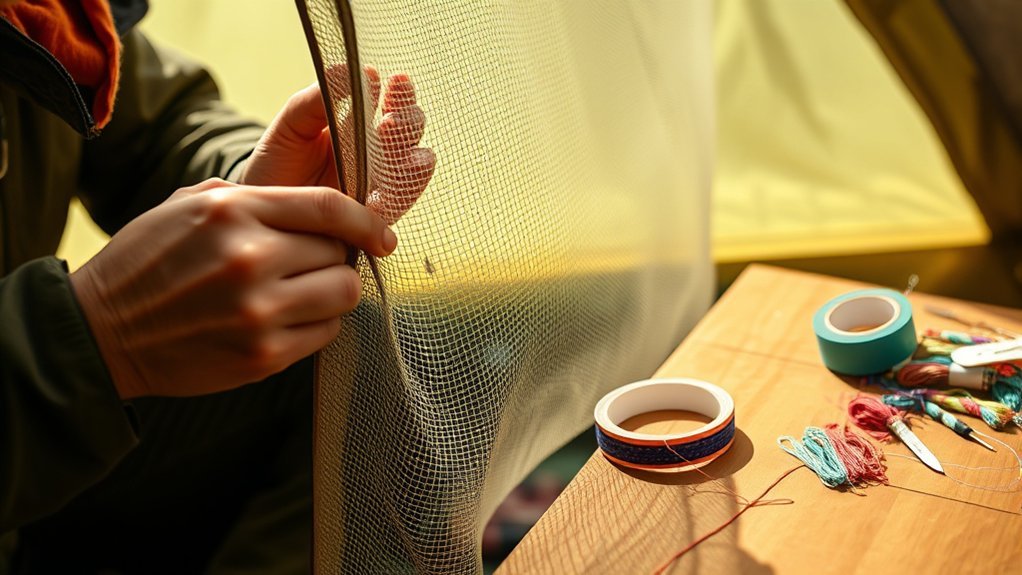
To repair tent mesh, start by identifying any holes and bunched fibers. For small holes under 3 inches, use tenacious tape mesh patches, ensuring the area is clean and dry first. Larger holes need fabric patches at least half an inch larger, applied on both sides for extra durability. Use strong, UV-resistant thread for sewing, opting for straight or zigzag stitches. Regular inspections and maintenance are key to preventing further damage. There’s more to know to keep your tent in top shape.
Understanding Tent Mesh Damage

When you’re out camping, the last thing you want is to deal with damaged tent mesh. Understanding the different mesh types and how they can suffer damage is vital for damage prevention. Regular inspections are key; look for frayed threads or visible holes. Catching these issues early can save you from larger headaches later.
Holes in tent mesh are typically classified by size. If you encounter holes under 3 inches, specialized adhesive repair patches can work wonders. For larger holes, treat them like fabric tears and use tenacious tape to guarantee a solid fix.
Proper maintenance and prompt repairs can greatly extend your tent’s lifespan, allowing you more freedom to explore the great outdoors without worrying about mesh damage. By being proactive, you’ll enjoy a more liberating camping experience, knowing your gear is in top shape.
Distinguishing Between Holes and Bunched Fibers
To effectively address any issues with tent mesh, it’s essential to distinguish between actual holes and merely bunched fibers. Start with hole identification: look for distinctly frayed threads or gaps in the mesh. If you find a clear opening, that’s a hole needing repair. On the other hand, if the fibers appear bunched but not torn, you might not need a patch at all. A simple fiber assessment can often resolve the issue—vigorously rubbing the bunched area can realign the mesh. Regular inspections are vital; catching these issues early prevents larger repairs later. Remember, understanding the difference between a hole and bunched fibers not only saves you time but also conserves your resources. Embrace this knowledge, and your tent will maintain its resilience, allowing you to focus on your adventures rather than worrying about repairs.
Preparing for Repairs
Before diving into repairs, you need to take a moment to thoroughly assess the damage on your tent mesh. Check for actual holes versus just bunched fibers; this distinction is vital. Once you’ve identified the damage, clean the area around it with rubbing alcohol. This step guarantees proper adhesion of your patch materials and tape, setting the stage for a solid repair.
Next, gather your repair tools, including tenacious tape, mesh repair patches, and scissors. Cut your patches to be at least half an inch larger than the hole, rounding the corners to prevent peeling. If the damage is significant, consider applying patches on both sides of the mesh for added reinforcement. Taking these preparatory steps will not only streamline the repair process but also empower you to restore your tent mesh effectively, making sure your outdoor adventures continue uninterrupted.
Repairing Small Holes With Mesh Patches
With your tent mesh assessed and the area cleaned, you’re ready to tackle small holes effectively. For holes under 3 inches, grab some tenacious tape mesh repair patches. These come pre-cut in circles with adhesive borders for hassle-free application. Before you start, verify the area is completely dry—this boosts the adhesive properties, guaranteeing your repair lasts.
If you notice bunched fibers instead of a distinct hole, rub them vigorously to realign and reduce their appearance. When applying the mesh patch, round the corners to prevent peeling, ensuring a secure fit. Press firmly to maximize contact and enhance adhesion.
With skillful mesh patch application, you’ll breathe new life into your tent, allowing you to embrace the great outdoors without worrying about pesky holes. Remember, your adventures deserve a reliable shelter!
Products Worth Considering
Easy and Fast: Cut a suitable size or shape of the screen repair tape, then cover the tear or hole you want to repair. No tools needed and only seconds you're done! Fast and easy way to repair screens temporarily or permanent
Adequate Quantity: package includes 20 pieces of tent mesh repair kits, which measure approximately 8 cm/ 3.15 inches in diameter, enough quantity and suitable size to meet your daily repairing needs
Instant Repairs – Fix rips, holes, and tears fast with peel-and-stick patches; no sewing, ironing, or heat needed.
Addressing Larger Holes With Fabric Patches
When you’re dealing with larger holes in tent mesh, selecting the right fabric patch is essential for a long-lasting repair. Start by cleaning the area around the hole with rubbing alcohol to guarantee a strong bond, then apply the patch securely, rounding the corners to prevent peeling. For added durability, consider using pre-cut mesh patches with adhesive borders, which simplify the process and enhance the overall finish.
Products Worth Considering
Product Packaging: This product has 30 screen repair pieces, which is sufficient to meet your daily maintenance needs
Reliable material: Our down jacket repair patch are different from others in that backpacking patch kit are made of nylon material and specially selected with the best adhesive in the market, so clothing patches patches are very durable and safe to use
QUICK DIY REPAIR KIT - it takes seconds to apply the waterproof patch to the ripped fabric on your down jacket, puffer coat, shoe, tent, ski clothing or bag.
Selecting Suitable Fabric Patch
Repairing larger holes in tent mesh requires careful selection of fabric patches to guarantee a lasting fix. Choose a patch that’s at least half an inch larger than the hole. Tenacious tape or similar self-adhesive fabric types work best for durability. Cut the patch with rounded corners to prevent peeling and enhance longevity. For ideal reinforcement, apply patches on both the inside and outside of the mesh.
| Patch Type | Recommended Size | Adhesive Strength |
|---|---|---|
| Tenacious Tape | 2″ x 2″ | High |
| Nylon Fabric | 3″ x 3″ | Medium |
| Polyester Mesh | 4″ x 4″ | High |
Regularly inspect your mesh for wear to catch issues before they expand.
Preparing Fabric Surface
To guarantee a successful patch application, start by thoroughly cleaning the area around the larger hole. Use rubbing alcohol as a cleaning technique to remove dirt and oils, ensuring proper adhesion for your patching materials. Once cleaned, cut your fabric patch to be at least half an inch larger than the hole, allowing for ample coverage and a strong seal. Remember to round the corners of the patch; sharp corners tend to lift over time. For enhanced reinforcement, consider applying the patch to both sides of the fabric. Finally, press firmly and let the adhesive cure according to the manufacturer’s instructions. This careful preparation sets the stage for a durable, reliable repair that’ll keep you adventuring worry-free.
Applying Patch Securely
After preparing the fabric surface, it’s time to securely apply your patch, especially for those larger holes in the tent mesh. Start by choosing an appropriate adhesive type, ensuring it’s compatible with your patch material. Here’s what you need to do:
- Use tenacious tape patches at least half an inch larger than the hole for adequate coverage.
- Clean the area with rubbing alcohol to enhance adhesion and remove any dirt or oils.
- Round the corners of your fabric patches to minimize peeling over time.
For ideal patch placement, apply patches on both sides of the mesh for added durability. Press firmly on the patch and let it cure according to the manufacturer’s instructions before using your tent again.
The Importance of Cleaning Before Repairs
Before diving into repairs, it’s essential to clean the area around any damage to your tent mesh. Use effective cleaning methods like rubbing alcohol to remove dirt and oils. This step guarantees better adhesive properties for patches and repairs, making them more durable. A clean surface helps the adhesive on tenacious tape bond effectively, preventing future issues. Plus, cleaning allows you to distinguish between actual holes and bunched fibers, giving you a clearer understanding of the damage.
Removing debris and contaminants not only prepares the area for repair but also safeguards against further damage during the process. By properly preparing your tent mesh, you set a strong foundation for maintaining its integrity and longevity. Remember, a meticulous cleaning routine makes all the difference in the success of your repair, empowering you to enjoy your outdoor adventures without worry.
Techniques for Applying Patches
Applying patches effectively can make all the difference in restoring your tent mesh’s integrity. Start by confirming the area around the hole is clean and dry. Use rubbing alcohol to get rid of any dirt or oils. Choose the right patch type based on the size of the hole:
- For holes under 3 inches, use tenacious tape mesh repair patches, which have adhesive borders for easy application.
- For larger holes, apply tenacious tape on both sides of the mesh for extra support.
- Cut your patch at least half an inch larger than the hole, rounding the corners to prevent peeling.
Once you’ve positioned the patch, press firmly and allow it to cure for a few hours, or as specified in the instructions. This confirms a strong bond and maximizes the effectiveness of your adhesive options. With the right techniques, your tent mesh will be ready for your next adventure.
Products Worth Considering
Repair rips and tears on tent or bug screens, mosquito netting and no-see-ums instantly; no heat required
Repair rips and tears on tent or bug screens, mosquito netting and no-see-ums instantly; no heat required
WHAT YOU WILL RECEIVE: Package includes 20 pieces of screen door repair kit, which measure approximately 10 cm/ 4 inches in diameter, enough quantity and suitable size to meet your daily repairing needs
Enhancing Durability With Sewing
When it comes to sewing repairs on your tent mesh, choosing the right thread is essential for durability. Opt for strong, UV-resistant thread to guarantee your stitches hold up against outdoor elements. Basic sewing techniques, like using a zigzag stitch for larger holes, can greatly enhance the longevity of your repairs.
Products Worth Considering
12WT Bonded Polyester Outdoor Thread. Improved resistance to strength loss from UV exposure over standard polyester filament thread. No lint. No joint. Outdoor Living Thread
Upholstery Repair Sewing Kit: 8 x upholstery thread cord, 7 x hand sewing needle, 9 x big eye blunt needles, 1 x sewing awl, 1 x hook awl, 1 x inch tape measure, 1 x sewing thimble, 1 x needle bottle, 1 x yarn scissors, 2 x seam rippers. Rich combinations can meet your different needs
★ Heavy duty black sewing thread and nylon sewing kit for carpets,canvas, shoes, coats, tents, mattresses, furs and leather.
Choosing the Right Thread
Choosing the right thread for repairing tent mesh is essential for ensuring your repairs hold up against the rigors of outdoor use. Opt for heavy-duty thread types like polyester or nylon, which provide superior strength and wear resistance. Aim for a thickness of 30-40 weight to handle tension effectively. Here are some key considerations:
- Color-matching: Use thread colors that blend with your mesh to maintain aesthetics and help identify weak points during inspections.
- Waxed thread: This option is less prone to fraying and adds water resistance, perfect for outdoor conditions.
- Variety on hand: Always keep extra thread in various colors and types for quick repairs during your camping trips.
With the right thread, your repairs will be stronger and more effective.
Basic Sewing Techniques
Mastering basic sewing techniques is key to enhancing the durability of your tent mesh repairs. Start with essential sewing tools like a needle and strong nylon thread, as they’re crucial for lasting fixes. Before you sew, clean the area around the hole to help the thread adhere properly and prevent further fraying. Utilize basic stitching methods such as straight or zigzag stitches, especially in high-stress areas, to provide added strength. For extra protection, consider reinforcing the sewn area with a patch of fabric or mesh on the inside, securing it with adhesive or additional stitches. Finally, always tie off the thread securely with a non-slip knot to maintain the integrity of your repair over time.
Regular Maintenance and Inspection Tips
To keep your tent mesh in top condition, regular maintenance and inspection are essential. By staying proactive, you can prevent minor issues from escalating into costly repairs. Here are some tips to guide your tent maintenance routine:
- Inspect your mesh regularly for signs of wear, frayed threads, or bunched fibers. Catching potential holes early can save you headaches later.
- Clean the mesh with mild soap and water after each trip. This not only removes dirt but also helps you spot any damage more easily during your inspections.
- Store your tent properly in a cool, dry place to prevent moisture buildup that can lead to mold and deterioration.
Additionally, using a footprint under your tent can greatly reduce wear and tear, ensuring your mesh stays intact for adventures to come. By following these guidelines, you’ll enhance your tent’s longevity and enjoy the freedom of the great outdoors with peace of mind.
Frequently Asked Questions
Can I Use Regular Tape for Tent Mesh Repairs?
You can’t use regular tape for tent mesh repairs; it won’t hold up. Instead, explore specialized adhesive types designed for tent repair options, ensuring a durable fix that keeps your outdoor adventures worry-free and enjoyable.
How Long Do Patch Repairs Typically Last?
Patch repairs can last anywhere from a few months to several years, depending on repair longevity and patch materials used. Choose high-quality patches and proper techniques to maximize durability and guarantee your tent stays functional.
What Types of Fabric Are Best for Patches?
When patching, choose nylon fabric for its lightweight strength or polyester fabric for durability. Both materials blend seamlessly, creating a sturdy defense against the elements, ensuring your adventures remain uninterrupted and your spirit stays liberated.
Is It Safe to Wash a Patched Tent?
Yes, it’s safe to wash a patched tent if you use gentle washing techniques. Always hand wash with mild soap, avoiding harsh chemicals, and air dry to maintain your tent’s integrity and guarantee effective tent maintenance.
Can I Repair Mesh in Wet Conditions?
Yes, you can repair mesh in wet conditions. Imagine a downpour while camping; using wet repair techniques like specialized adhesive tape can work, but consider moisture considerations to guarantee a strong bond for lasting durability.
Conclusion
In the great outdoors, a small tear can lead to big problems, but with the right approach, you can extend your tent’s life. By understanding the types of damage and utilizing patches, tape, and sewing techniques, you can effectively repair your mesh. Remember, a well-maintained tent not only keeps you sheltered but also enhances your outdoor experience. So, don’t let a little wear and tear ruin your adventure—take action and enjoy the journey ahead!