

Last Updated on July 29, 2026 by Mason Reed
Chipmunks are a normal part of many campgrounds, but they become a problem when they learn that tents, picnic tables, coolers, or RVs provide easy food. The most humane response is not to chase or relocate them. Remove every food reward, follow the campground’s storage rules, protect your RV’s unwanted openings, and give the animals space.
Quick Answer
Keep chipmunks away from camp by storing food, trash, pet food, toiletries, and dirty cookware in the campground-approved locker, vehicle, or animal-resistant container. Wipe up crumbs immediately, never feed wildlife, keep tents zipped, and report persistent or aggressive animals to the campground host instead of trapping or relocating them yourself.
Key Takeaways
- Use the food-storage method required by the park or campground; an ordinary bag, tent, or soft cooler may not be enough.
- Secure crumbs, trash, pet food, toiletries, grease, and dirty dishes whenever they are not in immediate use.
- Do not feed, touch, chase, poison, or relocate chipmunks.
- Essential oils, predator scents, cayenne sprays, and LED lights are not dependable substitutes for sanitation and exclusion.
- Seal unwanted RV gaps carefully, but never block combustion-air openings, appliance vents, drains, or other required ventilation.
At a Glance
| Time Required | 10–20 minutes to organize camp, plus about 5 minutes after each meal |
| Difficulty | Easy for campsite cleanup; moderate for safe RV exclusion repairs |
| Tools Needed | Approved food locker or hard-sided container, sealed trash storage, cleaning cloth, small brush, and RV-safe mesh and sealant when needed |
| Cost | About $0–$80, depending on whether storage is provided and whether RV repair materials are needed |
Disclosure: As an Amazon Associate I earn from qualifying purchases. Some links on this page are affiliate links, at no extra cost to you.
Follow Campground Wildlife Rules First
Before unpacking food, read the campground notice board, reservation instructions, and food-storage rules. Requirements vary. A location may require a metal food locker, a locked hard-sided vehicle, an approved animal-resistant canister, or a specific hanging method.
The National Park Service warns that chipmunks and other small animals can gnaw through tents and reach unattended food within minutes. Keep food and regulated scented items out of your sleeping area even when you are only leaving camp briefly.
Warning: Never feed or hand food to a chipmunk. Food-conditioned wildlife may approach people, bite, damage equipment, or lose normal foraging behavior. Feeding wildlife is also prohibited in many parks.
Understanding Chipmunk Behavior
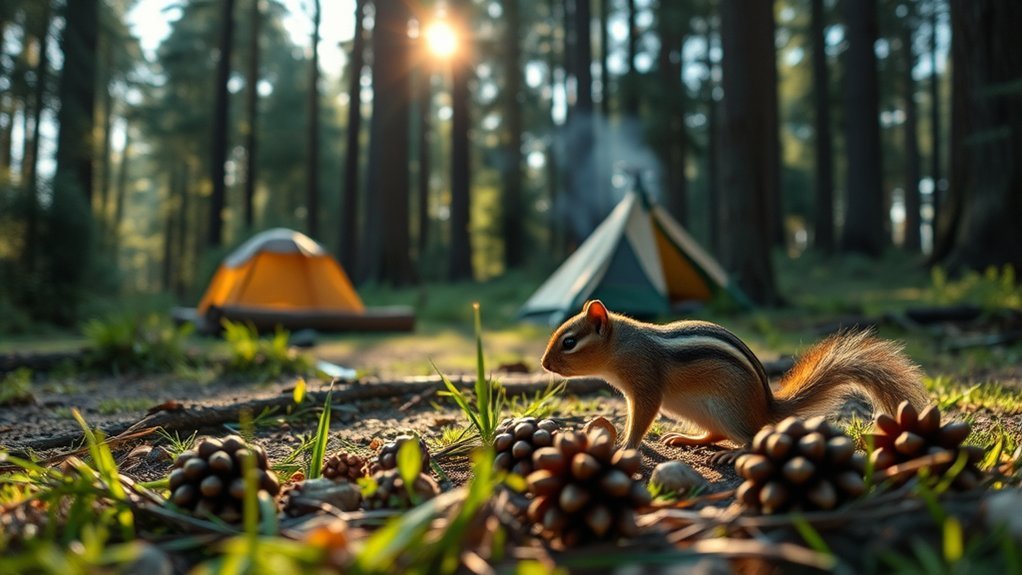
Chipmunks are small members of the squirrel family. They usually forage on the ground but can also climb trees, logs, fences, picnic tables, and other structures. Their natural diet includes seeds, nuts, berries, fungi, insects, and other available foods. At busy campgrounds, crumbs, pet food, birdseed, and unattended meals can become easier rewards.
Activity varies by species, season, and climate. Eastern chipmunks are commonly active during daylight, especially in the early morning and late afternoon. They gather and cache food during warmer months and may become especially noticeable while storing food before winter. They enter a form of winter torpor but may appear during mild weather.
Eastern chipmunk burrows may have a main tunnel 20–30 feet long, although the system is normally hidden and the entrance may have little loose soil around it. A burrow near camp does not mean the animal must be removed. In most cases, preventing access to human food is enough to reduce unwanted approaches.
The goal is not to remove every chipmunk from the area. It is to make your campsite stop functioning as a food source.
Identifying Signs of Chipmunks at Camp
Direct sightings are the clearest sign, but you may also notice evidence that a small rodent has found food or shelter:
- Small burrow entrances near logs, rocks, retaining walls, or structures
- Seed shells, gnawed food packaging, or missing food
- Small holes chewed in a tent, pack, screen, or soft container
- Scratching sounds in an RV compartment or beneath a platform
- Droppings, nesting material, or gnaw marks inside an enclosed space
Several rodents can leave similar evidence, so do not assume every dropping, sound, or hole came from a chipmunk. Avoid touching an animal, nest, carcass, urine, or droppings with bare hands.
Warning: Do not dry-sweep or vacuum rodent droppings or nesting material. Disturbing contaminated dust can expose you to pathogens. Keep people and pets away, ventilate the space when appropriate, and follow the CDC’s current rodent-cleanup guidance.
Maintaining a Clean Campsite
A clean campsite is the most dependable chipmunk deterrent. “Clean” means more than putting leftover food in a bag. Food smells and residue can remain on tables, cookware, wrappers, clothing, and the ground.
Secure Food and Scented Items
Use the storage method required at your campground. Depending on the location, that may be a supplied food locker, a locked hard-sided vehicle, or an approved animal-resistant container. Close and lock it after every use.
Store all locally regulated scented items, including:
- Food, snacks, drinks, and condiments
- Trash, recyclables, and food wrappers
- Pet food, treats, and feeding bowls
- Dirty cookware, utensils, and dish cloths
- Cooking grease and strained food scraps
- Toothpaste, lip balm, soap, lotion, and deodorant
- Medications and other products included in the local rules
Do not store these items in a tent or leave them unattended on a picnic table. A soft cooler may contain crumbs, but it is not automatically animal-resistant.
Clean After Every Meal
- Put unused food away before starting the cleanup.
- Collect wrappers and visible scraps.
- Wipe the table, stove, and preparation surface.
- Pick up food dropped beneath chairs or the picnic table.
- Clean dishes according to the campground’s wastewater rules.
- Secure trash, grease, dish cloths, and cookware.
- Check the area again before leaving camp or going to sleep.
Do not burn food scraps, grease, tea bags, or coffee grounds in the fire ring. Partly burned food can continue to attract wildlife.
Pro Tip: Perform a two-minute “clean camp reset” whenever the group finishes eating. Assign one person to secure food while another checks the table, ground, chairs, and fire ring for crumbs or scraps.
What to Do When a Chipmunk Approaches
Remain calm and remove the reward that attracted it. Do not offer food to lure it elsewhere. Put food away, gather crumbs, and step back so the animal has an open escape route.
If a chipmunk enters a tent or RV:
- Move children and pets away from the opening.
- Do not corner, grab, or strike the animal.
- Open the nearest safe exterior door, tent flap, or window screen.
- Make the remaining interior area less accessible and wait quietly at a distance.
- After it leaves, inspect for food, nesting material, gnaw damage, and possible entry points.
- Tell the campground host if the animal repeatedly enters occupied sites or behaves aggressively.
Natural Deterrents for Chipmunks: What Actually Helps
The most effective “natural” deterrent is a campsite that provides no meal. Removing food, water, waste, and easy shelter addresses the reasons rodents approach people without injuring them.
Daffodils, garlic, cayenne mixtures, human hair, predator urine, and similar remedies are sometimes suggested for yards. They are not dependable campsite controls. Campers should not plant flowers, dig borders, spray irritants, or spread foreign materials around a temporary site.
Cayenne and other irritants can affect people, pets, and wildlife if they enter the eyes, nose, or mouth. Predator-odor products can create an unpleasant campsite without providing lasting control. Animals may also ignore or become accustomed to unfamiliar smells when food remains available.
Note: A remedy used around a privately owned garden is not automatically suitable for a public campsite. At an established campground, avoid digging, planting, moving natural materials, or applying substances unless the land manager has approved it.
Sealing Entry Points in Your RV
Food control should come first, but physical exclusion can help prevent chipmunks and other rodents from entering an RV. Inspect the vehicle in daylight and look for unwanted gaps around utility penetrations, storage compartments, damaged screens, doors, and the undercarriage.
Warning: Never seal an opening until you are confident no animal is trapped inside. Do not block a furnace, refrigerator, water-heater, battery, propane, plumbing, drain, or manufacturer-required ventilation opening. Consult the RV manual or a qualified technician when the purpose of an opening is unclear.
Inspect the RV for Gaps and Damage
- Check door seals, screens, slide-out seals, and storage-compartment latches.
- Inspect around pipes, cables, drains, and utility connections.
- Look beneath the chassis for missing covers or damaged material.
- Search for droppings, nesting material, food caches, or gnaw marks.
- Repeat the inspection after storage, repairs, or travel on rough roads.
Use the Right Exclusion Material
For confirmed unwanted gaps, use a durable physical barrier such as corrosion-resistant metal mesh or hardware cloth, then secure it with a sealant compatible with the RV surface. Foam alone may not resist gnawing and should not be used to cover a required opening.
| Material | Typical Use | Important Limitation |
|---|---|---|
| Silicone sealant | Flexible exterior joints and compatible window or trim areas | Surface compatibility and paintability vary |
| Acrylic caulk | Small protected interior gaps | Not ideal for constantly wet or highly flexible joints |
| Polyurethane sealant | Durable exterior gaps on compatible materials | Requires correct preparation and curing |
| Corrosion-resistant metal mesh | Physical reinforcement over confirmed unwanted openings | Must not obstruct required airflow, drainage, or equipment access |
Perform Regular Maintenance Checks
Inspect repaired areas after each trip and before removing an RV from storage. Weather, vibration, UV exposure, and movement can loosen seals. Keep storage compartments clean and remove snacks, pet food, grass seed, birdseed, and other edible materials before long-term storage.
Using LED Lighting Around Camp
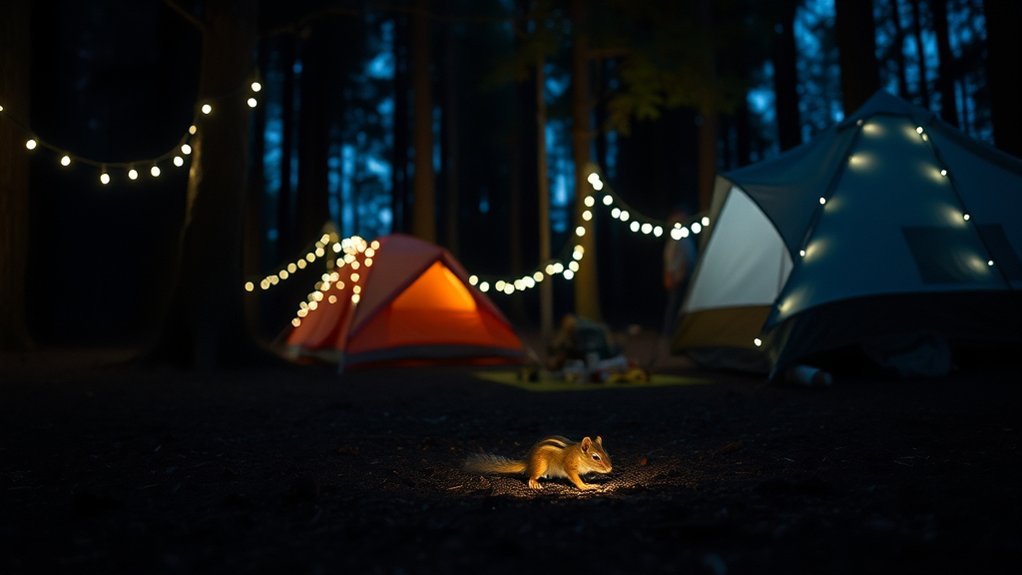
LED lights can help you see crumbs, close containers, and move around camp safely after dark, but ordinary campsite lighting is not a proven chipmunk repellent. Chipmunks are generally daytime animals, so leaving bright lights on overnight does not address the main cause of visits.
Use only the lighting needed for safety and cleanup. Follow quiet-hour, dark-sky, and generator rules. Avoid directing bright or flashing lights at wildlife, neighboring campsites, or natural habitat. Motion-activated lights may startle an animal temporarily, but they should not replace food storage or exclusion.
Trapping Chipmunks Humanely and Legally
At an ordinary campground, do not set a trap unless the land manager has specifically authorized it. Campers normally do not own the property, and trapping regulations differ by state, municipality, species, and land-management agency.
Peanut butter, sunflower seeds, nuts, raisins, and grains are commonly described as chipmunk baits. Those foods can also attract additional wildlife, pets, and unintended animals. A trap can expose a captured animal to heat, cold, dehydration, injury, or stress if it is not managed under an approved plan.
Do not assume that carrying a captured chipmunk one mile away is lawful or humane. Some jurisdictions prohibit off-property relocation, require permission at the release site, or require a licensed wildlife-control operator. Relocation can also move parasites or disease and leave the animal without a known burrow or food cache.
If a chipmunk is causing repeated damage:
- Remove food and shelter attractants.
- Photograph the damage without approaching the animal.
- Contact the campground host, ranger, or property manager.
- Follow the instructions of the applicable state wildlife agency.
- Use a qualified wildlife-control professional when the land manager recommends one.
Current examples of location-specific rules can be seen in the New York Department of Environmental Conservation’s nuisance-wildlife guidance. Always check the rules for the actual location rather than relying on another state’s policy.
Creating a Low-Attraction Camp Zone
No outdoor campsite can be guaranteed “chipmunk-free.” A realistic goal is to keep the occupied area clean and prevent animals from receiving food.
- Use an existing or designated campsite.
- Keep food preparation concentrated on a durable surface.
- Store food immediately after use.
- Keep tent doors and RV screens closed.
- Do not leave packs, snack bags, or pet bowls unattended.
- Keep children from offering food or trying to touch wildlife.
- Pack out all waste that the campground cannot accept.
Do not dig an L-shaped footer around a tent, construct a gravel moat, remove living vegetation, move rock piles, or plant daffodils or Allium species at a temporary campsite. Leave No Trace guidance emphasizes using existing durable sites rather than creating or altering one.
Note: At a privately owned seasonal RV pad or permanent camp, the owner may consider approved vegetation management or structural exclusion. Obtain permission, check local wildlife rules, and avoid disturbing an active nest or burrow.
Repelling Chipmunks With Essential Oils
Peppermint, citrus, eucalyptus, and other strong scents are frequently promoted as rodent repellents, but they should not be presented as reliable chipmunk control. No universal number of drops, spray concentration, or reapplication schedule has been established for safe and effective campground use.
Essential oils may irritate skin, eyes, or airways, and some concentrated oils can be hazardous to pets. Scented cotton balls can become litter or be investigated by wildlife. Oils can also damage plastics, coatings, fabrics, or RV finishes.
Do not spray oils on a chipmunk, its burrow, vegetation, food-contact surfaces, tent fabric, or another camper’s site. Where a campground treats toiletries and fragrances as scented items, store the oil with the rest of those products.
The safer approach is to skip the aromatic barrier and rely on sanitation, approved food storage, closed doors, intact screens, and carefully repaired RV gaps.
Long-Term Prevention Strategies
Habitat Management
At a public campground, do not clear wood piles, prune vegetation, move rocks, or alter habitat yourself. Report a burrow beneath a structure, exposed trash area, damaged food locker, or heavy rodent activity to the land manager.
On privately owned property, reducing dense clutter beside a building may make the immediate area less attractive, but habitat work should be proportionate. Chipmunks are native wildlife in much of North America and usually cause little serious damage. Preserve natural habitat away from the occupied structure while removing artificial food rewards near doors, foundations, and storage areas.
Food Source Management
Long-term prevention depends on consistency. One forgotten pet bowl or open sack of birdseed can undo several days of careful cleanup.
- Use hard-sided storage for edible supplies.
- Repair broken trash lids and food lockers.
- Clean grills, camp stoves, picnic tables, and vehicle interiors.
- Do not scatter seed or create an informal bird-feeding station.
- Keep food out of long-term RV storage.
- Teach every member of the group the same storage routine.
Barrier Installation Methods
Permanent fencing, buried footers, and gravel borders are generally yard or building-management techniques, not ordinary camping methods. Small chipmunks can also climb, dig, and use nearby objects to bypass poorly designed barriers.
For an RV or privately owned outbuilding, focus on the actual entry point. Repair screens, adjust door sweeps, close utility gaps with corrosion-resistant metal mesh and compatible sealant, and keep compartments latched. The Indiana Department of Natural Resources recommends physical exclusion materials such as hardware cloth and caulking for unwanted building openings.
What Not to Do
- Do not feed chipmunks: This encourages repeated approaches and may lead to bites or property damage.
- Do not touch or corner them: Give the animal a clear route away from people.
- Do not use poison: It can harm pets, predators, and non-target wildlife and may be illegal at the campsite.
- Do not use glue traps: They can capture unintended animals and cause prolonged suffering.
- Do not spray irritants at wildlife: Cayenne, concentrated oils, and similar materials may injure animals or people.
- Do not modify public land: Avoid digging, planting, trenching, moving rocks, or constructing barriers.
- Do not relocate an animal without authorization: Confirm the law and obtain land-manager permission first.
- Do not keep food in the tent: Thin fabric does not provide meaningful protection from a determined rodent.
Frequently Asked Questions
Do chipmunks carry diseases that can affect humans?
Rodents, including chipmunks, can carry pathogens and can host ticks, mites, or fleas. This does not mean every chipmunk is infected. Avoid bites and contact with urine, droppings, saliva, nests, and dead rodents. Use current public-health guidance when cleaning a contaminated enclosed area.
What time of year are chipmunks most active?
Activity depends on species, weather, and location. Eastern chipmunks are commonly visible during the warmer months and often forage in the early morning and late afternoon. They may be especially noticeable while gathering and storing food before winter.
Can chipmunks climb trees or structures?
Yes. Although chipmunks spend much of their time on or below the ground, they can climb trees, logs, fences, picnic tables, and other structures to reach food. Moving a container onto a table is therefore not the same as securing it.
Are there specific foods that attract chipmunks?
Seeds, nuts, grains, fruit, birdseed, pet food, crumbs, and many camping foods can attract them. Grease, dirty cookware, food wrappers, and spilled drinks may also provide a reward or scent cue.
How do I know if my measures are working?
Look for fewer approaches to the table or tent, no new gnaw damage, no missing food, and no fresh droppings or nesting material inside the RV. A chipmunk may still pass through the area; success means it no longer receives food or enters occupied equipment.
Does peppermint oil keep chipmunks away from camp?
Peppermint oil is widely promoted, but it is not a dependable substitute for secure food storage and cleanup. It may irritate people or animals, affect pets, damage some materials, and become another scented item that must be stored. Do not spray it on wildlife or burrows.
Can I live-trap and relocate a chipmunk from a campground?
Do not do so without authorization. The campground may prohibit trapping, and state rules may restrict capture, transport, or release. Contact the host, ranger, property manager, or state wildlife agency. Exclusion and removal of food rewards should be tried first.
Sources
- National Park Service — North Cascades Food Storage Requirements — tent, cooler, food, cookware, and scented-item storage risks
- National Park Service — Wildlife Viewing and Safety — feeding, bites, safe distance, and keeping food out of tents
- Centers for Disease Control and Prevention — Controlling Wild Rodent Infestations — rodent exposure, signs, food-source removal, and health precautions
- Indiana Department of Natural Resources — Eastern Chipmunk — behavior, diet, climbing, and building exclusion
- New York Department of Environmental Conservation — Remove or Take Nuisance Animals Legally — relocation restrictions and professional removal
- Leave No Trace — Travel and Camp on Durable Surfaces — using established campsites and avoiding site alteration
Conclusion
Keeping chipmunks away from camp humanely comes down to removing rewards rather than trying to overpower wildlife with smells, lights, or traps. Secure every food and scented item, clean after each meal, keep tents and RV openings closed, and follow the site’s rules. When an animal repeatedly enters equipment or causes damage, report it to the land manager instead of handling or relocating it yourself.

