
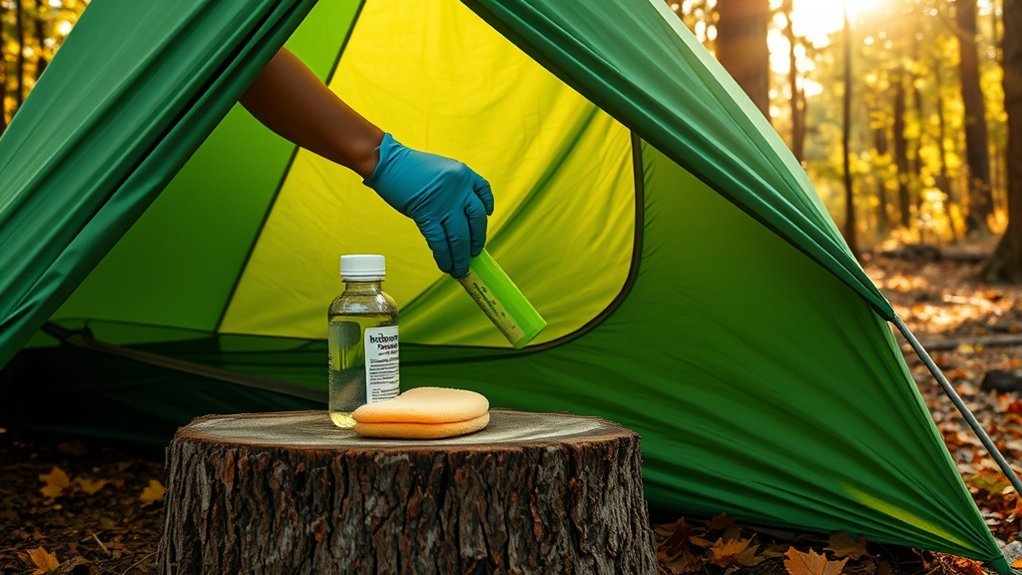
To remove tree sap from your tent without staining, first identify the sap and gather mild soap flakes, water, and a soft sponge. Rinse the stained area with water, then gently scrub with the soapy mixture. For tougher patches, apply clear hand sanitizer or rubbing alcohol, working it in with a soft brush. Always rinse thoroughly and check for remaining stickiness. Proper care and cleaning techniques will guarantee your tent stays in good condition—there’s more to explore!
Understanding Tree Sap and Its Properties

Tree sap is a sticky substance that trees produce primarily to heal wounds and transport nutrients, much like their version of blood. This viscous liquid varies in composition depending on tree characteristics, often containing sugars, water, and organic compounds. Different sap types can be found in various tree species, such as pines and maples. Pine sap is typically thicker and more resinous, while maple sap tends to be lighter and less adhesive.
When sap hardens, it transforms into pitch, making removal even more challenging. You might also encounter honeydew, a sticky residue from aphids that can mimic sap, complicating your cleaning efforts. Understanding these properties is essential for effective removal, as different sap types require tailored approaches. Recognizing the specific tree characteristics involved will help you navigate the cleaning process more efficiently and liberate your tent from sticky situations.
Initial Steps for Sap Removal
First, assess the sticky substance on your tent to determine its extent and type. Then, gather your cleaning supplies, including mild soap flakes, a soft sponge, and clear hand sanitizer. These initial steps will set you up for effective sap removal.
Assess the Sticky Substance
Sticky residues on your tent can be a nuisance, but identifying the source is vital for effective removal. Start with sticky substance identification: is it tree sap or honeydew? This distinction is significant, as cleaning method differentiation can make all the difference. Look closely at the tree species; for example, sap from the Field Maple may require different techniques compared to honeydew. Before diving into removal, check the tent fabric for any care instructions to prevent damage. Conduct a preliminary cleaning with plain water to lift surface residues, and always test any cleaning solution, like mild soap or solvents, on a hidden area first. This guarantees you won’t stain or degrade the fabric during the removal process.
Gather Cleaning Supplies
Before diving into the cleaning process, it’s vital to gather the right supplies to tackle tree sap effectively. Start with mild soap flakes, like Dreft, as they’ll help remove stubborn stickiness without harming your tent material. You’ll need a clean sponge or soft cloth to gently apply your cleaning solutions, minimizing fabric abrasion. Rubbing alcohol or mineral spirits are essential for effectively breaking down sap residues, so have those on hand. Don’t forget a container of warm water to rinse the tent fabric, ensuring all soap or solvent residues are removed. Finally, a plastic scraper or spatula will aid in gently removing any hardened sap without tearing the fabric. Organize your supplies to streamline your cleaning techniques.
Recommended Cleaning Solutions
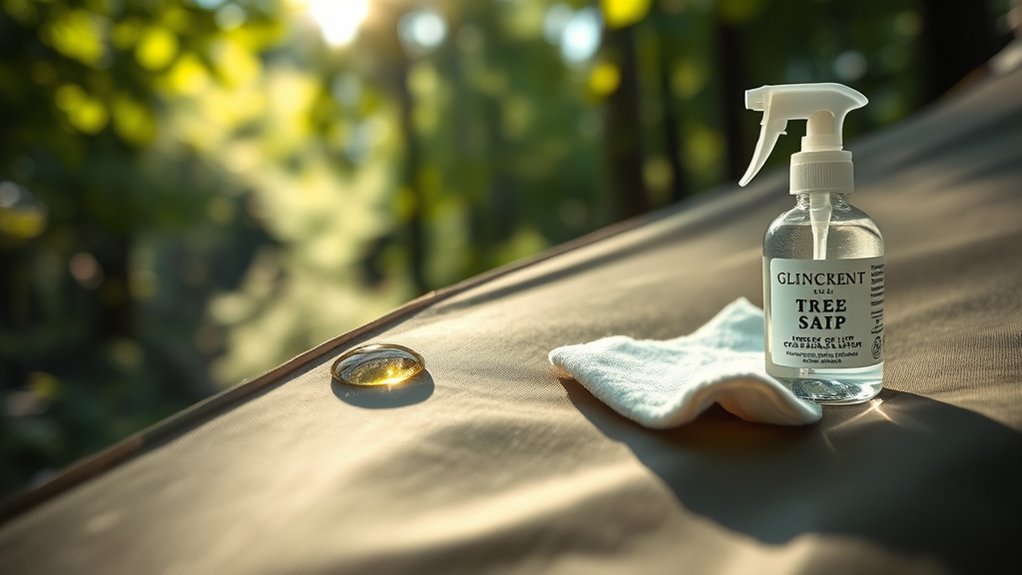
When tackling tree sap on your tent, a few effective cleaning solutions can make the job easier. Start by rinsing the sap-stained area with plain water to remove any loose residues. For stubborn stickiness, mix mild soap flakes, like Dreft, with water and gently scrub the area using a soft sponge. This natural remedy can help lift the sap without damaging the fabric.
If the sap is tougher, consider using cleaning agents like Goo Gone or rubbing alcohol. Just remember to test a small hidden area first to verify compatibility with the tent material. After applying any cleaning solution, thoroughly wash the area with water to eliminate any residue.
If needed, think about reapplying a waterproofing solution afterward. With the right approach, you can keep your tent in great shape and ready for your next adventure!
Using Hand Sanitizer for Effective Removal
Using hand sanitizer is a practical way to tackle tree sap on your tent. Apply it directly on the stain, and work it in gently to guarantee it penetrates the fabric effectively. After removal, remember to rinse the area thoroughly to maintain the tent’s integrity.
Application Method Explained
One effective method for removing tree sap from a tent involves applying clear hand sanitizer directly to the stain. The alcohol content helps dissolve the sticky residue effectively. Follow these application techniques for best results:
- Apply hand sanitizer onto the sap stain.
- Use your fingers or a soft toothbrush to gently work it into the fabric.
- Lightly agitate the fabric to aid in disintegrating the sap.
- Rinse the area thoroughly with water to remove any residue.
- Check the area after drying; repeat if any sap remains.
Keep fabric considerations in mind, as different materials may react differently. This method empowers you to reclaim your tent without worry, ensuring your adventures remain stain-free.
Effectiveness on Various Fabrics
While hand sanitizer is generally effective on many fabrics, its performance can vary depending on the material of your tent. Most synthetic fabrics, like polyester and nylon, show good fabric compatibility with hand sanitizer, allowing the alcohol to dissolve tree sap effectively. However, natural fibers like cotton may be more prone to staining or damage, so test a hidden area first to guarantee stain resistance. Apply the hand sanitizer directly onto the sap and work it into the fabric with your fingers or a soft brush to maximize contact. Remember, rinsing afterward is vital to eliminate any leftover sanitizer, which could lead to discoloration. Always prioritize fabric compatibility to guarantee successful sap removal without compromising your tent.
Post-Removal Care Tips
After you’ve successfully removed the tree sap, it’s essential to take steps to care for your tent. Proper tent storage and maintenance can prolong its life and keep it in top shape. Here are some post-removal care tips:
- Rinse the treated area thoroughly to eliminate any sanitizer residue.
- Allow the tent to dry completely before storage to prevent mildew.
- Store your tent in a cool, dry place to avoid moisture buildup.
- Regularly clean your tent every few months, especially after heavy use.
- Always inspect for any remaining stains or damages before your next adventure.
Alternative Methods for Stubborn Sap
If you’re dealing with stubborn tree sap on your tent, several alternative methods can effectively tackle the problem without damaging the fabric. Here are some practical sap removal techniques to take into account:
| Method | Description | Caution |
|---|---|---|
| Baking Soda & Oil | Mix and apply to break down stickiness | Test on a hidden area first |
| Mineral Spirits | Use a soft cloth for larger amounts | Check for fabric degradation |
| Isopropyl Alcohol | Gently clean small sap sections | Wash thoroughly afterward |
| Freezing | Freeze tent for a few hours, then scrape off | Use a plastic scraper, not metal |
| Goo-Gone | Effective for sap, but rinse thoroughly afterward | Confirm it doesn’t harm waterproofing |
Preventing Damage to Tent Material
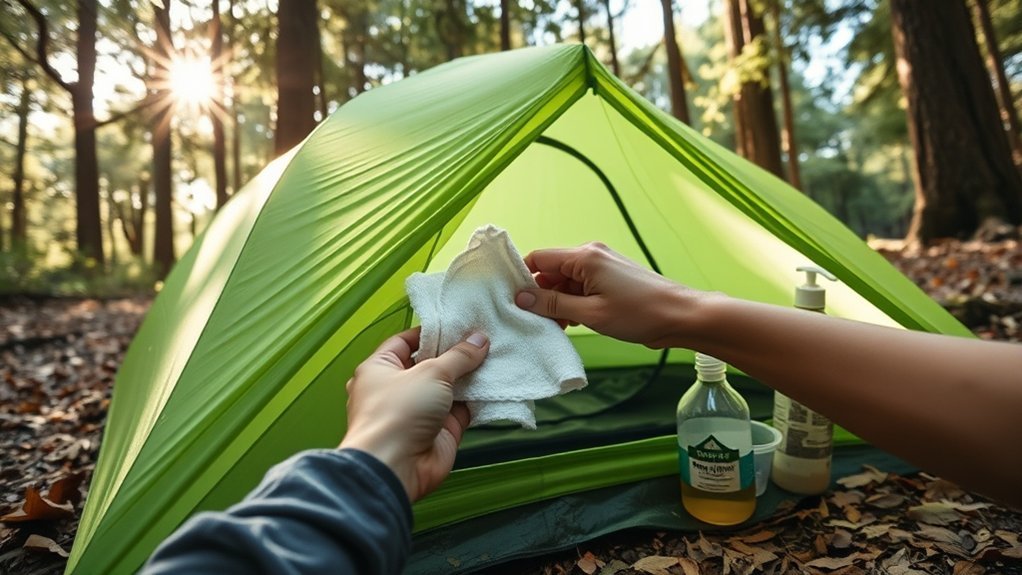
To keep your tent in top shape, always test any cleaning solution on a hidden area first to prevent unexpected damage. Use soft sponges instead of abrasive tools to gently tackle sap, protecting the fabric from tears. Regular maintenance, like applying a tent-specific waterproofing solution, helps guarantee your tent stays effective against moisture.
Test Cleaning Products First
Before diving into cleaning your tent, it’s essential to test any cleaning products to prevent potential damage to the fabric. Using proper testing methods can guarantee product safety and maintain your tent’s integrity. Here are some steps to follow:
- Test on a small, inconspicuous area first.
- Dab a bit of the cleaning solution and wait a few minutes.
- Check for discoloration or damage before full application.
- Stick to mild soaps or recommended agents to avoid harsh effects.
- If using solvents, apply them sparingly and monitor for negative reactions.
Avoid Abrasive Tools
When it comes to cleaning tree sap from your tent, steering clear of abrasive tools is crucial for preserving its material and waterproofing. Using soft cloths or sponges is your best bet to avoid scratches or abrasions on the fabric. Stay away from steel wool or abrasive scrubbers, as they can compromise your tent’s waterproof coatings and overall integrity. When scraping off hardened sap, opt for plastic scrapers instead of metal ones to minimize the risk of tearing the fabric. Always test any cleaning technique on a hidden area of the tent first to verify it won’t cause damage or discoloration. Gentle cleaning agents, like mild soap or mineral oil, are preferable to harsh chemicals that can degrade your tent’s material.
Regular Maintenance Practices
Maintaining your tent regularly is essential for preventing damage to its material and ensuring longevity. With a few simple tent maintenance practices, you can keep your fabric in top shape and ready for your next adventure:
- Clean your tent with mild soap and water to remove dirt and prevent sap buildup.
- Store it in a cool, dry place, away from direct sunlight to protect its waterproof coatings.
- Inspect for sap or sticky residues after each trip for easier cleaning.
- Reapply a durable water repellent (DWR) treatment after cleaning to maintain waterproofing.
- Avoid setting up under trees that produce sap or honeydew to minimize sticky deposits.
Post-Cleaning Care for Your Tent
After you’ve successfully cleaned the tree sap from your tent, it’s essential to take the right steps for post-cleaning care. Start by thoroughly rinsing the fabric with water to eliminate any cleaning agents that could harm the material or its waterproofing. Inspect your tent for any remaining stickiness or damage, which may necessitate further cleaning or repairs.
Here’s a quick reference table on post-cleaning care:
| Step | Action | Purpose |
|---|---|---|
| Rinse | Wash with water | Remove cleaning agents |
| Inspect | Check for stickiness or damage | Identify further cleaning needs |
| Consider Waterproofing | Apply treatment like Nikwax Solarproof | Restore protective barrier |
| Store | Keep in a cool, dry place | Prevent mold or mildew |
| Regular Checks | Look for sap or honeydew accumulation | Minimize future cleaning efforts |
With proper tent storage and care, you’ll make sure your gear lasts for many adventures.
Reapplying Waterproofing After Cleaning
To guarantee your tent remains waterproof after cleaning off tree sap, it’s crucial to reapply a waterproofing treatment. This step restores your tent’s original water resistance and prevents moisture from seeping in.
Here are some effective waterproofing techniques and product recommendations:
- Choose the right product: Use tent-specific solutions like Nikwax Tent & Gear Solarproof.
- Dry completely: Make sure your tent is fully dry after cleaning for ideal adhesion.
- Follow instructions: Adhere to the manufacturer’s guidelines for application and drying times.
- Apply evenly: Distribute the waterproofing treatment uniformly across the fabric.
- Schedule maintenance: Regularly reapply waterproofing to extend your tent’s lifespan in wet conditions.
Taking these steps will help maintain your tent’s performance, making your camping experience enjoyable and dry. Don’t overlook this important part of your tent care routine!
Tips for Future Sap Prevention
Reapplying waterproofing is just one part of caring for your tent; preventing tree sap from becoming a problem in the first place can save you a lot of hassle later on. Here are some practical preventive measures to take into account:
| Tip | Description |
|---|---|
| Tree Selection | Choose locations away from sap-producing trees like Field Maple. |
| Use a Tarp | Place a tarp or groundsheet under your tent for added protection. |
| Regular Cleaning | Clean your tent regularly to remove sap or honeydew residues. |
| Proper Storage | Store your tent in a cool, dry place away from sunlight. |
| DWR Coating | Think about a tent with a durable water repellent coating for extra resistance. |
Seeking Professional Help and Manufacturer Advice
If you’ve tried cleaning tree sap from your tent without success, reaching out to the manufacturer can be a wise next step. They can provide specific cleaning recommendations tailored to your tent’s materials, ensuring you don’t compromise its integrity. Here’s what you can gain from contacting them:
Reaching out to your tent’s manufacturer can provide essential cleaning tips and ensure you maintain its integrity.
- Detailed care instructions for sap removal
- Techniques that won’t damage waterproofing
- Information about repair services for significant damage
- Guidance on replacement parts, if necessary
- Insight into warranty implications related to cleaning methods
Frequently Asked Questions
Can Tree Sap Damage My Tent’s Waterproof Coating?
Yes, tree sap can damage your tent’s waterproof coating if left untreated. For best tent care, promptly clean sap to maintain waterproof maintenance. Regularly inspect and protect your gear to guarantee it stays in top shape.
How Long Should I Let the Sanitizer Sit on Sap?
Let the sanitizer sit on the sap for about five to ten minutes. This enhances sanitizer effectiveness, making sap removal easier. Keep an eye on it to avoid any potential damage to your tent.
Is It Safe to Use Bleach on Tent Fabric?
No, it’s not safe to use bleach on tent fabric. Instead, consider bleach alternatives like vinegar or baking soda for effective tent cleaning. They’re gentler on materials and won’t compromise the fabric’s integrity.
What Fabric Types Are Most Resistant to Tree Sap?
Oh, the irony! You’d think tents made of polyester and nylon wouldn’t mind a little tree sap. But really, these tent materials offer the best sap resistance, keeping your adventures stain-free and liberating.
Can I Machine Wash My Tent After Sap Removal?
Yes, you can machine wash your tent after sap removal, but make certain you follow proper tent care guidelines. Use a gentle cycle with mild detergent and avoid fabric softeners to preserve its water resistance and integrity.
Conclusion
In the battle against tree sap, you’ve armed yourself with the right tools and techniques. By following these steps, your tent can shine like new, free from sticky reminders of nature’s charm. Remember to protect your gear with waterproofing after cleaning, and keep an eye out for sap-prone areas in the future. With a little care, you’ll guarantee your camping adventures remain stain-free and enjoyable, letting you focus on the great outdoors rather than pesky sap!
