
Last Updated on September 10, 2026 by Daniel Globe
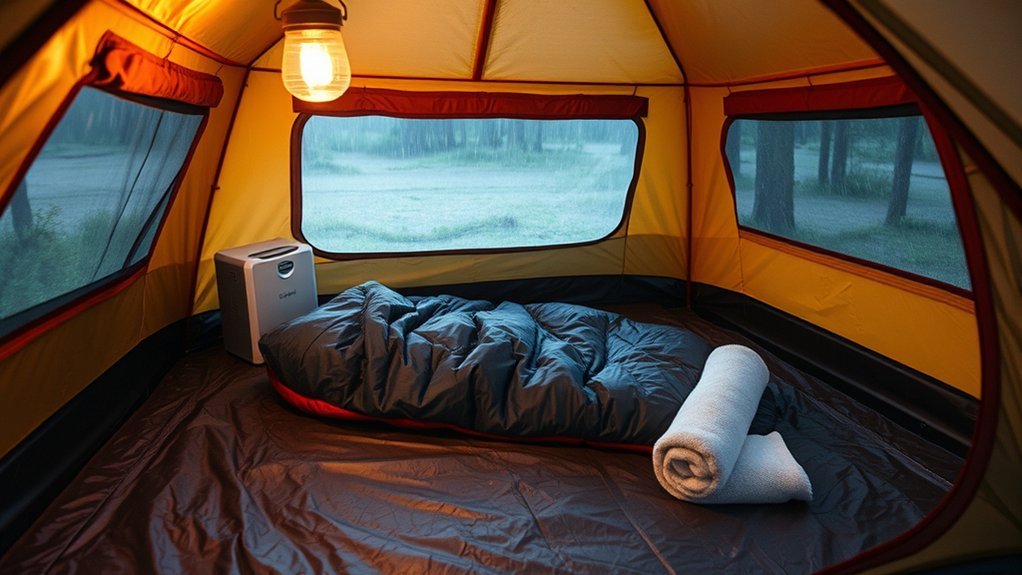
A dry sleeping bag is one of the most important parts of a safe, comfortable sleep system. Rain is only one threat: tent condensation, wet clothing, damp ground, sweat, and poor storage can also reduce loft and warmth. The best approach is to protect the bag during travel, control moisture inside the tent, and air it out before packing.
Quick Answer
Keep your sleeping bag dry by packing it in a waterproof dry bag or pack liner, pitching on a naturally raised and well-drained site, using a sleeping pad, opening tent vents, and keeping wet gear outside the sleeping area. Air the bag each morning and store it loose only after it is completely dry.
Key Takeaways
- Use waterproof storage while traveling, but never keep a sleeping bag sealed and compressed for long-term storage.
- Choose a naturally dry campsite; do not build a platform from logs, branches, rocks, or vegetation.
- Ventilation reduces condensation, but it cannot remove it completely in cold or humid weather.
- Sleep in dry clothes, keep your face outside the bag, and separate wet gear from your sleep system.
- Air the bag every morning and dry it fully before storing it at home.
At a Glance
| Time Required | About 5–10 minutes at setup, plus 15–30 minutes of airing when conditions allow |
| Difficulty | Easy |
| Tools Needed | Dry bag or pack liner, sleeping pad, tent vents, dry sleep clothes, and an optional breathable liner |
| Cost | Often no extra cost with existing gear; optional waterproof storage or a liner adds cost |
Disclosure: As an Amazon Associate I earn from qualifying purchases. Some links on this page are affiliate links, at no extra cost to you.
Why Sleeping Bags Get Damp Inside Tents
A sleeping bag can become damp even when the tent does not leak. Warm, moist air from breathing, perspiration, wet clothing, and damp gear can condense when it touches a colder tent fly or sleeping-bag shell. Cold ground can also create moisture beneath a sleeping pad.
Sea to Summit explains that condensation can form inside tents and sleeping-bag shells, especially when temperatures fall and humid air reaches a cold surface. Ventilation helps, but no tent design can guarantee a completely condensation-free night.
Your goal is not to eliminate every drop of condensation. It is to keep moisture away from the insulation and give damp gear a chance to dry.
Proactive Measures for Dryness
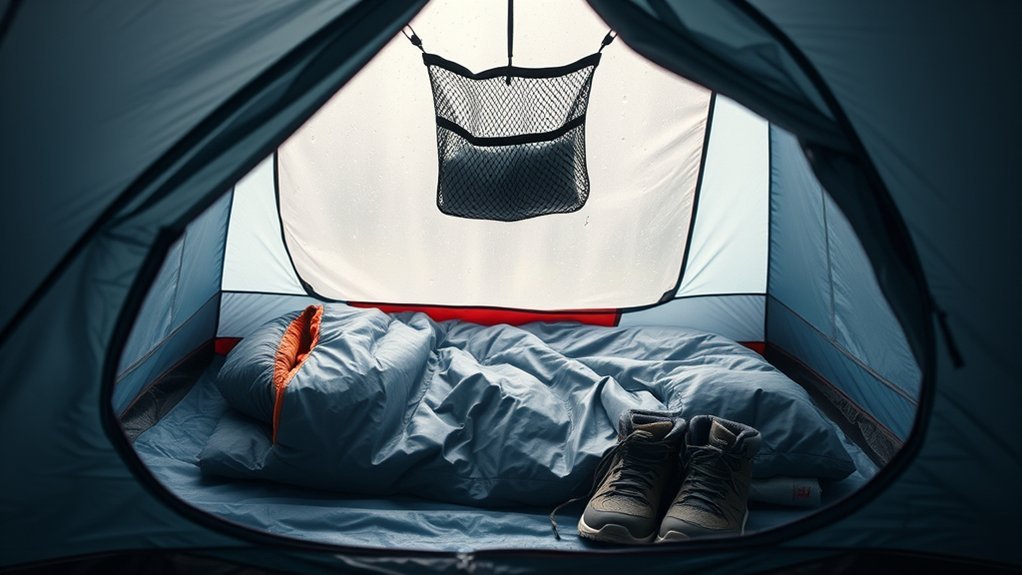
Start by protecting the sleeping bag before you reach camp. A waterproof dry bag, roll-top sack, or waterproof backpack liner is much more dependable than a standard fabric stuff sack when rain, river crossings, or wet ground are possible. Close the waterproof storage carefully and keep sharp items away from it.
Once the tent is pitched, remove the sleeping bag from its compression sack so the insulation can regain loft. Place it on a dry sleeping pad rather than directly on the tent floor. The National Park Service recommends using a sleeping pad and changing into dry clothes before bed.
A tent footprint or correctly sized groundsheet can protect the tent floor from abrasion and mud. It should stay fully beneath the tent so it does not collect runoff. A footprint does not replace a waterproof tent floor, sound site selection, or ventilation.
Pro Tip: Use two layers of protection on very wet trips: line the backpack with a waterproof pack liner, then place the sleeping bag in its own sealed dry bag. Keep the wet tent fly in a separate sack.
Keeping Down Sleeping Bags Dry
Down insulation is light, compressible, and warm for its weight, but it can clump and lose loft when saturated. Water-repellent or hydrophobic down can resist light moisture, but it is not waterproof. REI advises keeping down-filled gear dry because even treated down can become wet during heavy exposure.
For a down bag, focus on prevention:
- Keep the bag sealed during travel until the shelter is ready.
- Use a dry sleeping pad and dry base layers reserved for sleep.
- Keep your nose and mouth outside the hood so your breath does not enter the insulation.
- Move the footbox and shoulders away from wet tent walls.
- Air the bag as soon as you notice dampness or reduced loft.
A bivy sack or sleeping-bag cover can block drips and wind, but it must be designed for sleeping and sufficiently breathable. A nonbreathable plastic cover can trap vapor around the bag and make internal condensation worse.
Note: Synthetic insulation generally dries faster and retains more warmth when damp than down, but a saturated synthetic bag can still leave you cold. Treat every sleeping bag as gear that needs dry protection.
Protecting Sleeping Bags in Wet Weather
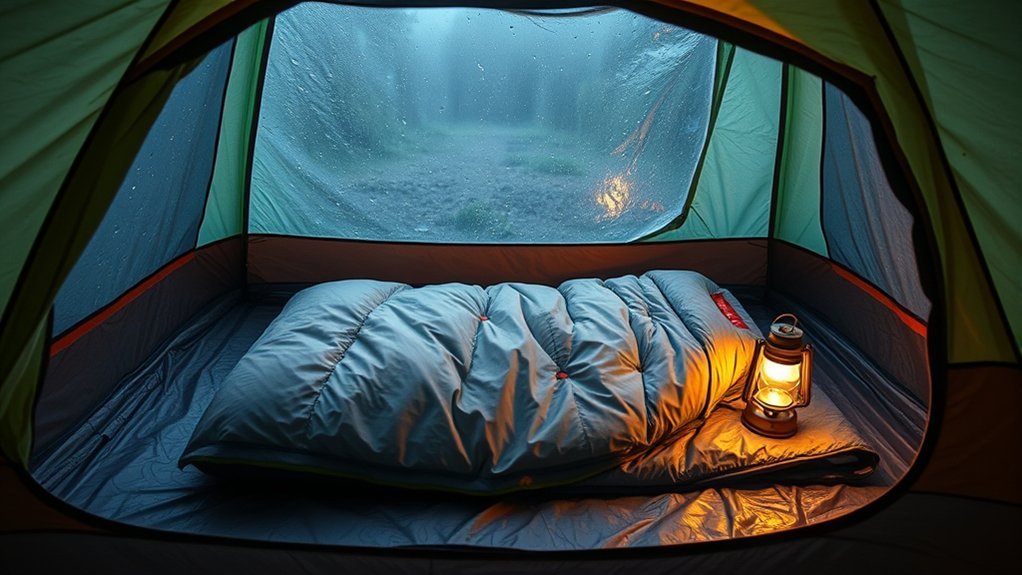
Wet-weather protection starts before the rain. Check the forecast, inspect the tent floor and rainfly, seal any seams that require maintenance, and practice pitching the shelter at home. At camp, keep the sleeping area separate from wet boots, rainwear, and packs.
Choose a Naturally Dry Campsite
Choose a legal, durable site that is naturally raised, level enough for sleep, and outside obvious drainage channels, depressions, flood-prone ground, and runoff paths. Use established tent pads where provided. Do not cut branches, move large rocks, dig trenches, or build a platform beneath the tent.
Leave No Trace advises campers not to build structures or alter campsites. A well-chosen site protects both your sleeping bag and the landscape.
Utilize Tent Ventilation Effectively
Open roof vents, low vents, and mesh panels whenever rain protection and temperature allow. Create cross-flow by opening vents on opposite sides. Keep the fly properly tensioned so wet fabric is less likely to sag onto the inner tent. In heavy rain, open protected vents and the top of a vestibule zipper only as far as the design safely permits.
Do not press the sleeping bag against the tent wall. In a small shelter, center the pad, keep loose clothing away from the sides, and use internal loops or pockets for lightweight items. Store wet gear in the vestibule when it is safe and permitted, not beside the sleeping bag.
Keep Sleeping Bag Protected
- During travel: Keep the bag in sealed waterproof storage.
- At camp: Unpack it only after the tent floor and sleeping pad are dry.
- While sleeping: Keep the hood opening clear of your mouth and avoid overheating.
- During breaks: Do not place the bag on wet ground, snow, or vegetation.
- When packing: Separate a wet fly, footprint, and sleeping pad from the sleeping bag.
Warning: Never hang or drape a sleeping bag close to a campfire, stove, heater, lantern, or hot exhaust. Heat, sparks, and carbon monoxide can cause burns, melt fabric, start a fire, or create a life-threatening hazard.
Troubleshooting Where the Moisture Came From
| Where It Is Damp | Likely Cause | Best Fix |
|---|---|---|
| Footbox or side only | Contact with a wet tent wall | Center the pad, tension the fly, and keep the bag off the fabric |
| Around the hood | Breathing into the bag | Keep your mouth and nose outside the hood |
| Inside the liner | Sweat or damp sleep clothes | Change into dry layers and vent the bag before you sweat |
| Bottom of pad and tent floor | Ground condensation or a leak | Dry both surfaces, inspect the floor, and move only to a legal drier site if needed |
| Entire bag after transport | Failed dry bag, wet pack contents, or trapped moisture | Replace or repair waterproof storage and isolate wet gear |
Additional Tips for Sleeping Bag Care
Regular Inspection and Maintenance
Inspect the shell, lining, seams, zipper, drawcords, and insulation before and after a trip. Repair small tears promptly so they do not spread or release fill. Check the manufacturer’s care label before applying seam products, detergents, or water-repellent treatments.
Spot-clean small dirty areas first. A full wash is appropriate when the bag is heavily soiled, oily, noticeably smelly, or losing loft—not automatically every three to six months. REI recommends following the manufacturer’s instructions, using suitable cleaner, and avoiding dry cleaning, bleach, fabric softener, and agitator-style washers.
Proper Storage Techniques
Storage depends on the situation:
- During transport: Compress the bag only as much as needed and protect it in waterproof storage.
- In the tent: Keep it lofted on a dry pad and away from wet walls and gear.
- At home: Dry it completely, then store it loose in a large breathable cotton or mesh sack in a cool, dry place.
Do not use a waterproof sack for long-term storage. Moisture trapped in a sealed container can encourage mildew. REI’s storage guidance also warns that months of compression can reduce the loft of both down and synthetic insulation.
Moisture-Wicking Liners Usage
A removable liner can keep body oils and dirt away from the sleeping bag and is easier to wash than the entire bag. Choose a breathable liner suitable for the temperature. Lightweight synthetic or silk liners dry quickly; warmer fleece liners may be useful in cold conditions but can cause sweating if the sleep system becomes too hot.
A liner is not a waterproof barrier and cannot fix a leaking tent or soaked insulation. Keep it clean and dry it fully after each trip.
Morning Moisture Management
Check the sleeping bag as soon as you wake. Feel the footbox, hood, outer shell, and underside for dampness or reduced loft. Then follow these steps:
- Open the zipper fully and shake the bag gently.
- Turn it inside out if the lining feels damp.
- Drape it loosely over a clean, dry line, tent body, or other safe surface.
- Use moving air, partial shade, or brief mild sun; avoid prolonged direct UV exposure.
- Do not pack it until it is as dry as conditions reasonably allow.
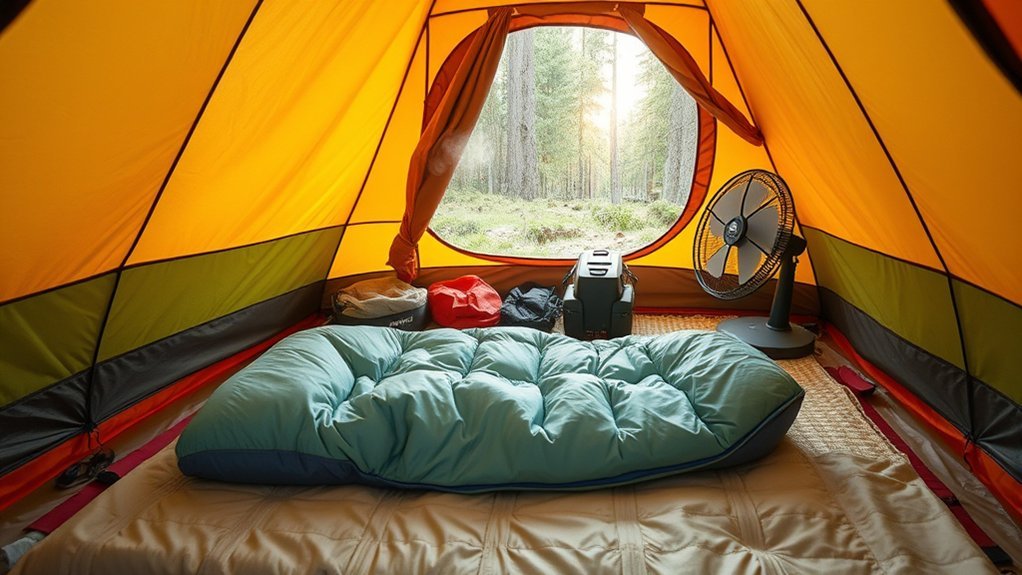
If the rainfly is wet, pack it separately from the inner tent and sleeping bag. At home, finish drying the bag immediately. A fan or dehumidifier can help in a dry indoor room.
Evening Preparation Techniques
Build a simple dry-sleep routine before temperatures fall:
- Unpack early: Give the bag time to regain loft before bed.
- Change clothes: Put on dry base layers and socks reserved for sleeping.
- Vent the shelter: Open protected vents before condensation builds.
- Remove moisture sources: Keep wet footwear, rainwear, and towels in the vestibule or another protected area.
- Manage warmth: Loosen the hood or open the zipper before you become sweaty.
- Check the walls: Reposition the pad so the sleeping bag will not touch wet fabric overnight.
Body Heat Utilization Without Adding Moisture
Your body warms the air trapped in the sleeping bag, but it also releases moisture. Use body heat to stay warm—not as the main way to dry wet insulation.
- Do a brief period of light movement before bed, then stop before you sweat.
- Enter the bag in dry clothing and with dry hair.
- Keep your face outside the bag to limit moisture from breathing.
- Vent the zipper if you feel hot or clammy.
- Do not place soaked clothing inside the sleeping bag during cold weather unless an emergency plan specifically requires it; the added moisture can reduce warmth.
What to Do If the Sleeping Bag Gets Soaked
A soaked sleeping bag can become a serious cold-weather problem. Move into shelter, remove wet clothing, put on dry layers, and prevent further heat loss. Gently press water from the bag without wringing or twisting it, then spread it out in moving air. Use a large dryer on low heat only when the care label permits.
If you cannot get warm, if shivering becomes severe or stops, or if someone becomes confused, clumsy, or unusually drowsy, treat the situation as a possible cold-related emergency. Use dry insulation, seek help, and leave the exposed environment when it is safe to do so.
Frequently Asked Questions
How often should I wash my sleeping bag?
Wash it when it is heavily dirty, oily, smelly, or losing loft, not on a rigid calendar. Spot-clean first and follow the care label. Frequent full washing adds wear, while putting away a dirty bag can also reduce performance.
Can I use a sleeping bag in winter conditions?
Yes, but the complete sleep system must match the expected conditions. Use an appropriately rated bag, an insulated sleeping pad, dry layers, and a weatherworthy shelter. Allow extra safety margin because wind, humidity, fatigue, clothing, and individual metabolism affect warmth.
What materials are best for sleeping bags?
Down offers excellent warmth for its weight and packs small, but it requires careful moisture protection. Synthetic insulation is usually bulkier and heavier for similar warmth, yet it dries faster and performs better when damp. The best choice depends on climate, trip length, weight, budget, and access to drying.
How do I store my sleeping bag long-term?
Dry it completely, remove it from the compression sack, and place it loosely in a large breathable cotton or mesh storage bag. Keep it in a cool, dry, temperature-controlled location rather than a damp basement, hot attic, garage, vehicle, or sealed waterproof container.
Are sleeping bag liners worth the investment?
A liner can be worthwhile because it keeps the bag cleaner and is easy to wash. Some liners add warmth, but the effect varies by material and fit. A liner does not waterproof the bag, replace an insulated pad, or solve condensation from poor ventilation.
Should I use a waterproof bivy over my sleeping bag?
Use only a bivy designed for sleeping and suitable for the conditions. A breathable bivy can block drips, splash, and wind, but every cover changes moisture movement. A nonbreathable cover can trap condensation against the sleeping bag.
Is a tent footprint enough to keep a sleeping bag dry?
No. A footprint can protect the tent floor and reduce mud or abrasion, but it cannot stop moisture from breathing, sweat, wet gear, or poor ventilation. Use it as one part of a system that includes good site selection, a waterproof floor, a sleeping pad, and airflow.
Conclusion
Keeping a sleeping bag dry is mostly about controlling small sources of moisture before they become a serious problem. Protect the bag during transport, choose a naturally dry campsite, use a sleeping pad, ventilate the shelter, and keep wet gear away from the sleep area. Air the bag every morning and store it loose only after it is completely dry. These habits protect loft, warmth, and comfort in both down and synthetic bags.
Sources
- National Park Service — What to Bring Camping — sleeping pads, dry sleep clothes, weather-appropriate sleeping bags, and keeping breath out of the bag.
- REI Co-op — Sleeping Bag Care — waterproof transport storage, washing, drying, and care precautions.
- REI Co-op — How to Store a Sleeping Bag — complete drying, loose breathable storage, and avoiding long-term compression.
- Sea to Summit — Condensation and What You Can Do About It — tent airflow, sleeping-bag condensation, and separating wet gear.
- Leave No Trace — Leave What You Find — avoiding campsite structures, trenches, and unnecessary site alteration.
