
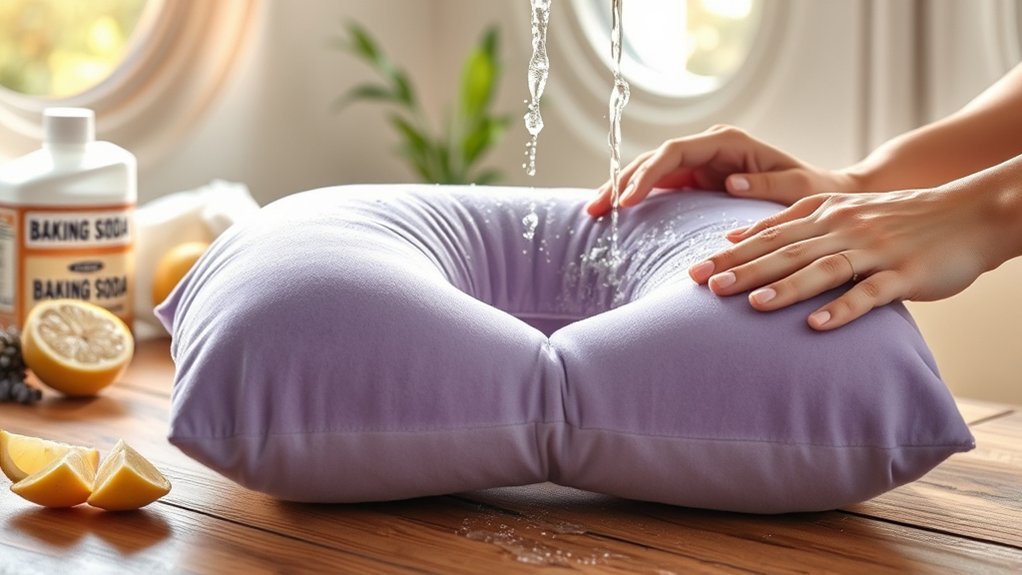
Last Updated on September 10, 2026 by Daniel Globe
A smelly travel pillow can make an otherwise great trip unpleasant. Sweat, skin oils, and trapped moisture can build up in the cover or filling and create lingering odor. The safest fix depends on what the pillow is made from, so start with the care tag before using water, heat, or a washing machine.
Quick Answer
To remove sweat smell from a travel pillow, wash the removable cover as directed, air out the core, and use baking soda on dry surfaces for lingering odor. Spot-clean memory foam instead of soaking it unless the manufacturer specifically allows washing. Let every part dry completely before reassembly or storage.
Key Takeaways
- Check the care tag first because memory foam, microbead, inflatable, fiber-filled, and buckwheat pillows can require different cleaning methods.
- For many memory-foam travel pillows, the cover can be washed but the foam insert should only be wiped or spot-cleaned.
- Baking soda can help neutralize some odor compounds, but it is not a substitute for washing a dirty removable cover.
- Do not assume every microbead pillow is spot-clean only; washability varies by product.
- Dry the pillow completely before storing it. Trapped moisture can encourage mold growth and bring odors back.
At a Glance
| Time Required | About 15–30 minutes of active cleaning, plus odor-treatment and drying time |
| Difficulty | Easy |
| Tools Needed | Mild detergent, clean cloths, baking soda, soft brush or vacuum upholstery attachment, basin only for washable fills, fan if needed |
| Cost | Usually under $5 if you already have basic laundry supplies |
Disclosure: As an Amazon Associate I earn from qualifying purchases. Some links on this page are affiliate links, at no extra cost to you.
Why Does Your Travel Pillow Smell?
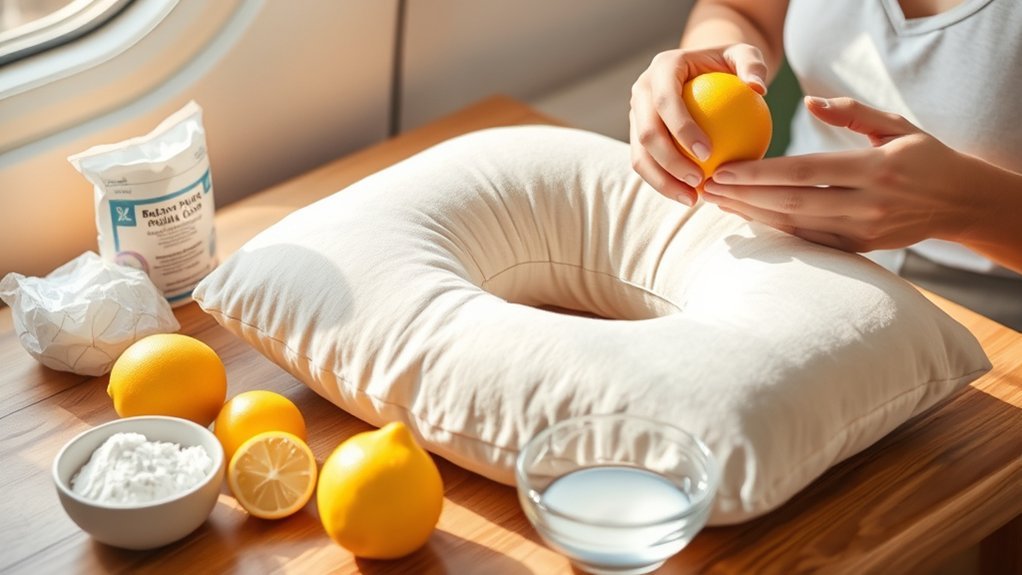
If you’ve noticed an unpleasant odor coming from your travel pillow, you’re not alone. A travel pillow sits against your neck, hair, and face, so its cover can collect sweat, skin oils, hair products, and other residue. When a damp pillow is packed into a case or bag before it has dried, the trapped moisture can make odor worse.
Odor does not automatically mean the pillow is unsafe. A normal sweaty smell often improves after the cover is washed and the pillow is aired out. A persistent musty or moldy smell, visible spotting, or a pillow that remains damp inside is different. Porous material with suspected mold may be difficult to clean reliably, so replacement can be the safer choice.
Know Your Pillow Type Before You Clean
Before you do anything else, check the care tag or the manufacturer’s current instructions. Travel pillows commonly use memory foam, microbeads, inflatable bladders, fiber fill, or buckwheat hulls, and there is no single washing method that is safe for all of them.
- Memory foam: Do not machine wash it. Many travel-pillow manufacturers also say not to submerge the foam insert at all. For example, Cabeau directs users to wash the removable cover and wipe the memory-foam insert with a damp cloth, while Tempur-Pedic says not to wash or submerge the insert unless the product instructions specifically permit it.
- Microbead: Follow the tag. Some microbead pillows are washable and others are surface-clean only, so a blanket “never wash” rule is not reliable. Avoid high heat unless the manufacturer specifically allows it.
- Inflatable: Wipe the surface with a cloth, mild soap, and clean water as needed. Keep liquid from being forced into the valve, and let the pillow dry fully before folding or storing it.
- Fiber-filled: Some polyester or down-alternative travel pillows can be machine washed, but only use the cycle, water temperature, and drying method listed on the care label.
- Buckwheat hull: Remove the hulls before washing the fabric shell. Hullo’s care guidance recommends washing the empty case in cold water, air-drying it, and returning the hulls only after the shell is fully dry.
Note: The care tag outranks general cleaning advice. A molded memory-foam insert, shredded foam pillow, microbead pillow, and fiber-filled pillow can all have different instructions even when they look similar from the outside.
Initial Steps to Remove Odors From Your Travel Pillow
Start with the least aggressive method. This often removes travel sweat odor without putting the filling at risk.
- Separate the cover and core. If the cover is removable, take it off before deodorizing the insert.
- Air out the pillow. Place the core in a dry, shaded, well-ventilated area. A fan can improve airflow. There is no need to wait a fixed two or three days; move on once the pillow is dry and the odor has noticeably reduced.
- Wash the removable cover. Use the water temperature and cycle on the care label. A mild detergent is usually a safe choice when the label does not call for a specialty cleaner.
- Spot-clean the core if needed. For memory foam and other surface-clean-only pillows, use a lightly damp cloth with a small amount of mild detergent. Blot rather than saturate.
- Use baking soda on a dry core for lingering odor. Let it sit, then remove it thoroughly with a soft brush or vacuum attachment.
Warning: Do not put a memory-foam insert into a washer or dryer unless its manufacturer explicitly says the insert is machine washable. Agitation, saturation, and heat can damage many foam products.
Should You Use Sunlight to Freshen a Travel Pillow?
Fresh air helps, but direct sunlight is not a universal cleaning step. For memory-foam travel pillows, shaded airflow is the safer default. Cabeau specifically recommends letting its foam inserts air dry and keeping them out of direct sunlight. Research on polyurethane foam also documents photodegradation under UV exposure, so prolonged sun exposure is not a useful general rule for foam.
For inflatable, microbead, fiber-filled, or buckwheat-style pillows, use outdoor sunlight only when the care instructions allow it. Some fabrics can fade, some plastics can age with heat or UV, and a damp fill can stay wet inside even when the surface feels dry. A shaded porch, open window, drying rack, or fan often provides enough airflow without extra heat.
Using Baking Soda to Remove Odors From Your Travel Pillow
Baking soda can be useful for a dry pillow that still smells after airing. McGill University’s Office for Science and Society explains that sodium bicarbonate can neutralize some acidic odor compounds by converting them into less volatile salts. That does not mean it removes every type of odor, and it should not be treated as a disinfectant.
- Make sure the pillow surface is dry.
- Sprinkle a light, even layer of baking soda over the affected area.
- Let it sit for about one hour. For a stubborn odor, repeat the treatment rather than heavily coating or wetting the pillow.
- Remove the powder thoroughly with a soft brush, gentle shaking outdoors, or a vacuum upholstery attachment if the fabric can tolerate vacuuming.
- Repeat on the other side if needed.
Pro Tip: Skip direct fragrance on the foam. If you like a scented pillow, place a lightly scented cotton ball or sachet inside a removable outer cover where it does not touch your skin or the foam, and stop using it if the fragrance causes irritation.
Fragrance can cause contact dermatitis in sensitive people, especially around the face and neck. The American Academy of Dermatology notes that fragrance is a common trigger for allergic contact dermatitis.
Hand Washing Techniques for Deep Cleaning
A deep hand wash is appropriate only for a pillow core whose care instructions say it can be submerged. This is commonly more relevant to some fiber-filled or washable microbead pillows than to molded memory-foam travel pillows.
Proper Washing Techniques
- Read the care tag again and confirm that the core itself is washable, not just the removable cover.
- Fill a basin with cool or lukewarm water and a small amount of mild detergent.
- Submerge the washable pillow and gently compress it to move the cleaning solution through the filling. Do not twist or wring it.
- Drain the soapy water and rinse with clean water until the water runs clear and the pillow no longer feels soapy.
- Press out water gently between clean towels if the care instructions allow it.
- Dry the pillow using the method on the label. Do not reassemble or store it until the core is completely dry.
Effective Rinsing Methods
Leftover detergent can create residue and make a pillow feel or smell unpleasant after cleaning. Use fresh rinse water and gently compress washable fills several times until suds are gone. Do not keep a memory-foam insert underwater simply to “rinse better.” For surface-clean-only foam, use a separate cloth lightly dampened with clean water to blot away soap, then let the insert air dry.
How to Properly Dry and Maintain Your Pillow
- Dry promptly and completely. The U.S. Environmental Protection Agency advises drying damp materials within 24–48 hours when possible to reduce mold risk. A pillow should not be stored or used while its core is still damp.
- Use airflow rather than high heat. A fan in a dry room can speed evaporation. For memory foam, follow the manufacturer’s instruction and avoid a dryer unless it is explicitly approved.
- Wash the cover regularly. For a heavily used travel pillow, washing the removable cover after a trip is a practical routine when the care label allows it.
- Air out the core before packing. Do not compress a pillow into its travel pouch immediately after a long, sweaty trip.
- Store it dry. Use the original travel case or another clean storage bag only after the pillow is fully dry. If the storage bag is not breathable, make extra sure no moisture is trapped inside.
Moisture matters more than the clock: a pillow is ready to store only when the cover and the core are completely dry, not merely dry on the surface.
How to Remove Sweat Stains Without Damaging the Pillow
If the odor comes with a visible sweat stain, treat the fabric differently from the foam. For a removable washable cover, apply a small amount of liquid laundry detergent to the stained area, gently work it in with your fingers or a soft cloth, then wash according to the label. Test any stain treatment on a hidden area first if the fabric is colored or delicate.
For a memory-foam core, avoid soaking the stain. Blot with a lightly damp cloth and mild detergent, then blot again with a clean damp cloth to remove residue. Let the foam dry fully with good airflow. Avoid bleach, solvent cleaners, steam, or strong fragrance unless the manufacturer specifically approves them.
Troubleshooting Odor That Won’t Go Away
- The cover smells clean but the core still smells: Air the core longer, then use a dry baking-soda treatment if the material can be vacuumed or brushed safely.
- The smell returns after packing: The pillow may have been stored before it was fully dry. Unpack it and dry it thoroughly before using the storage pouch again.
- The pillow smells musty rather than sweaty: Check for dampness or visible spotting. If porous filling appears moldy or the musty odor persists after complete drying and approved cleaning, replacement is the safer option.
- The foam changed shape after cleaning: Stop adding water or heat. Let it dry completely and reassess. If the foam stays brittle, lumpy, torn, or permanently misshapen, replace it.
- The odor is from a new foam pillow: Follow the manufacturer’s airing instructions before applying cleaners. Do not try to cover a new-material smell with heavy fragrance.
When to Replace Your Travel Pillow
Travel pillows do not have one reliable replacement interval because material quality, use, compression, moisture exposure, and cleaning methods vary. Replace the pillow based on condition rather than an arbitrary one-year rule.
It is time to consider replacement when odor persists after the cover and core have been cleaned according to the manufacturer, when you see suspected mold in porous material, when seams or the inflatable valve are failing, or when the pillow has flattened, cracked, clumped, or stopped providing the support it was designed to give.
Frequently Asked Questions
Can I use essential oils to mask the smell?
It is better to remove the odor than cover it. Avoid putting essential oil directly on foam or on fabric that rests against your skin. If you use fragrance, keep it separate from the foam and stop if it causes skin, eye, or breathing irritation.
Is it safe to machine wash my travel pillow?
Only if the care label says the pillow core is machine washable. Removable covers are often washable, but many memory-foam inserts are not. Microbead and fiber-filled pillows vary by product, so check the tag rather than relying on the fill name alone.
How often should I clean my travel pillow?
Clean it based on use and the manufacturer’s instructions. A removable cover can be washed after a sweaty or long trip, while the core can be aired out before storage and spot-cleaned when needed. Avoid unnecessary deep washing of foam.
What materials are best for an easy-to-clean travel pillow?
The easiest design to maintain is usually one with a removable, machine-washable cover and a core that can be aired or wiped without disassembly. The care label matters more than broad claims such as “odor resistant.”
Can sweat stains be removed effectively from my pillow?
Often, yes. On a washable removable cover, pretreat the stained area with a small amount of liquid laundry detergent and wash according to the label. On memory foam, use a lightly damp cloth and mild detergent instead of soaking the core.
What should I do if the pillow smells musty after cleaning?
Dry it completely with strong airflow and check for visible spotting or damp areas. If a musty odor remains in porous foam or fill after approved cleaning and full drying, replacement is safer than repeatedly soaking the material.
Can I use vinegar, bleach, or steam on memory foam?
Do not use strong cleaners, bleach, or steam unless the pillow manufacturer specifically approves them. For many memory-foam travel pillows, a lightly damp cloth with mild soap is the recommended cleaning method.
Conclusion
Removing sweat smell from a travel pillow is mostly about matching the cleaning method to the material. Wash a removable cover when allowed, air out the core, use baking soda for dry deodorizing, and spot-clean memory foam instead of automatically soaking it. For any washable core, rinse well and dry it completely before storage. If odor stays musty, the filling shows suspected mold, or the pillow has lost its shape and support, replacing it is the better move.
Sources
- Cabeau — travel-pillow cover washing, memory-foam spot cleaning, baking soda, and shaded drying guidance
- Tempur-Pedic — current guidance not to wash or submerge a pillow insert unless specifically allowed
- U.S. Environmental Protection Agency — moisture control and prompt drying to reduce mold risk
- McGill University Office for Science and Society — how sodium bicarbonate neutralizes some acidic odor compounds
- Hullo — buckwheat-pillow shell and hull care instructions
- American Academy of Dermatology — fragrance as a possible contact-dermatitis trigger
