

To recycle or donate your old travel pillows, start by cleaning them thoroughly to eliminate stains and odors. Check local donation guidelines and consider giving them to homeless shelters, animal shelters, or daycare centers. If donating isn’t an option, look into textile recycling programs or mail-in services. Remember to verify the condition of your pillows before disposal. Discover more ways to responsibly part with your pillows and the benefits of doing so.
What to Do With Your Old Travel Pillow
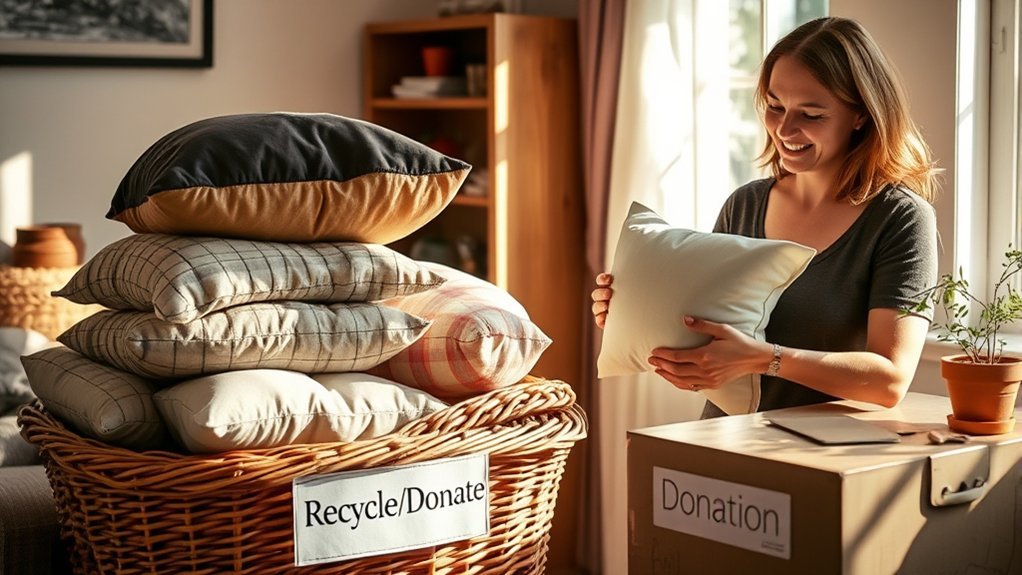
When you find yourself with an old travel pillow, don’t just toss it aside; there are plenty of creative and responsible ways to give it a new life. Think about transforming it into a cozy pet bed by placing it in a washable cover—your furry friend will appreciate the comfort. If you want to help people in need, consider donating your pillow to local homeless shelters or community organizations; they often welcome items that provide comfort during travel or temporary housing. For sustainable practices, check out textile recycling programs that accept pillows. Verify your pillow is clean and in good condition before donating or recycling. If it’s made from natural materials, you can even compost the filling after removing it from the casing.
Signs It’s Time to Let Go of Your Travel Pillow
If your travel pillow has noticeable wear and tear, like frayed fabric or exposed filling, it’s time to contemplate a replacement. Unpleasant odors that linger after washing signal it’s no longer hygienic, while a loss of shape means it can’t support your neck properly. Keep an eye on these signs to guarantee your travel comfort isn’t compromised!
Visible Wear And Tear
Visible wear and tear on your travel pillow can signal that it’s time for a replacement. If you notice fraying fabric or exposed stuffing, it indicates a loss of structural integrity that can compromise your comfort. A flat pillow that lacks support won’t help you rest during your travels, suggesting it’s time to let it go. Stains that persist even after washing can signal material degradation and the potential presence of allergens, making replacement advisable. Regularly inspecting your pillow every 1-2 years can enhance pillow longevity, ensuring you’re always equipped for a restful journey. Don’t hesitate to liberate yourself from worn-out pillows; your comfort and health deserve it!
Unpleasant Odors Present
Worn-out travel pillows not only show visible signs of damage but can also develop unpleasant odors that signal it’s time to say goodbye. These odors often indicate bacteria growth, making your pillow unsuitable for use. If you’ve tried odor removal techniques without success, it’s a strong sign it’s time for a replacement. Regularly replacing your travel pillow every 1-2 years is essential for hygiene and comfort. Here are some key points to reflect upon:
- Persistent smells despite washing indicate bacteria growth.
- Odors may signal material breakdown affecting support.
- Old pillows can disturb your sleep.
- Dispose of or recycle responsibly to promote hygiene.
Don’t let an unpleasant pillow hold you back from restful travel!
Loss Of Shape
When your travel pillow begins to lose its shape, it’s more than just an aesthetic issue; it directly affects your comfort and support during journeys. If your pillow feels flat or lumpy, it’s time to let go. Lack of neck support can lead to discomfort and potential pain, undermining your travel comfort improvements. Regular inspection is key; if your pillow doesn’t bounce back after use or washing, replace it. Persistent odors or stains indicate hidden bacteria, making it unsafe. Remember, most travel pillows only last 1-3 years, depending on usage. By following these pillow maintenance tips, you’ll guarantee a cozy travel experience. Embrace liberation by investing in a new pillow that truly supports your adventures!
How to Ensure Your Old Pillows Are Safe for Donation
To guarantee your old travel pillows are safe for donation, start by cleaning them thoroughly to eliminate any stains or odors. Many donation centers have strict donation guidelines, so it’s essential to verify your pillows are in good condition. Follow these steps for pillow safety:
- Wash your pillows on a gentle cycle with mild detergent.
- Air-dry completely to remove dust mites and allergens.
- Remove any zippers, tags, or non-fabric components that could pose safety risks.
- Check with local shelters or organizations to confirm their acceptance policies for travel pillows.
Where Can You Donate Your Old Travel Pillows?
Wondering where to give your old travel pillows a new life? Start by reaching out to local homeless shelters; they often accept pillows to provide comfort to those in need. Animal shelters are another great option, as they love using travel pillows for pet bedding. If you have kids in mind, check with daycare centers about their donation guidelines for nap areas. Don’t forget to connect with community partnerships or charities running emergency housing programs, as they may benefit from your generous donation. Just a heads-up: thrift stores typically don’t accept used travel pillows, so verify their policies before dropping them off. Your old pillows can bring comfort and support to others—so take action today!
Recycling Options for Old Travel Pillows
When it comes to recycling old travel pillows, you’ve got some great options. Look for local textile recycling programs or drop-off locations that specifically accept these items. You can also explore mail-in recycling services to guarantee your travel pillow gets a second life!
Textile Recycling Programs Available
Recycling old travel pillows is easier than you might think, thanks to a variety of textile recycling programs available across the country. Embracing sustainable practices has never been more accessible! Here are some options to reflect upon:
- American Textile Recycling Service (ATRS) – Drop off your travel pillows at designated bins nationwide.
- Local Recycling Centers – Check with your center for specific guidelines on pillow acceptance.
- TerraCycle – Utilize their Zero Waste Boxes to recycle various textiles, including travel pillows.
- Community Initiatives – Contact local municipalities or solid waste districts for emerging textile recycling options.
Local Recycling Drop-off Options
Finding local recycling drop-off options for your old travel pillows can make a significant impact on reducing waste. Start by checking with your municipality or solid waste district for emerging textile programs. Facilities operated by the American Textile Recycling Service (ATRS) often provide accessible bins in various states. Use Earth911’s Recycling Locator tool to find nearby recycling facilities that accept travel pillows.
| Facility Type | Description |
|---|---|
| ATRS Bins | Bins for general textile recycling |
| Municipal Programs | Local programs for textile recycling |
| Specialized Centers | Facilities for synthetic material recycling |
Remember to verify with each center about their specific guidelines to guarantee your pillows don’t end up in landfills.
Mail-in Recycling Services Offered
If you’re looking for a convenient way to dispose of your old travel pillows responsibly, mail-in recycling services offer a practical solution. These services guarantee your items don’t end up in landfills while promoting sustainable practices. Here are some options to contemplate:
- TerraCycle: Send in your travel pillows for proper recycling and material recovery.
- Zero Waste Boxes: Purchase a box for textiles and fill it with unwanted items before sending it off.
- American Textile Recycling Service (ATRS): Check if they offer mail-in options specific to your travel pillows.
- Material Check: Verify your pillow’s material is accepted, as some programs only accept cotton or polyester.
Utilizing these mail-in options supports textile recycling and reduces your environmental impact!
Creative Ways to Upcycle Old Travel Pillows
While you might think old travel pillows are destined for the trash, there are plenty of creative ways to give them a new life. Transform your pillows into cozy pet beds by placing them in washable covers, offering your furry friends a comfy spot. Need neck support while gardening? Repurpose them for cushioned comfort! You can also use the stuffing to create unique stuffed animals or decorative cushions, adding a personal touch to your home decor. Combine multiple pillows to craft larger floor cushions for extra seating during gatherings. Finally, cut and reshape them into travel-sized neck pillows for future journeys. These eco-friendly options not only reduce waste but also inspire creative projects that enhance your everyday life!
Health and Hygiene Considerations for Old Travel Pillows
When it comes to old travel pillows, health and hygiene should be top of mind. Dust mites, odors, and stains can accumulate over time, creating potential health risks, especially for those with allergies. If your pillow shows signs of wear or has a persistent smell, it might be time to contemplate recycling or replacing it for your well-being.
Dust Mite Accumulation
As you travel, your pillow might seem like a cozy companion, but it can also become a breeding ground for dust mites, which thrive in warm, humid environments. These tiny pests can lead to allergic reactions and respiratory issues, especially in sensitive individuals. To keep your travel pillow safe and healthy, consider these tips:
- Wash your pillow regularly to reduce dust mite populations.
- Replace your travel pillow every 1-2 years to minimize allergen accumulation.
- Store your pillow in a cool, dry place to deter dust mites.
- Monitor for signs of wear or age, as older pillows may harbor significant allergens.
Odor and Stains
Over time, your travel pillow can accumulate unpleasant odors and unsightly stains, raising important health and hygiene concerns. These issues can harbor bacteria and allergens, especially harmful for those with respiratory issues. For effective odor removal and stain treatment, regular washing is crucial, but if your pillow still smells or shows stains afterward, it’s time to let it go. Before donating, verify your pillow is clean and odor-free; many centers reject items that don’t meet hygiene standards. Remember, travel pillows made from synthetic materials aren’t biodegradable, so consider eco-friendly disposal options to minimize landfill waste. By addressing these concerns, you not only protect your health but also contribute positively to the environment and those in need.
How to Find Local Recycling Centers for Travel Pillows
Wondering how to properly dispose of your old travel pillows? Finding local recycling centers for travel pillow recycling can be straightforward. Here’s how you can take action:
- Use Earth911 Recycling Locator: This tool can help you discover centers that accept travel pillows, as most standard facilities don’t.
- Contact Your Municipal Solid Waste District: Ask about any textile recycling programs that include travel pillows.
- Check Local Textile Factories: Some may accept travel pillows; always verify their policies first.
- Explore Mail-in Recycling Programs: These eco-friendly options can simplify your disposal process.
FAQs on Pillow Disposal
When it comes to disposing of travel pillows, you likely have questions about the best practices. Many donation centers, like the Salvation Army and Goodwill, don’t accept used travel pillows due to travel pillow hygiene concerns. Always check local donation center policies before you drop them off. If your pillow is clean and in good condition, consider donating it to animal shelters, which often use them for bedding. For recycling, standard bins won’t work for synthetic-filled pillows, so seek out special textile recycling programs. If your pillow’s made of natural materials, like cotton, you can compost the casing after removing any synthetic parts. Use Earth911’s Recycling Locator to find nearby options!
The Environmental Impact of Responsible Pillow Disposal
While many people overlook the impact of their old travel pillows, responsible disposal can make a significant difference for our environment. By engaging in sustainable practices, you can help combat the growing waste crisis. Here’s how:
- Recycle your pillows to prevent harmful materials from contaminating soil and water.
- Donate to local charities, ensuring your pillows find a new home instead of a landfill.
- Explore eco friendly alternatives for your next pillow purchase, reducing your future environmental impact.
- Support the recycling industry, which plays an essential role in reducing landfill mass and methane emissions.
Frequently Asked Questions
Can I Donate Travel Pillows That Are Slightly Stained?
You can donate slightly stained travel pillows, but check the donation guidelines first. Consider stain removal techniques to improve their condition. Many organizations appreciate clean items, so take that extra step to guarantee your donation’s impact!
How Do I Clean My Travel Pillow Before Donating?
To clean your travel pillow, use gentle cleaning methods like machine washing on a delicate cycle or hand washing with mild detergent. Make certain it’s thoroughly dried to maintain its shape and comfort before considering donation.
Are There Specific Charities That Accept Travel Pillows?
Many charity organizations and local shelters gladly accept travel pillows. Just check with them first, and you’ll help provide comfort to those in need. Your thoughtful donation can make a real difference!
What Materials Are Travel Pillows Made From?
Travel pillows are typically made from materials like memory foam for comfort and support, or inflatable designs that offer portability. Understanding these materials helps you choose the best option for your travel needs and comfort.
Can I Recycle Travel Pillows With Plastic Coverings?
You can’t recycle travel pillows with plastic coverings through regular recycling options. In fact, only about 9% of plastic gets recycled. Consider repurposing materials instead or donating them to organizations that accept various pillow materials.
Conclusion
So, before you let your travel pillow retire in a dusty corner, consider recycling or donating it instead. After all, wouldn’t you want your pillow to have a second career? Let it spread joy to someone else instead of becoming a forgotten relic of your adventures. Remember, one person’s worn-out pillow is another’s cozy travel companion. So, give it a new lease on life—because nothing says “I care about the planet” like passing on a slightly squished piece of foam!
