

Last Updated on September 10, 2026 by Daniel Globe
An inflatable travel pillow becomes more comfortable when it supports your head without squeezing your neck or pushing your head away from the seat. Start with partial inflation, test the pillow against the actual seatback, and release or add air in small amounts. The best position depends on the pillow’s shape, your neck length, and how upright you are sitting.
Quick Answer
Inflate your travel pillow to slightly below full firmness, place it where it supports the chin and sides of your head, and test it against the seatback. Release air if it pushes your head forward. Add a soft washable cover, secure loose straps, and adjust the pillow again after takeoff if it becomes firmer.
Key Takeaways
- Begin with partial inflation. A pillow that is too full can create pressure points or push your head forward.
- Use the orientation that matches your pillow’s design and supports your chin without restricting breathing, swallowing, or head movement.
- Test the pillow while sitting against the real seatback, not while standing or sitting away from the seat.
- A soft cover, secure closure, and correctly placed lumbar support can improve comfort without changing the pillow itself.
- Check the care label before washing, dry the pillow fully, and test the valve for leaks before every major trip.
At a Glance
| Time Required | 5 to 10 minutes for fitting and adjustment |
| Difficulty | Easy |
| Tools Needed | Inflatable travel pillow and its valve; optional washable cover, scarf, or small lumbar cushion |
| Cost | Usually $0 with your current pillow; optional covers and accessories cost extra |
Disclosure: As an Amazon Associate I earn from qualifying purchases. Some links on this page are affiliate links, at no extra cost to you.
Understanding the Importance of Proper Inflation
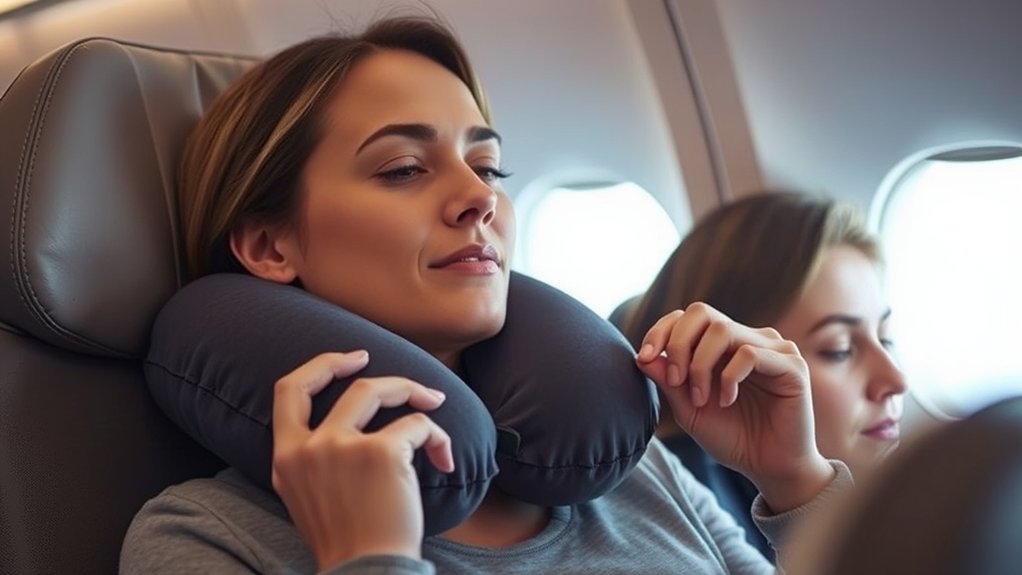
Inflation controls the pillow’s height, firmness, and ability to follow the shape of your neck. A fully inflated pillow may feel stable in your hands but become uncomfortable when it is compressed between your body and a firm seatback. Start below full inflation, close the valve, sit back, and then adjust the air in small amounts.
Your pillow is probably overinflated when it feels hard, presses into your jaw, raises your shoulders, pushes your head forward, or creates a strong pressure point. It is probably underinflated when it folds, collapses under your head, allows repeated side-to-side movement, or provides no support beneath your chin.
How to Find the Right Inflation Level
- Inspect the valve, seams, and surface for visible damage.
- Inflate the pillow to about three-quarters of its maximum size.
- Put it on according to the manufacturer’s directions.
- Sit fully against the seatback and relax your shoulders.
- Let your head become heavy instead of holding it upright with your neck muscles.
- Release a small amount of air if the pillow pushes your head forward or feels hard.
- Add a little air if your head falls through the support or tilts sharply to one side.
- Repeat the test while looking straight ahead and while leaning slightly toward your preferred sleeping side.
Pro Tip: Test the pillow at home in a dining chair, car passenger seat, or other high-backed chair. Wear the same jacket or hoodie you expect to wear while traveling because bulky clothing changes the fit.
Warning: The pillow should never make breathing or swallowing difficult. Loosen or remove it if you notice pain, numbness, tingling, dizziness, jaw pressure, or worsening neck symptoms. Ask a qualified healthcare professional for individual guidance if you have had recent neck surgery, a recent neck injury, or an active cervical condition.
Why the Pillow May Feel Firmer During a Flight
Commercial aircraft cabins are pressurized, but the pressure during cruise is lower than normal sea-level pressure. The FAA explains that modern passenger aircraft commonly maintain a cabin altitude below or around 8,000 feet. According to NASA’s explanation of Boyle’s law, a confined gas changes volume as surrounding pressure changes. As a result, a tightly filled pillow may feel firmer after takeoff.
Note: Avoid filling the pillow completely before takeoff. If it becomes hard or uncomfortable during cruise, open the adjustment valve carefully and release a small amount of air.
Choosing the Right Position for Your Inflatable Travel Pillow
Correct positioning matters as much as inflation, but there is no single orientation that works for every pillow. A traditional U-shaped pillow may close at the front, while a wrap-style pillow may support one side of the neck. Other designs have a flat rear panel, a raised chin section, or straps that attach to the seat.
The best position is the one that supports your head without forcing it forward, squeezing your neck, or making your shoulders rise.
- Start with the intended orientation: Check the label or manufacturer instructions before rotating the pillow.
- Support the chin gently: If your chin drops toward your chest, move the thicker support toward the front or front-side of your neck if the design allows it.
- Reduce rear bulk: If the seatback and pillow combine to push your head forward, release air or rotate a symmetrical U-shaped pillow so less material sits behind your neck.
- Support your preferred side: If your head usually falls toward the window, place the taller or firmer section on that side.
- Use closures lightly: Tighten straps or toggles only enough to stop the pillow from spreading or slipping.
- Keep normal movement: You should still be able to turn your head enough to respond to your surroundings and follow crew instructions.
Perform a 30-Second Fit Check
After putting the pillow on, sit back, close your eyes, relax your jaw, and let your head become heavy for about 30 seconds. A suitable fit should reduce sudden head movement while allowing comfortable breathing, swallowing, and small head turns. If you must keep your neck muscles tense to stay comfortable, adjust the air or position again.
Make Your Pillow Cozier With Soft Covers and Accessories
A thin, washable cover can reduce the sticky or cool feeling of an exposed air bladder. Cotton, polyester knit, fleece, bamboo-derived fabric, or another soft material may work, but choose a cover that does not add excessive bulk behind your head.
You can also wrap a clean T-shirt, light scarf, or thin pillowcase around the pillow. Smooth the fabric so folds do not press into your skin. Avoid thick memory foam inserts unless the pillow was designed to hold one, because added thickness can move your head farther away from the seatback.
- Use a breathable cover if you become warm around the neck.
- Choose a removable, washable layer for overnight or repeated trips.
- Keep zippers, toggles, and valve caps away from your cheek and jaw.
- Secure loose fabric so it cannot cover your face while you sleep.
- Pair the pillow with an eye mask and earplugs when light and noise are the main barriers to rest.
Solutions for Common Inflatable Pillow Issues
Inflatable pillows are adjustable and compact, but small fitting problems can make them feel less comfortable than expected. Use the symptom you notice to identify the most likely adjustment.
Most comfort problems come from excessive air, the wrong orientation, an unstable closure, heat buildup, or a mismatch between the pillow and seatback.
The Pillow Pushes Your Head Forward
Release air first. If the rear section remains bulky, try a different permitted orientation or place more of the support at the front and sides. Make sure your upper back is against the seat rather than slouched several inches forward.
Your Chin Keeps Dropping
Move the supportive section closer to the front or front-side of your neck. Tighten the closure slightly if the pillow spreads apart, but do not tighten it against your throat. A front-closing design may work better than an open U-shape for people who experience repeated forward head drop.
Your Head Falls to One Side
Add a small amount of air or position the taller section on the side toward which you lean. When you have a window seat, the pillow can work with the wall, but place a folded jacket or clean layer between your head and the hard surface.
The Pillow Slips
Check whether the closure is threaded correctly and whether smooth clothing is reducing friction. A soft cover, scarf, or properly designed seat strap may help. Do not tie the pillow to emergency equipment or attach it where it could block another passenger.
The Pillow Feels Hot or Sweaty
Use a lighter cover, loosen the front closure slightly, and keep the front of your neck open when the design permits. Avoid wrapping thick blankets around both the pillow and your face.
The Pillow Squeaks or Rustles
Release a little air and add a thin fabric cover. Excessively tight inflation increases surface tension and can make coated materials noisier when they rub against clothing or the seat.
The Pillow Loses Air
Confirm that the valve is fully closed and that no fabric or debris is trapped in it. Inflate the pillow at home and leave it for several hours. If it repeatedly softens, inspect the seams and bladder for a leak. Use only a repair method approved by the manufacturer. Replace the pillow if the valve or seam continues to fail.
Adjusting for Different Sitting Positions During Travel
Your inflation level may need to change when the seat angle changes. Make adjustments after reclining, returning the seat upright, moving to a different vehicle, or adding a jacket behind your back.
Upright Seat Position
Use enough side and chin support to reduce head movement, but keep the rear section soft enough that your ears remain roughly above your shoulders. If your head moves forward of your chest, reduce the rear thickness.
Reclined Seat Position
A slightly softer setting often works because the seatback supports more of your head’s weight. Release air gradually rather than opening the valve fully. Recheck your chin position after the seat angle changes.
Window Seat Position
Place the more supportive section toward the window side if your pillow allows it. Use a clean fabric barrier against the wall and avoid leaning directly on hard trim, controls, or gaps between panels.
Middle or Aisle Seat Position
Use balanced support on both sides because you may not have a wall to lean against. Keep the pillow and any straps within your own seating space. Remove or loosen the pillow before standing so you can move normally.
Adding Lumbar Support for Enhanced Comfort
A neck pillow cannot correct a slouched sitting position by itself. When your lower back rolls backward, your upper back and head often move forward, making the neck pillow feel too thick. A small amount of lumbar support can help you sit against the seatback more comfortably.
Importance of Lumbar Support
OSHA’s chair guidance recommends a backrest that follows the natural curve of the spine and provides suitable lumbar support. Although airplane and vehicle seats are different from office chairs, the same basic fitting principle is useful: support should fill the small gap at your lower back without forcing your torso forward.
- Place support in the curve of your lower back, not behind your shoulder blades.
- Begin with a thin rolled scarf, sweater, or towel.
- Reduce the thickness if your hips slide forward or your chest is pushed away from the seat.
- Keep both feet supported when possible.
- Change position periodically instead of remaining rigid for the entire journey.
Best Lumbar Pillow Options
The best travel option is compact, adjustable, and thin enough for the seat. A small inflatable lumbar cushion is easy to pack and lets you change the firmness. A rolled towel, scarf, or folded sweater provides a free alternative. A thick memory foam cushion may be comfortable in a car but can take up too much space in a tight airline seat.
Look for a smooth surface, a secure valve, and an adjustable strap if you need the support to remain in one position. The cushion should support the lower back without pressing sharply into the spine.
Caring for Your Pillow
Regular care helps prevent odors, skin irritation, valve problems, and avoidable leaks. Because materials and construction differ, always follow the care label for your specific pillow.
- Check the valve and seams: Inspect the pillow before every major trip.
- Close the valve before cleaning: Keep water and soap from entering the air chamber.
- Clean the correct part: Wipe or hand-wash the exterior only when the manufacturer permits it. Wash removable covers separately according to their labels.
- Use mild products: Avoid bleach, strong solvents, and harsh scrubbing unless the manufacturer specifically allows them.
- Rinse away residue: Soap left on the surface may irritate the skin or make the pillow feel sticky.
- Air-dry fully: Do not pack the pillow while the cover, valve area, or surface is damp.
- Store it safely: Deflate it, fold or roll it without sharp creases, and keep it away from heat, direct sunlight, and sharp objects.
For example, Sea to Summit’s inflatable-pillow care guidance recommends hand cleaning for its Aeros pillows rather than machine washing the inflatable pillow. Your model may have different instructions, so its label should remain the final authority.
When to Repair or Replace the Pillow
Use a manufacturer-approved patch when the bladder has a small repairable puncture. Replace the pillow when a seam is separating, the valve will not remain closed, the surface is peeling, a recurring leak cannot be located, or a persistent odor remains after proper cleaning and drying.
Tips for a Restful Sleep While Traveling
A comfortable pillow is only one part of resting during a trip. Reduce light and noise, keep essential items within reach, and choose a sleeping position that does not require constant muscle effort. Avoid placing phones, hard buckles, earbuds, or bulky clothing between the pillow and your neck.
Optimal Pillow Inflation Level
The best level is the lowest inflation that provides stable support. This approach keeps the pillow softer and reduces the chance that it will push your head forward.
- Your shoulders should remain relaxed rather than lifted.
- Your chin should not be forced tightly toward your chest.
- Your head should not be pushed several inches away from the seatback.
- The pillow should not collapse completely when your head becomes heavy.
- You should be able to breathe, swallow, and make small head movements comfortably.
Correct Pillow Positioning
Start with the manufacturer’s intended position. Then make a practical adjustment based on what your head does when you relax. Move support toward the front if your chin drops, toward one side if your head tilts, or away from the rear if your head is pushed forward. Adjustable straps should stabilize the pillow without creating pressure against the throat.
Remember to Move on Long Journeys
A travel pillow can help you rest, but it should not encourage you to remain motionless for an entire long trip. The CDC recommends moving your legs frequently and walking periodically during long-distance travel. When conditions and crew instructions allow, remove or loosen the pillow, change position, flex your ankles, and stand or walk occasionally.
Frequently Asked Questions
Can I use my inflatable pillow for outdoor camping?
Yes, provided the pillow is designed for that use or is durable enough for your sleeping setup. Keep it away from thorns, sharp rocks, rough tent hardware, sparks, and hot surfaces. Place fabric or a sleeping mat beneath it, and bring the manufacturer’s repair patch if one is available.
How do I clean my inflatable travel pillow?
Follow the care label. In general, close the valve and clean the exterior with mild soap and water when the manufacturer permits it. Wash a removable cover separately. Keep water out of the air chamber, avoid harsh chemicals, and allow every part to air-dry completely before storage.
Is it safe to use while flying?
An ordinary manually inflated travel pillow is generally a simple comfort item. It must not interfere with your seat belt, breathing, movement, another passenger, an aisle, or crew instructions. Products that use compressed-gas cartridges or automatic inflation systems may be subject to separate airline and hazardous-material rules, so check with the airline before travel.
What materials are inflatable travel pillows made from?
The air-holding bladder may be made from TPU, PVC, or another coated synthetic material. The outer surface or removable cover may use nylon, polyester, fleece, cotton, or blended fabric. Padding, valves, and closures may use additional materials. Check the product label when allergies, skin sensitivity, or material preferences are important.
How do I store my inflatable pillow when not in use?
Make sure the pillow is clean and completely dry. Deflate it fully, close the valve after the remaining air has escaped, and roll or fold it according to the manufacturer’s directions. Store it in a cool, dry place away from direct sunlight, heaters, sharp items, and heavy objects.
Why does my inflatable pillow feel harder after takeoff?
Cabin pressure during cruise is lower than sea-level pressure, so the sealed air inside the pillow can expand and make it feel firmer. Avoid fully inflating it before takeoff. If it becomes uncomfortable, release a small amount of air through the adjustment valve.
What should I do if the pillow pushes my head forward?
Release air first. Sit with your upper back against the seat and check how much material is behind your neck. If the design permits, rotate the pillow so more support sits at the front or sides and less sits behind your head. A lower-profile design may be a better fit for a seat with a thick headrest.
Conclusion
To make an inflatable travel pillow more comfortable, treat it as an adjustable support rather than a cushion that must be filled completely. Begin with partial inflation, sit against the real seatback, and adjust the air and orientation according to what your head does when you relax. Add a soft cover or light lumbar support only when it improves the fit without adding excessive bulk.
Before each trip, test the valve, inspect the seams, and review the care instructions. During the journey, loosen or remove the pillow if it creates pressure, restricts movement, or causes symptoms. A properly fitted pillow should make it easier to relax without forcing your head or neck into an uncomfortable position.
Sources
- NASA Glenn Research Center: Boyle’s Law – explains the relationship between gas pressure and volume.
- Federal Aviation Administration: Aircraft Pressurization – explains typical passenger-aircraft cabin pressurization.
- Occupational Safety and Health Administration: Chair and Lumbar Support Guidance – supports proper lower-back support and seated positioning.
- Centers for Disease Control and Prevention: Blood Clots and Travel – supports periodic leg movement and walking during long journeys.
- Sea to Summit: How to Wash an Inflatable Pillow – provides manufacturer care guidance for an inflatable pillow.
- PubMed: Neck Support Pillows, a Comparative Study – provides supporting context about pillow consistency, height, comfort, and neck support.
