

Last Updated on July 24, 2026 by Caleb Warren
Inflatable travel pillows are designed to support your neck during long flights or road trips, but filling them to maximum capacity usually backfires. Overinflating a travel pillow creates an unyielding surface that distorts your spine’s natural curve, creates uncomfortable pressure points, and elevates the risk of the pillow bursting when airplane cabin pressure drops at high altitudes. Aiming for approximately 75% capacity (three-quarters full) provides the perfect balance of flexibility and support.
Quick Answer
You should never fully overinflate an inflatable travel pillow. Inflating your pillow to roughly 75% capacity allows the material to yield and contour to your neck’s natural arch. Overinflation causes severe cervical neck strain, restricts airflow, and can cause the pillow to over-expand and pop due to atmospheric pressure drops inside airplane cabins.
Key Takeaways
- The 75% Rule: Fill your travel pillow to about three-quarters full so it molds dynamically to your posture.
- Cabin Pressure Impact: Air expands inside sealed bladders as airplanes climb to cruising altitude; underinflating on the ground prevents in-flight overinflation.
- Cervical Spine Protection: Rock-hard pillows push the head forward, triggering muscle fatigue in the neck and shoulders.
- Micro-Adjustments: Utilize built-in push-button air valves while seated in your travel position for customized firmness.
At a Glance
| Target Inflation Level | 70% – 80% (Medium Firmness) |
| Time Required | 30 – 60 Seconds |
| Primary Tools | Breath valve or integrated push-pump micro-adjuster |
| Key Health Risk | Forward head posture & trapezius strain |
Disclosure: As an Amazon Associate I earn from qualifying purchases. Some links on this page are affiliate links, at no extra cost to you.
Understanding Overinflation: How Much Is Too Much for Your Travel Pillow?
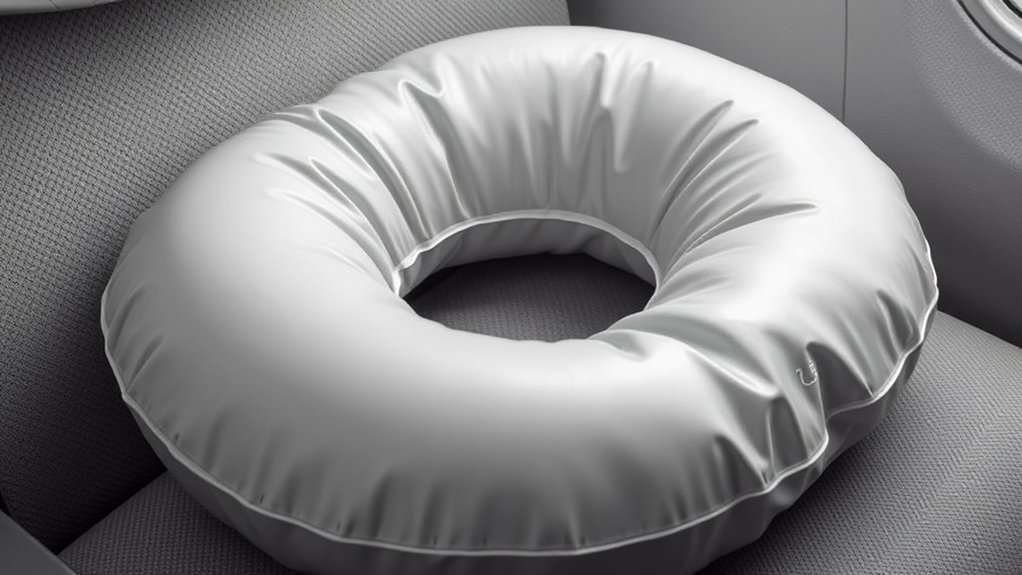
Determining whether your inflatable travel pillow is overfilled comes down to how well it yields to touch. When a pillow is inflated to 100% capacity, its exterior becomes rigid, turning a supportive travel accessory into a hard barrier. Overinflation prevents the cushion from conforming to your neck’s natural lordotic curve, creating pressure points along the base of your skull and neck muscles.
Aim for a medium firmness by filling the internal air bladder to roughly three-quarters full. At this level, the air inside shifts slightly under the weight of your head, providing custom ergonomic support. Most modern inflatable pillows feature an integrated quick-release valve or micro-adjustment button, allowing you to bleed off excess air while seated in your flight or train seat until your head rests comfortably in alignment with your shoulders.
The Physics of In-Flight Air Expansion (Cabin Pressure Effect)
A frequently overlooked danger of inflating travel pillows at the airport terminal is atmospheric pressure change. According to Federal Aviation Administration (FAA) cabin pressurization standards, commercial aircraft cabins are pressurized to an equivalent altitude of 6,000 to 8,000 feet during flight.
Demonstrated by Boyle’s Law ($P_1V_1 = P_2V_2$), as ambient air pressure decreases during ascent, gas inside a sealed chamber expands. If you blow up your travel pillow to 100% capacity at sea level prior to boarding, the internal air volume will expand by 15% to 20% once cruising altitude is reached. This turns a firm pillow into a rock-hard cushion that puts extreme strain on seam welds and valve seals.
Warning: Inflating your travel pillow to maximum capacity on the ground before a flight can cause internal seam rupture or valve failure at cruising altitude as air expands under lowered cabin pressure.
Avoid These Common Mistakes When Inflating Your Travel Pillow
Achieving ideal comfort on long trips requires correct inflation levels combined with proper anatomical placement. Avoiding basic inflation mistakes will keep you comfortable and eliminate neck stiffness upon landing.
Inflate To Medium Firmness
Fully inflating a pillow creates a surface with no recoil or give. Aiming for medium firmness (~75% full) creates an adaptive air pocket that redistributes internal volume when your head leans back. Test the pillow by pressing your hand into the center: it should depress roughly 1 to 1.5 inches without bottoming out against the back layer.
Position Pillow Correctly
Proper alignment is just as important as air pressure. Standard U-shaped travel pillows are frequently worn incorrectly with the opening facing forward. If your head tends to drop forward when sleeping upright, try turning the pillow around so the thickest central bridge sits under your chin. This prevents sudden head snaps during deep sleep phases.
Pro Tip: If you suffer from forward head slump when sleeping in airplane seats, reverse your U-shaped pillow so the bulk sits beneath your chin to support your jaw line.
How Overinflation Can Mess With Your Comfort
When an air bladder is pumped to maximum capacity, it pushes your head forward relative to your torso. This position flexes the upper cervical spine, overstretching the trapezius and levator scapulae muscles over extended periods. Clinical guidelines from the Mayo Clinic on neck pain causes highlight that sustained forward head posture is a primary driver of muscle fatigue, spasms, and tension headaches.
“Sustained forward head posture strains cervical vertebrae, compounding muscle tension and creating localized pressure points during prolonged travel.”
Additionally, fully tensioned thermoplastic polyurethane (TPU) or polyvinyl chloride (PVC) fabrics lack flexibility, trapping body heat against your skin. A slightly underinflated pillow allows micro-ventilation between the fabric folds, creating a cooler sleep surface.
Adjusting Your Travel Pillow’s Firmness for Maximum Comfort
Optimal inflation levels vary based on your preferred sleeping position and seating environment:
- Back Sleepers: Keep inflation at 70%–75%. This allows the head to sink backward slightly, aligning the throat and cervical spine without forcing the head forward.
- Side Sleepers (Window Leaners): Inflate closer to 80%–85%. Side sleeping requires a slightly firmer bolster to fill the wider gap between the shoulder tip and earlobe.
- Tray Table Sleeper (Forward Leaners): Inflate to 65%–70% to allow face cushions to conform gently around breathing pathways.
Note: Always perform final inflation adjustments while seated in your travel chair with your seatback reclined to your actual sleeping angle.
Benefits of Proper Inflation Techniques
Using proper inflation techniques turns your inflatable pillow into an effective ergonomic tool. Regulating air density delivers distinct advantages:
- Optimal Spinal Alignment: Preserves the natural lordotic curve of your neck to minimize morning stiffness.
- Pressure Point Relief: Distributes cranial weight evenly across soft fabric surface areas.
- Extended Pillow Lifespan: Reduces tension on high-stress seam welds and air retention valves.
- Temperature Control: Encourages airflow across skin-contact surfaces to prevent heat buildup.
Essential Maintenance Tips for Keeping Your Inflatable Travel Pillow in Top Shape
Proper maintenance protects internal air bladders and ensures hygienic use trip after trip:
- Clean the Surface Regularly: Wipe down the external air bladder using a soft cloth dampened with mild soapy water. If your pillow features a removable fleece cover, machine wash it on a gentle cold cycle.
- Inspect Air Valves and Seams: Periodically submerge an inflated pillow in water or apply soapy water along seams to check for micro-boiling bubbles indicating air leaks.
- Dry Completely Before Storage: Ensure internal moisture from human breath evaporates fully before deflating and folding. Store the pillow uncompressed in a cool, dry location to prevent material degrading or mildew growth.
Frequently Asked Questions
Can I Use a Pump to Inflate My Travel Pillow?
Yes, you can use a manual hand pump or small portable battery pump. However, exercise extreme caution: electric pumps inflate bladders rapidly and can quickly overinflate or pop internal TPU seams. Stop pumping once the pillow reaches roughly 75% firmness.
What Materials Are Used in Inflatable Travel Pillows?
Most modern inflatable travel pillows utilize Thermoplastic Polyurethane (TPU) or Polyvinyl Chloride (PVC) for the inner air bladder. The exterior is typically lined with flocked micro-velvet, polyester, or breathable bamboo rayon covers for skin comfort.
Is It Safe to Sleep on an Inflated Travel Pillow?
Yes, sleeping on an inflatable travel pillow is safe provided it is adjusted to a medium firmness that keeps your head aligned with your spine without restricting breathing pathways or over-extending neck muscles.
How Long Does an Inflatable Travel Pillow Last?
With proper care—avoiding sharp objects, keeping inflation around 75%, and storing in a dry environment—a high-quality TPU travel pillow typically lasts between 2 to 5 years of regular travel.
Can I Wash My Inflatable Travel Pillow?
You can wash the outer removable cover in a standard washing machine. For the inflatable inner bladder, wipe it clean by hand using lukewarm water and mild soap, then allow it to air dry completely before storing.
Conclusion
Treating your inflatable travel pillow like a precision gear item rather than a simple balloon is the key to restful travel. Avoid the common pitfall of overinflation: fill your pillow to roughly 75% capacity to account for cabin pressure air expansion and cervical spine ergonomics. By mastering proper inflation levels, positioning the cushion correctly for your sleep style, and maintaining the air bladder, you can arrive at your destination refreshed and free from neck pain.
Sources
- Federal Aviation Administration (FAA) — Federal Regulations on Aircraft Cabin Pressurization (14 CFR § 25.841)
- Mayo Clinic — Neck Pain Causes, Symptoms, and Postural Strain Ergonomics
- National Center for Biotechnology Information (NCBI) — Biomechanical Effects of Head and Neck Alignment in Upright Sitting Sleep
