
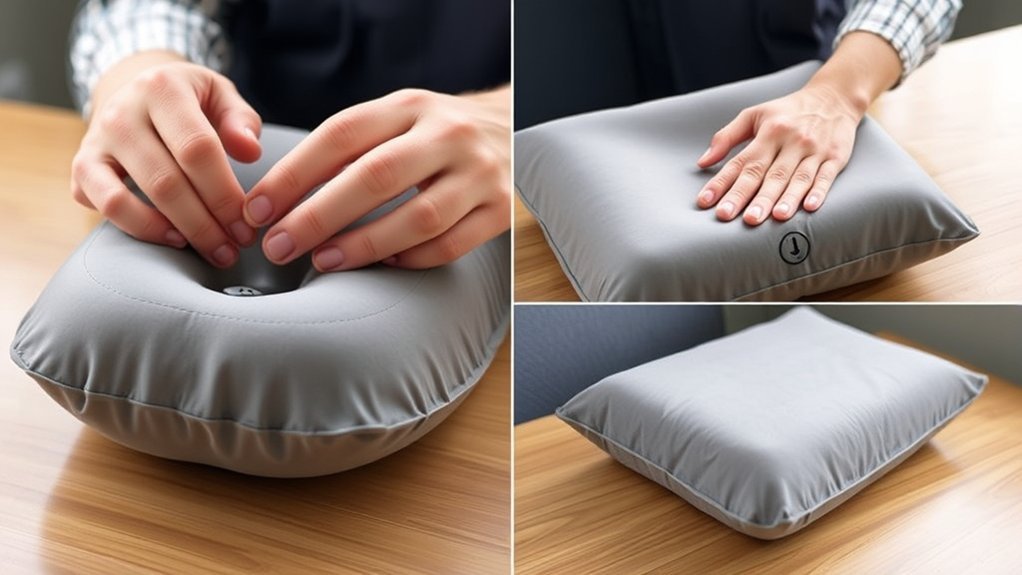
Last Updated on July 29, 2026 by Caleb Warren
A stiff neck can make a long trip miserable, and an inflatable travel pillow can provide adjustable support without taking up much luggage space. The exact inflation method depends on the valve, however, so check the pillow’s label or instructions before you blow into it, operate a built-in pump, wash it, or attempt a repair.
Quick Answer
Unfold the travel pillow, locate its valve, and set the valve to the inflation position. Add air gradually with one to several breaths, or use the built-in pump if your model has one. Close the valve, test the fit, and release small amounts of air until the pillow feels supportive rather than rigid.
Key Takeaways
- Identify your valve before inflating because not every travel pillow uses the same button, flap, cap, or pump.
- Add air gradually and stop when the pillow supports your head without pushing it forward or feeling hard.
- Deflate by opening the release side of the valve, then roll gently toward the valve to remove the remaining air.
- Follow the care label: the air chamber may require hand washing even when a removable cover is machine washable.
- Pack the pillow tightly during a trip, but store it dry and uncompressed with the valve open when it will not be used for a while.
At a Glance
| Time Required | About 1–2 minutes to inflate and adjust; about 1 minute to deflate |
| Difficulty | Easy |
| Tools Needed | None for most models; a manufacturer-approved low-pressure pump is optional for compatible valves |
| Cost | No additional cost unless you need a compatible pump or repair kit |
Disclosure: As an Amazon Associate I earn from qualifying purchases. Some links on this page are affiliate links, at no extra cost to you.
Verdict
An inflatable travel pillow is a practical option for travelers who value low weight, adjustable firmness, and a small packed size. It can work well on plane rides, trains, buses, and road trips. It also fits easily beside a compact carry-on travel backpack.
Its main advantage is portability. Its drawbacks are the need to inflate it, the possibility of air loss, and a less cushioned feel than some foam pillows. Comfort varies by shape, seat, neck size, and firmness, so the best setting is the one that keeps your head supported without forcing it forward.
Before You Begin
Time needed: About 1–2 minutes to inflate and adjust the pillow, plus about 1 minute to deflate and pack it.
What you need: Your inflatable travel pillow and clean, dry hands. A compatible low-pressure pump may be used only when the manufacturer approves it.
Check first: Read the product label or manual. Confirm whether the pillow is mouth-inflated, pump-inflated, or self-inflating; identify which part of the valve controls inflation and deflation; and check whether the cover can be removed for washing.
Warning: Do not connect an inflatable travel pillow to a high-pressure air compressor or an incompatible electric pump. Excess pressure can stretch the air chamber, damage a seam, or force the valve out of position.
Key Features of Your Inflatable Travel Pillow
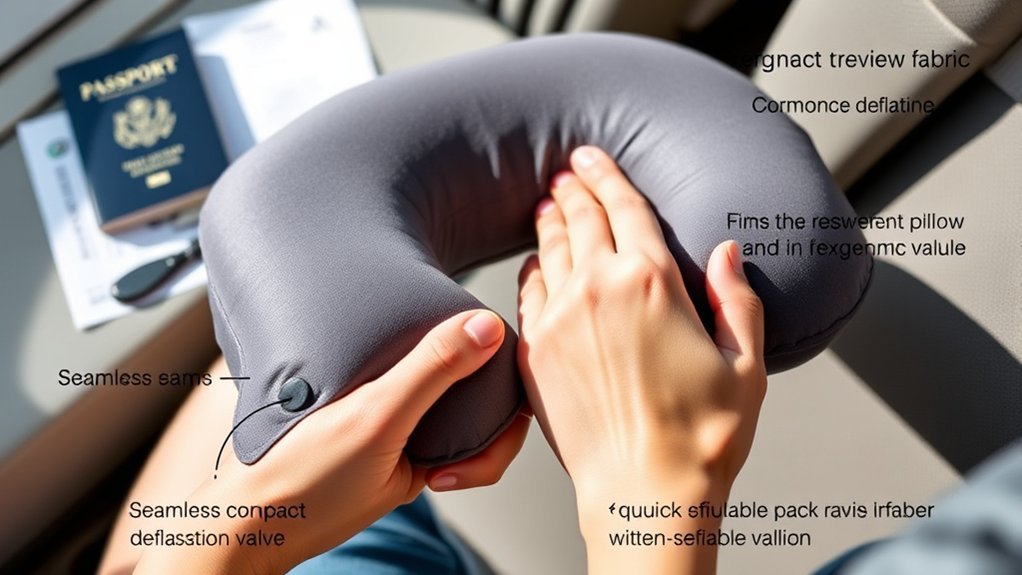
Inflatable travel pillows combine an air chamber with a soft outer surface or removable cover. Adding or releasing air changes the height and firmness, while full deflation allows the pillow to fit into a small pouch. Some models use a multi-function valve for inflation, fine adjustment, and rapid deflation. Others use a separate cap, an internal flap, a twist control, or a built-in hand pump.
For example, the Cabeau AirTNE manufacturer page describes an inflatable core with a center button for adjusting compression. That does not mean every pillow works the same way, so use the markings on your own valve as the final guide.
How to Unfold Your Pillow for Use
Remove the pillow from its pouch and unroll it completely. Separate any folded layers and smooth out sharp creases without pulling hard on the seams. If the pillow has a removable cover, make sure the air chamber is seated correctly inside it.
Place the valve where you can reach it easily. On a U-shaped neck pillow, also identify the opening, clasp, or chin-support section before inflation so you know how the pillow is meant to sit.
Locating the Inflation Valve
The valve may be at the back, side, front, or end of the pillow. Look for printed arrows, an inflation symbol, a cap, a silicone flap, or a push button. Do not pull the valve forcefully away from the fabric.
Common Inflatable Pillow Valve Types
- One-way flap valve: Air enters through a flexible internal flap. To deflate, you normally press or move the flap so air can escape.
- Push-button valve: A center or fine-tune button releases small amounts of air for firmness adjustment.
- Twist valve: The control rotates between inflation and release positions. Align its marks before blowing into it.
- Built-in pump: A foam or mechanical pump is pressed repeatedly until the pillow reaches the desired firmness.
- Two-part multi-function valve: One section is used for inflation and fine adjustment, while a larger opening provides rapid deflation.
Check that the valve is clean, correctly positioned, and free of lint or grit. A small piece of debris can prevent a one-way flap or cap from sealing.
Step-by-Step Inflation Process
- Unfold the pillow fully. Smooth the air chamber and make sure it is not twisted inside its cover.
- Find and inspect the valve. Remove visible lint and identify the inflation setting.
- Open or set the valve. Follow the arrows or markings on the pillow. Do not assume a center button must be pressed while inflating.
- Add air gradually. Blow one steady breath at a time, or operate the built-in pump. Many mouth-inflated models take only a few breaths, but the amount varies by size and valve design.
- Stop before the pillow feels rigid. Leave enough give for the surface to conform to your neck and jaw.
- Close the valve securely. Replace the cap or return the control to its sealed position.
- Test the fit. Sit in your normal travel position and release a small amount of air if the pillow pushes your head forward or feels hard.
Pro Tip: Start slightly soft. It is easier to add another breath than to repeatedly release air from an overfilled pillow while seated.
How to Adjust Your Inflatable Travel Pillow’s Firmness
Sit back and check whether your head, neck, and jaw feel supported. The pillow should reduce unwanted movement without pressing sharply into your neck or lifting your shoulders.
- If it feels too hard: Tap the fine-tune button or briefly open the release valve.
- If it feels too soft: Add one breath or a few pump strokes, then reseal the valve.
- If it pushes your head forward: Release air from the section behind your neck or rotate the pillow if the manufacturer allows another orientation.
- If your chin drops: Position the thicker or closable section under the jaw if that is how your model is designed.
Note: The pillow may feel firmer or softer as cabin pressure and temperature change. Check the fit again after the aircraft reaches cruising altitude, and release a little air if necessary.
Quick and Easy Deflation Techniques
- Remove the pillow from your neck before opening the valve.
- Open the large deflation port, move the flap, turn the valve, or hold the release button as directed by the product markings.
- Press gently across the pillow to move air toward the valve.
- Once mostly flat, roll from the end farthest from the valve.
- Keep the release opening unobstructed until the remaining air has escaped.
- Close the valve only if the manufacturer recommends doing so for packed travel storage.
Warning: Do not put the complete pillow or inflatable bladder in a washing machine unless its care label specifically permits it. Machine agitation can damage an air chamber, coating, seam, or valve. A removable fabric cover may have separate machine-washing instructions.
Compact Folding for Storage
After deflation, flatten the pillow with your hands and roll it toward the open valve. Avoid sharp folds directly across the valve or welded seams. Once the remaining air is out, the pillow should fit easily into its pouch and help you travel light.
Quick Folding Technique
Open the release valve and lay the pillow on a clean surface. Fold it loosely lengthwise only if that matches the shape of its storage pouch, then roll from the opposite end toward the valve. Do not kneel on it or twist it to force out the last pocket of air.
Space-Saving Travel Design
A fully deflated pillow takes much less space than most solid-foam travel pillows. It can usually be packed in a carry-on, personal item, or day bag without much bulk. Keep sharp objects, pens, keys, and exposed zipper teeth away from the air chamber.
Rolling the pillow into its pouch is suitable during a trip. For long-term storage at home, let it dry completely and store it loosely or flat with the valve open when the manufacturer recommends it.
Washing Your Inflatable Pillow
Always check the care label before cleaning. Construction varies, and the cover may have different instructions from the air chamber.
Cleaning a Complete Inflatable Pillow
- Deflate the pillow unless the manufacturer tells you to clean it partially inflated.
- Close the valve before applying water so liquid does not enter the air chamber.
- Use warm water, mild soap, and a soft cloth or non-abrasive sponge.
- Rinse away all soap residue without twisting or wringing the pillow.
- Open the valve and air dry the pillow completely before long-term storage.
This method is consistent with Sea to Summit’s care guidance for Aeros inflatable pillows, but your own product label takes priority.
Washing a Removable Cover
Remove the air chamber only when the product is designed for this. Wash the cover according to its sewn-in label. Some covers can be machine washed on a gentle cycle, while others require hand washing. Let both the cover and air chamber dry completely before reassembly.
Note: Do not pour disinfectant, bleach, alcohol, or strong cleaner onto the pillow unless the manufacturer approves it. Harsh chemicals may discolor the fabric or damage a coating, adhesive, or printed finish.
Best Practices for Using Your Inflatable Travel Pillow While Traveling
- Inflate the pillow before you settle into a cramped seat.
- Keep the valve accessible so you can make small adjustments.
- Use only enough air to support your head comfortably.
- Keep the pillow away from food spills, sharp jewelry, pens, and rough hook-and-loop fasteners.
- Wipe away surface soil with a damp cloth after use when the care label allows it.
- Let moisture dry before sealing the pillow in its pouch.
- At home, store it loosely with the valve open rather than leaving it tightly compressed for months.
How to Position an Inflatable Travel Pillow
Place the pillow according to its shape rather than assuming the opening must always face forward. A traditional U-shaped pillow may support the sides and back of the neck, while a model with chin support may place its closure at the front. Some travelers rotate a basic U-shaped pillow so the thickest section supports the direction their head naturally falls.
Keep the pillow clear of the seat belt and do not place it where it interferes with a child restraint, vehicle headrest, or other safety equipment.
Troubleshooting Common Inflation Issues
The Pillow Will Not Inflate
- Confirm that the valve is set to the inflation position.
- Check whether an internal flap is stuck open.
- Make sure the valve cap, twist control, or center button is not in release mode.
- Unfold the air chamber fully so a crease is not blocking airflow.
- Inspect the valve for lint, sand, or other debris.
Some twist-style valves must be aligned with printed arrows before they seal. The Cocoon repair guidance, for example, explains how the position of its valve control affects inflation. Follow the markings for your model.
The Pillow Feels Softer After Inflation
A small firmness change can result from cooler air or a change in pressure. Add a small amount of air and monitor it. If the pillow continues to lose firmness under stable conditions, check the valve and air chamber for a leak.
The Valve Leaks
- Clean the sealing surface with a damp cloth and let it dry.
- Make sure the cap is fully seated.
- Return a twist or push-button control to its closed position.
- Check whether the valve base is separating from the fabric.
Do not apply household glue to the valve unless the manufacturer recommends a specific adhesive. Glue can make a warranty repair more difficult.
How to Find a Small Puncture
- Inflate the pillow until it holds its normal shape without becoming rigid.
- Listen and feel for escaping air around the valve, seams, and fabric.
- If the care instructions permit water testing, apply a small amount of soapy water to one section at a time and look for growing bubbles.
- Mark the suspected spot with removable tape or a washable marker.
- Rinse and dry the pillow completely before applying an approved patch.
A flat-surface puncture may accept a repair patch, but valve, seam, weld, or internal barrier failures may require professional repair or replacement. Manufacturer guidance notes that air loss can result from punctures as well as air-barrier and welded-seam problems. See Sea to Summit’s inflatable-pillow leak guidance for an example.
Moisture Is Inside the Pillow
Open the valve and leave the pillow unrolled in a dry, ventilated area. Do not put it in a clothes dryer. For long-term storage, follow the manufacturer’s directions; some brands recommend storing the pillow flat with the valve open so condensation can escape.
Frequently Asked Questions
Can I use my travel pillow in a hammock?
Yes, an inflatable travel pillow can provide head or neck support in a hammock. Start with a softer setting because the hammock already curves around your body. Keep the pillow away from sharp hardware, rough bark, and hook-and-loop straps that could puncture its air chamber.
Is the pillow machine washable?
It depends on the construction. Do not machine wash the inflatable bladder or complete pillow unless the care label allows it. A removable fabric cover may be machine washable on a gentle cycle. Follow the separate label for each part and let everything dry completely before reassembly.
What materials is the pillow made from?
Materials vary by model. Common components include a TPU or PVC air chamber and a polyester, nylon, fleece, knit, or microsuede outer surface. Check the product label or manufacturer specifications if you have a material sensitivity or need to know how a coating should be cleaned.
How do I repair a punctured pillow?
Clean, rinse, and dry the damaged area, then apply a patch and adhesive approved for the pillow’s air-chamber material. Follow the repair kit’s curing time before reinflating. Contact the manufacturer instead of patching when the leak is at the valve, a welded seam, or an internal barrier.
Can children use this travel pillow safely?
Only use the pillow for a child who meets the manufacturer’s age and size guidance, and supervise the child throughout use. The pillow must not interfere with a vehicle restraint or seat belt. Never use an inflatable travel pillow as an infant sleep pillow or place it in an infant’s crib, bassinet, or other sleep space. The U.S. Consumer Product Safety Commission advises keeping pillows out of infant sleep spaces.
Can I inflate the pillow with a pump?
Use a pump only when it has a compatible adapter and the pillow manufacturer permits it. Choose a low-pressure hand pump or approved miniature inflator. Do not use a shop compressor, tire inflator, or other high-pressure source.
Why does my pillow feel firmer during a flight?
The air inside an inflatable pillow can change volume as cabin conditions and temperature change. If the pillow becomes uncomfortable after takeoff, use its fine-adjustment control or briefly open the release valve to let out a small amount of air.
An inflatable travel pillow is easiest to use when you treat its valve, cover, and air chamber as model-specific parts. Inflate gradually, adjust it after you sit down, dry it fully before storage, and investigate continuing air loss instead of assuming every problem needs a patch. Those habits will help the pillow remain clean, compact, and useful on a long flight or road trip.
Sources
- Cabeau AirTNE Inflatable Neck Pillow — example of a mouth-inflated core with a center firmness-adjustment button
- Sea to Summit: How Do I Wash My Aeros Pillow? — hand washing, valve closure, mild soap, rinsing, and air-drying guidance
- Sea to Summit: How Do I Store My Aeros Pillow? — short-term packed storage and long-term unrolled storage guidance
- Sea to Summit: Pillow Air-Loss Troubleshooting — puncture, barrier, weld, moisture, and warranty considerations
- U.S. Consumer Product Safety Commission Safe Sleep Guidance — infant sleep-space guidance concerning pillows and other soft items

