

Last Updated on September 10, 2026 by Daniel Globe
A flattened travel pillow may recover with a few minutes of careful handling, but the correct method depends on what is inside it. Loose polyester fill can often be shaken or hand-fluffed, while memory foam should expand at room temperature and stay out of the dryer. Start by checking the care label so you do not damage the foam, cover, air chamber, microbeads, or internal support.
Quick Answer
Check the care label and identify the fill before you fluff a travel pillow. Hand-knead memory foam and let it expand at room temperature; never put the foam core in a dryer unless the maker explicitly allows it. Shake or tumble only dryer-safe loose-fill pillows, and fully inflate air pillows.
Key Takeaways
- The care label overrides all general cleaning and drying advice.
- Do not put a solid memory foam core in a washer or dryer unless its manufacturer specifically permits it.
- Hand fluffing works best for polyester, down-alternative, shredded-foam, and similar loose fills.
- Airing can reduce moisture and odors, but it is not a guaranteed sanitizing treatment.
- Replace the pillow when it no longer provides support, stays misshapen, leaks, smells after cleaning, or has damaged materials.
At a Glance
| Time Required | 2–10 minutes for fluffing; 30 minutes to overnight if airing or drying is needed |
| Difficulty | Easy |
| Tools Needed | Your hands; optional soft cloth, mild detergent, drying rack, or dryer balls for a dryer-safe loose-fill pillow |
| Cost | Usually $0 with items already at home |
Disclosure: As an Amazon Associate I earn from qualifying purchases. Some links on this page are affiliate links, at no extra cost to you.
Essential Techniques to Fluff Your Travel Pillow
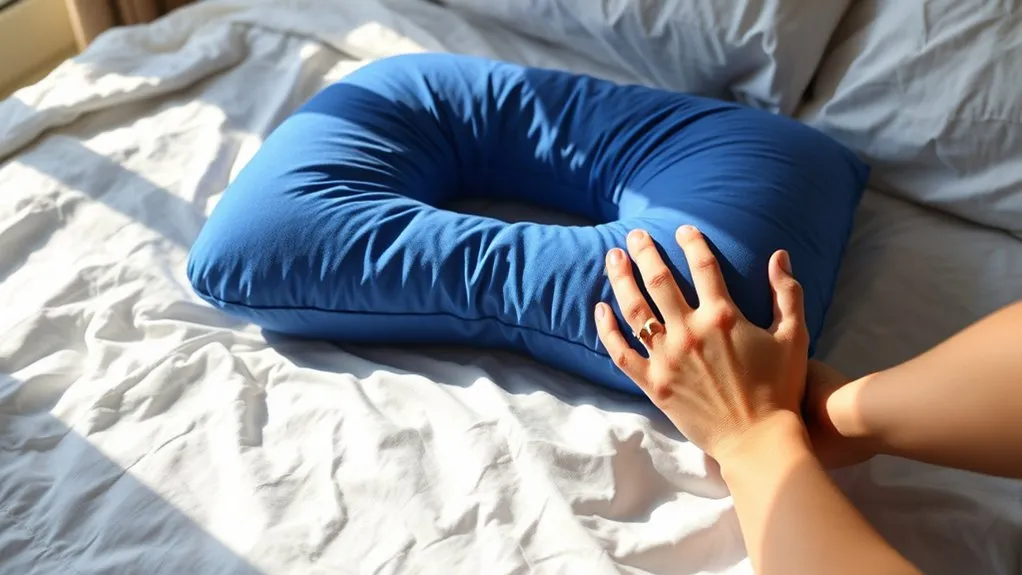
Begin with the gentlest method. Hold the pillow at opposite ends, press the sides toward the center, and release. Rotate the pillow and repeat the motion until the filling feels even. For a loose-fill pillow, you can also shake it from each end and lightly pat the thicker areas toward the thinner areas.
About 15 seconds per section is a practical starting point, but it is not a strict limit. Continue only as long as the filling is becoming more even. Stop if you hear tearing, feel a damaged insert, or notice beads or filling escaping through a seam.
Warning: Do not put a memory foam core, latex insert, plastic support, microbead pillow, or inflatable air chamber in a dryer unless the product’s care label clearly says it is safe. Heat and tumbling can deform foam, melt components, weaken seams, or damage valves.
Identify the Fill Before You Begin
Look for a sewn-in care label, packaging instructions, or the manufacturer’s online product page. The pillow’s outer shape does not tell you how it should be handled. Two U-shaped pillows may contain completely different materials.
| Pillow Type | Safest First Method | Avoid Unless the Label Allows It |
|---|---|---|
| Solid memory foam | Unpack, gently knead, and let it expand at room temperature | Washer, dryer, high heat, wringing, or soaking |
| Shredded foam | Massage clumps apart and redistribute the pieces by hand | Machine washing or drying without specific permission |
| Polyester or down-alternative fiber | Shake, pat, and pull apart compacted fill by hand | Dryer use unless the label permits it |
| Microbeads | Gently roll the pillow to redistribute the beads | Heat, strong squeezing, damaged seams, and machine washing |
| Inflatable | Open the valve correctly and inflate to the desired firmness | Overinflation, sharp objects, and machine drying |
| Wrap-style support pillow | Remove the internal frame if instructed, then reshape or wash the fabric section as directed | Washing the support frame with the fabric |
Manufacturer instructions can differ even among pillows made from similar materials. Tempur-Pedic advises washing only the removable cover of its pillows, while Sleep Number’s travel-pillow instructions call for washing the cover and spot-cleaning the insert. Always follow the directions for your exact model.
Fluffing Techniques for Each Travel Pillow Type
Revitalize a Memory Foam Travel Pillow
Solid memory foam does not contain loose filling that can be beaten into place. It recovers by slowly expanding after compression. Use this method:
- Remove the pillow from its storage bag. Unfasten any compression strap and take off a removable cover if the instructions allow it.
- Lay it on a clean, flat surface. Keep it at normal room temperature, away from a heater, hair dryer, radiator, or hot vehicle.
- Gently knead compressed areas. Press the foam between your palms and release. Do not twist or wring it.
- Rotate the pillow. Work around the curved sections so one area does not receive all the pressure.
- Allow more expansion time. A tightly packed pillow may need several hours to regain its normal shape.
If the foam is also dirty, follow the maker’s instructions. Cabeau recommends wiping its memory foam insert with a damp cloth and mild soap, avoiding saturation, and allowing it to dry completely in a ventilated area. Its guidance also says to keep the foam away from direct sunlight and heat. See Cabeau’s travel neck pillow care guide.
Pro Tip: If the memory foam feels unusually firm, let it reach room temperature before kneading it. Foam may feel firmer when cold, especially after being stored in a car or airplane luggage compartment.
Hand-Fluff a Polyester or Down-Alternative Pillow
Loose synthetic filling responds best to shaking, patting, and redistribution:
- Hold the pillow at both ends and shake it several times.
- Push the ends toward the center, then pull them apart.
- Pinch large clumps gently through the fabric and separate them with your fingers.
- Pat thick sections toward flat sections.
- Rotate the pillow and repeat until the fill feels balanced.
This method can restore loft when the filling is merely compressed. It cannot repair broken fibers, torn baffles, missing fill, or permanent matting.
Redistribute Shredded Foam
Shredded foam can form clusters after long compression. Hold each clump between your palms, press gently, and release. Work through the pillow one section at a time. If the pillow has an adjustable zipper, make sure the zipper is fully closed before handling it so foam pieces do not escape.
Do not assume shredded foam is machine washable. Some products permit it, while others require the insert to remain dry. Follow the label for the exact pillow.
Reshape a Microbead Travel Pillow
Place the pillow on a flat surface and slowly roll it between your palms to move beads from crowded areas into flat areas. Avoid hard pulling or aggressive twisting because a split seam can release hundreds of small beads.
If the pillow still feels empty after the beads are evenly distributed, the beads may have compressed or some may have escaped. Fluffing cannot replace lost fill.
Restore an Inflatable Travel Pillow
An inflatable pillow does not need traditional fluffing. Open the valve as directed, inflate the chamber, and close the valve securely. Add only enough air to support your neck comfortably; a slightly softer pillow often conforms better than one inflated as firmly as possible.
If it loses firmness quickly, check that the valve is closed and clean. Listen for escaping air and inspect the seams. Follow the manufacturer’s patching instructions if the pillow includes a repair kit. Replace it if the valve or welded seam cannot hold air.
Restore a Wrap-Style Support Pillow
Some scarf-style travel pillows contain a removable plastic or foam support. Take the support out before washing only when the manufacturer instructs you to do so. For example, Trtl’s aftercare instructions tell users to remove the internal support before washing applicable fabric sections on a cool cycle.
After the fabric is fully dry, reinstall the support in its original direction. Check that it lies flat and does not create a hard edge against your neck.
Use a Dryer Ball Only for a Dryer-Safe Loose-Fill Pillow
A dryer can help separate clumps in some polyester, down-alternative, or similar loose-fill pillows, but only when the care label permits tumble drying. It is not a safe default for memory foam.
- Read the label and confirm that the complete insert—not just the removable cover—can go in a dryer.
- Use the temperature and cycle printed on the label. Low heat or an air-only cycle is common, but it is not universal.
- Add clean wool dryer balls or a clean tennis ball secured inside a tied sock if the manufacturer allows this method.
- Pause periodically to check the pillow and redistribute the fill by hand.
- Continue drying only until the interior is completely dry. Do not store a pillow with damp filling.
The Sleep Foundation’s pillow-drying guide advises keeping virtually all memory foam and polyfoam pillows out of dryers because water and heat can damage the foam.
The safest fluffing method is determined by the pillow’s internal material—not by its U-shape, brand category, or how flat it looks.
Why Airing Out Your Travel Pillow Matters
A travel pillow can collect moisture, body oils, dust, and odors during a long journey. Airing it in a dry, ventilated place can help moisture evaporate and may reduce stale smells. However, airing is not a substitute for washing a removable cover or following the product’s cleaning instructions.
Reduces Moisture Accumulation
Remove the pillow from its storage bag after a trip and open or loosen any strap. Place it on a clean drying rack or flat surface in a well-ventilated room. Turn it occasionally so air reaches both sides.
A quick 30-minute airing may be enough for a dry pillow that only needs freshening. A spot-cleaned or noticeably damp insert may need several hours or overnight. The pillow should feel dry throughout before you replace its cover or pack it away.
The U.S. Environmental Protection Agency emphasizes moisture control, complete drying, and keeping indoor humidity low to reduce conditions that support mold and allergens.
Helps Reduce Unpleasant Odors
Fresh airflow can reduce mild odors caused by trapped moisture. If the smell remains, remove and wash the cover according to its label. Spot-clean the insert only when the manufacturer permits it.
Do not mask a strong musty smell with perfume or fabric spray. A persistent musty odor may indicate that moisture remains inside the pillow. Continue drying it, inspect it for discoloration, and replace it if it cannot be cleaned safely.
Keeps the Pillow Fresher Between Trips
Regular airing helps prevent a slightly damp pillow from being sealed inside a bag. Washable covers can also reduce the amount of sweat and skin oil that reaches the insert. Once every component is clean and completely dry, store the pillow in a breathable case rather than a tightly sealed plastic bag.
Note: Sunlight and outdoor air are not guaranteed to disinfect a pillow. Some foam manufacturers advise keeping their inserts away from direct sun and heat, so a shaded, ventilated location is the safer general choice.
How to Spot and Address a Lumpy Travel Pillow
A lumpy pillow may have compacted fill, trapped moisture, shifted foam pieces, damaged internal compartments, or lost material. First, identify whether the lumps move when you press them.
- Movable soft clumps: Massage them apart and spread the fill toward flat sections.
- Hard foam ridge: Let the pillow reach room temperature, then gently knead the area without twisting it.
- Wet or cool clump: Stop fluffing and allow the pillow to dry completely.
- Empty section beside a full section: Check whether an internal baffle or seam has torn.
- Microbeads near a seam: Stop handling the pillow until the opening is repaired or the pillow is contained.
- Inflatable pillow with one flat side: Check for a valve problem, puncture, or failed seam.
After redistributing the fill, place the pillow on a flat surface for several minutes and check whether the lumps return. Persistent hard areas may mean the material has degraded rather than merely shifted.
What to Do if a Compressed Pillow Will Not Expand
- Remove all packaging. A hidden strap or tight removable cover can restrict expansion.
- Check the temperature. Let cold foam warm naturally to room temperature.
- Place it flat. Avoid leaving it folded over a chair or packed inside luggage.
- Gently work the compressed area. Press and release instead of pulling or twisting.
- Allow several hours. Heavily compressed foam can recover slowly.
- Check the warranty or return policy. Contact the manufacturer if a new pillow never reaches the stated dimensions or has permanent creases.
Do not speed the process with a microwave, oven, iron, hair dryer, clothes dryer, heating pad, or radiator.
Can You Wash a Travel Pillow?
Some travel pillows are washable, but many inserts are not. Always separate the care instructions for the cover from the instructions for the core.
- Removable fabric cover: Often machine washable on a cool or gentle cycle, but check the label.
- Solid memory foam: Usually spot-clean only; do not saturate it.
- Loose polyester fill: May be machine washable and dryable if the label permits it.
- Microbead insert: Often limited to surface or spot cleaning because heat and agitation may damage the beads or seams.
- Inflatable pillow: Usually wiped clean after the air chamber is closed; avoid getting water inside the valve.
- Wrap-style pillow: The fabric may be washable after a plastic support is removed.
Use a small amount of mild detergent. Avoid bleach, harsh stain removers, fabric softener, or dryer sheets unless the care label specifically permits them. Rinse or wipe away detergent residue and let every component dry fully before reassembly.
When Should You Think About Replacing Your Travel Pillow?
There is no universal replacement schedule for every travel pillow. Frequent travelers may wear out a pillow faster than occasional users, while proper storage can extend its useful life. Judge the pillow by its support, cleanliness, and condition.
| Sign | What It May Mean | Recommended Action |
|---|---|---|
| It remains flat after proper recovery time | Foam or fiber may be permanently compressed | Replace it if neck support is reduced |
| Hard lumps return after redistribution | Fill may be matted, degraded, or separated by a torn baffle | Replace it if the lumps affect comfort |
| Persistent musty odor or visible growth | Moisture or contamination may remain inside | Stop using it and replace it if safe cleaning is not possible |
| Torn fabric, escaping beads, or exposed foam | The cover or insert has failed | Repair only if the manufacturer approves; otherwise replace |
| Inflatable chamber repeatedly loses air | Valve, puncture, or seam failure | Patch it as directed or replace it |
Tips for Maintaining Your Travel Pillow’s Shape
- Fluff it after each trip: Redistribute loose fill before it remains compressed for a long period.
- Release compression straps: Do not leave the pillow packed tightly between trips unless the manufacturer designed it for long-term compressed storage.
- Use a washable cover: A cover helps keep body oils and dirt away from the insert.
- Keep it dry: Air the pillow after travel and never seal it in a bag while damp.
- Store it loosely: Use a breathable case in a dry closet instead of placing heavy luggage on top of it.
- Protect valves and supports: Keep inflatable valves closed and avoid bending rigid internal frames.
- Follow the label: Product-specific instructions take priority over generic washing or drying advice.
Best Practices for Long-Lasting Travel Pillow Comfort
Fluff your pillow before a trip so you can identify a support problem while you are still at home. Test it in the position in which you plan to use it. The pillow should support your head without forcing your chin sharply toward your chest or pushing your neck forward.
After traveling, remove the pillow from its bag, inspect the seams, and wash the cover when needed. Let the insert air in a dry room before storing it. If the pillow has a clasp, drawstring, valve, zipper, or internal frame, make sure that component is dry and working before the next trip.
A clean pillow can still need replacement if it no longer supports your neck. Likewise, a supportive pillow should not be used if it has persistent contamination, an unsafe tear, escaping microbeads, or a damaged air chamber.
Frequently Asked Questions
Can I wash my travel pillow in the washing machine?
Only if the care label says the complete pillow or removable fabric section is machine washable. Many memory foam travel pillows have washable covers but spot-clean-only foam inserts. Remove any plastic support, foam core, or inflatable chamber when the manufacturer instructs you to do so.
Can I put a memory foam travel pillow in the dryer?
Usually not. Dryer heat and tumbling can damage memory foam. Remove and dry a washable cover separately, then let the foam insert air-dry completely at room temperature. Use a dryer only when the instructions for your exact pillow explicitly allow it.
What materials are commonly used in travel pillows?
Common designs use solid memory foam, shredded foam, polyester or down-alternative fiber, microbeads, inflatable air chambers, or a fabric wrap with a removable support frame. Check the label because each material has different washing, drying, and reshaping requirements.
How long should a compressed travel pillow take to expand?
A lightly compressed pillow may recover within minutes, while tightly packed memory foam may need several hours at room temperature. Remove all packaging, lay it flat, and gently knead compressed areas. Contact the manufacturer if a new pillow never reaches its expected shape.
How often should I replace my travel pillow?
Replace it according to its condition rather than a fixed calendar. It is time for a new pillow when it no longer provides support, stays permanently flat or lumpy, has an unrepairable leak or tear, releases filling, or retains odor or contamination after proper cleaning.
Can I use fabric softener on my travel pillow?
Use fabric softener only if the care label permits it. Softener can leave residue on some performance fabrics and is prohibited for certain covers and protectors. A small amount of mild detergent is the safer general choice.
Are there travel pillows that do not flatten easily?
Dense memory foam often holds its shape well but can remain compressed temporarily after packing. Inflatable pillows regain their shape when filled but can lose air if a valve or seam fails. Structured wrap-style pillows resist flattening because an internal support carries much of the load.
Conclusion
You can restore many flattened travel pillows, but the safest method depends on the fill. Hand-fluff loose fiber, gently knead foam at room temperature, redistribute microbeads with care, and inflate air pillows without overfilling them. Keep memory foam out of the dryer unless the manufacturer specifically approves it, and make sure every pillow is completely dry before storage. If the pillow remains flat, damaged, contaminated, or unable to support your neck, replacement is the better option.
Sources
- Tempur-Pedic: Can I Wash My Pillow? — supports keeping the foam material out of the washing machine and washing the removable cover separately.
- Cabeau: How to Clean Your Travel Neck Pillow — supports spot-cleaning memory foam, avoiding saturation, and drying it in ventilation away from direct heat.
- Sleep Number: Cleaning Your Pillow — provides separate care instructions for travel-pillow covers, inserts, foam, and loose-fill products.
- Sleep Foundation: Can You Put Pillows in the Dryer? — explains which fill materials may be dryer-safe and why foam usually is not.
- U.S. Environmental Protection Agency: Sources of Indoor Particulate Matter — supports moisture control, complete drying, and practices that reduce indoor allergens.

