

Last Updated on July 24, 2026 by Daniel Globe
A few inches can make a major difference to how you feel during a flight. Airline seat pitch measures the distance between the same point on one seat and the corresponding point on the seat in the next row. It helps you estimate front-to-back space before you book.
Pitch is useful, but it is not a perfect measurement of legroom. Seat thickness, recline, tray tables, entertainment equipment, and the shape of the seat back can all change how much usable knee space you actually receive.
Quick Answer
Seat pitch is the distance between matching points on two consecutive airplane seats. It is commonly used to estimate legroom, but it does not measure your exact knee clearance. Many economy layouts offer about 30–32 inches, while extra-legroom and premium cabins provide more space depending on the aircraft.
Key Takeaways
- Seat pitch measures row spacing, not your exact usable legroom.
- Many economy seats have approximately 30–32 inches of pitch, but some high-density layouts offer only 28–29 inches.
- Seat width measures side-to-side space, while pitch measures front-to-back spacing.
- Extra-legroom, premium economy, exit-row, and bulkhead seats can offer more space, but each has different restrictions and tradeoffs.
- Always check the operating airline, exact aircraft, and current booking seat map because configurations can change.
What’s in This Article
- What Does Seat Pitch Measure?
- How Pitch Affects Comfort and Legroom
- Pitch vs. Seat Width: What’s the Difference?
- How to Interpret Seat Pitch Numbers
- The Impact of Pitch on Your Experience
- How Airlines Set Their Seat Pitch
- Seat Pitch by Cabin Class
- How to Find a Comfortable Seat Based on Pitch
- Frequently Asked Questions
Disclosure: As an Amazon Associate I earn from qualifying purchases. Some links on this page are affiliate links, at no extra cost to you.
What Does Seat Pitch Measure?
Seat pitch is measured from a fixed point on one seat to the same point on the seat directly behind or in front of it. For example, an airline may measure from one point on a seat frame to the matching point in the next row.
This means a 31-inch pitch does not give you 31 inches of empty space in front of your knees. Part of that measurement is occupied by the seat itself. A thick seat back may leave less usable room than a thin, contoured seat installed at the same pitch.
Note: Airlines may publish seat pitch, legroom, bed length, or a general claim such as “extra legroom.” These measurements are not interchangeable. Compare the same type of measurement whenever possible.
How Pitch Affects Comfort and Legroom
More pitch usually gives your knees and lower legs additional space. It can make it easier to change position, use the tray table, stand up, or let another passenger leave the row. The difference becomes more noticeable for tall travelers and on longer flights.
However, pitch is only one part of the experience. Your usable space can also be affected by:
- Seat-back thickness: Slimmer shells may create more knee clearance at the same pitch.
- Recline: A reclining seat in front of you can reduce laptop and upper-body space.
- Underseat equipment: Entertainment or power boxes may reduce foot space.
- Tray-table position: Bulkhead tray tables are often stored inside the armrest.
- Seat shape: Curved seat backs can provide more room around your knees.
Long periods of limited movement can also contribute to blood-clot risk during long-distance travel. The Centers for Disease Control and Prevention advises travelers to move their legs frequently and walk around periodically during trips lasting more than four hours.
Warning: Travel-related blood clots are uncommon, but the risk rises for people with factors such as a previous clot, recent surgery, pregnancy, cancer, obesity, or limited mobility. Speak with a healthcare professional before traveling if you may be at increased risk.
Pitch vs. Seat Width: What’s the Difference?
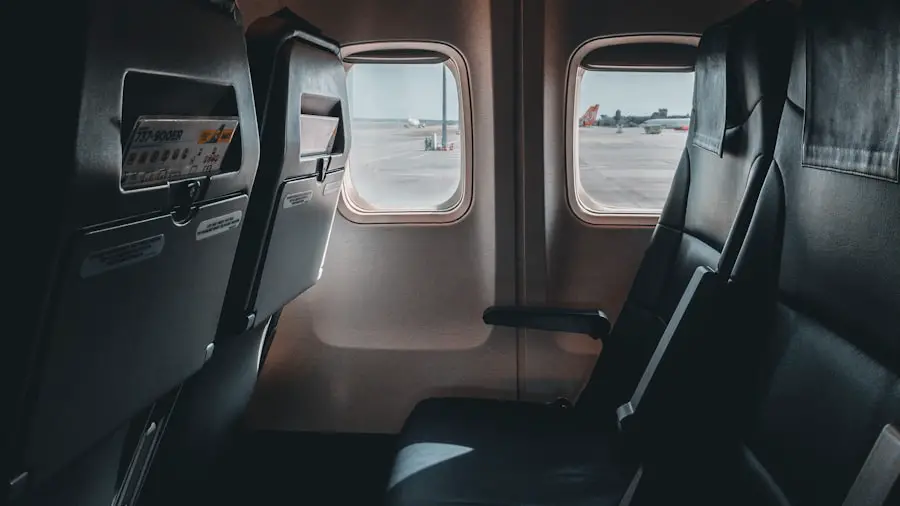
Pitch and width measure different parts of an airplane seat. Pitch describes the spacing between rows. Width usually describes the distance between the inside edges of the armrests.
A seat can have generous pitch but still feel restrictive if it is narrow. A wide seat can also feel uncomfortable if the row spacing leaves little knee room. For a more complete comparison, check both measurements along with the seat layout and aircraft type.
| Measurement | What It Describes | What It Affects |
|---|---|---|
| Seat pitch | Distance between matching points on consecutive seats | Knee space, movement, tray-table use, and ease of leaving the row |
| Seat width | Side-to-side distance, usually measured between armrests | Shoulder, hip, and personal space |
| Bed length | Length of a premium seat when converted into a flat bed | Sleeping space in lie-flat business or first class |
Note: Pitch is not the same as usable legroom. A modern slimline seat can provide more knee clearance than a thicker seat installed with the same row spacing.
How to Interpret Seat Pitch Numbers
There is no single pitch that will feel comfortable to every traveler. Your height, leg length, body shape, flight duration, and the design of the seat all matter. The following ranges are practical reference points rather than legal or industry-wide standards.
| Published Measurement | Common Context | What You May Notice |
|---|---|---|
| 28–29 inches | Some high-density or low-cost economy layouts | Limited knee room, especially for tall travelers |
| 30–32 inches | Many standard economy configurations | Typical economy spacing, with comfort varying by seat design |
| 33–35 inches | Extra-legroom economy or roomier standard layouts | More knee clearance and easier movement |
| 38–42 inches | Many long-haul premium economy products | More recline, greater separation, and often a leg or foot support |
| Approximately 76–80-inch bed | Selected long-haul lie-flat business seats | A sleeping surface rather than a directly comparable economy pitch figure |
Current official examples show how widely layouts can differ. Spirit publishes 28–29 inches for some standard seats, while American and Delta publish 30–32 inches on many Main Cabin configurations. Delta lists 34 inches for Comfort and 38 inches for Premium Select on its Airbus A350. Japan Airlines lists approximately 42 inches for premium economy on its Airbus A350-1000.
The Impact of Pitch on Your Experience
| Factor | Possible Effect | What to Check |
|---|---|---|
| Low pitch | Less knee clearance and more difficulty changing position | Seat-shell shape, recline, and flight duration |
| Extra pitch | More room to move, work, eat, or stand | Whether the seat has fixed armrests or limited storage |
| Seat in front reclines | Reduced upper-body and laptop space | Recline design and tray-table clearance |
| Aircraft change | Different row spacing or seat configuration | Recheck the seat map before departure |
Pitch can affect much more than whether your knees touch the seat in front. It can determine whether you can open a laptop comfortably, reach a bag, cross your legs, or leave the row without disturbing other passengers.
How Airlines Set Their Seat Pitch
Airlines choose cabin layouts based on the aircraft model, route, cabin type, target customer, operating costs, and the number of seats they want to install. Increasing row spacing usually means fitting fewer rows into the cabin, so airlines balance passenger space against capacity and revenue.
The United States does not currently specify one universal minimum passenger-seat pitch. However, federal aircraft-certification rules include emergency-evacuation requirements. Under 14 CFR §25.803, transport-category aircraft must provide rapid evacuation means. Aircraft with more than 44 passenger seats must also show that the maximum seating capacity can be evacuated within 90 seconds under the required simulated conditions or through an approved equivalent combination of testing and analysis.
The FAA requested public comments on minimum seat dimensions in August 2022. Its current regulations still do not provide a single minimum pitch that applies to all airline passenger seats as of July 25, 2026.
Pro Tip: Check the operating airline and aircraft number, not only the airline brand. A codeshare flight may be sold by one airline but operated with another airline’s seats and cabin layout.
Seat Pitch by Cabin Class
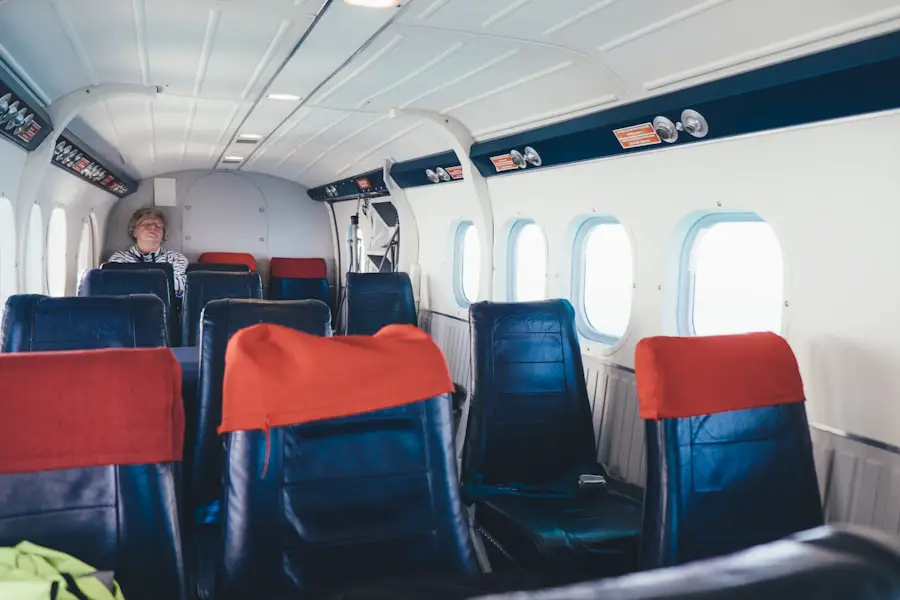
Economy Class
Many standard economy layouts publish approximately 30–32 inches of pitch. American Airlines lists Main Cabin measurements from about 30 to 32 inches on several aircraft, while Delta lists 31–32 inches for Main Cabin on its Airbus A350.
Some high-density layouts are tighter. Spirit publishes 28–29 inches for standard seats on selected configurations. A well-shaped seat may improve usable knee space, but a 28- or 29-inch row will generally feel more confined than a 31- or 32-inch row.
Extra-Legroom Economy
Extra-legroom products usually provide additional row spacing or a location such as an exit row. The exact increase varies. Delta publishes 34 inches for Delta Comfort on its Airbus A350, while American publishes different Main Cabin Extra measurements depending on the aircraft and row.
Products such as United Economy Plus, Delta Comfort, and American Main Cabin Extra may also include benefits such as earlier boarding or a location near the front of the cabin. Benefits, availability, and complimentary access rules vary by fare and status.
Premium Economy
Premium economy commonly provides wider seats, additional recline, and more space between rows than standard economy. Delta publishes 38 inches for Premium Select on its Airbus A350. Japan Airlines publishes approximately 42 inches for premium economy on its Airbus A350-1000.
Do not assume every product called “premium economy” has the same seat. On some flights, an airline may sell an extra-legroom economy seat rather than a separate premium economy cabin.
Business Class
Business-class layouts vary too widely for one useful pitch number. Regional business class may use a recliner or even an economy-style seat with the neighboring seat blocked. Long-haul business class may provide a fully flat bed.
For lie-flat products, compare bed length, bed width, direct aisle access, footwell size, and privacy. Delta publishes bed lengths from approximately 76 to 80 inches on several long-haul aircraft, while Qatar Airways lists a 79-inch bed on selected Airbus A350 configurations.
Note: A 79-inch business-class bed is not the same as 79 inches of conventional seat pitch. Lie-flat seats overlap, angle, or use enclosed footwells, so bed length is the more useful sleeping measurement.
How to Find a Comfortable Seat Based on Pitch
Use the following process before paying for a seat or cabin upgrade.
- Confirm the operating airline. Codeshare partners may use a different aircraft and seating product from the airline that sold the ticket.
- Find the aircraft type. Look for details such as Boeing 737-800, Airbus A321neo, or Boeing 787-9 in the booking results or flight-management page.
- Open the current airline seat map. Use the airline’s official aircraft page and the live map shown during booking or in “Manage Trip.”
- Compare pitch and width. Check both numbers when the airline publishes them.
- Inspect the row type. Determine whether it is a standard, bulkhead, exit-row, or extra-legroom seat.
- Read the restrictions. Check recline, fixed armrests, underseat storage, infant-bassinet locations, and exit-row eligibility.
- Recheck before departure. Airlines sometimes substitute a different aircraft or cabin configuration.
Consider Exit Rows Carefully
Exit rows often provide additional space, but they are not suitable for everyone. Passengers must meet the airline’s age, mobility, communication, and assistance requirements. Some exit-row seats also have limited recline or fixed armrests.
Understand Bulkhead Tradeoffs
A bulkhead seat has a wall, curtain, or divider in front instead of another passenger seat. It may provide open knee space, but you may be unable to stretch your feet under the seat ahead. Your tray table and entertainment screen may also be stored in the armrest, making the seat feel narrower.
Check the Seat Design
A slim seat back can create additional usable knee room without increasing the published pitch. By contrast, a thick shell, large literature pocket, or underseat entertainment box can reduce the space you feel.
Plan for Movement on Long Flights
On trips lasting more than four hours, move your legs while seated and stand or walk periodically when it is safe to do so. An aisle seat may make movement easier. Follow the cabin crew’s instructions and keep the aisle clear during turbulence or service.
Want to learn more? Check out our related guide: Understanding Pitch: The Key to Comfortable Airline Seats.
Frequently Asked Questions
What is pitch in airline seats?
Seat pitch is the distance between the same point on one airplane seat and the corresponding point on the next seat. Airlines and travelers use it to estimate row spacing, but it does not equal the exact amount of open legroom.
How is airline seat pitch measured?
It is measured between matching reference points on two consecutive seats. The reference may be part of the seat frame or structure rather than the front edge of the cushion.
What is a standard airline seat pitch?
There is no universal standard. Many economy configurations publish about 30–32 inches, while some high-density layouts offer 28–29 inches. Extra-legroom economy may offer around 33–35 inches, and many long-haul premium economy seats publish approximately 38–42 inches.
Is seat pitch the same as legroom?
No. Pitch measures the spacing between rows. Usable legroom depends on the thickness and shape of the seat, the position of equipment, the seat in front’s recline, and the amount of foot space under that seat.
Can passengers request a seat with more pitch?
Yes. Depending on availability, you may be able to buy extra-legroom economy, an exit-row seat, a bulkhead seat, premium economy, or a higher cabin. Complimentary access depends on the airline, fare, route, and loyalty status.
Does a bulkhead or exit-row seat always have more legroom?
No. Many do provide more space, but the amount varies. Bulkheads may limit foot extension and underseat storage, while some exit-row seats have restricted recline or fixed armrests.
Can the pitch change after I choose my seat?
Yes. An airline may substitute a different aircraft or configuration for operational reasons. Your seat assignment may also change, so review the current seat map in the airline’s app or website before departure.
Seat pitch is one of the easiest measurements to check before booking, but it should not be considered alone. Compare the exact aircraft, seat width, row type, recline, storage restrictions, and operating airline. For a long flight, even a modest increase in usable space can make eating, working, resting, and moving around easier.
Sources
- Electronic Code of Federal Regulations: 14 CFR §25.803 — U.S. emergency-evacuation requirements for transport-category aircraft.
- Federal Aviation Administration: Minimum Seat Dimensions Request for Comments — FAA background on passenger-seat dimensions and evacuation safety.
- Centers for Disease Control and Prevention: Blood Clots and Travel — long-distance travel risks and movement guidance.
- Delta Air Lines Airbus A350 Seat Specifications — published measurements for Main Cabin, Delta Comfort, Premium Select, and Delta One.
- Japan Airlines A350-1000 Cabin Specifications — official premium economy pitch and width information.
- Spirit Airlines Onboard Experience — official examples of 28–29-inch standard-seat pitch.


2 Comments
Pingback: Complete Singapore Airlines Suite Cost Guide [2026]
Pingback: Complete Spirit Airlines Guide: Fees & Issues [2026]