
Last Updated on July 25, 2026 by Daniel Globe
Planning a trip to the British Museum requires a mix of timing, strategic navigation, and practical logistics to truly appreciate its vast historical collection. Housing world-famous artifacts like the Rosetta Stone and Egyptian mummies, this world-class institution can feel overwhelming without a clear game plan. By securing your free timed-entry tickets online, arriving during quiet hours, and knowing which entrances to use, you can avoid frustrating queues and experience London’s iconic cultural hub at your own pace.
Quick Answer
To visit the British Museum, book free timed-entry tickets online in advance via the official website. Arrive during off-peak hours—weekday mornings between 10:00 and 11:30 AM or late afternoons on Fridays when the museum stays open until 20:30. Use the Montague Place entrance to avoid main-gate crowds, and bring a small bag, as large luggage over 40x40x25cm is strictly prohibited.
Key Takeaways
- General Admission is Free: Reserve free timed-entry passes online to guarantee entry, though paid tickets are required for special temporary exhibitions.
- Optimal Visiting Times: Early weekday mornings (10:00 AM) or Friday evenings (open until 20:30) offer the lightest crowd levels.
- Strict Security & Bag Limits: Wheeled suitcases and bags larger than 40cm x 40cm x 25cm are banned inside with no on-site cloakroom storage for large luggage.
- Strategic Entry Point: The Montague Place entrance on the north side of the museum often has shorter security lines than the main Great Russell Street gates.
- Prioritize Masterpieces First: Head straight to Room 4 (Rosetta Stone) and Room 18 (Parthenon Sculptures) as soon as doors open before tour groups arrive.
At a Glance
| Time Required | 3 to 4 hours (minimum for main highlights) |
| Difficulty | Easy (Flat, accessible galleries; extensive walking) |
| Tools Needed | Free digital timed ticket, museum app/map, comfortable walking shoes |
| Cost | Free general entry (Special temporary exhibitions cost £14–£25) |
Disclosure: As an Amazon Associate I earn from qualifying purchases. Some links on this page are affiliate links, at no extra cost to you.
Planning Your Visit and Best Times to Go
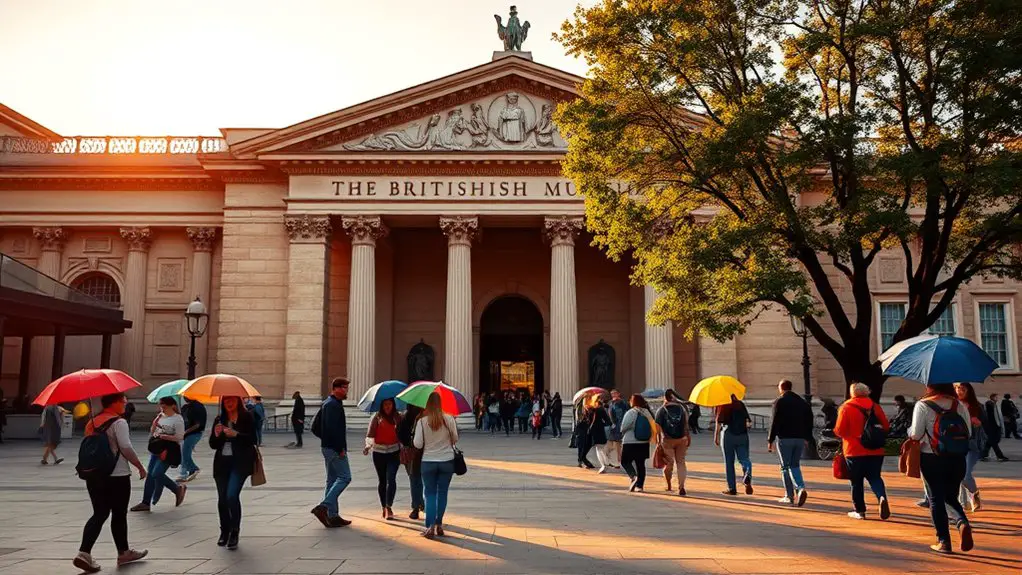
Timing your arrival correctly makes a massive difference when visiting the British Museum, which sees millions of international travelers every year. The museum operates daily from 10:00 AM to 5:00 PM, with extended hours on Fridays until 8:30 PM (20:30). Visiting during Friday night late openings is one of the best ways to explore quieter galleries bathed in ambient lighting.
To avoid long lines at security checkpoints, aim to visit on weekday mornings right at 10:00 AM or in the late afternoon after 3:30 PM, when group tour buses begin leaving. Off-peak months—specifically November through mid-February (excluding Christmas holidays)—offer significantly thinner crowd densities.
“Arriving right as doors open at 10:00 AM gives you roughly a 45-minute window to view high-demand exhibits like the Rosetta Stone without standing three-deep in crowds.”
Planning around peak school group hours (11:00 AM to 2:00 PM on weekdays) helps maintain a relaxed pace. Reserving your pass on the official British Museum portal guarantees your entry slot during high-demand summer and holiday periods.
Pro Tip: Skip the main entrance queue on Great Russell Street. Walk around to the Montague Place entrance on the north side of the building. Security screening lines here are routinely much shorter.
Navigating the Museum’s Layout and Highlights

Spanning over eight million works, the British Museum’s collection occupies over 60 physical galleries surrounding the glass-roofed Great Court. Stepping into this central court gives you immediate access to all main wings, basic amenities, and official information desks.
To navigate efficiently, pick up a physical paper map at the entrance desk for a small voluntary donation, or download the interactive gallery map directly to your smartphone. The museum layout is grouped broadly by geographic region and historical era:
- Ground Floor: Ancient Egypt (Room 4), Ancient Greece and Rome (Rooms 18 & 84), Middle East, and the Americas.
- Upper Floor (Level 3): Egyptian Mummies (Rooms 61–66), Sutton Hoo Anglo-Saxon Ship Burial (Room 41), and the Lewis Chessmen (Room 40).
- Lower Floor (Level -1): African Galleries (Room 25).
Tips for Exploring Popular Exhibits
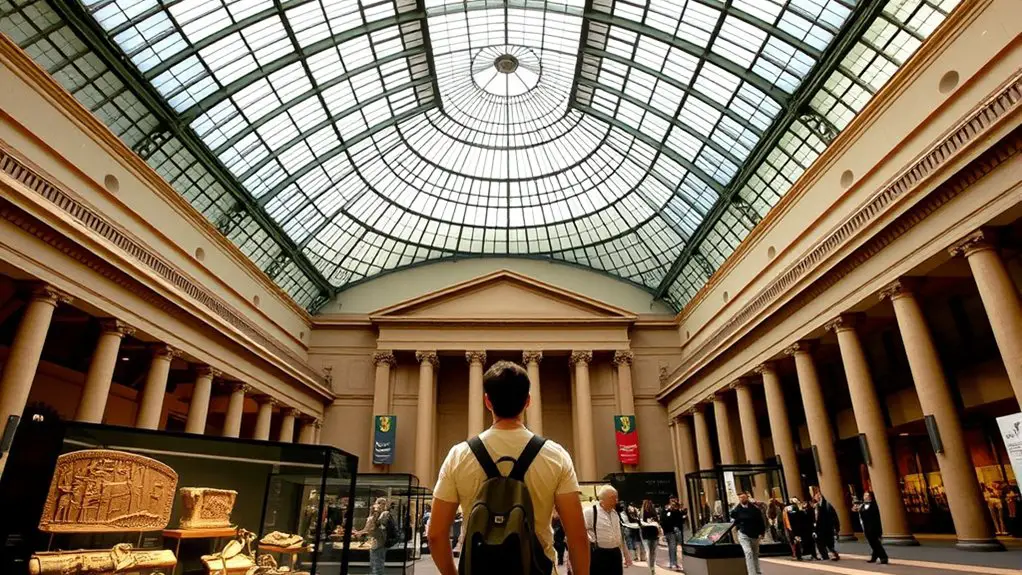
Because key artifacts draw high crowd volumes throughout the day, organize your route to visit headline exhibits immediately upon entering:
- The Rosetta Stone (Room 4): Located on the Ground Floor near the main entrance. Head here immediately at 10:00 AM.
- The Parthenon Sculptures (Room 18): Located in a purpose-built gallery on the Ground Floor West; less crowded in late afternoons.
- Egyptian Mummies (Rooms 62–63): Situated on the Upper Floor; these rooms narrow quickly, so visit before midday.
- Sutton Hoo Treasure & Lewis Chessmen (Rooms 40–41): Essential stops for European medieval history enthusiasts.
Interactive display screens and hands-on “Desk Discovery” stations staffed by museum volunteers allow visitors to handle authentic historical artifacts, offering a memorable, tactile dimension to the tour.
Making the Most of Guided Tours and Audio Guides
To get meaningful historical context from your visit, taking advantage of structured interpretive materials is highly recommended over passive browsing.
The official British Museum Audio Guide device (available for rental in the Great Court) or smartphone app provides pre-curated tours ranging from 20-minute highlight circuits to deep-dive thematic pathways. The app features interactive maps, clear audio narration, and commentary from museum curators.
Note: Free 30-minute volunteer-led “Spotlight Tours” run daily across various galleries. Check the digital info boards in the Great Court upon arrival for that day’s schedule and meeting points.
Consider these strategies to optimize tour options:
- Download Before You Go: Install the British Museum audio app on your phone via public Wi-Fi before arriving to save mobile data.
- Bring Personal Headphones: standard 3.5mm wired or Bluetooth headphones ensure clear audio narration over ambient ambient noise.
- Follow the “Top 10 Highlights” Route: Perfect for first-time visitors with under two hours of total available time.
Practical Advice on Entry, Tickets, and Accessibility
While admission to the museum’s permanent collection is free, reserving a general admission pass ahead of time remains the most effective way to guarantee entry at your selected time slot during busy seasons.
Ticket Booking Tips
To ensure smooth entry, follow these essential booking practices:
- Reserve free general admission tickets directly through the official museum website.
- If you plan to view temporary special exhibitions, purchase those paid tickets well in advance as daily caps sell out quickly.
- Download your digital ticket QR codes directly to your mobile wallet for rapid scanning at security turnstiles.
- Group visits (for parties larger than 10) require dedicated group booking slots to ensure entry.
Warning: Strict Luggage Policy: Wheeled suitcases and large backpacks exceeding 40cm x 40cm x 25cm are banned inside the museum. There are no cloakrooms available for storing oversized luggage on-site. Leave large bags at major train station storage facilities (like Euston or King’s Cross) prior to arriving.
Accessibility Options Available
The museum is fully committed to providing broad access for visitors with physical, sensory, or visual needs. Both major entrances provide step-free access, and elevators service all display floors.
| Accessibility Feature | Description | How to Access |
|---|---|---|
| Step-Free Access | Ramps and street-level lifts at Montague Place & Great Russell St | Main entrances |
| Wheelchair Rental | Free manual wheelchairs available for visitor use | Book in advance or request at coat desk |
| Sensory Accommodations | Sensory maps, quiet spaces, and early morning calm sessions | Download online / contact visitor support |
| Audio Described Guides | Tactile maps and detailed audio description tracks | Information desk in Great Court |
| Assistance Dogs | Guide dogs and registered service animals fully permitted | Allowed throughout all galleries |
Exploring the Museum’s Surroundings and Nearby Attractions
Located in the heart of Bloomsbury, the museum is surrounded by historic squares, transport links, and distinct London landmarks easily explored on foot.
Getting There & Nearest Tube Stations
Reaching the museum via the London Underground network is straightforward using any of four nearby stations serviced by Transport for London (TfL):
- Tottenham Court Road (Central, Northern, Elizabeth Lines): 5-minute walk.
- Holborn (Central, Piccadilly Lines): 7-minute walk.
- Russell Square (Piccadilly Line): 7-minute walk.
- Goodge Street (Northern Line): 8-minute walk.
Nearby Parks and Gardens
The neighborhood features classic Georgian residential squares ideal for resting after hours on your feet:
- Russell Square: Features a large central fountain and seasonal outdoor cafe.
- Bloomsbury Square: London’s oldest square, located just east of the museum gates.
- Gordon Square & Tavistock Square: Peaceful, tree-lined green spaces famous for literary connections to the Bloomsbury Group.
Cultural Landmarks Nearby
| Landmark | Architectural Features | Significance & Distance |
|---|---|---|
| Charles Dickens Museum | Preserved Victorian Georgian townhouse | Literary history (15-min walk east in Bloomsbury) |
| Sir John Soane’s Museum | Eccentric historic townhouse interior | Architectural curiosity & antiquities (10-min walk south in Lincoln’s Inn Fields) |
| Guildhall Art Gallery | Neoclassical structure built over Roman ruins | Civic London history (Short bus/tube ride to the City) |
Popular Dining Options
While the British Museum features indoor dining options—including the Great Court Restaurant and Pizzeria—the surrounding streets offer fantastic local choices according to Visit London travel recommendations:
- Museum Cafes: Convenient for light sandwiches, espresso, and pastries under the glass canopy.
- Classic British Pubs: Historic pubs along Museum Street and Great Russell Street serve fish and chips, savory pies, and local cask ales.
- International Cuisine: Nearby Marchmont Street and Charlotte Street feature Italian trattorias, ramen bars, and Middle Eastern eateries.
Ensuring a Comfortable and Enjoyable Experience
Experiencing a large collection requires basic physical preparation and proper etiquette to keep galleries enjoyable for everyone:
- Footwear: Wear broken-in walking shoes or sneakers; gallery floors are hard stone and wood.
- Gallery Etiquette: Non-flash photography is permitted for personal use in most galleries. Refrain from touching artifacts or leaning on glass display cabinets.
- Hydration: Bring a refillable water bottle; free water refill stations are located near restrooms on the main level.
Frequently Asked Questions
Are there any hidden or lesser-known exhibits worth seeking out?
Yes. While crowds flock to the Rosetta Stone, explore Room 24 (Living and Dying) to see the Easter Island statue (Hoa Hakananai’a), or visit Room 40 to discover the ancient Mold Gold Cape and medieval astrolabes in relative quiet.
Can I bring food and drinks into the museum?
Open food and drink containers are strictly prohibited inside the display galleries to protect the artifacts. However, sealed water bottles are allowed. You can eat packed lunches in designated seating areas within the Great Court or in the outdoor courtyards.
Is there a dress code for visiting the British Museum?
There is no formal dress code. Smart-casual, comfortable clothing suitable for walking and standing for extended periods is recommended. Wear supportive footwear and dress in light layers, as climate control varies across different historical galleries.
Are there facilities for visitors with disabilities beyond wheelchair access?
Yes. The museum offers sensory maps, quiet rooms, accessible restrooms, induction loops at information desks, tactile display tours, and large-print exhibition guides upon request at the visitor center desk.
How can I participate in special events or temporary exhibitions?
Temporary paid exhibitions, curator lectures, and evening workshops require dedicated tickets booked online in advance via the official British Museum ticket system. Joining as a Museum Member provides free unlimited access to all paid special exhibitions.
Conclusion
Visiting the British Museum is one of London’s most rewarding cultural activities. By taking advantage of free online timed entry, utilizing the less-crowded Montague Place entrance, and heading straight to priority galleries like Room 4 and Room 18 early in the morning, you can seamlessly navigate world history without being overwhelmed by crowds. Follow these simple travel guidelines to enjoy an enriching, comfortable, and memorable trip through human culture.
Sources
- The British Museum Official Portal — Official visiting guidelines, entrance rules, accessibility, and ticket reservations.
- Transport for London (TfL) — Official London Underground routes, walking maps, and station access information.
- Visit London Official Tourism Guide — Local dining suggestions, neighborhood insights, and regional landmark details.
