
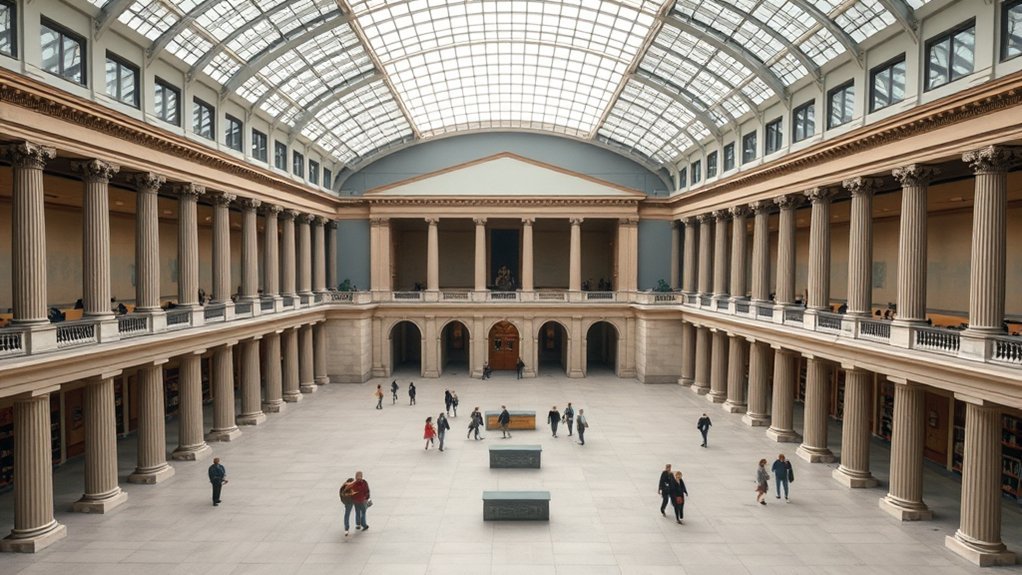
Last Updated on September 11, 2026 by Daniel Globe
For the quietest visit to the British Museum, plan your arrival for a Tuesday, Wednesday, or Thursday at 10:00 AM when the doors open, or during the late afternoon between 3:30 PM and 5:00 PM. January and February are the calmest months of the year, while Friday late openings (until 8:30 PM) offer a relaxed evening window. Reserving a free timed-entry ticket online, arriving via the less crowded Montague Place entrance, and heading immediately to top exhibits like the Rosetta Stone (Room 4) and Egyptian Mummies (Rooms 62–63) will help you bypass the heaviest crowds.
Quick Answer
The quietest time to visit the British Museum is weekday mornings (Tuesday through Thursday) from 10:00 AM to 11:00 AM or late afternoons after 3:30 PM. Friday evenings between 5:30 PM and 8:30 PM also see significantly smaller crowds. Use the northern Montague Place entrance to avoid long security queues at the main gate.
Key Takeaways
- Best Days: Midweek days (Tuesday to Thursday) have the lightest daily attendance outside school holidays.
- Best Hours: 10:00 AM–11:00 AM (rope drop) and 3:30 PM–5:00 PM on standard days; Friday evenings until 8:30 PM.
- Alternative Entrance: Enter via Montague Place rather than Great Russell Street for noticeably shorter security queues.
- Ticketing: Admission to the permanent collection is free, but pre-booking a timed entry ticket online is essential to avoid long walk-up lines.
- Strict Bag Rule: No luggage, wheeled suitcases, or bags larger than 40cm × 40cm × 50cm are allowed inside, and there is no cloakroom for oversized items.
At a Glance
| Quietest Time Windows | 10:00 AM – 11:00 AM, 3:30 PM – 5:00 PM, and Friday 5:30 PM – 8:30 PM |
| Best Days of the Week | Tuesday, Wednesday, and Thursday (Midweek) |
| Best Entrance | Montague Place (North Entrance) |
| General Admission Cost | Free (Advance timed booking highly recommended) |
| Recommended Duration | 2.5 to 3 hours for highlights; 4+ hours for in-depth visits |
Disclosure: As an Amazon Associate I earn from qualifying purchases. Some links on this page are affiliate links, at no extra cost to you.
What Is the Quietest Time to Visit the British Museum?
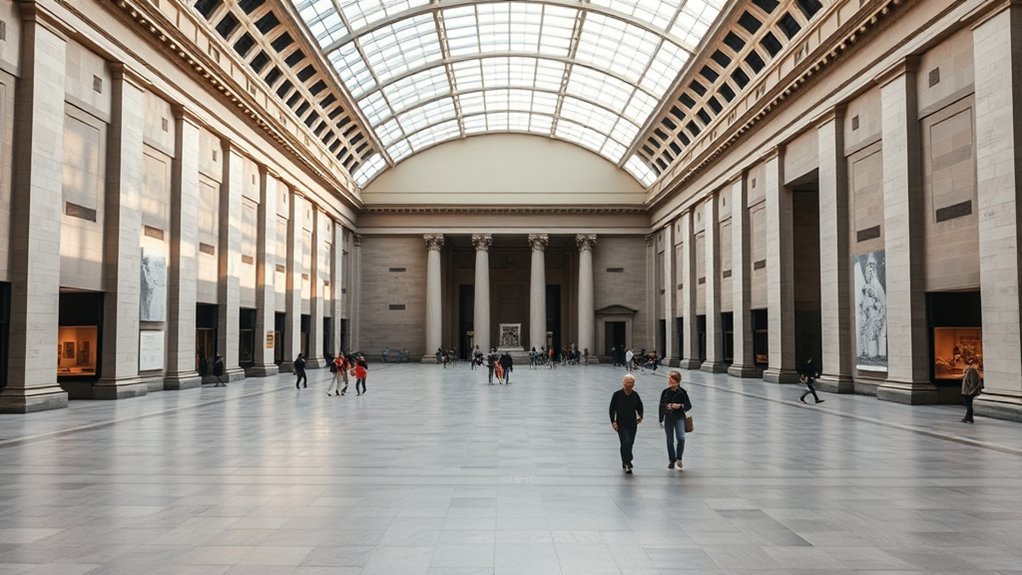
The quietest time to visit the British Museum is right when the doors open at 10:00 AM or in the late afternoon between 3:30 PM and 5:00 PM. During these windows, tour groups and school excursions have either not yet arrived or are already leaving, giving you ample room to view popular exhibits without shoulder-to-shoulder crowds.
For visitors seeking an even quieter experience, Friday evenings represent the single best opportunity during the week. While the museum normally closes at 5:00 PM, it remains open until 8:30 PM on Fridays. After 5:30 PM, day-trippers disperse, leaving the galleries open for leisurely, uninterrupted exploration.
Warning: The British Museum enforces strict security screening at all gates. Wheeled suitcases and large bags exceeding 40cm × 40cm × 50cm are strictly prohibited inside the museum. There are no left-luggage lockers on site, so store large baggage at nearby train stations (such as King’s Cross or Euston) before arriving.
Best Days to Visit the British Museum
The best days to visit the British Museum are Tuesday, Wednesday, and Thursday. Mondays tend to be busy with long-weekend travelers and tour operators, while Saturdays and Sundays see peak local and tourist foot traffic.
Midweek visits offer several clear advantages:
- Faster Security Screening: Queue times at both main security points rarely exceed 5 to 10 minutes.
- Better Gallery Access: High-traffic spaces such as Room 4 (Egyptian Sculpture) and Room 18 (Parthenon Sculptures) remain accessible without long queues forming around glass display cases.
- Easier Amenities Access: On-site cafes, seating areas in the Great Court, and restrooms experience significantly shorter lines.
If you must visit over a weekend, reserve the earliest 10:00 AM slot on Sunday morning or explore during the last 90 minutes before closing.
Quietest Times of Day at the British Museum
Foot traffic inside the British Museum follows a predictable daily curve. Arriving before 10:30 AM or after 3:30 PM keeps you out of sync with large group tours and school field trips that dominate the midday hours.
Right at Opening (10:00 AM – 11:00 AM)
Arriving at the museum gates by 9:45 AM allows you to pass through security as the doors open at 10:00 AM. This gives you a clear 45-to-60-minute window before major tour buses and school groups begin entering around 10:45 AM.
| Time Window | Estimated Crowd Level | Visitor Profile & Activity |
|---|---|---|
| 10:00 AM – 10:45 AM | Lowest | Early individual visitors; empty highlight galleries. |
| 10:45 AM – 12:30 PM | High | School excursions and organized guided tour groups arrive. |
| 12:30 PM – 2:00 PM | Peak | Heavy general attendance; Great Court dining areas packed. |
| 2:00 PM – 3:30 PM | Moderate / High | Afternoon tourist wave; steady flow throughout major rooms. |
| 3:30 PM – 5:00 PM | Lighter | School groups depart; crowds thin out toward gallery closing. |
Use the initial 45 minutes to visit the Ground Floor Egyptian Sculpture gallery (Room 4) and the Parthenon Sculptures (Room 18) before migrating to upper-floor galleries as crowds build.
Late Afternoon Visits (3:30 PM – 5:00 PM)
Starting a visit around 3:30 PM provides another quiet window. By mid-afternoon, most tour buses have departed for their next itinerary stops, and families with young children head out. Note that galleries begin clearing approximately 15 minutes before official closing, so last entry into the museum is at 4:45 PM on standard days.
Pro Tip: If entering at 3:30 PM, bypass the Ground Floor and head straight up to the Upper Galleries (Rooms 61–66 for Egyptian mummies and burial artifacts), as these upper rooms empty out fastest in the late afternoon.
Why Fridays Can Be Less Crowded
The British Museum extends its opening hours until 8:30 PM every Friday (with gallery clearing starting at 8:15 PM). While Friday daytime attendance matches typical weekday numbers, the atmosphere changes after 5:00 PM.
Key advantages of Friday evening visits include:
- Zero School Groups: School trips and large motorcoach tours do not operate during evening hours.
- Atmospheric Lighting: The Great Court and classical galleries are softly illuminated, offering a calm and peaceful aesthetic.
- Special Exhibition Availability: Paid temporary exhibitions often have wider slot availability on Friday evenings compared to Saturday or Sunday afternoons.
Combine a Friday 5:00 PM arrival with entry through the northern Montague Place gate for direct, queue-free access into the galleries.
Best Seasons to Visit the British Museum
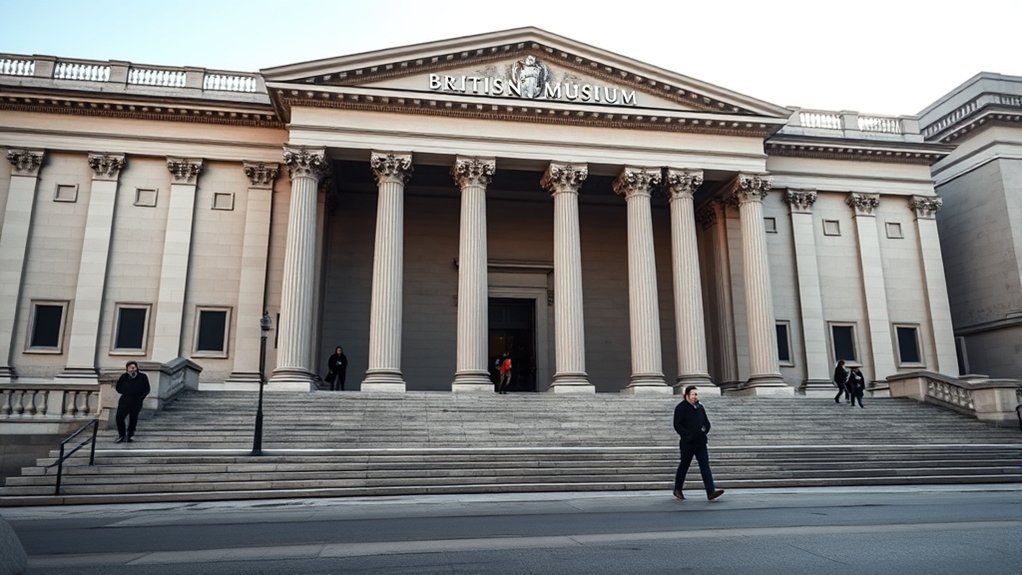
Seasonal patterns strongly impact visitor density in London. Winter offers the lowest overall crowd levels, while autumn delivers a comfortable balance of mild weather and manageable visitor volume.
Winter Offers Lowest Crowds
Aside from the two-week Christmas and New Year holiday period, January and February are the quietest months of the entire year at the British Museum. Overall international tourism in London drops significantly during these winter months, meaning you can often explore entire galleries—such as the Enlightenment Gallery (Room 1) or the Middle East collections—with only a few other visitors present.
Autumn Balances Weather And Quiet
September, October, and November (excluding the late-October UK school half-term week) provide an ideal combination of pleasant London weather and moderate crowd sizes. Once European summer school holidays conclude in early September, weekday tourist volume drops by roughly 30% to 40% compared to July and August.
When Crowds Peak During the Day
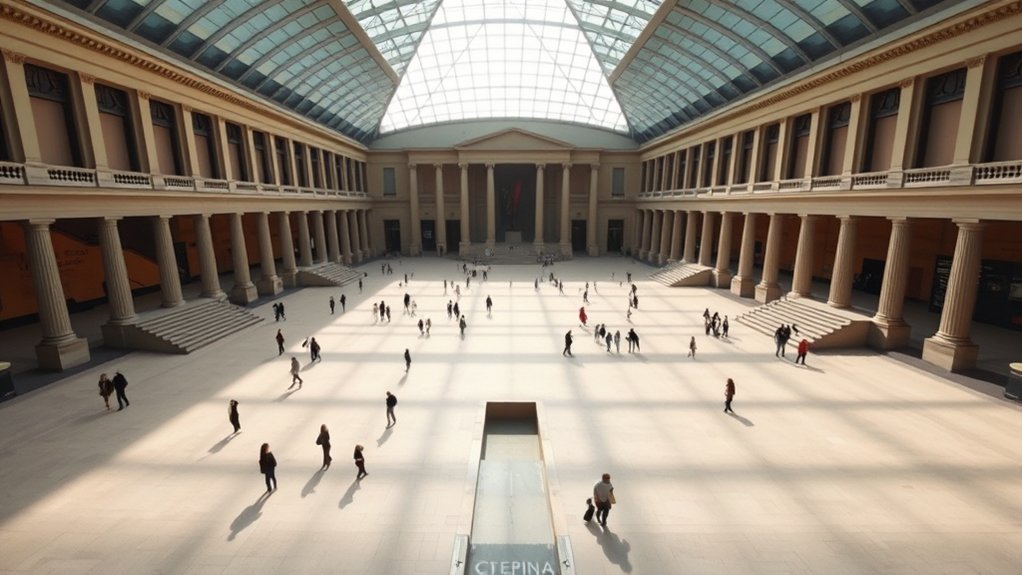
To avoid bottlenecks and long security lines, steer clear of peak congestion windows:
- Peak Arrival Rush (11:00 AM – 1:30 PM): Timed-entry queues at the main Great Russell Street gates often back up onto the street sidewalk as tour groups arrive simultaneously.
- Midday Lunch Rush (12:30 PM – 2:00 PM): The Great Court seating areas, Court Cafe, and Pizzeria experience their heaviest demand, creating extra noise and congestion throughout the central hub.
- UK School Holidays & Bank Holidays: Half-term weeks (mid-February, late May, late October), Easter week, and the summer peak (mid-July through August) see high crowd volume regardless of the time of day.
“By timing your visit for either the 10:00 AM rope drop or the Friday evening late opening, you transform a potentially hectic visit into an intimate encounter with 2 million years of human history.”
Use the Montague Place Entrance at the British Museum
The British Museum has two public entry points. While 80% of visitors queue at the southern Great Russell Street main gates, experienced visitors use the northern entrance on Montague Place (WC1E 7JW).
| Entrance | Average Queue Time | Best For |
|---|---|---|
| Montague Place (North) | 2 – 8 minutes | Fast-track entry, step-free access, and Russell Square Underground arrivals. |
| Great Russell Street (South) | 15 – 35 minutes | Iconic front colonnade views and Tottenham Court Road arrivals. |
The Montague Place entrance leads directly into the lower level of the King Edward VII Building. It features its own dedicated airport-style security scanners, accessible elevators, and direct stair access to the Great Court and Asia galleries.
Note: Closest Underground stations for the Montague Place entrance are Russell Square (Piccadilly Line) and Goodge Street (Northern Line), both located within an easy 6-to-8-minute walk.
Which British Museum Exhibits to Prioritize First
With over 60 galleries spanning several floors, tackling exhibits in strategic order prevents backtracking and helps you see major highlights before crowds gather:
- The Rosetta Stone (Ground Floor, Room 4): Head here immediately upon your 10:00 AM entry. By 10:45 AM, the viewing perimeter around the stone’s glass case is typically 3 to 4 people deep.
- Parthenon Sculptures (Ground Floor, Room 18): Move west through the ancient Greek galleries into the expansive Duveen Gallery while it remains quiet.
- Egyptian Mummies & Death on the Nile (Level 3, Rooms 62–63): Take the northwest stairs up to the Upper Egyptian galleries before mid-morning school groups fill the corridors.
- Sutton Hoo Ship Burial & Anglo-Saxon Treasure (Level 3, Room 41): Walk east across the upper level to examine the 7th-century gold jewelry and iconic Sutton Hoo helmet.
- The Lewis Chessmen (Level 3, Room 40): Located adjacent to Sutton Hoo, this collection of intricately carved 12th-century walrus ivory chess pieces is best viewed before midday crowds accumulate.
How Long to Stay for a Calmer Visit
A focused visit of 2.5 to 3 hours is ideal for seeing the primary world treasures without experiencing museum fatigue. Trying to cover all 8 million cataloged objects in a single day is impossible and leads to sensory overload.
| Duration | Recommended Coverage Scope | Pacing Strategy |
|---|---|---|
| 2.0 – 2.5 Hours | Top 5 highlights + Great Court architecture. | Fast-paced, high-efficiency route through Ground and Level 3. |
| 3.0 – 3.5 Hours | Top highlights plus Enlightenment Gallery, Mesopotamia, & Asia. | Balanced pace with a 20-minute coffee break in the Great Court. |
| 5.0+ Hours (Full Day) | Comprehensive gallery coverage + special exhibition ticket. | Split the day with lunch outside in Bloomsbury to recharge. |
How to Book Tickets and Skip Queues
While general admission to the permanent collection is completely free, managing your tickets properly is critical for avoiding delays at the door.
Book Timed Tickets Online in Advance
General admission tickets can be booked directly through the official British Museum ticket booking service. Time slots are released in 15-minute increments up to several months in advance. Booking online secures your entry window and lets you skip the standby line outside.
- Book at least 1 to 2 weeks in advance for summer, spring, or holiday visits.
- Bookings can accommodate groups of up to 9 people per reservation.
- Tickets are scanned digitally from your smartphone screen or printed confirmation.
- British Museum Members do not require pre-booked timed tickets and receive priority access.
Use Advance Entry for Special Exhibitions
Temporary special exhibitions (such as major archaeological showcases in the Sainsbury Exhibitions Gallery) require separate paid tickets. These tickets include general admission access, allowing you to enter the museum grounds via the priority booked queue.
Choose the Quieter Montague Place Entrance
When approaching the museum, skip the front line on Great Russell Street and navigate north toward Montague Place. Look for the security tent positioned directly opposite the University of London Senate House. Scanners and staff here process visitors with pre-booked tickets with minimal waiting.
Frequently Asked Questions
What is the least crowded day to visit the British Museum?
Tuesday is consistently the least crowded day to visit the British Museum, closely followed by Wednesday and Thursday. Midweek days see lower tourist traffic than Mondays and weekends, especially during the off-peak autumn and winter months.
What is the quietest time of day to visit the British Museum?
The quietest times of day are between 10:00 AM and 11:00 AM (immediately at opening) and late afternoon between 3:30 PM and 5:00 PM. On Friday evenings, visits between 5:30 PM and 8:30 PM offer quiet galleries with few tour groups.
What exhibits should I not miss at the British Museum?
The must-see exhibits are the Rosetta Stone (Room 4), the Parthenon Sculptures (Room 18), the Egyptian Mummies (Rooms 62–63), the Sutton Hoo Anglo-Saxon Ship Burial (Room 41), and the 12th-century Lewis Chessmen (Room 40).
How do I avoid queues at the British Museum?
To avoid queues, reserve a free timed-entry ticket online in advance, arrive 15 minutes before opening at 10:00 AM (or visit on a Friday evening), and enter through the north entrance on Montague Place rather than the main gate on Great Russell Street.
Can I bring a suitcase or backpack into the British Museum?
Small backpacks and day bags are permitted subject to security screening. However, wheeled luggage, carry-on suitcases, and any bags larger than 40cm × 40cm × 50cm are strictly prohibited. There are no luggage storage lockers on site, so large items must be deposited at external left-luggage facilities beforehand.
Conclusion
Visiting the British Museum does not have to mean wrestling through heavy crowds or standing in endless ticket lines. By scheduling your trip for a midweek morning (Tuesday to Thursday) or a Friday evening, reserving your free timed tickets in advance, and entering via the quieter Montague Place gate, you will enjoy a smooth, relaxed experience with direct access to the world’s greatest cultural treasures.
Sources
- The British Museum Official Visitor Guide — Admission guidelines, opening hours, and timed ticketing.
- British Museum Accessibility & Facilities — Entrance locations, step-free access, and security policies.
- Transport for London (TfL) — Public transit routes and Underground stations serving Bloomsbury.
